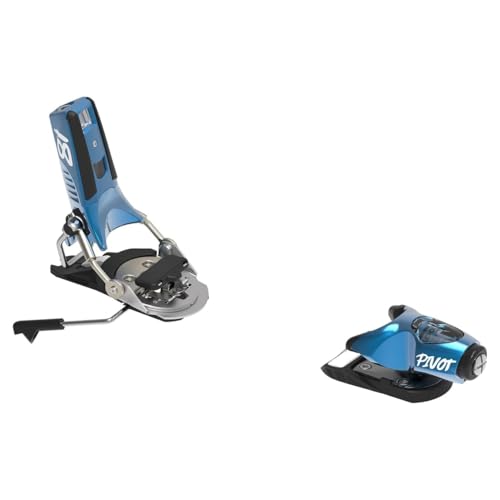
Tom and Ryan took the Atomic Strive 16 MN through six flat drop landings at Whistler Blackcomb, and it never released once. It scores 92.5 out of 100 and ranks #1 in our best freeride ski bindings guide as our Best Overall Freeride Ski Binding.

What is the best overall freeride ski binding?
The best overall freeride ski binding is the Atomic Strive 16 MN, which scored 92.5 out of 100, held through six flat drop landings with no unwanted release, and clicked shut with moderate force on steep traverses.

Atomic Strive 16 MN
- Weight: 1,125 g each
- DIN range: 7 to 16
- Brake width: 115 mm
- Boot soles: Alpine, GripWalk, touring
Bottom Line : The best freeride binding we tested: a low toe, a metal heel and a crisp click-in, with no unwanted release in six drops. The sliding plate wants to stay clear of grit.
Pros
- Hold 9.5: no unwanted release in six flat drop landings
- Power transfer & edge feel 9.5 from a very low toe
- Step-in 9.0, with moderate force on a steep traverse
- Takes alpine, GripWalk and touring boot soles
Cons
- The 115 mm brake overhangs a 102 mm waist by 6.5 mm a side
- The sliding plate needs to be kept clear of fine grit
- Nothing under DIN 7
Who it's best for
Tom led and Ryan co-tested, at DIN 8.0 and 10.0. Aggressive freeriders who want a low stand height, metal retention and the option of touring boots suit it. Skiers who want a turntable heel, or whose binding needs a DIN range that starts below 7, should look at the Look Pivot 2.0 15 GW instead. A certified shop sets the DIN.
Why we love it
Hold on Hard Landings (9.5). The metal-reinforced Low Drive Toe carriage and the metal heel held through six flat drop landings with no unwanted release and no forward-pressure drift under heavy compressions.
Power Transfer & Edge Feel (9.5). The very low toe puts the boot sole almost on the topsheet. The testers noted fine edge detail and quick edge roll-over on firm snow.
Chop Damping (9.0). The low center of gravity and the metal in the heel track calmed chopped spring snow without making the ski feel dead or stiff.
Step-In & Ice Clearing (9.0). The heel snapped shut crisply with moderate force on steep traverses, and the sliding plate cleared wet slush.
What we didn't like
Mind the brake width. The 115 mm brake overhangs a 102 mm waist by 6.5 mm on each side. Atomic also lists a 100 mm brake, which we didn't test, so match the brake to your own waist.
The sliding plate needs a clean track. Fine parking-lot grit stops it centering cleanly, so keep the track clean. It has no turntable heel, and its DIN range starts at 7.
Should you buy it?
Pick the Strive 16 MN if you ski hard and want the best all-round freeride binding we tested, at a mid-price. If you want a turntable heel, or a DIN range that starts below 7, look at the Look Pivot 2.0 15 GW instead. Have a shop check the range against your own setting.
On the Snow
Tom led the Strive 16 MN, and Ryan co-tested it. A certified shop technician set the DIN at 8.0 for Tom and 10.0 for Ryan. The brake was 115 mm, on skis with a 102 mm waist, so the brake overhung the ski by 6.5 mm on each side.
Landings were where it earned its keep. Six flat drops came and went with no unwanted release and no forward-pressure drift under heavy compressions. That is the reason it scored 9.5 for hold. The metal-reinforced Low Drive Toe carriage and the metal heel track did the holding.
Edge feel came next. The very low toe puts the boot close to the topsheet, and our testers reported fine edge detail and quick roll-over on firm snow, which earned 9.5 for power transfer. The low center of gravity did similar work in chop. It muted chopped spring snow without making the ski feel sluggish or overly stiff, and it scored 9.0 for chop damping.
Step-in was the one area where it asked more of the skier. The heel snapped shut crisply with moderate force on steep traverses, and the sliding plate cleared wet slush. That earned a 9.0, the same as chop damping.
Where It Asks Something of You
Sort the brake first. The 115 mm brake overhung a 102 mm waist by 6.5 mm on each side, and that is a lot of overhang on firm snow. Atomic also lists a 100 mm brake. We did not test that one, so match the brake to your own ski waist and have a shop check it.
The sliding plate needs a clean track. Testers found that fine parking-lot grit can stop it returning cleanly to center, so wipe the track before and after you ski.
The DIN range starts at 7, and the binding has no turntable heel. Skiers who need a lower setting, or who want a turntable heel, will be better served elsewhere. The listing gives 7 to 16, but a certified shop sets your DIN, so check the range against your own weight, height and boot before you ski it.
Spec Sheet vs Our Test
Multi-Norm boot compatibility. The listing says the Strive 16 MN takes alpine (ISO 5355), GripWalk (ISO 23223) and touring (ISO 9523) soles. Our testers rode it on GripWalk soles, and our notes also record a bench check and a field check with touring soles. For you, that means one binding can cover resort and touring boots, but have a shop confirm your boot's sole standard before you buy.
Low toe. The Low Drive Toe carriage is built to sit the boot low over the ski. Our testers felt that on firm snow, where the fine edge detail and quick roll-over earned 9.5 for power transfer. For you, that means a direct feel when you carve.
Metal heel track. The heel carries metal reinforcement along its track. On the drops, that kept the heel steady under heavy compressions, with no forward drift. For you, that means a heel that holds its position when you land hard, which is a big part of the 9.5 for hold.
DIN range 7 to 16. The listing gives this range. Tom set his at 8.0 and Ryan at 10.0, both on the calibration of a certified shop technician. For you, that means the range is for a shop to set, not for us to recommend, and the 7 floor is what rules out the lightest skiers.
Brake width. The listing gives 90, 100, 115 and 130 mm. Our testers rode the 115 mm brake. For you, that means the brake has to match your ski's waist: on our 102 mm skis, the 115 mm brake overhung by 6.5 mm a side.
Should You Buy the Atomic Strive 16 MN?
Yes, if you ski hard on freeride terrain and want the most solid all-round hold we tested. It held six flat drops with no unwanted release, edged sharply on firm snow, and quieted chop well. It also takes GripWalk, alpine and touring soles, which matters if you move between resort and backcountry boots. Get a shop to check the brake and the DIN, and it is a binding you can trust on big days.
Skip it if you want a turntable heel, need a DIN range that starts below 7. For a turntable heel, the Look Pivot 2.0 15 GW is the one to look at. If you are a heavier skier who wants the strongest hold in the guide, the Marker Jester 18 Pro scored higher on hold, though the Strive 16 MN is the better all-rounder for most freeriders.
Compare With
- Marker Jester 18 Pro: our Best Freeride Ski Binding for Heavy Skiers.
- Look Pivot 2.0 15 GW: our Best Freeride Ski Binding for Drops.
- Atomic Strive 14 GW: our Best Freeride Ski Binding for Advanced Skiers.
- Look Pivot 2.0 18 GW: our Best Freeride Ski Binding for Durability.
- Marker Jester 16: our Best Freeride Ski Binding for Charging Chop.
- Tyrolia Attack 14 GW: our Best Freeride Ski Binding for Easy Step-In.
- Marker Duke PT 16: our Best Hybrid Freeride Ski Binding for High DIN.
- Marker Griffon 13: our Best Budget Freeride Ski Binding.
- Atomic Shift2 13 MN: our Best Lightweight Hybrid Freeride Ski Binding.
- Best Freeride Ski Bindings: the full guide, with all ten bindings ranked.
Editor's Note, 24 November 2026: This is a new review. It was added alongside our best freeride ski bindings guide.
Our Testers
Tom Harris, All-Mountain Ski Tester. A ski shop service manager and boot fitter. A strong advanced skier who loves bowls and glades. Tom led the Strive 16 MN.
Ryan Williams, Lead Tester. A heavy fleet equipment mechanic and commercial vehicle technician. At 6 ft 2 and 215 lb, he is our heavy, high-impact user. Ryan co-tested the Strive 16 MN.