What is the best overall all-mountain ski?
The best overall all-mountain ski is the Volkl M7 Mantra, which locked into 8:30 AM hardpack on Regulator Johnson at Snowbird with 9.5 out of 10 for edge hold and drove through afternoon ruts without tip deflection.

Volkl M7 Mantra
- Length tested: 177 cm
- Weight: 4,180 g (pair)
- Waist: 96 mm
- Turn radius: 16.8 m (center)
Bottom Line : Tied for the strongest skis here on firm snow and in chop. They're hard work in tight bumps unless you stay over the front of your boot.
Pros
- Edge hold 9.5, with GS-level bite on morning hardpack
- Stability in chop 9.5, with no tip deflection
- A 96 mm waist that still floated 15 cm of wind-buffed snow
- Tom's bench check found 2.5 mm of camber, flatter than a traditional frontside carver
Cons
- Tight spots 7.5: the stiff tail and 4,180 g pair demand active shovel pressure
- The heaviest pair on test
- The tail punishes a backseat lapse in steep bumps
Who it's best for
Advanced to expert skiers who ski fast in variable snow and drive the shovel (the front of the ski) will get the most from them. Ryan led and James co-tested. Intermediates and low-speed mogul cruisers should look elsewhere.
Why we love it
Edge Hold on Firm Snow (9.5). The skis locked into 8:30 AM hardpack on Regulator Johnson with GS-level edge bite. The 16.8 m center radius carved crisp medium arcs when pressured forward, with no washing out.
Stability in Chop (9.5). The testers bulldozed straight through afternoon ruts in Mineral Basin, and through refrozen May push piles on Garbanzo, with no tip deflection. The titanal frame kept the forebody planted at speed.
Tom's bench check at 177 cm found only 2.5 mm of unweighted camber on a granite surface plate, much flatter than a traditional frontside carver. He also found a small ridge in the sidewall near the front of the ski that catches a fingernail, which he calls completely normal.
What we didn't like
If you drop backseat in steep bumps, that beech-reinforced sidewall and four-piece Titanal frame will punish you immediately. Stay over the front of your boot and nothing touches it.
James, in the testers' notes
Tight spots are the weak point, at 7.5. The testers found the tailored carbon tips lighten the swing slightly over earlier Mantra builds, but the stiff tail and 4,180 g pair still demand active shovel pressure in tight Alta moguls.
Soft-snow float scored 8.0. The broad 139 mm tip planed cleanly through 15 cm of wind-buffed snow and wet May slush, but it rewards direction and pace over loose, surfy pivoting.
Should you buy it?
Choose the Volkl M7 Mantra if you're an advanced or expert skier who stays centered and drives the shovel through variable snow. For one pair that does everything, the testers' own pick is the Blizzard Rustler 9, which pivots far better in tight spots and sits 1.5 points lower. Length: James, at 5 ft 10, found 177 cm his ideal daily length, and Ryan, at 6 ft 2, says he'd normally size up to 184 cm.
Read our full Volkl M7 Mantra review →

What is the best all-mountain ski for a one-ski quiver?
The best all-mountain ski for a one-ski quiver is the Blizzard Rustler 9, which scored 8.5 out of 10 on all four tests: edge hold on firm snow, chop, tight spots and soft snow.

Blizzard Rustler 9
- Length tested: 174 cm
- Weight: 3,560 g (pair)
- Waist: 96 mm
- Turn radius: 16.0 m
Bottom Line : The only pair here with no score under 8.5, so it carves, absorbs chop, pivots in bumps and floats. It lacks the Mantra's top-end stiffness for 215 lb chargers.
Pros
- Four scores of 8.5, the most even result on test
- A 3,560 g pair that still damped afternoon chop
- Rockered tips and tails pivoted in Seppo's bump line
- Tip rose in soft snow and heavy spring corn without diving
Cons
- No top-end ceiling for 215 lb or heavier chargers
- A slightly domed base near the waist out of the plastic
- Minor cosmetic topsheet nick from ski-on-ski contact
Who it's best for
Tom led and Libby co-tested the Rustler 9, which suits intermediate to expert skiers who want one pair for the whole mountain. Heavyweights who want maximum stiffness will prefer the Mantra.
Why we love it
Edge Hold on Firm Snow (8.5). The FluxForm metal laminate underfoot held a lively, predictable 16.0 m carve on morning firm snow, with an intuitive tail release.
Stability in Chop (8.5). The pair damped impressively for 3,560 g. It stayed composed through chewed-up afternoon chop on Garbanzo without feeling dead or overly demanding.
Ease in Tight Spots (8.5) and Soft-Snow Float (8.5). The rockered tips and tails let both Tom and Libby pivot easily in Seppo's bump line and tight tree chutes, and the tip rose in soft Ballroom snow and heavy spring corn without hooking or diving.
Zero weak spots, it pivots on a dime in tight trees, yet holds an edge cleanly when you open it up on morning corduroy.
Libby, in the testers' notes
What we didn't like
Tom's fix is a tune. His straight-edge check out of the plastic showed the base slightly domed near the waist, which he calls common on factory Rustlers. After a fresh stone grind and a 1°/2° edge bevel, firm-snow edge bite sharpened dramatically.
Minor cosmetic topsheet chips along the exposed metal edge are likely if the skis knock together on the chair. The testers also found no top-end ceiling for a 215 lb charger.
Should you buy it?
The Blizzard Rustler 9 is the pair to buy if you want one ski for firm lanes, chop, bumps and soft snow, and you're not a heavyweight chasing race-stock stiffness. It's the testers' own pick for the best one-ski quiver. Heavier chargers should go to the Mantra.
Read our full Blizzard Rustler 9 review →

What is the best frontside-leaning all-mountain ski?
The best frontside-leaning all-mountain ski is the Kastle Paragon 93, which scored 9.5 out of 10 for edge hold on hardpack and kept its 3,654 g pair calm through afternoon ruts.

Kastle Paragon 93
- Length tested: 177 cm
- Weight: 3,654 g (pair)
- Waist: 93 mm
- Turn radius: 16.4 m
Bottom Line : A frontside-leaning carver with a surprisingly lively side in soft snow and bumps at 3,654 g a pair. Its 93 mm waist floats less than the 96 to 99 mm skis, and it sits in the premium tier.
Pros
- Edge hold 9.5, among the best here
- Stability in chop 9.0 at 3,654 g
- One of the cleanest factory tunes in the test
- Quick edge to edge in mogul troughs
Cons
- Soft-snow float 7.5, the second lowest
- A supportive tail that kicks a backseat skier forward
- Premium tier
Who it's best for
The target skier is advanced to expert and spends 60 to 70% of the day carving firm terrain and mixed chop. James led and Tom co-tested. If powder comes first for you, look at something wider.
Why we love it
Edge Hold on Firm Snow (9.5). The testers credit the metal reinforcement and the tip damping with razor-sharp grip on morning hardpack.
Stability in Chop (9.0). The skis punch above their 3,654 g pair weight. They sliced through afternoon ruts with calm, quiet suspension.
Tom's bench check found factory bevels of 1.3° base and 88° (2°) side, one of the cleanest out-of-wrapper tunes in the test.
What we didn't like
Carves like a narrow frontside ski at 3,654 g/pair, though if you get lazy and drop into the backseat in rough crud, that supportive tail will buck you forward.
James, in the testers' notes
Width is the catch. The skis were capable in 15 cm of soft snow and spring slush (float 7.5), but the narrower 93 mm waist sits lower than the 96 to 99 mm competitors when the snow gets deep.
The flatter, supportive tail also rewards staying centered to forward, so a lazy backseat habit gets punished in rough chop.
Should you buy it?
Go for the Kastle Paragon 93 if firm terrain and mixed chop fill most of your day and you're happy with a premium-tier pair. Anyone who chases soft snow should step up to the Maverick 96 CTI or the Enforcer 99.
Read our full Kastle Paragon 93 review →
What is the best all-mountain ski for soft snow?
The best all-mountain ski for soft snow is the Atomic Maverick 96 CTI, which scored 8.5 out of 10 for soft-snow float, with a beveled tip that planed over soft snow and resisted hooking in wet spring slush.

Atomic Maverick 96 CTI
- Length tested: 179 cm
- Weight: 3,800 g (pair)
- Waist: 96 mm
- Turn radius: 18.0 m
Bottom Line : A lively ski that blends directional carving grip with easy slashing in soft snow, in the budget tier. The 18.0 m radius prefers open terrain, and the skis run shorter than the stamped 179 cm.
Pros
- Soft-snow float 8.5 without hooking in wet slush
- Edge hold 8.5 and chop 8.5 at 3,800 g
- A tapered tail that released in bump troughs and steep chutes
- Budget tier
Cons
- The 18.0 m radius prefers open terrain over tight turns
- Skis closer to 174 to 175 cm than its stamped 179 cm
- The lighter shovel deflected under a 215 lb skier in heavy chop
Who it's best for
Advanced skiers who want a lighter, livelier alternative to the Mantra or the Enforcer 99 should start here. Ryan led and Tom co-tested. Short-radius carving purists will prefer the Kastle Paragon 93.
Why we love it
Soft-Snow Float (8.5). The HRZN 3D tip planed smoothly in soft snow and resisted hooking in wet spring slush.
Edge Hold on Firm Snow (8.5) and Stability in Chop (8.5). The CTI layup and minimal tail rocker tracked cleanly on morning firm snow, with energetic rebound out of medium to long turns. The ash and poplar Power Woodcore kept vibration muted through afternoon chop without feeling overly heavy.
Tom compared its effective running edge with the 177 cm Mantra and found noticeably longer tip cutouts and a deeper tip taper on the 179 cm Maverick, so it skis closer to a 174 to 175 cm ski on snow.
What we didn't like
Way looser and easier to slash than the older Maverick 95 Ti, though at 215 lbs I felt the lighter shovel deflect a touch more in heavy afternoon crud than the M7 Mantra.
Ryan, in the testers' notes
It skis shorter than stamped. Tom found the 179 cm pair skis like a 174 to 175 cm ski, because of the longer tip cutouts and deeper tip taper.
The 18.0 m radius also prefers open terrain over tight slalom turns, and Ryan's 215 lb frame found the lighter shovel deflecting more in heavy afternoon chop than the Mantra.
Should you buy it?
Pick the Atomic Maverick 96 CTI if you want a lighter, livelier ski than the Mantra, and you'll spend time in soft snow and bump troughs. Short-radius carvers should look at the Paragon.
Read our full Atomic Maverick 96 CTI review →
What is the best all-mountain ski for heavy crud?
The best all-mountain ski for heavy crud is the Nordica Enforcer 99, which scored 9.5 out of 10 in chop, absorbing afternoon push piles in Mineral Basin with no chatter, and has the widest waist here at 99 mm.

Nordica Enforcer 99
- Length tested: 173 cm
- Weight: 3,920 g (pair)
- Waist: 99 mm
- Turn radius: 17.5 m
Bottom Line : Tank-like in heavy crud and a soft-snow surfer on its 99 mm waist. It's heavy to swing in tight, frozen bumps.
Pros
- Stability in chop 9.5, tied for best
- The widest waist on test, at 99 mm, for soft-snow float 8.5
- Edge hold 8.5 once rolled onto a high edge angle
- Mid-price tier
Cons
- Tight spots 7.0, the lowest on test
- A 3,920 g pair needs muscular leg input in bumps
- Stiff feedback in frozen mogul troughs
Who it's best for
Lighter or lower-energy skiers will find the Enforcer 99 tiring. It's for strong intermediate to expert skiers who prize soft-snow and crud stability over quick tree agility. James led and Tom co-tested.
Why we love it
Stability in Chop (9.5). The skis were smooth, heavy and unflappable, and they absorbed brutal afternoon push piles in Mineral Basin with zero chatter. The maker's Energy 2 Ti Pulse Core puts a wood core and an elastomer between two layers of titanal.
Soft-Snow Float (8.5). The widest platform on test surfed effortlessly through soft snow and heavy May slush.
Tom's bench check found factory edge angles of 0.9° base and 87.5° (2.5°) side, a noticeably aggressive side bevel that bites hard on ice once you tip the skis over.
What we didn't like
Unstoppable when pointed down the fall line through crud, but if you scrub speed sideways across frozen mogul troughs, that dual-Titanal chassis sends stiff feedback straight into your knees.
James, in the testers' notes
The bumps are where it hurts. Even at 173 cm, the 3,920 g pair and its high resistance to twisting needed muscular leg input in tight bumps and trees, the lowest tight-spots score of the ten (7.0).
Edge hold scored 8.5 and was slightly slower edge to edge than the 93 to 96 mm skis.
Should you buy it?
Buy the Nordica Enforcer 99 if you're a strong skier who wants heavy-crud and soft-snow stability more than quick tree agility. Lighter skiers should skip it.
Read our full Nordica Enforcer 99 review →
What is the best low-fatigue all-mountain ski?
The best low-fatigue all-mountain ski is the Dynastar M-Pro 94 Ti, which weighs a light 3,400 g a pair, scored 8.5 out of 10 for both edge hold and tight spots, and made quick pivots in bumps and trees effortless.

Dynastar M-Pro 94 Ti
- Length tested: 178 cm
- Weight: 3,400 g (pair)
- Waist: 94 mm
- Turn radius: 17.0 m
Bottom Line : An easy, smooth daily driver with a low swing weight and no hollow feel. The shovel softens under heavy chargers in rough chop.
Pros
- Tight spots 8.5 at only 3,400 g
- Edge hold 8.5, smooth and quiet
- Soft-snow float 8.0 and forgiving to smear
- Budget tier
Cons
- The shovel rattled under a 215 lb skier in heavy afternoon ruts
- A brief delay between rolling on edge and full engagement
- A coarse, fuzzy factory base out of the wrapper
Who it's best for
Tom led and Ryan co-tested a smooth, low-fatigue daily driver for advancing intermediates through experts. Heavyweights chasing rough chop need more mass than this.
Why we love it
Ease in Tight Spots (8.5). The low 3,400 g pair mass and progressive tip rocker made quick pivots in bumps and trees effortless.
Edge Hold on Firm Snow (8.5). The titanal laminate and the polyurethane-damped core delivered smooth, quiet edge hold on firm morning runs.
Soft-Snow Float (8.0). The tip rose smoothly in soft snow and corn, and the skis were forgiving and easy to smear across variable terrain.
What we didn't like
Because the PU-damped Hybrid 2.0 core flexes progressively rather than snapping instantly, there's a brief beat between rolling on edge and full ski engagement; and the full tail sidewall feels slightly locked-in until you flatten the ski.
Ryan, in the testers' notes
Give it a beat. Ryan found a brief delay between rolling onto the edge and full engagement, because the core flexes progressively.
Chop scored 8.0, and at 215 lb Ryan found the softer, high-rocker shovel rattled slightly at speed in heavy afternoon ruts. Tom also found the factory base noticeably coarse and slightly fuzzy out of the wrapper, and a quick stone pass and fresh wax woke it up.
Should you buy it?
Take the Dynastar M-Pro 94 Ti if you want a smooth, low-fatigue ski that's easy to turn, and you aren't a heavyweight charger. Heavyweights who attack rough chop need more mass.
Read our full Dynastar M-Pro 94 Ti review →
What is the best playful all-mountain ski?
The best playful all-mountain ski is the Fischer Ranger 96, which scored 8.5 out of 10 for tight spots and never punished a technical mistake, with an easy-to-release tail in bumps and glades.
Fischer Ranger 96
- Length tested: 173 cm
- Weight: 3,700 g (pair)
- Waist: 96 mm
- Turn radius: 17.0 m
Bottom Line : An approachable, playful ski that forgives mistakes. Its rebound is muted out of carved turns, and the soft tip flaps in heavy ruts.
Pros
- Tight spots 8.5, with an easy-to-release tail
- Even 8.0 scores for edge, chop and float
- A forgiving feel that doesn't punish technical errors
- A balanced 3,700 g pair
Cons
- Muted rebound out of carved turns
- A soft, rockered tip that flexed and flapped in heavy ruts
- Less stable on refrozen hardpack than the Rustler 9
Who it's best for
Playful skiers who pivot, slash and ski bumps and trees will like it. Libby led and James co-tested. If aggressive frontside carving is your thing, the Paragon or the Mantra suits you better.
Why we love it
Ease in Tight Spots (8.5). It was very easy to release the partial-twin tail and scrub speed in bumps and tight glades.
Edge Hold on Firm Snow (8.0). The Shaped Ti 0.5 underfoot gave dependable grip on morning firm snow with a forgiving, non-hooky feel.
Soft-Snow Float (8.0). The generous Freeski tip splay floated smoothly through soft snow and spring corn.
What we didn't like
Super smooth and damp in choppy snow, though it feels more muted and less poppy out of carved turns than the Rustler 9 or Maverick 96 CTI.
Libby, in the testers' notes
Look at the tip. In chop the balanced 3,700 g pair kept the midsection calm, but the softer rockered tip flexed and flapped noticeably in heavy ruts.
Tom's bench flex found that the 0.5 mm titanal layer tapers sharply outside the binding zone, which leaves a very soft, compliant shovel and tail. The muted carve rebound and softer tip also limit stability on refrozen hardpack compared with the Rustler 9.
Should you buy it?
Pick the Fischer Ranger 96 if you ski bumps and trees, like to slash and smear, and want a ski that never punishes a mistake. Aggressive carvers should look elsewhere.
Read our full Fischer Ranger 96 review →
What is the best all-mountain ski for firm-snow cruising?
The best all-mountain ski for firm-snow cruising is the K2 Mindbender 89Ti, which scored 9.0 out of 10 for edge hold on morning hardpack, with the narrowest waist here at 89 mm and a metal Y-Beam that snapped edge to edge.

K2 Mindbender 89Ti
- Length tested: 182 cm
- Weight: 4,006 g (pair)
- Waist: 89 mm
- Turn radius: 16.6 m
Bottom Line : A firm-snow specialist with tenacious grip and calm chop damping. The narrow waist sinks in soft snow and drags in wet slush.
Pros
- Edge hold 9.0 on morning hardpack
- Stability in chop 8.5 on firm afternoon chop
- The narrowest waist here, at 89 mm, snapped edge to edge
- Hardpack bite jumped after a base and edge tune
Cons
- Soft-snow float 7.0, the lowest on test
- A 182 cm, 4,006 g pair swings heavy in tight bumps
- A tail that locks into a rail at high edge angles
- Premium tier
Who it's best for
Frontside-focused skiers who spend 75% or more of their time on firm trails, such as East Coast cruisers, are who it's for. Ryan led and James co-tested. Western soft-snow seekers should size up to 94 to 99 mm.
Why we love it
Edge Hold on Firm Snow (9.0). The narrowest waist on test plus the titanal Y-Beam snapped edge to edge on morning hardpack with a tenacious carve.
Stability in Chop (8.5). The substantial 4,006 g pair and the metal Y-Beam plowed calmly through firm afternoon chop.
Tom's advice from the bench: don't judge the 89Ti on a dull factory edge. Once the base bevel was cleaned up and the side edges sharpened, hardpack bite jumped a full grade.
What we didn't like
When kept flat it smears smoothly, but the minimal tail taper locks the back end into a rail the second you tip it onto high edge angles; you have to actively flatten the ski to break the tail loose in tight trees.
Ryan, in the testers' notes
Soft days are the problem. The skis were fine in 5 to 10 cm of fresh dust, but the 89 mm waist sank deeper in soft Ballroom snow and dragged noticeably in wet May slush compared with wider rivals (float 7.0).
Tight spots scored 7.5 because the 182 cm length and 4,006 g pair felt longer and heavier to swing in tight bump troughs than the 93 to 96 mm skis in 173 to 177 cm.
Should you buy it?
Buy the K2 Mindbender 89Ti if you ski firm snow most days and want carving precision and calm chop damping, and a premium-tier pair suits you. Western soft-snow skiers should pick something wider. Get the edges tuned first.
Read our full K2 Mindbender 89Ti review →
What is the best all-mountain ski for trees and bumps?
The best all-mountain ski for trees and bumps is the Elan Ripstick 96, which scored 9.0 out of 10 for tight spots, the best on test, and weighs a featherlight 3,140 g a pair.
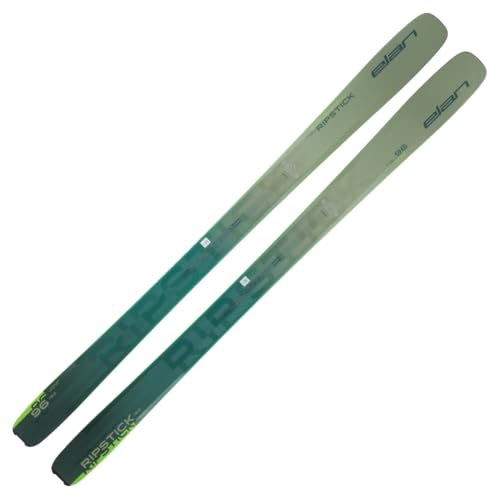
Elan Ripstick 96
- Length tested: 175 cm
- Weight: 3,140 g (pair)
- Waist: 95 mm
- Turn radius: 16.8 m
Bottom Line : The easiest ski to flick through bumps and trees, with very low leg fatigue. It lacks the mass and metal to stay calm in rough chop.
Pros
- Tight spots 9.0, the best on test
- A featherlight 3,140 g pair
- Soft-snow float 8.0 and playful
- Mid-price tier
Cons
- Chop 7.0: it bounced around in heavy ruts and refrozen chop
- Edge grip faded on steep, icy morning pitches
- Edges dent more easily with no metal sheet to protect them
Who it's best for
Libby led and Annie co-tested them. Lighter skiers, intermediate to advanced tree and mogul lovers, and anyone who wants a low-fatigue ski should look here; heavy or high-speed chop chargers should look elsewhere.
Why we love it
Ease in Tight Spots (9.0). The best agility on test in bumps and tight trees: it flicked from turn to turn with almost zero leg fatigue.
Soft-Snow Float (8.0). The light swing weight and rockered shovel floated playfully in soft snow and spring corn.
Edge Hold on Firm Snow (7.5). The Amphibio profile initiated turns smoothly on groomed blues, though grip faded on steep, icy pitches.
Hands down the easiest ski in the lineup to flick through tight trees and moguls without burning out your quads.
Annie, in the testers' notes
What we didn't like
Chop is its weak spot. At just 3,140 g a pair, with no titanal, the Ripstick got bounced around in heavy afternoon ruts and refrozen May chop, scoring 7.0.
Tom's bench note: the carbon rods and no protective metal sheet over the edges mean underfoot edges dent more easily after rocky early-season days, and riders must respect the Left and Right Amphibio stamps, because swapping feet reverses the cambered inside edge and ruins hardpack hold. One pair also took a minor topsheet nick from ski-on-ski contact.
Should you buy it?
Pick the Elan Ripstick 96 if bumps and trees are your terrain and you want skis that don't tire your legs, and if you're a lighter skier. Heavy chargers should buy a metal-damped ski.
Read our full Elan Ripstick 96 review →
What is the best lightweight all-mountain ski?
The best lightweight all-mountain ski is the Head Kore 99, which weighs only 3,120 g a pair, scored 8.5 out of 10 for both soft-snow float and tight spots, and rode high on soft snow and spring slush.

Head Kore 99
- Length tested: 170 cm
- Weight: 3,120 g (pair)
- Waist: 97 mm
- Turn radius: 15.3 m
Bottom Line : A featherweight with a crisp, snappy feel in soft snow and trees. It deflects and chatters in refrozen chop, and the cap topsheet chips easily.
Pros
- Soft-snow float 8.5 and tight spots 8.5
- The lightest pair on test, at 3,120 g
- A quick 15.3 m radius for clean medium turns
- Budget tier
Cons
- Chop 6.5, the lowest score on test
- A stiff, ultra-light layup that felt pingy on hard ice
- The cap topsheet chipped along the edge after two test days
Who it's best for
Lightweight skiers and 50/50 resort and touring skiers who put low weight first in soft snow and trees fit best. Annie led and Libby co-tested. Anyone who blasts through tracked-out crud in the afternoon needs a metal-damped ski.
Why we love it
Soft-Snow Float (8.5). The wide tip splay and minimal mass kept the skis riding high on soft snow and spring slush.
Ease in Tight Spots (8.5). The ultra-low swing weight and short 15.3 m radius made quick pivots in trees and bumps easy.
Edge Hold on Firm Snow (7.5). The quick radius carved clean medium turns on smooth morning runs.
What we didn't like
In soft snow it feels weightless and snappy, but in refrozen afternoon chop that rigid, ultra-light carbon/Karuba layup deflects off chunks instead of plowing through them; and the stiff tail punishes backseat lapses.
Libby, in the testers' notes
Afternoon crud is where it falls apart. Chop scored 6.5, the lowest on test: at 3,120 g a pair with a stiff flex and no metal damping, the Kore 99 deflected and chattered harshly in refrozen ruts.
The stiff, lightweight layup also felt pingy on hard ice. Tom's bench note adds that the weight-saving cap-topsheet chamfer bevels easily, and two test days left visible nicks along the top rail, with minor chipping along the tail edge on one pair.
Should you buy it?
Take the Head Kore 99 if you're a lighter skier or a resort and touring hybrid who wants low weight in soft snow and trees. If your afternoons mean tracked-out crud, reach for a metal-damped pair such as the Enforcer 99: chop is the Kore's weak spot.
Read our full Head Kore 99 review →
How did we test the all-mountain skis?
We tested the all-mountain skis by skiing each pair on the same four kinds of terrain, with two testers per pair, scoring edge hold on firm snow, stability in chop, ease in tight spots and soft-snow float, then weighing every pair.
An all-mountain ski has to do four jobs in one day: grip a firm morning lane, stay calm in tracked-out afternoon snow, turn easily in bumps and trees, and float when the snow gets soft. Ryan, James, Tom, Libby and Annie skied ten pairs, two testers on each, a lead and a co-tester, at Snowbird and Alta in Utah in March 2026 and at Whistler Blackcomb in British Columbia in March and May 2026.
Every pair got the same four runs. The firm morning lane was Chip's Run and Regulator Johnson at Snowbird and the upper and lower Dave Murray Downhill at Whistler. The afternoon chop was the ruts of Mineral Basin and Collins Gulch, and Lower Olympic and the Garbanzo push piles. Bumps and trees were High Rustler and Alf's High Rustler at Alta, and Seppo's and In the Spirit at Whistler. Soft snow was Ballroom and Catherine's Area, and Symphony Bowl and the upper glacier at Whistler.
March ran from -7°C to -1°C, with chalky hardpack at 8:30 AM, 15 to 20 cm of wind-settled snow in the upper bowls and tracked-out chop by afternoon. May ran from +1°C to +7°C, with firm refrozen corn in the morning softening into heavy, wet spring slush by 1:00 PM.
Every pair carried the same binding, a Tyrolia Attack 14 GW, mounted on the factory recommended line. A certified shop technician bench-verified every setting. The DIN, the release setting that decides how hard a fall has to be before the binding lets go, was shop set at 8.5 for Ryan, James and Tom and 6.5 for Libby and Annie. The boots, heights, weights and DINs are in the table below. You can read about the binding in our all-mountain ski binding guide.
| Tester | Height | Weight | Age | Level | Boots | Shop-set DIN | Role |
|---|---|---|---|---|---|---|---|
| Ryan | 6 ft 2 | 215 lb | 38 | Expert | Lange XT3 Free 130 MV, Mondo 28.5, boot sole length 326 mm (GripWalk) | 8.5 | Heavy, high-impact charger |
| James | 5 ft 10 | 172 lb | 33 | Expert | Nordica Promachine 130, Mondo 27.5 | 8.5 | Former alpine ski racer and ski tuner |
| Tom | 5 ft 11 | 178 lb | 36 | Expert | Salomon S/Pro Supra BOA 120, Mondo 27.5, boot sole length 314 mm (GripWalk) | 8.5 | Ski shop service manager and boot fitter; bench inspector |
| Libby | 5 ft 7 | 142 lb | 30 | Expert | Nordica Promachine 115 W, Mondo 25.5, boot sole length 295 mm (GripWalk) | 6.5 | Ski patroller and freeride skier |
| Annie | 5 ft 6 | 135 lb | 31 | Advanced-intermediate | Atomic Hawx Prime 105 S W, Mondo 24.5, boot sole length 285 mm (GripWalk) | 6.5 | Recreational crossover baseline |
The four scored qualities:
- Edge Hold on Firm Snow: linked medium carves on the firm morning lane, and whether the edge bit or washed out
- Stability in Chop: the same afternoon ruts and push piles, and whether the ski stayed calm or got deflected
- Ease in Tight Spots: how little effort it took to pivot and turn in the bumps and trees
- Soft-Snow Float: whether the tip rose or dove and hooked in soft snow and slush
- Weight (measured, not scored): each bare pair, skis only and no bindings, on a calibrated bench scale (±0.5 g)
The overall score is the plain average of the four scores times ten, rounded to the nearest half point. A ski that appears in more than one of our guides has one score everywhere: the average of its results across those guides. The metric bars show this guide's own test. Tom ran a bench check on each pair before it was mounted, and his findings are in the product sections. A few terms: the shovel is the front of the ski; rocker is the tip and tail curving up off the snow, and camber is the arch under the foot; swing weight is how heavy a ski feels to flick around; titanal is a light metal laminate. The waist, turn radius and length printed in each card are the listing figures for the length we skied, and every weight and every score comes from our testers. We don't score price; where a ski's value stands out we say so in tiers (budget, mid-price, premium), and the Check Latest Prices button shows the current number. You can meet the testers at the bottom of this page.
Which all-mountain ski suits your skiing?
The right all-mountain ski depends on your weight, your pace and how much of your day is firm, chopped or soft: pick by the row that matches you.
| If you're… | Buy |
|---|---|
| A strong, fast skier who stays centered in variable snow | Volkl M7 Mantra |
| Wanting one pair for the whole mountain, intermediate to expert | Blizzard Rustler 9 |
| Carving firm terrain most of the day, with some soft snow | Kastle Paragon 93 |
| Wanting a livelier ski for soft snow and bump troughs | Atomic Maverick 96 CTI |
| Strong, and happiest plowing heavy crud and soft snow | Nordica Enforcer 99 |
| An advancing skier who wants a smooth, low-fatigue daily driver | Dynastar M-Pro 94 Ti |
| Playful, and into slashing, smearing and glades | Fischer Ranger 96 |
| Skiing firm snow nearly all day | K2 Mindbender 89Ti |
| Lighter, and hunting bumps and trees | Elan Ripstick 96 |
| Light, or part resort and part touring, and focused on soft snow | Head Kore 99 |
What did our all-mountain ski tests show?
Our all-mountain ski tests showed that chop separated the ten most, by 3.0 points, that the Volkl M7 Mantra tied for the top score in both edge hold and chop, and that the Blizzard Rustler 9 was the only pair with no score under 8.5.
Each ski's four scores are also in its card above.
How well do all-mountain skis hold an edge on firm snow?
The all-mountain skis with the best edge hold on firm snow were the Volkl M7 Mantra and Kastle Paragon 93, which each scored 9.5.
Where we tested it. Linked medium carves on the same firm morning lane for every pair: Chip's Run and Regulator Johnson at Snowbird, and the Dave Murray Downhill at Whistler.
What separated them. The Mantra and Paragon scored 9.5, the Mindbender 9.0, the Rustler 9, Maverick 96 CTI, Enforcer 99 and M-Pro 94 Ti 8.5, the Ranger 8.0, and the Ripstick and Kore 7.5. The spread is 2.0 points.
The two 7.5 scores belong to the two lightest pairs, 3,140 g and 3,120 g: the Ripstick's grip faded on steep, icy pitches and the Kore felt pingy on hard ice. Tom's tune mattered too: a stone grind and a 1°/2° bevel sharpened the Rustler 9, and a cleaned-up bevel and sharpened side edges lifted the Mindbender by a full grade.
What it felt like. If firm snow is most of your day, buy for this score first. The narrowest waists did well here: the 89 mm Mindbender scored 9.0 and the 93 mm Paragon 9.5.
| Ski | What we found |
|---|---|
| Volkl M7 Mantra | GS-level bite on 8:30 AM hardpack; no washing out |
| Kastle Paragon 93 | Razor-sharp grip and a clean factory tune |
| K2 Mindbender 89Ti | Snapped edge to edge; bite jumped after a tune |
| Blizzard Rustler 9 | A lively, predictable 16.0 m carve with a good tail release |
| Atomic Maverick 96 CTI | Tracked cleanly, with energetic rebound in long turns |
| Nordica Enforcer 99 | Solid once rolled onto a high edge angle; slower edge to edge |
| Dynastar M-Pro 94 Ti | Smooth, quiet hold on firm morning runs |
| Fischer Ranger 96 | Dependable grip with a forgiving, non-hooky feel |
| Elan Ripstick 96 | Smooth turn start, but grip faded on icy pitches |
| Head Kore 99 | Clean medium turns on smooth runs; pingy on hard ice |
How stable are all-mountain skis in chop?
The most stable all-mountain skis in chop were the Volkl M7 Mantra and Nordica Enforcer 99, which each scored 9.5.
Where we tested it. The same afternoon ruts and push piles for every pair: Mineral Basin and Collins Gulch ruts, and Lower Olympic and the Garbanzo push piles.
What separated them. The Mantra and Enforcer scored 9.5, the Paragon 9.0, the Rustler 9, Maverick 96 CTI and Mindbender 8.5, the M-Pro 94 Ti and Ranger 8.0, the Ripstick 7.0 and the Kore 6.5. The spread is 3.0 points, the widest of the four scores.
Weight didn't decide it alone. The Paragon, at 3,654 g, scored 9.0, while the Mindbender, 352 g heavier, scored 8.5. But the two lightest pairs, the Kore and the Ripstick, scored lowest.
What it felt like. If your afternoons mean tracked-out snow, this is the score that separates a ski you enjoy from one you fight. The 3,120 g Kore deflected and chattered in refrozen ruts, while the Mantra and Enforcer plowed through.
| Ski | What we found |
|---|---|
| Volkl M7 Mantra | Bulldozed ruts and push piles with no tip deflection |
| Nordica Enforcer 99 | Smooth, heavy and unflappable; zero chatter |
| Kastle Paragon 93 | Calm, quiet suspension above its weight |
| Blizzard Rustler 9 | Composed and damped, without feeling dead |
| Atomic Maverick 96 CTI | Muted vibration, though the shovel deflected under Ryan |
| K2 Mindbender 89Ti | The metal Y-Beam plowed calmly through firm chop |
| Dynastar M-Pro 94 Ti | Calm, but the shovel rattled under Ryan in heavy ruts |
| Fischer Ranger 96 | Calm midsection; the soft tip flapped in heavy ruts |
| Elan Ripstick 96 | Bounced around in heavy ruts and refrozen chop |
| Head Kore 99 | Deflected and chattered harshly in refrozen ruts |
How easy are all-mountain skis to turn in tight spots?
The all-mountain ski that was easiest to turn in tight spots was the Elan Ripstick 96, which scored 9.0.
Where we tested it. The same bump and tree runs for every pair: High Rustler and Alf's High Rustler at Alta, and Seppo's and In the Spirit at Whistler.
What separated them. The Ripstick scored 9.0, the Rustler 9, M-Pro 94 Ti, Ranger 96 and Kore 99 8.5, the Paragon and Maverick 96 CTI 8.0, the Mantra and Mindbender 7.5 and the Enforcer 7.0. The spread is 2.0 points.
The three lowest scores belong to the three heaviest pairs: the Mantra at 4,180 g, the Mindbender at 4,006 g and the Enforcer at 3,920 g.
What it felt like. Heavy skis made the testers work. Even in a 173 cm length the Enforcer needed muscular leg input in tight bumps, while Annie called the Ripstick the easiest ski in the lineup to flick through trees.
| Ski | What we found |
|---|---|
| Elan Ripstick 96 | Flicked turn to turn with almost no leg fatigue |
| Blizzard Rustler 9 | Pivoted easily in Seppo's bump line and tight chutes |
| Dynastar M-Pro 94 Ti | Low pair weight and progressive tip made pivots easy |
| Fischer Ranger 96 | The partial-twin tail released easily in bumps and glades |
| Head Kore 99 | Low swing weight and a short radius made pivots easy |
| Kastle Paragon 93 | Quick edge to edge in mogul troughs |
| Atomic Maverick 96 CTI | The tapered tail released in troughs and steep chutes |
| Volkl M7 Mantra | The stiff tail and heavy pair demanded active shovel pressure |
| K2 Mindbender 89Ti | Long and heavy to swing; the tail locked into a rail |
| Nordica Enforcer 99 | Needed muscular leg input in bumps and trees |
How well do all-mountain skis float in soft snow?
The all-mountain skis that floated best in soft snow were the Blizzard Rustler 9, Atomic Maverick 96 CTI, Nordica Enforcer 99 and Head Kore 99, which each scored 8.5.
Where we tested it. The same soft runs for every pair: Ballroom and Catherine's Area at Alta, and Symphony Bowl and the upper glacier at Whistler, in March wind-settled snow and heavy May slush.
What separated them. Four skis scored 8.5, the Mantra, M-Pro 94 Ti, Ranger 96 and Ripstick 8.0, the Paragon 7.5 and the Mindbender 7.0. The spread is 1.5 points, the narrowest of the four scores.
The two narrowest waists, the 89 mm Mindbender and the 93 mm Paragon, scored lowest. The 94 mm M-Pro still scored 8.0, so waist isn't the whole story.
What it felt like. The Mindbender sank deeper in soft Ballroom snow and dragged in wet slush, while the Kore's wide tip splay and low mass kept it riding on top. If you ski soft snow often, skip the narrowest two.
| Ski | What we found |
|---|---|
| Blizzard Rustler 9 | The tip rose without hooking or diving |
| Atomic Maverick 96 CTI | The beveled tip planed smoothly; no hooking in slush |
| Nordica Enforcer 99 | The widest platform surfed through soft snow and slush |
| Head Kore 99 | Wide tip splay and low mass rode high |
| Volkl M7 Mantra | The broad tip planed, but it rewards direction over pivots |
| Dynastar M-Pro 94 Ti | Smooth tip rise; forgiving and easy to smear |
| Fischer Ranger 96 | Generous tip splay floated smoothly |
| Elan Ripstick 96 | Light and playful in soft snow and corn |
| Kastle Paragon 93 | Capable, but sits lower than the 96 to 99 mm skis |
| K2 Mindbender 89Ti | Fine in fresh dust; sank and dragged in slush |
How much do all-mountain skis weigh?
The all-mountain skis we weighed ranged from 3,120 g to 4,180 g a pair, bare, with no bindings.
Where we tested it. We weighed each bare pair, skis only, before mounting, on a calibrated bench scale (±0.5 g). Weight is measured, not scored, so it's not in the overall number.
What separated them. The Head Kore 99 was lightest at 3,120 g and the Volkl M7 Mantra heaviest at 4,180 g, a gap of 1,060 g, so the Mantra weighs about 34% more.
What it felt like. Lighter meant easier in tight spots and weaker in chop. The two lightest pairs scored 8.5 and 9.0 in tight spots and 6.5 and 7.0 in chop, while the heaviest scored 9.5 in chop and 7.5 in tight spots.
| Ski | What we found |
|---|---|
| Head Kore 99 | 3,120 g |
| Elan Ripstick 96 | 3,140 g |
| Dynastar M-Pro 94 Ti | 3,400 g |
| Blizzard Rustler 9 | 3,560 g |
| Kastle Paragon 93 | 3,654 g |
| Fischer Ranger 96 | 3,700 g |
| Atomic Maverick 96 CTI | 3,800 g |
| Nordica Enforcer 99 | 3,920 g |
| K2 Mindbender 89Ti | 4,006 g |
| Volkl M7 Mantra | 4,180 g |
What do people ask about all-mountain skis?
These are common questions about all-mountain skis, answered from our own test results.
What waist width should an all-mountain ski have?
The ten skis we tested ran from 89 mm to 99 mm at the waist, and the narrowest skis led on firm snow while the widest were best in soft snow and chop, with some 96 mm skis level with them. The 89 mm Mindbender scored 9.0 for edge hold and 7.0 for float, and the 93 mm Paragon scored 9.5 and 7.5.
Three of the four 96 mm skis (the Rustler 9, Maverick 96 CTI and Ranger 96) scored 8.0 or higher on every test, which makes 96 mm a safe middle. The Elan Ripstick 96 is 95 mm at the waist in the 175 cm we skied.
How long should an all-mountain ski be?
Our testers skied these lengths: Libby (5 ft 7) and Annie (5 ft 6) 170 to 175 cm, James (5 ft 10) 173 to 182 cm, Tom (5 ft 11) 173 to 179 cm and Ryan (6 ft 2) 177 to 182 cm. Each listing is one length, and a ski can ski shorter or longer than its stamp: Tom found the 179 cm Maverick 96 CTI skis like a 174 to 175 cm ski, and Ryan says he'd normally size up to 184 cm on the Mantra.
Do all-mountain skis come with bindings?
These ten are skis alone, so you buy the binding separately. We mounted a Tyrolia Attack 14 GW on every pair, and a certified shop technician bench-verified the DIN. Don't set your own DIN: a shop sets it from your weight, height, boot sole length and ability, and your boot sole must match the binding (alpine or GripWalk).
Are lighter all-mountain skis better?
A lighter ski is easier to turn and worse in chop. The two lightest pairs, the Kore 99 at 3,120 g and the Ripstick 96 at 3,140 g, scored 8.5 and 9.0 in tight spots but 6.5 and 7.0 in chop.
Which all-mountain ski is best for an intermediate skier?
The Blizzard Rustler 9 is the best all-mountain ski for a progressing intermediate, because the testers rate it intermediate to expert and it scored 8.5 on all four tests. Annie, our advanced-intermediate tester, skied only two pairs, the Kore 99 and the Ripstick 96, and called the Ripstick the easiest ski in the lineup to flick through trees. The Dynastar M-Pro 94 Ti suits advancing intermediates who want a low-fatigue ski, and the Mantra is wrong for intermediates.
What are the 10 best all-mountain skis?
The 10 best all-mountain skis are the ten ranked above, led by the Volkl M7 Mantra.
The best overall pick is the Volkl M7 Mantra for strong, fast skiers, and the testers' own pick for one pair is the Blizzard Rustler 9. For carving buy the Kastle Paragon 93, for soft snow the Atomic Maverick 96 CTI, and for heavy crud the Nordica Enforcer 99. For an easy daily driver take the Dynastar M-Pro 94 Ti, for playful skiing the Fischer Ranger 96, for firm snow the K2 Mindbender 89Ti, for trees and bumps the Elan Ripstick 96 and for low weight the Head Kore 99.
Editor's Note, 16 November 2026: New guide. Ryan, James, Tom, Libby and Annie tested ten all-mountain skis at Snowbird and Alta in March 2026 and at Whistler Blackcomb in March and May 2026, on the same Tyrolia Attack 14 GW binding, scoring each on edge hold on firm snow, stability in chop, ease in tight spots and soft-snow float, and weighing every pair.
Editor's Note, 27 September 2026: New guide for the 2026/2027 season, based on a test week at Whistler Blackcomb by Ryan, James, Libby and the rest of our crew.
Editor's Note, 20 October 2026: Re-ranked so the highest score comes first. Blizzard Rustler 9 moves from #2 to #1; Rossignol Sender Soul 102 moves from #10 to #2; DPS Kaizen 100 moves from #4 to #3; Fischer Ranger 96 moves from #5 to #4; Völkl M7 Mantra moves from #1 to #5; Armada Declivity 92 Ti moves from #3 to #6; Nordica Enforcer 99 moves from #6 to #7; K2 Mindbender 99Ti moves from #9 to #8; Faction Dancer 2 moves from #8 to #9; Head Kore 93 moves from #7 to #10.
Our Testers
This guide was written from the field notes of Ryan Williams, James Ward, Tom Harris, Libby Smith and Annie Ward.
- Sean Williams, Editor-in-Chief. A former commercial outdoor copywriter and gear journalist who runs Top-Notch Outdoor as an independent publisher, with no brand-funded trips and no supplied ad copy.
- Ryan Williams, Lead Tester. A heavy fleet equipment mechanic and commercial vehicle technician. At 6 ft 2 and 215 lb, he is our heavy, high-impact tester; he led the Mantra, Maverick 96 CTI and Mindbender tests.
- James Ward, Alpine Ski & Fat Bike Tester. On skis since he was 3 and a former regional alpine racer, now a ski tuner and dryland fitness coach. James led the Enforcer 99 and Paragon 93 tests.
- Tom Harris, All-Mountain Ski Tester. A ski shop service manager and boot fitter, and a strong advanced skier who loves bowls and glades. Tom led the Rustler 9 and M-Pro 94 Ti tests and ran the bench checks.
- Libby Smith, Freeride Ski & Fat Bike Tester. A seasonal mountain bike trail builder and winter ski patroller, with several seasons of freeriding behind her. Libby led the Ripstick 96 and Ranger 96 tests.
- Annie Ward, Women's All-Mountain Snowboard Tester. A freelance graphic designer and committed weekend all-mountain rider, who gave us the advanced-intermediate view on skis. Annie led the Kore 99 test.