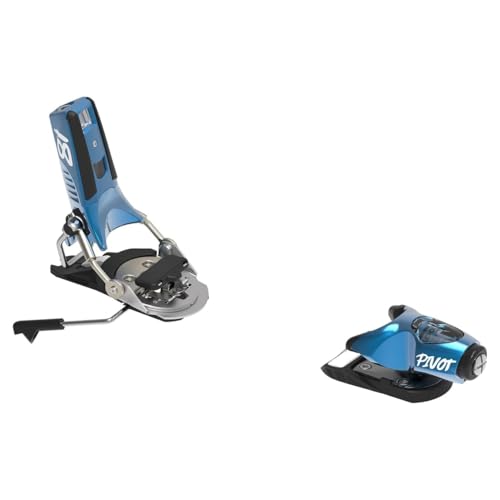
Ryan rode the Marker Jester 18 Pro at 215 lb, stomping 6 to 8 foot drops off Secret Bowl, and it never pre-released. It scores 91.5 out of 100 and ranks #2 in our best freeride ski bindings guide as our Best Freeride Ski Binding for Heavy Skiers.

What is the best freeride ski binding for heavy skiers?
The best freeride ski binding for heavy skiers is the Marker Jester 18 Pro, which scored 10 out of 10 for hold on hard landings and showed no side play under Ryan's 215 lb.

Marker Jester 18 Pro
- Weight: 1,110 g each
- DIN range: 8 to 18
- Brake width: 110 mm
- Boot soles: Alpine, GripWalk, touring
Bottom Line : A tied-top hold, with no pre-release under 215 lb on 6 to 8 foot drops, and a heavy magnesium build that quiets chop. It needs a hard stomp to close and starts at DIN 8.
Pros
- Hold 10.0: no pre-release in 6 to 8 foot drops under 215 lb
- Power transfer 9.5, with quick tip response on firm snow
- Chop damping 9.5 from heavy magnesium parts
- Anti Ice Rail scrapes slush off the boot
Cons
- Step-in 7.5: the heel needs a hard downward stomp
- The lowest DIN is 8, which rules out lighter skiers
- The anti-friction height screw needed a feeler-gauge re-check after day three
Who it's best for
Ryan led and James co-tested, at DIN 10.0 and 8.5 as set by a certified shop. Heavy, high-impact freeriders and former racers on high-consequence terrain, who like the direct feel of a conventional heel, suit it. It is not made for easy cruising.
Why we love it
Hold on Hard Landings (10.0). The Triple Pivot Elite 3 toe, with its heavy horizontal spring and magnesium parts, showed no side play and no toe-wing flutter under Ryan's 215 lb on 6 to 8 foot drops into firm-to-slush compressions. There were no pre-releases.
Power Transfer & Edge Feel (9.5). The broad magnesium toe gave quick lateral response across the 102 mm waist on injected morning boilerplate down the Glacier headwall, with no lag at the tip.
Chop Damping (9.5). The heavy magnesium toe and heel quieted tip chatter and high-frequency buzz through frozen afternoon ruts at 50+ mph.
What we didn't like
The heel is the weak spot. It needs a hard downward stomp to cam shut, and on soft side-hills that takes deliberate leg momentum. It scored 7.5 for step-in and ice clearing, though the Anti Ice Rail did scrape packed slush off the boot lugs.
The printed spring scale starts at 8.0, so lighter skiers cannot set it lower. The manual height screw also needed a feeler-gauge re-check after day three of the test. We found no structural damage.
Should you buy it?
Yes, if you charge big, steep, high-consequence terrain and prefer a traditional step-in heel to a turntable. Have a certified shop set your DIN, because the scale starts at 8.0 and only a shop can confirm the setting suits you. If you are lighter or want a more forgiving chassis, look at the alternatives below.
On the Snow
Secret Bowl gave us 6 to 8 foot drops into a mix of firm and slushy compressions, and that is where the Jester 18 Pro earned its top hold score. Ryan's 215 lb did the stomping, and the binding recorded zero pre-releases. Its toe showed no side play and no toe-wing flutter on any landing.
The Glacier headwall gave us injected morning boilerplate, the hardest test of edge hold. The Jester answered at once. The broad magnesium toe gave quick lateral response across the 102 mm waist, with no lag at the tip, which is why it scored 9.5 for power transfer and edge feel.
By afternoon the ruts were frozen and speeds went past 50 mph. The heavy magnesium toe and heel quieted the tip chatter and high-frequency buzz, earning 9.5 for chop damping. Across the spring freeze-thaw cycles, the binding stayed quiet and tight, and the day-three check found no loose parts.
Where It Asks Something of You
The Jester 18 Pro asks for effort at the heel. Getting in needs a deliberate, hard downward stomp, and on soft side-hills that means committing your leg momentum. Step-in is the one score that trails the top.
The lowest setting on the printed spring scale is 8.0. Lighter and average-weight skiers may not fit this binding at all, so ask a certified shop before you consider it.
The height adjustment is a manual screw. It needed a feeler-gauge re-check after day three, so plan a check after your first hard week on the hill.
Spec Sheet vs Our Test
Pro-level power transfer. The listing claims pro-level power transfer. Our testers found a broad magnesium toe that gave quick, direct lateral response across the 102 mm waist, with no lag at the tip on firm morning snow. We scored it 9.5 out of 10. For the reader, the claim holds on hard snow, and the feel is immediate rather than soft.
Freeride and park performance. The listing pitches the Jester 18 Pro for freeride and park performance. Our notes cover freeride terrain only: drops, chop and firm compressions. We make no park claim, so if the park is your main ground, read the park guide before you buy.
Should You Buy the Marker Jester 18 Pro?
Buy it if you are a heavy, high-impact freerider or a former racer who charges high-consequence terrain, and you prefer the direct entry of a traditional step-in heel. Its 10 out of 10 hold under 215 lb ties the top hold score in our freeride guide, and the magnesium build quiets chop better than most. It is our pick for that rider.
Do not buy it if you ski below the 8.0 floor on the printed scale, if you want a light, forgiving chassis, or if you mostly cruise under 20 mph. For big drops with a little less heel effort, the Look Pivot 2.0 15 GW is the better pick. For an easy click-in, go to the Tyrolia Attack 14 GW.
Compare With
- Atomic Strive 16 MN: our Best Overall Freeride Ski Binding.
- Look Pivot 2.0 15 GW: our Best Freeride Ski Binding for Drops.
- Atomic Strive 14 GW: our Best Freeride Ski Binding for Advanced Skiers.
- Look Pivot 2.0 18 GW: our Best Freeride Ski Binding for Durability.
- Marker Jester 16: our Best Freeride Ski Binding for Charging Chop.
- Tyrolia Attack 14 GW: our Best Freeride Ski Binding for Easy Step-In.
- Marker Duke PT 16: our Best Hybrid Freeride Ski Binding for High DIN.
- Marker Griffon 13: our Best Budget Freeride Ski Binding.
- Atomic Shift2 13 MN: our Best Lightweight Hybrid Freeride Ski Binding.
See the full field, and how we tested it, in our best freeride ski bindings guide.
Editor's Note, 24 November 2026: New review, written from the same freeride binding field notes as our best freeride ski bindings guide.
Our Testers
- Ryan Williams, Lead Tester. A heavy fleet equipment mechanic and commercial vehicle technician. At 6 ft 2 and 215 lb, he is our heavy, high-impact user.
- James Ward, Alpine Ski & Fat Bike Tester. On skis since he was 3 and a former regional alpine racer. Now a ski tuner and dryland fitness coach.