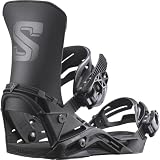
What is the best overall freeride snowboard binding?
The best overall freeride snowboard binding is the Flux XV, whose carbon-blended build scored a perfect 10.0 for edge response, chassis stiffness and highback support at 870 g, the lightest binding of the ten.

Flux XV
- Weight: 870 g
- Size tested: Large
- Baseplate: Carbon-blended
- Hardware: Titanium
Bottom Line : Edge response tied for the sharpest, the stiffest chassis in the guide, and the lightest build. With little foam underfoot, it buzzes on injected ice.
Pros
- Perfect 10.0 for edge response, chassis stiffness and highback support
- No flex under two-handed bench torsion
- Lightest binding of the ten at 870 g
- Titanium hardware and the carbon base held with no movement
Cons
- Chatter Damping 8.0: the carbon chassis carries raw ice texture into your boots
- Four fast laps on injected ice left arches and calves buzzing
- Forward lean needs a #3 Phillips screwdriver, so set it once at home
Who it's best for
Expert carvers, banked slalom racers and technical freeriders who want the stiffest binding in the test and have the legs for a harsh ride should start here, as Shaun did when he led the testing with Ryan alongside. A long, comfortable day on firm snow is the wrong job for it.
Why we love it
Edge Response (10.0). Shaun and Ryan called it the most reactive binding they'd tested. The carbon-blended baseplate and titanium hardware turned small foot twitches into instant, surgical edge bite, with no lag.
Chassis Stiffness (10.0). The chassis showed no flex under two-handed bench torsion, and on snow it acted like a rigid carbon beam under the boot sole.
Highback Support (10.0). Leaning your full body weight back into fast heelside trenches produced no backward deflection. The maker says the highback adds torsional support without restricting lateral movement. At 870 g it's light for a carbon build, and the baseplate let the testers center their US 10.5 boots in small steps.
What we didn't like
The cost is chatter damping (8.0). The footbed handled baseline chatter decently, but the unyielding carbon chassis passed raw ice texture into the boots, and after four fast laps on injected morning ice the lack of thick foam left arches and calves buzzing. The fix is in how you ride it: shorter blocks of laps on ice, or a kinder binding. The Union Atlas Pro damps 0.5 better, and the K2 Bond ties it at 8.5 with a softer ride.
Forward lean is the second cost. There's no lever or dial on the highback spine. Small stepped blocks at the two highback pivot points on the heel cup set the lean in 2.5° steps, so you loosen the screws on both sides with a #3 Phillips screwdriver, slide the highback to the notch you want and screw it down again. Set it once at home, because you won't want to do it on the hill. The straps and toe-strap ladders do adjust without tools.
Should you buy it?
Take the XV if you carve hard on firm snow, your legs can take the buzz, and you want the stiffest binding in the test. It sits in the premium price tier, and the 95 backs that up. Skip it for long, comfort-first days: the Union Atlas Pro, in the same tier, matches its 10.0 for edge response, scored 0.5 higher for damping and weighs 15 g more.
Read our full Flux XV review →

What is the best freeride snowboard binding for carving?
The best freeride snowboard binding for carving is the Union Atlas Pro, which gave Shaun and James a perfect 10.0 for edge response, with no perceptible lag between ankle input and edge engagement, at 885 g.

Union Atlas Pro
- Weight: 885 g
- Size tested: Large
- Material: Forged carbon
- Straps: Adjust without tools
Bottom Line : Zero-lag edge response, a forged carbon highback that held in deep heelside trenches, and the best damping of the carbon bindings. The stiff disc cover and carbon rim are unkind to cold fingers and calves.
Pros
- Perfect 10.0 for edge response
- Forged carbon highback held rigid in deep, low heelside trenches
- 8.5 for chatter damping, the best of the carbon bindings
- 885 g, second lightest of the ten, with mounting screws that stayed seated
Cons
- The disc cover is so stiff that prying it open with cold fingers risks a clip or a fingernail
- The stiff carbon rim digs into your outer calf unless the highback is rotated to match your forward stance angle
Who it's best for
Advanced freeriders and high-speed carvers on stiff directional boards, who want zero-lag edge bite, get the most from it; Shaun led the testing with James alongside. Anyone who changes stance on the hill with cold hands should look elsewhere.
Why we love it
Edge Response (10.0). Shaun and James found no perceptible lag between ankle input and edge engagement. The board snapped onto edge instantly, and it was one of only two bindings to score a perfect 10.0 here.
Chassis Stiffness (9.5). James's bench torsion checks found the baseplate fully rigid, with practically no lateral twist under the hardest push.
Highback Support (9.5). Shaun leaned back into deep, low heelside trenches and the forged carbon highback held his legs rigid, with no flex and no backward give.
Chatter Damping (8.5). The maker says a new bushing layer between baseplate and board cancels vibration. In Shaun's runs the dense full-footbed bushing deadened hardpack buzz better than the other carbon bindings and kept his soles settled on choppy morning ice.
What we didn't like
The flaws are physical, not mechanical. The disc cover is so stiff that Shaun and James struggled to pry it open with cold fingers, and the carbon rim will dig into your outer calf if you don't rotate the highback to match your forward stance angle. Both have a fix: set your stance in the parking lot, not at the top, and match the highback to your angles before the first lap. Mounting screws stayed seated through all the runs.
Should you buy it?
If the XV sounds too harsh, the Union Atlas Pro is the carbon binding to buy: it ties the XV's 10.0 for edge response, damps 0.5 better, sits in the same premium tier, and is one point behind overall. Skip it if you tweak stance on the hill with cold fingers, or if you ride flat angles that put that carbon rim against your calf. Want most of the same carving in a lower tier? The Flux CV scored 3 points lower, in the upper-mid price tier.
Read our full Union Atlas Pro review →

What is the best step-in freeride snowboard binding?
The best step-in freeride snowboard binding is the Bent Metal Lightning Supermatic, which Ryan stepped into hands-free and which still scored 9.5 for edge response, chassis stiffness and highback support.

Bent Metal Lightning Supermatic
- Weight: 1,230 g
- Size tested: Large
- Entry: Step-in, heel pedal
- Drive plate: Magnesium fiber
Bottom Line : Step-in convenience without giving up stiffness: nothing scored below 8.5. It's the heaviest binding here at 1,230 g, and wet slush can pack under the heel pad.
Pros
- 9.5 for edge response, chassis stiffness and highback support
- In Ryan's runs, hands-free step-in entry that kept freeride stiffness
- No mechanical slop in the roller cam, lever or ratchets
- 8.5 for chatter damping from a thick footbed and a heavy chassis
Cons
- Heaviest binding of the ten at 1,230 g
- Wet slush and chunky ice can pack under the heel pad, and the second locking click took a full-weight stomp
Who it's best for
Aggressive freeriders and high-speed carvers who hate strapping in, and won't trade away highback support or carve stiffness for it, are the audience; Ryan led the testing and Shaun co-tested. If you count grams or ride wet slush all day, look elsewhere.
Why we love it
Edge Response (9.5). Heelside carves locked in with no delay from the step-in mechanism, and Ryan put that down to the locked roller cam and the reinforced baseplate.
Chassis Stiffness (9.5). Bench checks and high-G carves turned up virtually no twist. The maker rates the magnesium fiber drive plate at 8 out of 10, medium stiff, and that undersells how the whole chassis rode.
Highback Support (9.5). The maker says the asymmetric highback is built for aggressive riding. Ryan found it braced the boot spine solidly, with no folding on aggressive heelside carves, and he counted four forward-lean positions on it.
Chatter Damping (8.5). The thick EVA footbed and the heavy chassis mass filtered out high-frequency morning ice chatter smoothly.
What we didn't like
Weight is the catch. At 1,230 g it's the heaviest binding of the ten, 220 g over the Flow NX2 Carbon and 360 g over the Flux XV. The second flaw is slush: wet slush and chunky ice can pack under the heel pad, and Ryan had to stomp down with his full body weight to get the second locking click. Kick the heel pad clear before you step in. The roller cam, locking lever and ratchets worked with no slop across all the laps.
Should you buy it?
The Lightning Supermatic is the one to buy if strapping in is the part of your day you hate and you refuse to lose stiffness for it. It's in the premium price tier, and you pay for the mechanism twice, in money and in grams. Skip it if you count grams: the Union Atlas Pro is 345 g lighter and one point higher. It scored the same 93 in our best step-in snowboard bindings guide, where it's the pick for carving.
Read our full Bent Metal Lightning Supermatic review →
What is the best freeride snowboard binding for Euro carves?
The best freeride snowboard binding for Euro carves is the Flux CV, whose raised heel cup stopped boot heels dragging in deep, chest-to-the-snow carves and scored 9.5 for edge response, chassis stiffness and highback support.

Flux CV
- Weight: 980 g
- Size tested: Large
- Heel cup: Raised
- Highback: Nylon
Bottom Line : Built for riders who lay the board over until the boot heel would drag. The tall heel cup wall can press on your lower Achilles if you ride flat stance angles.
Pros
- 9.5 for edge response, chassis stiffness and highback support
- The raised heel cup (maker: reduces boot drag) kept heels out of the snow in deep carves
- No flex when James twisted the baseplate by hand
- Hardware stayed solid through the fast runs
Cons
- The tall heel cup wall can press on the lower Achilles or calf collar with flat stance angles
- Forward lean needs a #3 Phillips screwdriver, so set it once at home
- Chatter Damping 8.0: firm morning hardpack still sent road feel through the footbed
Who it's best for
Dedicated trench-diggers, Euro-carve riders and technical freeriders who drag their heels in deep carves and want more control over the board's effective edge are who James had in mind when he led the testing, with Shaun co-testing. It's built for forward stance angles, so flat-angle riders should look elsewhere.
Why we love it
Edge Response (9.5). In the testers' runs the raised heel cup gave a strong heelside pull on the edge and started carves with instant edge bite. The maker says it improves edge engagement and reduces boot drag.
Chassis Stiffness (9.5). The reinforced baseplate showed no flex when James twisted it by hand, and it stayed planted through aggressive carving trenches.
Highback Support (9.5). The solid highback spine gave unwavering heelside hold and let the testers lean low into Euro carves without boot-heel drag.
Chatter Damping (8.0). James and Shaun found the footbed's stabilizer pads absorbed moderate ice buzz decently.
What we didn't like
The honest flaw is the heel cup wall. With flat stance angles it can create a pressure point against the lower Achilles or calf collar, and the testers' note is that this happens if you run flat angles without rotating the highback. So rotate the highback to match your angles before the first lap, or ride forward angles like the +27° front, +12° back carving stance we ran. If you ride flat and don't want to fiddle, pick another binding.
Forward lean is the second catch. There's no lever or dial on the highback spine, and the lean is set in 2.5° steps by small stepped blocks at the two highback pivot points on the heel cup. Loosen the screws on both sides with a #3 Phillips screwdriver, slide the highback to the notch you want, and screw it back down. Set it once at home. The straps and toe-strap ladders adjust without tools. Firm morning hardpack also sent some road feel through the footbed (8.0).
Should you buy it?
Pick the CV if you carve deep enough to drag your heels and you ride forward angles. It's in the upper-mid price tier, so the XV's four extra points cost you a tier more, and the CV matches the XV's 8.0 for damping. Skip it if you ride flat angles and won't rotate the highback to suit, because the heel cup wall will find your Achilles; the Union Atlas Pro, in the premium tier, scored 3 points higher and damps 0.5 better.
Read our full Flux CV review →
What is the best quick-entry freeride snowboard binding?
The best quick-entry freeride snowboard binding is the Flow NX2 Carbon, whose highback lifts the straps clear for quick entry and which Shaun and Ryan still scored 9.5 for edge response, chassis stiffness and highback support.

Flow NX2 Carbon
- Weight: 1,010 g
- Size tested: Large
- Baseplate: Aluminum alloy
- Maker flex: 10/10
Bottom Line : Stiff at 9.5 across edge response, chassis stiffness and highback support, though not the stiffest here, with a carbon-infused highback that Shaun found braced by a rear cable. It weighed 1,010 g, second heaviest here, and the cable adjuster needs a recheck.
Pros
- 9.5 for edge response, chassis stiffness and highback support
- Shaun credited a rear cable with carrying heelside energy from the highback into the aluminum base
- Quick entry, from the rear in the testers' runs
- Shaun and Ryan found the gel pads in the canted footbed absorbed heavy impacts cleanly
Cons
- Second heaviest binding of the ten at 1,010 g
- The forward-lean cable adjuster vibrated a quarter-turn loose on rough ice
- Chatter Damping 7.5: ice vibration conducts through the aluminum tray
Who it's best for
High-speed freeriders and heavy carvers who want quick entry and the uncompromising power of a carbon highback on an aluminum chassis are the audience, with Shaun leading the testing and Ryan co-testing. Skip it if you must re-enter on a steep slope or count grams.
Why we love it
Edge Response (9.5). The carbon-infused nylon highback, paired with the rear cable Shaun credited, started heelside turns with razor-sharp speed.
Chassis Stiffness (9.5). The maker lists a rockered, aluminum-alloy baseplate. In the testers' runs it gave rigid edge connection with no twisting or bowing under heavy carve loads.
Highback Support (9.5). The carbon-infused highback resisted rearward bending completely and held the testers upright on fast heelside carves, with no slop. Shaun credited the rear cable for carrying heelside energy from the top of the highback into the base.
Chatter Damping (7.5). Shaun and Ryan found the gel pads in the canted footbed absorbed heavy impacts cleanly, but high-frequency ice vibration still conducted through the aluminum tray.
What we didn't like
Start with the scale: we weighed the whole binding, not the parts, and it came to 1,010 g, second heaviest of the ten. The maker calls the baseplate lightweight and the highback super lightweight. Entry has two quirks: sliding your boot in from the rear on a steep slope pushed the board downhill away from the testers, so step in on flatter ground, and wet snow packed under the highback hinge stopped the lever latching until it was scraped clean. The forward-lean cable adjuster also vibrated a quarter-turn loose on rough morning ice and had to be reset, so check it at lunch.
Should you buy it?
At premium money, the NX2 faces a better-value neighbor: the Flux CV scored 1 point higher, weighs 30 g less and sits a tier lower. Buy the NX2 for one reason, quick entry on a stiff carbon-and-aluminum build, and put the cable adjuster on your lunchtime checklist. If weight is your complaint, the Union Atlas Pro is 125 g lighter and 4 points higher.
Read our full Flow NX2 Carbon review →
What is the best freeride snowboard binding for heavy riders?
The best freeride snowboard binding for heavy riders is the Ride A-8, whose aluminum chassis Ryan, at 215 lb, couldn't force to bow, even through the hard compressions at the bottom of the pitch.

Ride A-8
- Weight: 975 g
- Size tested: Large (US 10.5+)
- Chassis: Aluminum
- Ankle strap: Reversible
Bottom Line : An aluminum chassis that didn't bend under a 215 lb rider, and a reversible ankle strap that changes how the binding rides. It buzzes on refrozen ice, and its heel-cup bolts backed out by midday.
Pros
- 9.5 for chassis stiffness: no measurable deflection on the bench or under 215 lb
- The reversible ankle strap swaps a stiff carving feel for a softer padded one
- A micro-adjustable aluminum heel cup for exact centering
- Rubber pods under the canted footbed blunted heavy impacts
Cons
- Chatter Damping 7.5: the aluminum tray sent a sharp metallic buzz through the soles on refrozen ice
- The heel-cup bolts backed out half a turn by midday
- Short, stiff-sprung ratchet levers are hard to pop open with cold, numb thumbs
Who it's best for
Heavy carvers and aggressive riders who want the rigid precision of an aluminum chassis and prefer instant edge bite to soft damping are the audience, Ryan at 215 lb being the case in point; James co-tested. Want a quiet ride on morning ice? Wrong pick.
Why we love it
Chassis Stiffness (9.5). James's bench check found no measurable deflection in the aluminum tray, and on the hill Ryan couldn't force it to bow, even through the hard compressions at the bottom of the pitch.
Edge Response (9.0). The aluminum chassis sent power straight to the edge. Linked carves snapped from edge to edge with mechanical urgency and no chassis flex delay.
Highback Support (9.0). The nylon highback gave solid support along the spine, with just enough lateral room to drop the knees in during deep carves. The reversible ankle strap is the standout: flipped to its stiff composite side it gave an unyielding carve response, and flipped to the padded side it gave a more comfortable freeride flex.
What we didn't like
Our test and the maker's claim part ways on damping. The solid aluminum tray sent a sharp metallic buzz through the soles on refrozen morning ice (7.5), even though the maker says rubber pods under the canted footbeds absorb impacts and keep the ride smooth. The pods did blunt heavy hits. The second flaw is hardware: the bolts securing the aluminum heel cup backed out half a turn by midday, so put thread-locker on them before the first run and check them at lunch. The ratchet levers are short with stiff return springs, which is hard on cold thumbs.
Should you buy it?
Heavy riders who want metal under their feet should look here first. It sits in the upper-mid price tier, and the same-tier Flux CV scored 3 points higher, so the A-8 earns its place only if you want the aluminum chassis, the reversible strap, or both. If you'd rather have a quieter ride, the mid-price K2 Bond scored 1.0 higher for damping. Size Large is the maker's US 10.5 and up, and it fit the testers' 10.5 boots.
Read our full Ride A-8 review →
What is the best value freeride snowboard binding?
The best value freeride snowboard binding is the Flux XF, which is the cheapest binding in this guide and still scored 9.0 for edge response, chassis stiffness and highback support.

Flux XF
- Weight: 960 g
- Size tested: Large
- Highback: Torsional flex
- Footbed: Absorbs shock (maker)
Bottom Line : Rigid 9.0s across the board from the cheapest binding here. The thin footbed passes ice buzz into your feet, and the forward lean is set with a screwdriver.
Pros
- The cheapest binding in the guide, yet 9.0 for edge response, chassis stiffness and highback support
- No twist across the footbed on the bench; Ryan, at 215 lb, felt no bowing under hard heelside turns
- Ryan found the rigid base sat flush on the board with no foam gaskets
- Mounting screws stayed tight after 30 laps on rough, firm snow
Cons
- Chatter Damping 7.5: the thin, dense footbed passes high-frequency ice buzz into your feet
- Forward lean needs a #3 Phillips screwdriver, so set it once at home
Who it's best for
Aggressive all-mountain carvers and technical freeriders who want sharp edge transitions and direct board contact without spongy foam in the way, and who don't have a premium budget, are who Ryan and Shaun had in mind. Long days on morning ice are the wrong job for it.
Why we love it
Edge Response (9.0). Ryan found the rigid base sat flush against the board with no foam gaskets between them, so power went into toeside carves the instant he flexed his shins, and the base eliminated transition slop.
Chassis Stiffness (9.0). Bench-testing by hand turned up no twist across the footbed. At 215 lb, Ryan felt no baseplate bowing or lateral sag in hard heelside turns through injected hardpack.
Highback Support (9.0). The maker says the highback offers responsive support and torsional flex. Shaun found a firm center spine and wrap-around wings that cradled the boot collar and refused to fold backward at aggressive carving angles. The ankle strap wrapped like a custom mold and locked down the instep without pressure points on top of the foot.
What we didn't like
Forward lean costs you time. There's no lever or dial on the highback spine: small stepped blocks at the two highback pivot points on the heel cup set it in 2.5° steps. You loosen the screws on both sides with a #3 Phillips screwdriver, slide the highback to the notch you want and screw it down again, so set it once at home. The straps, toe-strap ladders and footbed ramps do adjust without tools.
The second flaw is the footbed (Chatter Damping 7.5). The maker says the footbed absorbs shock and improves board feel. It shed slush well, but Ryan and Shaun found its thin, dense pad passed severe high-frequency ice buzz straight into their feet. That's what the saving looks like. If you ride long days on ice, spend more on the Union Atlas Pro, or a little more on the K2 Bond. After 30 laps on rough, firm snow the mounting screws stayed tight, so the saving isn't in the hardware.
Should you buy it?
For the least money, the Flux XF is the binding to buy. It's the cheapest here, in the mid-price tier with the K2 Bond, and it scored 86: 1 point above the upper-mid Burton Cartel X and 2 below the upper-mid Ride A-8, which is the whole value case. The catch is long days on ice: if comfort comes first, the K2 Bond scored 1.0 higher for damping.
Read our full Flux XF review →
What is the best all-mountain freeride snowboard binding?
The best all-mountain freeride snowboard binding is the Bent Metal Transfer Pro, whose carbon drive plate snapped Ryan's board onto edge with a noticeable rebound pop and scored 9.0 for edge response.

Bent Metal Transfer Pro
- Weight: 945 g
- Size tested: Medium (US 8 to 11)
- Drive plate: Carbon fiber
- Heel cup: Adjustable aluminum
Bottom Line : Carbon rebound instead of a dead-stiff metal feel. Its chassis twists slightly on the bench, and the strap screws backed out.
Pros
- A carbon drive plate that gives rebound pop out of the carve
- 9.0 for highback support: held firm on deep turns
- 8.0 for chatter damping on fast morning ice
- The adjustable aluminum heel cup extended to its last notch for exact centering
Cons
- Chassis Stiffness 8.5: the chassis twisted slightly under heavy bench torque
- Forward lean has four fixed steps, with nothing between them
- The ankle strap mounting screws backed out half a turn on fast, chattery laps
Who it's best for
Riders who want carbon-driven carve response and rebound out of turns, without the dead, jarring rigidity of a solid metal chassis, should look here; Ryan led the testing with Shaun co-testing. It's the wrong pick if you want the stiffest chassis here or fine forward-lean adjustment.
Why we love it
Edge Response (9.0). The carbon drive plate works like a leaf spring under your boots. Loading weight through the middle of the carve snapped the board onto edge with a noticeable rebound pop, and it released that energy as pop when Ryan changed edges.
Highback Support (9.0). The highback gave solid heelside drive and held firm on deep turns without folding backward. The maker rates the flex stiff, 9 out of 10, and the test agreed.
Chatter Damping (8.0). The layered EVA footbed and the composite baseplate soaked up high-speed morning ice vibration reliably, though square-edged ruts still sent a sharp bump to the heel.
What we didn't like
Three flaws, and two have a fix. The bench check showed slight chassis twist under heavy torque (8.5), although the carbon drive plate stopped the boot sole sagging in hard carves, and that one has no fix. Ryan counted four fixed forward-lean steps, 10°, 14°, 18° and 22°, so you can't fine-tune between them: pick the step your boot likes. The ankle strap mounting screws also backed out half a turn on fast, chattery laps, so use thread-locker on them from the start.
Should you buy it?
Choose the Transfer Pro if you want carbon snap, not a metal tray, and your boot suits the Medium (the maker's US 8 to 11, and the testers' US 10.5 boots fit snugly). It sits in the upper-mid price tier and ties the cheaper Flux XF at 86: it damps 0.5 better and weighs 15 g less, while the XF scored 0.5 higher for chassis stiffness. Above US 11 you'd need the Large, which we didn't ride and which the maker cuts for US 11 to 14 boots.
Read our full Bent Metal Transfer Pro review →
What is the best freeride snowboard binding for hardpack?
The best freeride snowboard binding for hardpack is the Burton Cartel X Re:Flex, whose glass-filled composite baseplate bit into turns immediately on firm, salted glacier snow, with a Heel Hammock that stopped heel lift.

Burton Cartel X Re:Flex
- Weight: 895 g
- Size tested: Large
- Baseplate: Nylon composite, 45% glass
- Mounting: All systems
Bottom Line : Fast edge bite on firm snow, a rubber Heel Hammock that stops heel lift, and ratchets that worked flawlessly. The hammock grips so hard that getting your boot out takes a stomp.
Pros
- Immediate edge bite on firm, salted glacier snow
- The Heel Hammock stopped heel lift on aggressive heelside carves
- Smooth Glide ratchets worked flawlessly
- 895 g, fourth lightest of the ten
Cons
- Chatter Damping 7.5: high-frequency vibration still buzzes through the stiff composite heel frame
- The hammock grips boot rubber so tightly that pulling out takes a hard downward stomp and tug
- Disc mounting screws needed a torque check after hard chatter laps on non-Channel inserts
Who it's best for
Hard-charging all-mountain riders and carvers who want rapid edge response, no heel lift and ratchets that don't fail will like it; Shaun led the testing and James co-tested. If you're in and out of your bindings all day, the heel grip will wear on you.
Why we love it
Edge Response (9.0). The maker lists a nylon composite blended with 45% short glass. Shaun and James found it snapped into turns with immediate edge bite on firm, salted glacier snow.
Highback Support (9.0). The stiff highback spine, with the Heel Hammock, grabbed the boot heel securely. The rubber webbing locked the boot spine like a vise and stopped even a millimeter of heel lift on aggressive heelside carves.
Chassis Stiffness (8.5). The Re:Flex center hinge lets the board flex naturally underfoot while keeping the baseplate from twisting along its length.
What we didn't like
The hammock is both the best and the worst thing about it. It grips boot rubber so tightly that pulling your boot out at the end of a run took a hard downward stomp and tug, so expect that at every unstrap. The top rim of the highback can also dig into your lower calves if the forward lean is pushed too far, so set it no further forward than your boot needs. Chatter Damping is 7.5: the FullBED EVA with B3 Gel deadened chatter well, but high-frequency vibration still buzzed through the stiff heel frame. The Smooth Glide ratchets worked flawlessly, though the disc mounting screws wanted a torque check after hard chatter laps on non-Channel inserts.
Should you buy it?
The Cartel X suits riders who want a hard-charging edge and no heel lift. It sits in the same upper-mid price tier as the Ride A-8, matches its 9.0 for edge response and highback support, and weighs 80 g less. Skip it if you want the stiffest chassis (8.5) or hate the stomp-out, and if buzz bothers you the mid-price K2 Bond scored 1.0 higher for damping. For the least money the Flux XF scored 1 point higher.
Read our full Burton Cartel X Re:Flex review →
What is the best freeride snowboard binding for comfort?
The best freeride snowboard binding for comfort is the K2 Bond, whose footbed and basepad scored 8.5 for chatter damping, tied best in the guide with the Union Atlas Pro and the Lightning Supermatic.

K2 Bond
- Weight: 890 g
- Size tested: Large (US 9 to 11)
- Chassis: Fiberglass-infused nylon
- Maker flex: 6/10
Bottom Line : Tied for the best damping here, a comfortable ride on rough, refrozen snow, from a softer chassis and highback than the rest. That give let it twist under Ryan's 215 lb in high-G turns.
Pros
- 8.5 for chatter damping, tied best in the guide
- Predictable, smooth edge roll with dependable turn initiation
- Fit the US 10.5 boots cleanly, with room to spare
- No mechanical issues: screws and strap pins held torque
Cons
- Lowest in the guide for edge response, chassis stiffness and highback support, at 8.0 each
- On salted ice the binding twisted slightly in Ryan's high-G turns, delaying the edge
- The highback flexed rearward in radical, fast carves on injected ice
Who it's best for
Cruising carvers and all-mountain freeriders who value footbed damping, all-day comfort and smooth turn initiation over race-stiff board control are the people Ryan and James had in mind. Heavy or fast on salted ice? Wrong pick.
Why we love it
Chatter Damping (8.5). This is its strong suit. The maker lists a basepad with multi-density rubber pods, and Ryan found it absorbed high-frequency morning ice chatter and damped rough ruts exceptionally well, which kept his arches fresh on rough, refrozen snow.
Edge Response (8.0). The edge roll was predictable and smooth, and turn initiation dependable, though without the snap of the carbon models.
Chassis Stiffness (8.0). The maker lists a fiberglass-infused nylon chassis. It allowed a degree of natural twist, comfortable through carves, though it showed slight twist under heavy bench pressure.
What we didn't like
Everything about the stiffness is a notch softer, and you feel it. The maker rates the flex at 6 out of 10 and lists it for intermediate riders. When Ryan leaned into high-G turns on salted ice, the binding twisted slightly and there was a brief lag before the edge engaged, and the highback (8.0) flexed back a little in radical carves on injected ice. If you're lighter or ride at a more relaxed pace, you may never find the limit. If you're heavy or fast, step up to the Burton Cartel X or the Flux XF.
Should you buy it?
Buy the K2 Bond if comfort on rough, refrozen snow matters more than the last bit of edge snap. It sits in the mid price tier and ties for the best damping here. Skip it if you're heavy or ride fast on salted ice, where it twisted under Ryan's 215 lb: the upper-mid Burton Cartel X scored 1.0 higher for edge response and 4 points higher overall, but 1.0 lower for damping. The maker lists the Bond for intermediate riders, and no beginner rode it, so we can't call it beginner-friendly. Size Large is the maker's US 9 to 11, and it fit the testers' 10.5 boots with room to spare.
Read our full K2 Bond review →
How did we test the freeride snowboard bindings?
We tested the freeride snowboard bindings by riding all ten, two testers on each, on the steep pitch below the T-bar on Horstman Glacier at Whistler Blackcomb and the salted race training lanes below it in June and July 2026, then scoring edge response, chassis stiffness, highback support and chatter damping.
A freeride or carving binding has three jobs: carry your ankle and shin movement to the edge without delay, stay rigid when you lay the board over, and hold your heelside weight without folding. Three testers rode them, two on each binding: a freeride snowboarder and former banked slalom racer, a 215 lb heavy-impact rider, and an alpine ski tuner and carving coach. The lead and co-tester for each binding are named in its section above. In plain English: the chassis is the baseplate under your boot, the highback is the panel behind your calf, and a Euro carve is a turn laid over so far your chest nearly touches the snow.
We took fast runs on the steepest lane of each. The snow was bulletproof, salted and injected morning ice, then rutted high-speed hardpack, then heavy, dense slush by midday. Every binding was size Large except the Bent Metal Transfer Pro, which we rode in Medium on purpose to check the fit of US 10.5 boots against the maker's US 8 to 11 range. All ten went on a 2x4 mount, on three boards: a Capita The Black Snowboard of Death 159 cm (Shaun), a Lib Tech Terrain Wrecker 157 cm (Ryan) and a Salomon Assassin 158 cm (James). Boots were the Ride Fuse and the Burton Ion, both US men's 10.5. We ran two stances: a directional carving stance at 21.75 in (55 cm) with +27° front and +12° back, and a freeride baseline at 22.5 in (57 cm) with +21° front and -6° back.
Each tester scored every binding they rode out of 10 on four qualities:
- Edge Response: linked hard carves on the same firm run, noting how fast the board went from one edge to the other when pushed, and any delay or slop
- Chassis Stiffness: hard, deep carves, plus a bench check where the tester held the binding and tried to twist the baseplate by hand
- Highback Support: hard heelside turns, leaning back into the highback to see whether it held the tester or folded
- Chatter Damping: the same fast run on icy morning snow, noting how much buzz came up through the feet
The overall score out of 100 is the plain average of the four scores, times 10, so no single quality outweighs another. Weight is measured, not scored: we weighed one binding with its disc and hardware on the same bench scale, and it has a table and no rating chart. Price isn't scored either. Specs such as flex ratings and mounting patterns come from the maker; every weight, score and result is ours. You can meet the testers at the bottom of this page.
Which freeride snowboard bindings suit your riding?
The right freeride snowboard binding depends on how hard you carve and how long you ride: pick by the row that matches you.
| If you are… | Buy |
|---|---|
| Carving hard on firm snow and wanting the stiffest, quickest binding, whatever the buzz | Flux XV |
| Wanting zero-lag edge response with better damping than the XV | Union Atlas Pro |
| Hating strapping in and refusing to give up stiffness | Bent Metal Lightning Supermatic |
| Laying the board over until your heels drag, on forward stance angles | Flux CV |
| Wanting quick entry on a stiff carbon-and-aluminum build | Flow NX2 Carbon |
| Heavy or hard on gear, and wanting a metal chassis | Ride A-8 |
| Wanting the stiffness for the least money | Flux XF |
| Wanting carbon snap rather than a metal tray, in US 8 to 11 boots | Bent Metal Transfer Pro |
| Riding hard on firm snow and hating heel lift | Burton Cartel X Re:Flex |
| Wanting the softest ride on rough ice and not racing | K2 Bond |
What did our freeride snowboard binding tests show?
Our freeride snowboard binding tests showed that stiffness decided the ranking: the top five scored 9.5 or higher on edge response, chassis stiffness and highback support, while chatter damping barely separated the ten, with 1.0 point from best to worst.
Which freeride snowboard bindings have the fastest edge response?
The freeride snowboard bindings with the fastest edge response were the Flux XV and the Union Atlas Pro, which both scored a perfect 10.0.
Where we tested it. On the same firm, injected-ice run, each lead tester linked hard carves and noted how fast the board went from one edge to the other when pushed, and whether any delay or slop crept in.
What separated them. Only two bindings earned 10.0. Three followed at 9.5: the Bent Metal Lightning Supermatic, Flux CV and Flow NX2 Carbon. Four sat at 9.0 (Ride A-8, Flux XF, Bent Metal Transfer Pro and Burton Cartel X Re:Flex), and the K2 Bond stood alone at 8.0, a full point under the pack.
Each of the stiff group got there its own way. The A-8 did it with an aluminum chassis, the Transfer Pro with a carbon drive plate that gave rebound pop, the Cartel X with a glass-filled composite base, and the NX2 with a rear cable running from the highback to the base. The K2 Bond is the soft end: Ryan felt a brief lag before the edge engaged when he leaned into high-G turns on salted ice.
What it felt like. On the 10.0 bindings the testers noticed no gap between ankle input and edge. On the K2 Bond, Ryan felt the board wait a beat.
| Binding | What we found |
|---|---|
| Flux XV | Carbon-blended base and titanium hardware; surgical edge bite, no lag |
| Union Atlas Pro | No perceptible lag between ankle input and edge |
| Bent Metal Lightning Supermatic | Heelside carves locked in with no delay from the step-in mechanism |
| Flux CV | Taller heel cup gave a strong heelside pull on the edge; instant bite |
| Flow NX2 Carbon | Carbon-infused highback and rear cable started heelside turns fast |
| Ride A-8 | Aluminum chassis snapped edge to edge with no flex delay |
| Flux XF | Rigid base flush on the board; power reached toeside carves as shins flexed |
| Bent Metal Transfer Pro | Carbon drive plate snapped the board onto edge with rebound pop |
| Burton Cartel X Re:Flex | Glass-filled composite base bit immediately on firm, salted snow |
| K2 Bond | Smooth, predictable edge roll; none of the carbon bindings' snap |
Which freeride snowboard bindings are the stiffest?
The stiffest freeride snowboard binding chassis in our test belonged to the Flux XV at 10.0, with the Union Atlas Pro, Lightning Supermatic, Flux CV, Flow NX2 Carbon and Ride A-8 next at 9.5.
Where we tested it. Two testers put each binding through hard, deep carves, then ran a bench check: hold the binding and try to twist the baseplate by hand.
What separated them. Six bindings scored 9.5 or higher, and two of the six were aluminum trays, the Ride A-8 and the Flow NX2, so you don't need carbon to get a stiff chassis. Ryan, at 215 lb, couldn't make the A-8 bow, and the XF, a clear step down in price from the rest, still scored 9.0 with no twist on the bench.
At the bottom, the Bent Metal Transfer Pro and Burton Cartel X Re:Flex scored 8.5 and the K2 Bond 8.0. The Transfer Pro's polymer chassis twisted a little on the bench, although its carbon drive plate kept the boot sole from sagging. The Cartel X's center hinge is built to let the board flex underfoot while it resists twist, and the K2 Bond twisted slightly under heavy bench pressure.
What it felt like. The XV acted like a rigid carbon beam under the boot sole. The K2 Bond gave a little, and Ryan felt it.
| Binding | What we found |
|---|---|
| Flux XV | No flex under two-handed bench torsion |
| Union Atlas Pro | Bench torsion checks showed practically no twist |
| Bent Metal Lightning Supermatic | Virtually no twist on the bench or in high-G carves |
| Flux CV | No flex under hand-twist testing; planted in carving trenches |
| Flow NX2 Carbon | Rockered aluminum baseplate; no twisting or bowing under heavy loads |
| Ride A-8 | No measurable deflection on the bench; Ryan couldn't bow it at 215 lb |
| Flux XF | No twist across the footbed on the bench; no sag at 215 lb |
| Bent Metal Transfer Pro | Chassis twisted slightly on the bench; carbon plate kept the sole from sagging |
| Burton Cartel X Re:Flex | Center hinge let the board flex while resisting twist |
| K2 Bond | Slight twist under heavy bench pressure |
Which freeride snowboard bindings have the best highback support?
The freeride snowboard binding with the best highback support was the Flux XV at 10.0, followed by the Union Atlas Pro, Lightning Supermatic, Flux CV and Flow NX2 Carbon at 9.5.
Where we tested it. Hard heelside turns, leaning back into the highback to see whether it held the tester upright or folded and let them sit back.
What separated them. Seven of the ten scored the same for highback support as for chassis stiffness, so a stiff base and a stiff highback came as a pair. The exceptions were the Ride A-8 (a 9.5 chassis with a 9.0 highback) and the Transfer Pro and Cartel X (8.5 chassis, 9.0 highback). Four bindings scored 9.0 for highback support: the A-8, Flux XF, Transfer Pro and Cartel X. The K2 Bond was last at 8.0, with slight rearward flex in radical, fast carves on injected ice.
The 9.5 group held for different reasons. The Union Atlas Pro has a forged carbon highback, the Flow NX2 a carbon-infused one with a cable behind it, and the Lightning Supermatic an asymmetric highback with four forward-lean positions that braced the boot spine. The Flux CV has a solid spine that lets you lean low without heel drag, and the Cartel X's Heel Hammock stopped heel lift.
What it felt like. Leaning your full weight back into a fast heelside trench on the XV met no give at all. On the K2 Bond, the highback flexed a little in the radical carves.
| Binding | What we found |
|---|---|
| Flux XV | Full body weight into fast heelside trenches, no backward deflection |
| Union Atlas Pro | Forged carbon highback held rigid in low heelside trenches |
| Bent Metal Lightning Supermatic | Braced the boot spine; no folding on aggressive heelside carves |
| Flux CV | Solid spine, unwavering hold; let us lean low in Euro carves |
| Flow NX2 Carbon | Carbon-infused highback resisted rearward bending completely |
| Ride A-8 | Solid spine support with room to drop the knees in |
| Flux XF | Firm center spine and wings; refused to fold at carving angles |
| Bent Metal Transfer Pro | Firm on deep turns; no folding backward |
| Burton Cartel X Re:Flex | Stiff spine and Heel Hammock stopped heel lift |
| K2 Bond | Adequate on heelside carves; flexed rearward in radical, fast carves on injected ice |
Which freeride snowboard bindings damp chatter best?
The freeride snowboard bindings that damped chatter best were the Union Atlas Pro, Bent Metal Lightning Supermatic and K2 Bond, which each scored 8.5 on injected morning ice.
Where we tested it. The same fast run on icy morning snow, noting how much buzz came up through the feet. That was the quality that hurt most in the stiffest bindings.
What separated them. Chatter was the narrowest metric: 1.0 point from 8.5 to 7.5, against 2.0 for each of the other three. Three bindings scored 8.5, three scored 8.0 (Flux XV, Flux CV and Transfer Pro), and four scored 7.5: the Ride A-8, Flux XF, Cartel X and Flow NX2.
Weight didn't buy quiet. The Lightning Supermatic, at 1,230 g, and the Union Atlas Pro, at 885 g, tied for the best damping, one on the strength of a thick footbed and heavy chassis mass, the other with a bushing layer between the baseplate and the board. Both aluminum trays, the A-8 and the NX2, scored 7.5, and the testers blamed the metal for the buzz. The XF's thin, dense footbed passed ice buzz into the feet, and it scored 7.5 too.
What it felt like. After four fast laps on injected morning ice, the XV left the testers' arches and calves buzzing. The K2 Bond kept Ryan's arches fresh on the same refrozen snow.
| Binding | What we found |
|---|---|
| Union Atlas Pro | Bushing layer settled the soles on choppy morning ice |
| Bent Metal Lightning Supermatic | Thick EVA footbed and heavy chassis smoothed ice chatter |
| K2 Bond | Basepad pods took out high-frequency ice chatter and rough ruts |
| Flux XV | Decent on baseline chatter; the carbon chassis passed raw ice texture on |
| Flux CV | Stabilizer pads absorbed moderate buzz; firm hardpack still sent road feel |
| Bent Metal Transfer Pro | Layered EVA footbed soaked up vibration; square-edged ruts still hit the heel |
| Flow NX2 Carbon | Gel pads absorbed heavy impacts; aluminum tray conducted ice vibration |
| Ride A-8 | Rubber pods blunted heavy hits; aluminum tray buzzed on refrozen ice |
| Flux XF | Thin, dense footbed shed slush but passed ice buzz into the feet |
| Burton Cartel X Re:Flex | FullBED EVA with B3 Gel deadened chatter; stiff heel frame still buzzed |
How much do freeride snowboard bindings weigh?
A single freeride snowboard binding in our test weighed between 870 g and 1,230 g with its disc and hardware; the lightest was the Flux XV and the heaviest the Bent Metal Lightning Supermatic.
Where we tested it. We weighed one binding of each, with its disc and hardware, on the same bench scale. Weight is measured and isn't part of the overall score, so it has a table and no rating chart.
What separated them. The four lightest bindings, the Flux XV (870 g), Union Atlas Pro (885 g), K2 Bond (890 g) and Burton Cartel X Re:Flex (895 g), sit within 25 g of each other. The Lightning Supermatic is 360 g heavier than the XV and still scored 93, because weight isn't part of the score and nothing it was scored on fell below 8.5. The Flow NX2 Carbon is the second heaviest at 1,010 g, even though the maker calls its baseplate and highback lightweight.
Weight only loosely tracked score. The two lightest bindings finished first and second, but the K2 Bond is third lightest and finished last, and the Cartel X, fourth lightest, finished ninth.
| Binding | Weight |
|---|---|
| Flux XV | 870 g |
| Union Atlas Pro | 885 g |
| K2 Bond | 890 g |
| Burton Cartel X Re:Flex | 895 g |
| Bent Metal Transfer Pro | 945 g |
| Flux XF | 960 g |
| Ride A-8 | 975 g |
| Flux CV | 980 g |
| Flow NX2 Carbon | 1,010 g |
| Bent Metal Lightning Supermatic | 1,230 g |
What do people ask about freeride snowboard bindings?
Short answers on freeride and carving snowboard bindings, taken from our own scores and test results.
What is the best snowboard binding angle for carving?
There's no single best angle, but our carving stance was +27° front and +12° back at 21.75 in (55 cm), with both angles positive to give more drive on heelside and toeside trenches. Our freeride baseline was +21° front and -6° back at 22.5 in (57 cm). If you want to try a carving stance, move your angles forward a few degrees at a time from the stance you already ride.
How stiff should freeride snowboard bindings be?
Stiff enough that nothing gives under your hardest turn. Seven of our ten scored 9.0 or more for chassis stiffness, and the one that scored 8.0, the K2 Bond, which the maker rates 6 out of 10 for flex, twisted slightly under Ryan's 215 lb on salted ice. If you're lighter or ride for comfort, a softer binding like the Bond is a fair choice. If you chase the edge on ice, buy stiff.
Are carbon snowboard bindings worth it for freeriding?
Carbon was worth it at the top of our test: the two highest scorers, the Flux XV (95) and Union Atlas Pro (94), are both carbon builds in the premium price tier. It wasn't free, though. The XV scored 8.0 for chatter damping and left the testers' feet buzzing, while the Atlas Pro's bushing layer got it to 8.5. And carbon alone doesn't decide it: the carbon-plated Transfer Pro scored 86, level with the cheapest binding here, the Flux XF.
Do freeride snowboard bindings need thread-locker?
Check yours, because three of our ten had something work loose and a fourth needed a torque check. The Ride A-8's heel-cup bolts and the Bent Metal Transfer Pro's ankle-strap screws each backed out half a turn (Ryan says both need thread-locker from the start), and the Flow NX2's forward-lean cable adjuster vibrated a quarter-turn loose. The Burton Cartel X's disc screws needed a torque check after hard chatter laps on non-Channel inserts. The XV, Atlas Pro, CV, XF and K2 Bond held their torque, and the Lightning Supermatic's roller cam, lever and ratchets ran with no slop.
What is the lightest freeride snowboard binding?
The lightest freeride snowboard binding we weighed was the Flux XV at 870 g for a single binding with its disc and hardware. The Union Atlas Pro (885 g) and K2 Bond (890 g) were next, and the heaviest was the Bent Metal Lightning Supermatic at 1,230 g.
What are the 10 best freeride snowboard bindings?
The 10 best freeride snowboard bindings are the ten ranked above, led by the Flux XV at 95 and the Union Atlas Pro at 94.
For most hard carvers, buy the Flux XV if your legs can take the buzz, or the Union Atlas Pro for the same edge response and kinder damping. Want to step in hands-free? The Bent Metal Lightning Supermatic. On a tighter budget, the Flux XF; if comfort comes first, the K2 Bond. Prices move constantly on these, so use the Check Latest Prices buttons above for the current number, and pair a stiff binding with a board built for it from our best snowboards guide.
Editor's Note, 9 November 2026: New guide. In June and July 2026 Shaun, Ryan and James rode ten freeride and carving snowboard bindings, two testers on each, on Horstman Glacier at Whistler Blackcomb, weighed each binding, and scored each on edge response, chassis stiffness, highback support and chatter damping.
Our Testers
This guide was written from the field notes of Ryan Williams, James Ward and Shaun Taylor.
- Sean Williams, Editor-in-Chief. A former commercial outdoor copywriter and gear journalist who runs Top-Notch Outdoor as an independent publisher, with no brand-funded trips and no supplied ad copy.
- Ryan Williams, Lead Tester. A heavy fleet equipment mechanic and commercial vehicle technician. At 6 ft 2 and 215 lb he's our heavy, high-impact user, and here he led testing of the Ride A-8, Bent Metal Lightning Supermatic, Bent Metal Transfer Pro, Flux XF and K2 Bond, and co-tested the Flux XV and Flow NX2 Carbon.
- James Ward, Alpine Ski & Fat Bike Tester. On skis since he was 3 and a former regional alpine racer, now a ski tuner and dryland fitness coach. James led testing of the Flux CV, co-tested the Union Atlas Pro, Ride A-8, Burton Cartel X Re:Flex and K2 Bond, and did bench stiffness checks.
- Shaun Taylor, Freeride Snowboard Tester. Raced banked slalom and halfpipe in the late 1980s and 1990s before turning to backcountry freeriding, and a finish carpenter by trade. Shaun led testing of the Flux XV, Union Atlas Pro, Flow NX2 Carbon and Burton Cartel X Re:Flex, and co-tested the Flux XF, Bent Metal Lightning Supermatic, Bent Metal Transfer Pro and Flux CV.