What is the best overall park snowboard?
The best overall park snowboard is the CAPiTA Ultrafear, which scored 9.0 for catch-free sliding, kept 50-50s and front boardslides flat and predictable, and landed on rails with a dull thud instead of a metallic clang.

CAPiTA Ultrafear
- Length tested: 157 cm
- Weight: 2,810 g
- Profile: Traditional camber
- Shape: True twin
Bottom Line : The best durability score of the ten, no edge hang-ups on box slides, and spring that doesn't fight you. The base ran slow in warm slush and needed waxing.
Pros
- Durability 9.5, the best of the ten, after 50 rail and box laps
- Catch-free 9.0: 50-50s and front boardslides slid flat
- Rail landings sounded like a dull thud, not a metallic clang
- Light in the air: 180s off side hits took almost no effort
Cons
- The base ran slow in warm, suction-heavy afternoon slush
- Needed frequent waxing
- Pop 8.5 sits half a point under the Salomon Huck Knife
Who it's best for
Street and rail riders who crack edges on down-bars and want a damp, tough jib board with no hang-ups should start here. Amy led the testing with James co-testing.
Why we love it
Durability (9.5). Fifty rail and box laps left no edge cracks and no sidewall damage. The testers credit a cork-lined perimeter and a reinforced body for the dull thud on rails. The maker doesn't mention either, so that's their read of the build, not a spec.
Catch-Free (9.0). The maker lists traditional camber. Our testers found camber between the bindings and flat-to-rocker zones outside the inserts, and that raised the contact points enough that 50-50s and front boardslides stayed flat and predictable without the edges wanting to trip.
Pop (8.5) and Spins (8.5). The camber under the feet gave dependable snap, and the flatter zones outside it made ollies onto the 24-foot flat-down box take little leg strain. The board felt weightless in flat-ground rotations, and spinning 180s off side hits took almost no effort.
What we didn't like
Wet slush is where the base gave up. In warm, suction-heavy afternoon slush it ran noticeably slow and needed frequent waxing. Wax it often once the snow turns wet, and treat that as part of the cost of owning it. Pop (8.5) sits half a point under the Salomon Huck Knife (9.0), so a rider who lives on the 25-foot kicker may want the Huck.
Should you buy it?
Yes, if rails and boxes are your session. It scored 89, three points over the Bataleon Evil Twin and Ride Twinpig at 86 each, and it was the only board to reach 9.5 for durability. It sits in the mid-price tier. For a kicker-only day the Huck Knife popped higher.
Read our full CAPiTA Ultrafear review →

What is the best park snowboard for rails?
The best park snowboard for rails is the Bataleon Evil Twin, which scored 9.5 for catch-free sliding, tied for the best of the ten, and let the testers land 45 degrees off-axis on the wide flat box and slide out clean.

Bataleon Evil Twin
- Length tested: 157 cm
- Weight: 2,840 g
- Profile: Medium camber
- Shape: True twin
Bottom Line : Joint-best catch-free score plus lively pop, from a board that's very hard to hang up on boxes and rails. It feels vague on hard, salted takeoffs, and the base took a gouge.
Pros
- Catch-free 9.5, tied for the best of the ten
- Pop 8.5 from full-length center camber and carbon stringers
- Spins 8.5: spinning off knuckles took little effort
- Edges stayed dent-free after 40 rail and box laps
Cons
- Vague, washy roll on rock-hard salted takeoffs
- A visible base gouge from a rough weld on the round down-rail
- Durability 8.0, its lowest score
Who it's best for
Park riders who want to learn technical rail tricks and spins without fearing an edge catch, and who ride softer snow more than ice, will get the most from it. Amy led, with Ryan co-testing.
Why we love it
Catch-Free (9.5). The maker lists a 3BT 3D base. Our testers say it keeps the contact points off the snow: they could land 45 degrees off-axis on the wide flat box and the board simply slid out without catching.
Pop (8.5). The maker lists medium camber and carbon stringers that it says add pop. The full-length center camber and central stringers gave lively, energetic release off jump lips and flat-ground ollies.
Spins (8.5). The spoon-shaped, raised tips made spinning off knuckles feel effortless, and rotations started without the edge corners catching in soft slush.
What we didn't like
On rock-hard, salted jump approaches the raised edges gave a vague, washy roll before the sidecut bit, so setup carves felt loose. Start those carves earlier and give the edge time to grab. The base is the other cost: the maker lists a sintered Hyper Glide S base, and it still took a visible gouge from a rough weld on the round down-rail, though the edges stayed dent-free (Durability 8.0). Run a thumb along a rail weld before you slide it.
Should you buy it?
Pick it when rails and new tricks are the plan. Scoring 86 in the mid-price tier, it matches the Twinpig and sits three points under the Ultrafear, which beat it on durability by 1.5 points (9.5 against 8.0). Icy, salted takeoffs are the reason to look at a different board.
Read our full Bataleon Evil Twin review →

What is the best wide park snowboard?
The best wide park snowboard is the Ride Twinpig, which scored 9.5 for spins, the best of the ten, on a wide platform that gave Amy and Ryan a steady landing after 50 rail and box laps.

Ride Twinpig
- Length tested: 154 cm
- Weight: 2,860 g
- Shape: Twin, asymmetric
- Sidecut: Asymmetric quadratic
Bottom Line : The best spin score of the ten, a wide stable platform and a tough build. The wide waist feels slow edge to edge in smaller boots.
Pros
- Spins 9.5, the best of the ten
- Wide platform locked 50-50s on wide boxes
- Durability 8.5 after 50 laps, with no topsheet peeling or chipping
- Heelside carves dig in between features
Cons
- Slow edge to edge in boots under US men's 9.5
- Pop 8.0, a full point under the Huck Knife
- Needs aggressive lower-leg effort to switch between rail setup turns
Who it's best for
Riders in US 10 boots or bigger who want to size down for skate-like spin agility, without toe drag, are who it fits. Amy led and Ryan, who rides US 10.5 boots, co-tested.
Why we love it
Spins (9.5). The testers describe a chopped nose and tail on a board they sized down 4 cm from a standard park length, and say that removed the drag from rotations. It snapped around like a wide skateboard in the air.
Durability (8.5). It took 50 rail and box laps. The testers credit urethane rolled over the top edges for stopping the topsheet peeling and chipping that plagues standard park boards. The maker doesn't mention it, so it's their read of the build.
Catch-Free (8.5) and Pop (8.0). The maker lists a wider waist and a surfy, stable feel. The wide platform gave a stable surface for locking 50-50s on wide boxes, and raised tips kept the contact points off the metal. A mellow camber between the feet gave predictable snap, and the heelside sidecut (the maker lists an asymmetrical one) made heelside carves between features dig deep.
What we didn't like
Boot size decides this one. In boots smaller than US men's 9.5 it feels sluggish edge to edge and needs hard lower-leg effort to switch quickly between rail setup turns, so check your boot size before you buy. Pop (8.0) comes from a stable launch pad, not a spring, and sits a full point under the Huck Knife (9.0). The maker also promises a stable feel in all conditions and grip on hardpack and ice. We rode one summer glacier park, with no pure ice session, so we can't confirm either claim.
Should you buy it?
Worth it if your boots are US 10 or bigger and you want a board that spins like a skate deck. At 86 in the mid-price tier, it's level with the Evil Twin. Smaller boots? Take the Evil Twin, which scored 1.0 higher for catch-free (9.5 against 8.5).
Read our full Ride Twinpig review →
What is the best budget park snowboard?
The best budget park snowboard is the Burton Process Camber, which scored 84 in the budget price tier, with 9.0 for spins and the second-lightest weight of the ten at 2,750 g.

Burton Process Camber
- Length tested: 157 cm
- Weight: 2,750 g
- Profile: PurePop camber
- Shape: Twin
Bottom Line : Light and quick to spin, with snappy pop and an 84 from the budget tier. The edges lack bite on hard morning snow.
Pros
- Spins 9.0: switch 360s off the 25-foot kicker felt natural
- Pop 8.5: snappy release onto the square bar
- Second-lightest board here at 2,750 g
- 84 overall from the budget price tier
Cons
- Edges lack bite on bulletproof morning hardpack
- Sloppy landings on street down-rails still need quick balance corrections
- Mounting hardware needs a check after hard flat landings
- Matte topsheet chipped around the perimeter
Who it's best for
Intermediate to advanced freestyle riders who put light swing weight first, spin off medium jumps and want a board for more than the park (we rode it only in the park) will find it a fit. Amy led and James co-tested.
Why we love it
Spins (9.0). The maker lists a Super Fly II 700G Core built from stronger, lighter woods. In the air that came down to practically zero swing weight, and switch 360s off the 25-foot kicker felt effortless.
Pop (8.5). The maker's PurePop camber has subtle flat zones outside the feet to add pop. The testers felt them as launch pads that gave a snappy, energetic release when popping onto the square bar.
Catch-Free (8.0). Raised tips and tails made the board less hooky than a traditional full camber, though it earned only 8.0 because a sloppy landing on a street down-rail still demanded quick balance corrections.
What we didn't like
Hard morning snow exposed the edges. They lacked the aggressive bite for bulletproof morning hardpack on the glacier, so ride it after the first run softens the snow, or take the GNU Money if icy approaches are your day. The maker's Channel mounting system needs a loosening check after hard flat landings, and the matte topsheet picked up typical cosmetic chips from ski tips in the T-bar line (Durability 8.0). The sintered base itself held up cleanly over 45 laps.
Should you buy it?
This is the value pick. It sits in the budget price tier and scored 84, which is 4 points above the next three budget-tier boards (all 80) and only 5 under the mid-price Ultrafear. Spend more only if you want the extra catch-free margin on rails, where the Ultrafear scored 1.0 higher (9.0 against 8.0).
Read our full Burton Process Camber review →
What is the best park snowboard for jumps?
The best park snowboard for jumps is the Salomon Huck Knife, which scored 9.0 for pop, the best of the ten, and cleared the knuckle of the 25-foot kicker with explosive vertical spring.

Salomon Huck Knife
- Length tested: 156 Wide
- Weight: 2,945 g
- Profile: Lockout camber
- Shape: True twin
Bottom Line : The best pop of the ten, with a stable landing on big kickers. It hooks on round rails and flat bars until you detune the edges.
Pros
- Pop 9.0, the best of the ten, off the 25-foot kicker
- Stable on big jump lines and heavy landings
- Base shrugged off square-bar hits with no core gouges after 45 laps
- Blunt tips cut swing in the air
Cons
- Catch-free 7.5, tied for the lowest of the ten
- Heaviest board here at 2,945 g
- Wide waist wants a little more wind-up on flat 360s
- Topsheet flaked near the tip
Who it's best for
Advanced jump riders and park chargers in US 10.5 boots and up, who want a poppy camber deck that won't fold on a heavy landing, are the audience. Amy led and Shaun co-tested for jump stability and knuckle landings.
Why we love it
Pop (9.0). The maker lists lockout camber and promises explosive pop. On the 25-foot kicker it delivered: the camber loaded up between the feet and snapped off the lip with enough vertical spring to clear the knuckle with authority.
Durability (8.5). Forty-five laps left the base unharmed by direct hits on the square bar, with no core gouges. The only damage was cosmetic flaking on the glossy topsheet near the tip, from boards crossing in the T-bar line.
Spins (8.0). Blunt tips cut the swing in the air, though the wide waist of the 156 Wide takes a touch more wind-up on a flat-ground 360.
What we didn't like
Catch-Free scored 7.5 because the aggressive camber runs out close to the contact points, which makes the board hooky. Out of the wrapper it bites on round down-rails and flat bars, and the fix is a file: detune the edges between your feet before the first rail day. The maker also says you can enjoy the entire mountain beyond the park. We rode it only in the park, so that claim is untested here, and its rail behavior says to treat it as a jump board first.
Should you buy it?
Buy it for big kickers if you're willing to pick up a file. In the mid-price tier it scored 83, six points under the Ultrafear. Rails are the better reason to move on: the Evil Twin scored 2.0 higher for catch-free (9.5 against 7.5).
Read our full Salomon Huck Knife review →
What is the best park snowboard for butters?
The best park snowboard for butters is the Lib Tech Skate Banana, which scored 9.5 for catch-free sliding, tied for the best of the ten, and let you press the nose or tail into a butter with almost no effort.

Lib Tech Skate Banana
- Length tested: 156 cm
- Weight: 2,895 g
- Profile: Rocker/camber hybrid
- Shape: Twin
Bottom Line : Loose and catch-free, and very easy to press into butters. It has the lowest pop of the ten and punishes a backseat landing.
Pros
- Catch-free 9.5, tied for the best of the ten
- Nose and tail presses took almost no effort
- Spins 8.5: low rotational inertia
- Durability 8.5: no denting after 40 laps
Cons
- Pop 6.5, the lowest of the ten
- A backseat landing on the 25-foot kicker shoots the board out
- Edge serrations buzzed when sliding sideways on square iron rails
Who it's best for
Casual jibbers and butter fans who want a loose, skate-like board and don't hit big jumps are who it's for. Amy led and Shaun co-tested. The maker lists it for beginner to intermediate riders, but none of our testers is a beginner, so we make no beginner claim.
Why we love it
Catch-Free (9.5). The maker puts rocker between the feet. The rockered tips sat high off the surface, and an accidental edge catch on a box simply didn't happen.
Spins (8.5). Low rotational inertia let the board pivot effortlessly on flat snow, and it spun 360s off small lips with ease. The center rocker acts like a hinge, so pressing the nose or tail into a butter took almost no effort.
Durability (8.5). The maker lists birch and UHMW sidewalls, a sintered base and Magne-Traction edges. After 40 rail and box laps none of it had dented, and the topsheet resisted chipping.
What we didn't like
Pop scored 6.5, the lowest of the ten. The hinge that makes butters easy also means there's no stored snap to pop high over a feature. Land backseat on the 25-foot kicker and the rocker shoots the board out from under you, so stay centered or stay on small jumps. The Magne-Traction edges also gave a strange buzzing friction when we slid sideways on square iron rails. The maker adds powder float to its pitch, and a summer glacier gave us no powder to test it on.
Should you buy it?
Take it if butters and small features are your session. It scored 83 in the mid-price tier, and it's the one board here where a low pop score still lands in the top six. Big jumps are the Huck Knife's job, which popped 2.5 points higher (9.0 against 6.5).
Read our full Lib Tech Skate Banana review →
What is the best all-mountain freestyle snowboard?
The best all-mountain freestyle snowboard is the CAPiTA Defenders of Awesome (DOA), which scored 8.5 for pop and durability, handled the 25-foot kicker with no wobble, and at 2,610 g was the lightest board we weighed.

CAPiTA DOA
- Length tested: 154 cm
- Weight: 2,610 g
- Profile: Hybrid camber
- Shape: True twin
Bottom Line : Explosive pop and a steady launch from the lightest board of the ten. It throws you if you land tilted on a down-rail, and park-only riders will need to detune it.
Pros
- Pop 8.5: loading the tail off the 25-foot kicker sent riders high
- Durability 8.5: no delamination after 45 laps
- Steady on big kickers and on carved approaches
- Lightest board we weighed at 2,610 g
Cons
- Catch-free 7.5, tied for the lowest of the ten
- Throws you if you land tilted on a down-rail
- Stiff and camber-dominant for riders learning low-speed rail tricks
- Spins take more effort than on the Twinpig
Who it's best for
Anyone at the intermediate to advanced level who wants one aggressive freestyle board for medium-to-large jump lines, and the rest of the mountain too (we rode it only in the park), should look here. Amy led and Shaun co-tested.
Why we love it
Pop (8.5). The testers credit twin carbon-fiber beams, which is their read of the build, since the maker lists only the hybrid camber and a 5.5 out of 10 flex. Whatever the cause, loading the tail off the 25-foot kicker snapped riders high into the air with rock-solid authority.
Durability (8.5). Forty-five laps on the square bar left the edges tight with no delamination. The testers credit reinforced sidewalls for that.
Spins (8.0). Mid-weight swing and flat sections outside the bindings gave a stable platform for winding up 360s.
What we didn't like
Catch-Free scored 7.5 because the board is noticeably stiffer and more aggressive than the pure jib boards in this test. It tracks fast onto boxes but demands precise edge discipline: land tilted on a down-rail and it throws you. The maker rates the flex a medium 5.5 out of 10, Spins also took more effort than on the Twinpig. Park-only riders should detune the edges before rail sessions, and anyone learning low-speed rail tricks should start on a softer board.
Should you buy it?
Grab it if one board has to send medium-to-large jump lines and still ride the rest of the mountain (we rode only the park). It scored 81 in the mid-price tier, seventh of ten. Rail riders are better served by the Evil Twin, which scored 2.0 higher for catch-free (9.5 against 7.5) at the same price tier.
Read our full CAPiTA DOA review →
What is the best camber park snowboard for progressing riders?
The best camber park snowboard for progressing riders is the Arbor Formula, which scored 8.5 for catch-free sliding and gave James and Ryan camber edge hold without the hard edge catches of a stiffer camber deck.
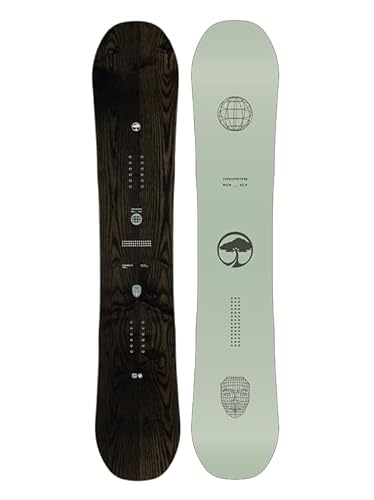
Arbor Formula
- Length tested: 157 Wide
- Weight: 2,910 g
- Base: Sintered
- Edge bumps: Grip Tech 2.25 mm
Bottom Line : A forgiving camber board that slid boxes without catching. Pop is soft, the rail grip bumps want a file, and the base needs waxing in wet slush.
Pros
- Catch-free 8.5: forgiving on off-axis box landings
- Smooth flex loads easily for ollies
- Edges and sidewalls resisted rail dents over 40 laps
- Sintered base ran smoothly
Cons
- Pop 7.5: no aggressive vertical snap
- The edge bumps grab on round down-rails until detuned
- Needs consistent waxing in wet glacier slush
- Third-heaviest board here at 2,910 g
Who it's best for
Progressing freestyle riders in larger boots who want the edge hold of camber without the unforgiving catches are who it suits. James led and Ryan, the heaviest rider on test, co-tested.
Why we love it
Catch-Free (8.5). The maker lists a 3 degree fender. Our testers say it raises the outside contact points slightly off the snow, and on off-axis box landings the board stayed forgiving and resisted catching an edge.
Pop (7.5). The camber flexes smoothly and gradually, so it loads easily for ollies. It lacks the aggressive vertical snap of the stiffer camber decks, and that's the trade for its forgiveness.
Durability (8.0). Forty laps left the edges and fully wrapped sidewalls free of rail dents, and the sintered base the maker lists ran smoothly.
What we didn't like
The maker's Grip Tech bumps (2.25 mm) felt slightly grabby underfoot when we slid sideways on round down-rails, so detune the edges lightly with a file before rail days. The sintered base also needs consistent waxing in wet glacier slush. On a quick late spin the wide 157W felt slightly heavy, which is why Spins scored 8.0.
Should you buy it?
Consider it as a forgiving way into camber if your boots are large. It scored 80 in the budget price tier, eighth of ten. The Burton Process Camber, in the same tier, scored 4 points higher and popped 1.0 better (8.5 against 7.5).
Read our full Arbor Formula review →
What is the best hybrid park snowboard?
The best hybrid park snowboard is the GNU Money, which scored 8.5 for catch-free sliding, pivoted on boxes with almost no effort, and kept a grip on icy morning in-runs.

GNU Money
- Length tested: 156 cm (Money L)
- Weight: 2,935 g
- Profile: C2 rocker/camber hybrid
- Shape: Twin
Bottom Line : A soft, easy-pressing twin that grips firm morning snow better than most rocker boards. Its pop is short, the base is slow unless waxed daily, and the topsheet chips.
Pros
- Catch-free 8.5: pivots on boxes and nose butters took little effort
- Dependable grip on icy morning jump in-runs
- Predictable spins off small lips and side hits
- Center rocker made nose butters easy to press
Cons
- Pop 7.5: not enough to clear long tables
- Serrated edges can catch on rough square-rail welds
- Base sluggish on wet summer slush unless waxed daily
- Topsheet chipped along the tail edge
Who it's best for
Budget-conscious park riders who want a soft, easy-pressing twin that still holds an edge on firm morning hardpack should look here. James led and Amy co-tested.
Why we love it
Catch-Free (8.5). The maker lists a C2 rocker camber hybrid. The rocker between the feet made pivoting on boxes and pressing nose butters effortless.
Spins (8.0). Balanced twin swing weight made spins predictable off small lips and side hits, with no surprise edge catches.
Edge grip. The testers named it the board's best trait. The serrated edges gave dependable grip on icy morning jump in-runs, which they called a rarity for a soft hybrid-rocker park board.
What we didn't like
Pop (7.5) stops short: the tail gives good spring, but there isn't the locked-in snap needed to clear long tables, so keep it to small and medium features. The serrated edges can also catch on rough square-rail welds during boardslides, and the base is sluggish in wet summer slush unless you wax it daily. After minor board taps the topsheet chipped along the tail edge. Durability (8.0) comes from only 35 laps, the fewest of any board here, so treat its toughness as less proven than the others. The maker also says it's designed to shred the whole mountain, and we rode it only in the park.
Should you buy it?
Go for it if you want a forgiving twin and your mornings are icy. In the budget price tier it scored 80, tying two other budget boards for ninth. The Burton Process Camber, in the same tier, scored 4 points higher and popped 1.0 better (8.5 against 7.5), but its testers wanted more bite on that same morning ice.
Read our full GNU Money review →
What is the best park snowboard for jibbing?
The best park snowboard for jibbing is the CAPiTA Pathfinder, which scored 8.5 for catch-free sliding and spins and slid smooth and flat across the wide box without twitching or hanging up.

CAPiTA Pathfinder
- Length tested: 155 cm
- Weight: 2,820 g
- Profile: Reverse camber
- Shape: True twin
Bottom Line : Predictable and forgiving on boxes and street features, from the budget tier. It lacks the snap for bigger kickers.
Pros
- Catch-free 8.5: smooth and flat across the wide box
- Spins 8.5: stable base for 180s and cab reverts
- Fourth-lightest board here at 2,820 g
- Easy, predictable pop onto street boxes
Cons
- Pop 7.0, the second lowest of the ten
- Won't ride away cleanly from heavy flat landings off bigger kickers
- Light surface scoring on the base from rail contact
Who it's best for
Riders progressing on rails and boxes, and jibbers who want a catch-free, budget-tier board for urban-style features, will find it a fit. James led and Amy co-tested.
Why we love it
Catch-Free (8.5). The maker lists reverse camber and a soft 4 out of 10 flex. Our testers describe a flat middle with raised tips, and it slid smooth and flat across the dancefloor box without twitching or hanging up.
Spins (8.5). The flat profile gave a stable base for flat-ground 180s and cab reverts, and it spun without fighting edge catches in slush.
Pop (7.0). The flat middle gave easy, predictable pop onto street boxes, which is exactly what the board is for.
What we didn't like
Pop (7.0) ranks second-lowest of the ten, short of the vertical boost to clear larger kickers, and it doesn't rebound cleanly out of a heavy flat landing, so keep it to boxes, rails and small jumps. The testers say the tip and tail joints shrugged off rail dings, but the base took light surface scoring from rail contact (Durability 8.0).
Should you buy it?
It makes sense if boxes and rails fill your day and you want a budget-tier board. It scored 80, tied for last with two others. The Evil Twin and Skate Banana scored a full point higher for catch-free (9.5 against 8.5), but both sit in the mid-price tier. Bigger jumps call for something with more spring, such as the Burton Process Camber in the same tier, which popped 1.5 higher (8.5 against 7.0) and scored 4 points more.
Read our full CAPiTA Pathfinder review →
How did we test the park snowboards?
We tested the park snowboards by riding all ten, two testers on each, in the terrain park off the T-bar on Horstman Glacier at Whistler Blackcomb in June and July 2026, then scoring pop, catch-free sliding on rails and boxes, spins and swing weight, and durability.
A park board has one job: pop off the kicker, then slide the metal without catching. So every board met the same features. The kickers were 15-foot and 25-foot tabletop jumps with chemically salted takeoffs and firm knuckle transitions. The boxes were a 20-foot wide flat box and a 24-foot flat-down street box, and the rails were a 20-foot round down-rail and a 16-foot flat square bar. The snow was salted hardpack on the early morning jump approaches at 07:30, wet corn by 11:00, and deep, rutted slush berms around the rail dismounts in the afternoon.
Four testers rode them, and the lead and co-tester for each board are named in its section above. Amy led seven boards and James led three, with Shaun and Ryan co-testing. Ryan is our heavy, high-impact rider. Here are the testers, so you can match your own height and weight to a length:
| Tester | Height | Weight | Boots |
|---|---|---|---|
| Amy | 5 ft 7 in (170 cm) | 140 lb (64 kg) | Vans Hi-Standard Pro, US men's 10 |
| James | 6 ft 1 in (185 cm) | 190 lb (86 kg) | Ride Fuse, US men's 10.5 |
| Shaun | 5 ft 10 in (178 cm) | 175 lb (79 kg) | Burton Ion, US men's 10.5 |
| Ryan | 6 ft 2 in (188 cm) | 215 lb (98 kg) | Burton Ion, US men's 10.5 |
Every board went on the same Union Strata bindings (Large), mounted across all ten decks, so you can read about them in our best snowboard bindings guide. Stance was a centered, true-twin park stance at a width of 21.5 in (55 cm), with +12° on the front foot and -12° on the rear, a true duck stance.
Plain-English words you'll see in this guide. Camber is an upward arch under the middle of the board that grips harder and pops. Rocker is the opposite, with the board raised between your feet or at the tips so it turns easier and slides without catching. A twin board is the same shape at both ends, so it rides switch (backwards) as well as forward. A butter is a trick where you press the nose or tail and spin the board flat. A 50-50 is sliding a box or rail straight along its length, and a boardslide is sliding it with the board across it. A down-rail is a rail that drops away as you slide it, and a kicker is a jump with a ramp lip. Detuning is filing the edges so they grab less on metal, and swing weight is how heavy a board feels when you spin it.
Two testers rode each board, and each board has one score out of 10 on four qualities:
- Pop: ollies on the flat and off the same side hit and kicker, noting how much spring we got for how much effort
- Catch-Free on Rails & Boxes: the same box and rail laps, noting whether the edge hung up or caught and how forgiving it was on an off-axis landing
- Spins & Swing Weight: 180s and 360s on the flat and off the kicker, noting whether the board came round easily or felt heavy in the air
- Durability: after a counted set of rail and box laps (35 to 50 per board), noting edge dings, base gouges and topsheet chips
The overall score out of 100 is the plain average of the four scores, times 10, so no single quality outweighs another. Weight is measured, not scored: we weighed every board without bindings or mounting hardware on an Ohaus Valor 1000 digital bench scale, and it has a table and no rating chart. Price isn't scored either, so we group boards into price tiers instead. Specs such as profile, shape and flex come from the maker; every weight, score and result is ours. You can meet the testers at the bottom of this page.
Which park snowboard suits your riding?
The right park snowboard depends on which feature you ride most: pick by the row that matches you.
| If you are… | Buy |
|---|---|
| Riding rails and boxes all day and wanting the toughest board | CAPiTA Ultrafear |
| Learning technical rail tricks and spins, mostly on softer snow | Bataleon Evil Twin |
| Wearing US 10 boots or bigger and wanting a wide, spin-happy board | Ride Twinpig |
| Wanting the best score from the budget price tier | Burton Process Camber |
| Living on big kickers and willing to detune the edges | Salomon Huck Knife |
| Pressing butters and jibbing small features | Lib Tech Skate Banana |
| Sending medium and large jumps with one aggressive freestyle board | CAPiTA DOA |
| Progressing in camber and wearing large boots | Arbor Formula |
| Wanting a soft, easy-pressing twin that grips icy mornings | GNU Money |
| Sliding boxes and rails rather than hitting big kickers | CAPiTA Pathfinder |
What did our park snowboard tests show?
Our park snowboard tests showed that pop separated the boards most, with 2.5 points from best to worst against 1.5 for spins and for durability, and that only two boards combined high pop with high catch-free scores.
Which park snowboards have the most pop?
The park snowboard with the most pop was the Salomon Huck Knife, which scored 9.0 on the 25-foot kicker, half a point ahead of four boards at 8.5.
Where we tested it. Ollies on the flat and off the same side hit and kicker, noting how much spring each board gave for how much effort.
What separated them. Pop had the widest spread, 2.5 points from the Huck Knife at 9.0 to the Skate Banana at 6.5. After the Huck Knife, four boards scored 8.5 (Ultrafear, Evil Twin, Process Camber and DOA) and the Twinpig scored 8.0. Then came a drop: the Arbor Formula and GNU Money scored 7.5, the Pathfinder 7.0 and the Skate Banana 6.5.
Profile tracks closely with that. The makers list camber or hybrid camber on all five boards that scored 8.5 or higher. The two boards with the lowest pop, the Skate Banana and the Pathfinder, are the two where the maker puts rocker or reverse camber between the feet.
What it felt like. The Huck Knife snapped off the 25-foot kicker with enough vertical spring to clear the knuckle. The Skate Banana felt like a hinge: nose and tail presses took almost no effort, but nothing came back.
| Board | What we found |
|---|---|
| Salomon Huck Knife | Explosive vertical spring off the 25-foot kicker |
| CAPiTA Ultrafear | Dependable snap; flatter zones outside made ollies onto the flat-down box easy |
| Bataleon Evil Twin | Full-length center camber and carbon stringers gave lively release |
| Burton Process Camber | Flat zones outside the feet worked as launch pads onto the square bar |
| CAPiTA DOA | Loading the tail off the 25-foot kicker snapped riders high |
| Ride Twinpig | Mellow camber and a wide platform gave predictable snap |
| Arbor Formula | Loaded easily, but no aggressive vertical snap |
| GNU Money | Good spring off the tail, not enough to clear long tables |
| CAPiTA Pathfinder | Easy pop onto street boxes, no boost for larger kickers |
| Lib Tech Skate Banana | Rocker hinge between the feet; no stored snap |
Which park snowboards are the most catch-free on rails and boxes?
The most catch-free park snowboards on rails and boxes were the Bataleon Evil Twin and the Lib Tech Skate Banana, which both scored 9.5.
Where we tested it. The same box and rail laps for every board, noting whether the edge hung up or caught and how forgiving it was on a landing a little off-axis.
What separated them. Two boards scored 9.5 and the CAPiTA Ultrafear scored 9.0. Four boards scored 8.5, the Burton Process Camber scored 8.0, and the Salomon Huck Knife and DOA both scored 7.5. The spread was 2.0 points.
The bottom two are the two boards our testers called aggressive: the Huck Knife has camber reaching close to the contact points, and the DOA is stiffer than the jib boards. They're also two of the five boards that scored 8.5 or higher for pop. Pop and catch-free pulled in opposite directions, and only two boards beat the trade-off: the Ultrafear (8.5 and 9.0) and the Evil Twin (8.5 and 9.5), the top two in the test.
What it felt like. The testers could land the Evil Twin 45 degrees off-axis on the wide flat box and have it slide out cleanly. Landing the DOA tilted on a down-rail threw the rider.
| Board | What we found |
|---|---|
| Bataleon Evil Twin | Landed 45 degrees off-axis on the flat box and slid out clean |
| Lib Tech Skate Banana | Rockered tips sat high; accidental catches didn't happen |
| CAPiTA Ultrafear | 50-50s and front boardslides slid flat and predictable |
| Ride Twinpig | Wide platform locked 50-50s; tips kept contacts off the metal |
| Arbor Formula | The 3 degree fender kept off-axis box landings forgiving |
| GNU Money | Center rocker pivoted easily; serrations caught on rough welds |
| CAPiTA Pathfinder | Slid smooth and flat across the wide box without twitching |
| Burton Process Camber | Less hooky than full camber, but sloppy rail landings needed corrections |
| Salomon Huck Knife | Camber near the contact points bit round rails and flat bars |
| CAPiTA DOA | Tracked fast onto boxes; threw a tilted landing on a down-rail |
Which park snowboards are best for spins?
The best park snowboard for spins was the Ride Twinpig, which scored 9.5, with the Burton Process Camber next at 9.0.
Where we tested it. 180s and 360s on the flat and off the kicker, noting whether each board came round easily or felt heavy in the air.
What separated them. Spins had a narrow spread of 1.5 points. After the Twinpig and the Process Camber, four boards scored 8.5 (Ultrafear, Evil Twin, Skate Banana and Pathfinder) and four scored 8.0 (Huck Knife, DOA, Arbor Formula and GNU Money).
Weight alone didn't decide it. The three heaviest boards, the Huck Knife, GNU Money and Arbor Formula, all scored 8.0, but so did the lightest board, the DOA at 2,610 g. The Twinpig weighs 250 g more than the DOA at the same 154 cm and still spun better, which our testers put down to its chopped nose and tail.
What it felt like. The Process Camber had practically zero swing weight in the air, and switch 360s off the 25-footer felt natural. The Arbor Formula felt slightly heavy on quick late spins.
| Board | What we found |
|---|---|
| Ride Twinpig | Chopped nose and tail snapped around like a wide skateboard |
| Burton Process Camber | Practically zero swing weight; switch 360s off the 25-footer |
| CAPiTA Ultrafear | Weightless on flat-ground rotations; 180s off side hits took little effort |
| Bataleon Evil Twin | Raised tips made spinning off knuckles effortless |
| Lib Tech Skate Banana | Low rotational inertia; 360s off small lips with ease |
| CAPiTA Pathfinder | Stable base for flat-ground 180s and cab reverts |
| Salomon Huck Knife | Blunt tips cut swing; wide waist wanted more wind-up |
| CAPiTA DOA | Balanced swing; took more effort than the Twinpig |
| Arbor Formula | Smooth through 180s; wide 157W felt heavy on late spins |
| GNU Money | Balanced twin swing; predictable off small lips |
Which park snowboards are the most durable?
The most durable park snowboard was the CAPiTA Ultrafear, which scored 9.5 after 50 rail and box laps with no edge cracks or sidewall damage.
Where we tested it. A counted set of rail and box laps for each board, from 35 to 50, noting edge dings, base gouges and topsheet chips.
What separated them. Only the Ultrafear scored 9.5. Four boards scored 8.5 (Twinpig, Huck Knife, Skate Banana and DOA) and five scored 8.0. Base damage showed on just two boards: a gouge on the Evil Twin and light scoring on the Pathfinder. The rest of the damage was cosmetic topsheet chipping or flaking.
Laps alone didn't explain the score: the two 50-lap boards scored 9.5 and 8.5. The GNU Money did the fewest at 35 and scored 8.0, so its toughness is the least proven.
What it felt like. The Ultrafear gave a dull thud on rail landings, instead of a sharp metallic clang.
| Board | What we found |
|---|---|
| CAPiTA Ultrafear | 50 laps; no edge cracks or sidewall damage |
| Ride Twinpig | 50 laps; no topsheet peeling or chipping |
| Salomon Huck Knife | 45 laps; no core gouges; cosmetic topsheet flaking at the tip |
| Lib Tech Skate Banana | 40 laps; no denting; topsheet resisted chipping |
| CAPiTA DOA | 45 laps; edges tight, no delamination |
| Bataleon Evil Twin | 40 laps; edges dent-free, one base gouge from a weld |
| Burton Process Camber | 45 laps; base clean; cosmetic topsheet chips |
| Arbor Formula | 40 laps; no rail dents; base needs waxing in slush |
| GNU Money | 35 laps; topsheet chipped on the tail edge |
| CAPiTA Pathfinder | 40 laps; light base scoring from rail contact |
How much do park snowboards weigh?
The park snowboards we weighed ranged from 2,610 g for the DOA at 154 cm to 2,945 g for the Salomon Huck Knife at 156 Wide.
Where we tested it. We weighed each board without bindings or mounting hardware on an Ohaus Valor 1000 digital bench scale. Weight is measured and isn't part of the overall score, so it has a table and no rating chart.
What separated them. The spread from lightest to heaviest was 335 g. The boards come in different lengths and widths, so compare weights with the length in the table. The DOA is the lightest and the Burton Process Camber is second at 2,750 g.
Light didn't win. The lightest board, the DOA, finished seventh at 81, and the heaviest, the Huck Knife, finished fifth at 83. The winner, the Ultrafear, is the third-lightest at 2,810 g.
| Board | Length ridden | Weight |
|---|---|---|
| CAPiTA DOA | 154 cm | 2,610 g |
| Burton Process Camber | 157 cm | 2,750 g |
| CAPiTA Ultrafear | 157 cm | 2,810 g |
| CAPiTA Pathfinder | 155 cm | 2,820 g |
| Bataleon Evil Twin | 157 cm | 2,840 g |
| Ride Twinpig | 154 cm | 2,860 g |
| Lib Tech Skate Banana | 156 cm | 2,895 g |
| Arbor Formula | 157 Wide | 2,910 g |
| GNU Money | 156 cm | 2,935 g |
| Salomon Huck Knife | 156 Wide | 2,945 g |
What do people ask about park snowboards?
Short answers on park snowboards, taken from our own scores and test results.
What is the best park snowboard for beginners?
We can't name one from testing, because no beginner rode these boards. The maker lists the Lib Tech Skate Banana for beginner to intermediate riders, and our testers found it loose, catch-free and easy to press, with the lowest pop of the ten. The Pathfinder scored 8.5 for catch-free on a soft 4 out of 10 flex, and the DOA and Salomon Huck Knife both scored 7.5 for it.
What makes a good park snowboard?
A good park snowboard pops off a kicker, slides rails and boxes without catching, spins easily and survives metal. Our four scores measure exactly that. The Ultrafear and Evil Twin were the only boards that scored 8.5 or higher for both pop and catch-free, and the Ultrafear also took the top durability score of 9.5. Weight mattered less than you'd think: the lightest board finished seventh.
What length park snowboard should I buy?
Start with the maker's size chart for your height and weight, then use our riders as a cross-check. Amy (5 ft 7 in, 140 lb) led on 154 to 157 cm boards, James (6 ft 1 in, 190 lb) led on 155 to 157 cm boards, and Ryan (6 ft 2 in, 215 lb) co-tested the 154, 157 and 157 Wide. The Twinpig is the one to size down: our testers rode a 154, 4 cm shorter than a standard park length for them. Each board was tested at one length, so we can't say what a different length does.
Is a camber or rocker park snowboard better?
In this test, camber popped higher, and rocker didn't slide cleaner by itself. The five boards that scored 8.5 or higher for pop all list camber or hybrid camber, while the Skate Banana and Pathfinder, with rocker or reverse camber between the feet, scored 6.5 and 7.0. For catch-free, the Skate Banana scored 9.5, but the camber-led Evil Twin matched it and the Ultrafear (9.0) beat the rocker-profile Pathfinder (8.5). Raised zones outside the feet mattered more than the profile label: the stiff, camber-led Huck Knife and DOA, without them, scored 7.5.
What are the 10 best park snowboards?
The 10 best park snowboards are the ten ranked above, led by the CAPiTA Ultrafear at 89 and then the Bataleon Evil Twin and Ride Twinpig at 86 each.
For most park riders, buy the CAPiTA Ultrafear. If rails are the whole point, the Bataleon Evil Twin; if your boots are big and you want spins, the Ride Twinpig; and if big kickers are the plan, the Salomon Huck Knife. For the best score from the budget tier, the Burton Process Camber is the one. Prices move constantly on these, so use the Check Latest Prices buttons above for the current number.
Editor's Note, 10 November 2026: New guide. In June and July 2026 Amy, James, Shaun and Ryan rode ten park snowboards, two testers on each, in the terrain park off the T-bar on Horstman Glacier at Whistler Blackcomb, weighed each board, counted 35 to 50 rail and box laps on each, and scored each on pop, catch-free sliding on rails and boxes, spins and swing weight, and durability.
Our Testers
This guide was written from the field notes of Amy Carter, James Ward, Shaun Taylor and Ryan Williams.
- Sean Williams, Editor-in-Chief. A former commercial outdoor copywriter and gear journalist who runs Top-Notch Outdoor as an independent publisher, with no brand-funded trips and no supplied ad copy.
- Ryan Williams, Lead Tester. A heavy fleet equipment mechanic and commercial vehicle technician. At 6 ft 2 in and 215 lb, he is our heavy, high-impact user. Ryan co-tested the Bataleon Evil Twin, Ride Twinpig and Arbor Formula.
- Amy Carter, Freestyle Snowboard Tester. An action sports videographer and terrain park builder, and our strongest snowboarder. Amy led testing of the CAPiTA Ultrafear, Bataleon Evil Twin, Ride Twinpig, Burton Process Camber, Salomon Huck Knife, Lib Tech Skate Banana and DOA, and co-tested the GNU Money and CAPiTA Pathfinder.
- James Ward, Alpine Ski & Fat Bike Tester. On skis since he was 3 and a former regional alpine racer, now a ski tuner and dryland fitness coach. James led testing of the Arbor Formula, GNU Money and CAPiTA Pathfinder, and co-tested the CAPiTA Ultrafear and Burton Process Camber.
- Shaun Taylor, Freeride Snowboard Tester. Raced banked slalom and halfpipe in the late 1980s and 1990s before turning to backcountry freeriding, and a finish carpenter by trade. Shaun co-tested the Salomon Huck Knife, Lib Tech Skate Banana and DOA, mainly for jump stability and knuckle landings.