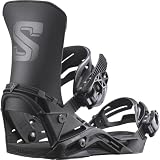
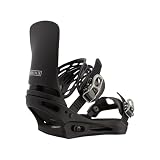
What is the best overall snowboard binding?
The best overall snowboard binding is the Nidecker LT Supermatic, which gave Ryan zero heel lift and nothing slipped or loosened in wet, salted summer slush.

Nidecker LT Supermatic
- Entry: Step-in, strap-assisted
- Flex: 8 out of 10
- Weight: 1,215 g
- Our setup time: 8 min
Bottom Line : Hands-free entry on ordinary boots, with strap tension that stayed identical every lap and no heel lift. It's also the heaviest binding here.
Pros
- Step in hands-free; strap tension the same on every run
- Zero heel lift in Ryan's runs
- Flat landings left Ryan with no heel sting
- Works with ordinary boots, no proprietary boot needed
Cons
- Heaviest here at 1,215 g, noticeably heavier in the hand than a two-strap binding
Who it's best for
Ryan, our 6 ft 2, 215 lb heavy hitter, led the testing, with James co-testing. It suits all-mountain riders, carvers and resort cruisers who want hands-free entry without being forced into proprietary boots.
Why we love it
Hold (9.5). The strap makes one unified bridge across the instep, and Ryan reported zero pinching and no numb toes. Ryan found that once the heel pedal shut the rear cam, the heel was locked down with zero heel lift.
Response (9.5). The maker says the flex is 8 out of 10. In Ryan's hands the reinforced baseplate and locking cam put the board on edge at once, with enough lateral give that it never felt braced.
Dampening (9.0). In Ryan's runs the full-length footbed filtered out the hard morning glacier ice, and flat landings off side hits left a 215 lb rider with no heel shock or bone sting.
Adjustability (9.0). Auto-locking ratchets make strap tension a set-it-and-forget-it job: set once to your boot, it was identical every run. You can also strap in the traditional way on tricky snow. Setup from the box took 8 minutes.
What we didn't like
At 1,215 g with disc and hardware it's the heaviest binding in this guide, and it feels noticeably heavier in the hand than a traditional two-strap binding. Nothing else drew a complaint: nothing slipped or loosened, and the cam and heel pedal operated reliably in wet, salted slush.
Should you buy it?
Buy it if you want hands-free entry on ordinary boots and a stiff, quick-edging feel: it's the one we'd buy first. Skip it if every gram counts. At 1,215 g it's the heaviest binding here, 375 g more than the lightest, the Salomon Highlander at 840 g. It's the one premium binding on this list, so buy it for the hands-free entry. We tested size Large.
Read our full Nidecker LT Supermatic review →

What is the best snowboard binding for freestyle?
The best snowboard binding for freestyle is the Flux DS, which Amy set up in 5 minutes, the quickest of the ten, and rode with zero pressure points.

Flux DS
- Weight: 910 g
- Our setup time: 5 min
- Size tested: Large
- Model year: 2025
Bottom Line : Boot-hugging straps, a playful flex underfoot, and straps and footbed ramps that adjust without tools. Forward lean needs a screwdriver, and it's firmer than the thick-foam bindings on hard ice.
Pros
- Straps wrap the boot with zero pressure points or foot cramps
- Straps, toe-strap ladders and footbed ramps adjust without tools
- Highback twisted for presses and tweaked grabs, in Amy's runs
- Zero hardware movement in testing
Cons
- Forward lean needs a #3 Phillips screwdriver
- Firmer underfoot on rock-hard refrozen snow than thick EVA platforms
Who it's best for
Amy, our park builder, rode it for freestyle play, lateral tweak and dampening, with Shaun co-testing high-speed stability and heelside support on firm snow. It suits mountain freestyle riders, park riders and all-mountain surfers who want a skate-like board feel and pressure-free straps.
Why we love it
Hold (9.5). In Amy's runs the ankle strap wrapped the boot's contours with zero pressure points or foot cramps, and the toe strap locked onto the boot shape without slipping. The ratchets worked cleanly in heavy mitts.
Response (9.0). Amy found the highback twists sideways for buttery presses and tweaked grabs, yet the baseplate contacts the board's edges directly, so turns started instantly.
Adjustability (9.5). The straps, toe-strap ladders and footbed ramps all adjust without tools, which is why the whole binding can seem tool-free. Setup from the box took 5 minutes, the quickest of the ten. The 9.5 rests on those parts: forward lean is the exception.
What we didn't like
Forward lean is the honest flaw, and it isn't tool-less. There's no lever or dial on the highback spine. Lean is set by small stepped blocks at the two highback pivot points on the heel cup, in 2.5-degree steps. To change it, loosen the screws on both sides with a #3 Phillips screwdriver, slide the highback to the notch you want and screw it back down. The way around it: set your lean once at home, and everything else adjusts on the hill without tools.
Dampening is the other soft spot (7.5). Amy's notes say the dual-density footbed softens chatter well compared with older Flux bindings, but bulletproof morning glacier ice still came through to the feet more than it does on the thick-foam bindings. Nothing broke, slipped or loosened.
Should you buy it?
Hand it to a freestyle rider first: it suits park, freestyle and loose, surfy all-mountain riding. Look elsewhere if you land flat a lot or want more cushion on hard ice, because its dampening scored 7.5 and the Union Strata (9.5) or Ride C-8 (8.5) cushion better. At mid-price it matches the premium LT Supermatic's 9.5 for hold. Our test size was Large; the model is the 2025 Flux DS.
Read our full Flux DS review →

What is the best snowboard binding for heavy riders?
The best snowboard binding for heavy riders is the Ride C-8, which Ryan, at 215 lb, leaned into heavy carves with no hardware slipping.

Ride C-8
- Weight: 960 g
- Our setup time: 9 min
- Size tested: Large
- Adjusting: Tool-less
Bottom Line : A chassis that soaked up chatter while Ryan drove heavy carves, with a reversible strap that Ryan found gives it two personalities. The ratchets are stiff in the cold.
Pros
- Instant carve power and lateral stability at speed
- Filters chatter well under a heavy rider
- Reversible ankle strap: stiff power or surfy give, per Ryan
- Screws held torque; no slippage
Cons
- Ratchets need heavy thumb pressure to release when cold or snow-caked
Who it's best for
Ryan, at 6 ft 2 and 215 lb our heavy, high-impact rider, led the testing, with Amy co-testing. It suits heavy-hitting all-mountain riders and high-impact riders who want good dampening and a chassis flex they can change.
Why we love it
Response (9.0). The C-8 delivered instant carve power and lateral stability at speed.
Dampening (8.5). Ryan found the canted footbed filtered high-frequency chatter from frozen, chattery snow efficiently under a heavy rider.
Hold (8.5). In Ryan's runs the reversible ankle strap gave two distinct riding personalities, stiff power one way and surfy give the other, and it pulled the boot firmly back into the heel cup.
Adjustability (8.5). The maker says the adjustments are tool-less; Ryan could also adjust the heel cup to center the boot and reverse the straps to change the flex. Setup took 9 minutes.
What we didn't like
The linkage ratchets need heavy thumb pressure to release when they're cold or caked in snow. That's the one real complaint. No hardware slipped; the machine screws held their torque.
Should you buy it?
If you're heavy or hard on gear, the C-8 is a dependable carving chassis with a flex you can tune. It's the wrong binding if you want a light one: Ride calls it lightweight, but on our scale it weighed 960 g, seventh lightest of ten. It's also the wrong one if cold-morning ratchets matter most, since Shaun found the Burton Cartel X's ratchets easy to work in freezing temperatures. For hands-free entry as well, step up to the Nidecker LT Supermatic, at premium money. At mid-price the C-8 already matches the upper-mid Burton Cartel X and Flow NX2 for response (9.0). Size tested: Large.
Read our full Ride C-8 review →
What is the best snowboard binding for freeride?
The best snowboard binding for freeride is the Burton Cartel X Re:Flex, which drove Shaun's edges through bulletproof hardpack with zero hesitation.

Burton Cartel X Re:Flex
- Weight: 895 g
- Our setup time: 9 min
- Chassis: Nylon composite, 45% glass
- Mounting: All systems
Bottom Line : Razor-sharp edge response and ratchets that stay easy to work in freezing temperatures. The tall highback needs its forward lean matched to your boot.
Pros
- Instant edge response on bulletproof hardpack
- Heel hammock stopped heel lift in Shaun's runs
- Ratchets easy to crank and release in the cold
- Hardware stayed secure
Cons
- Tall, stiff highback can dig into the calf
- Passes some vertical chop through the highback
Who it's best for
Shaun, our freeride tester, rode it, with James co-testing. It suits aggressive all-mountain riders, technical carvers and freeriders who want instant, uncompromised power transfer.
Why we love it
Hold (9.0). In Shaun's runs the ankle strap locked down evenly, and the heel hammock grabbed the boot spine to stop heel lift entirely. Shaun found the Smooth Glide ratchets easy to crank and release in freezing temperatures.
Response (9.0). The chassis, a nylon composite blended with 45% short glass, and the stiff highback reacted instantly and drove the edges through bulletproof hardpack.
Dampening (8.0). The full-length cushioned footbed with gel under the heel dampened refrozen morning chatter.
Adjustability (8.0). Shaun adjusted forward lean quickly without tools. Shaun noted that boot centering relies on the slots in the mounting disc rather than an adjustable heel cup. Setup took 9 minutes.
What we didn't like
The tall, stiff highback needs care. It can dig into your calf muscles if the forward lean isn't matched to your boot's spine angle, and it passed some vertical chop through the highback. The toe strap ladder showed light surface scuffing against the toe sliders; the hardware stayed secure.
Should you buy it?
Choose the Cartel X when you ride hard and want instant edge response on hardpack, and match the forward lean to your boot before your first run, or the highback will find your calf. Pass if you want a looser board feel: the Flux DS is the better fit. It's upper-mid money, and the mid-price Ride C-8 matches its 9.0 for response. We rode size Large.
Read our full Burton Cartel X Re:Flex review →
What is the best snowboard binding for carving?
The best snowboard binding for carving is the Union Force Classic, which gave James dependable heelside power on firm morning snow.

Union Force Classic
- Weight: 920 g
- Our setup time: 8 min
- Mounting: 2x4, 4x4, Channel
- Size tested: Large
Bottom Line : A proven, direct-feeling binding with plenty of fit adjustment. Put thread-locker on the heel loop screws before your first day.
Pros
- Dependable heelside power transfer on firm snow
- Straps cinch without hot spots; buckles didn't slip even caked in snow
- Heel loop and toe ramps that made centering easy for James
- Maker lists 2x4, 4x4 and Channel mounting
Cons
- Heel loop screws loosened half a turn after day two
- Noticeable feedback from heavy landings and iced ruts
- Rigid baseplate limited the board's flex underfoot, per James
Who it's best for
James, our alpine tester, rode it, with Ryan co-testing. It suits all-mountain riders and aggressive carvers who want a zero-nonsense binding with total fit customization.
Why we love it
Hold (9.0). James found the ankle strap cinched down securely with no hot spots, and the buckles engaged cleanly and didn't slip even when caked in snow.
Response (8.5). The heel cup gave James dependable heelside power on firm morning snow, and the binding was predictable and stable when railing high-speed turns.
Adjustability (9.0). James found the three-position heel loop, tool-less highback lean and multi-position toe ramps made centering the boot easy. Setup took 8 minutes.
What we didn't like
Two things to know. First, the heel loop screws loosened half a turn after day two under Ryan's weight, so put blue thread-locker on them out of the box. Second, James found the multi-density footbed handles routine chatter well, but heavy landings and iced ruts sent noticeable feedback to the joints compared with a bushing design, and the rigid baseplate limited the board's natural flex under his feet.
Should you buy it?
Carvers who want a simple, durable binding they can fit exactly should start here. Skip it if you land a lot of flat drops, because the Union Strata cushions far better. At mid-price it gives near-top hold (9.0) for less than the upper-mid and premium bindings here. We tested size Large.
Read our full Union Force Classic review →
What is the best snowboard binding for comfort?
The best snowboard binding for comfort is the Salomon Highlander, whose flexible heel hoop removed the outer-ankle pressure and foot cramping common with rigid heel cups.

Salomon Highlander
- Weight: 840 g
- Our setup time: 12 min
- Size tested: Large
- Forward lean: Screwdriver
Bottom Line : A 360-degree ankle wrap with no hot spots, and the lightest binding here at 840 g. Forward lean needs a screwdriver, and entry can take two hands.
Pros
- A 360-degree wrap of the ankle with zero hot spots
- Lightest binding here at 840 g
- Ankle freedom for micro-adjustments and tweaks
- Footbed absorbed ice vibration and flat landings without packing out
Cons
- Forward lean needs a screwdriver; highback rotation is limited
- Heel cup can collapse forward on entry
Who it's best for
Shaun, our freeride tester, rode it, with James co-testing. It suits all-mountain freeriders and carvers who fight chronic foot cramps, instep pain or numb toes.
Why we love it
Hold (9.5). In Shaun's runs the flexible heel hoop molded around the boot heel and completely removed the outer-ankle pressure and foot cramping common with rigid heel cups. The wrap is anatomical all the way around, with zero hot spots or pressure bite.
Response (8.5). Shaun found the freedom at the ankle allowed small adjustments and tweaks, yet the hoop tension snapped into heelside turns immediately when loaded.
Dampening (8.5). Shaun found the canted, dual-density footbed absorbed high-frequency ice vibration and deadened flat landings, and it didn't pack out. Strap mounting tabs stayed tight and centered.
What we didn't like
Adjustability (7.0) is its weak score. In Shaun's setup the forward lean is a two-stage clip that needs a screwdriver, highback rotation is limited, and setup took 12 minutes. Shaun also found the soft heel cup collapsing forward when stepping in, so it took two hands to slide the boot in cleanly.
Should you buy it?
Foot pain is the reason to buy this one: for cramps, instep pain and numb toes, it's the binding to get. It's a poor fit if you like to change settings on the hill. Its forward lean needs a screwdriver, while the K2 Formula (7 minutes) and Flux DS (5 minutes) set up faster. It's upper-mid money for a 9.5 hold, and the mid-price Flux DS scores the same 9.5. Size tested: Large.
Read our full Salomon Highlander review →
What is the best snowboard binding for shock absorption?
The best snowboard binding for shock absorption is the Union Strata, which killed ice chatter and flat-landing heel sting for Amy.

Union Strata
- Weight: 895 g
- Our setup time: 8 min
- Flex: 5 out of 10
- Mounting: 2x4, Channel
Bottom Line : The best dampening of the ten and a loose, surfy flex for presses and butters. Edge response on hard ice lags the stiffer bindings.
Pros
- Top dampening score here: ice chatter gone
- Absorbed flat jump drops with zero heel sting
- Loose, natural board flex for presses and butters
- Strap wraps with no pressure points
Cons
- Edge response lags on bulletproof ice
- Mini-disc won't fit 4x4 inserts
- Softer highback feels loose when charging flat-out
- Center screws needed retightening after day one
Who it's best for
Amy, our park builder, rode it, with Ryan co-testing. It suits park riders, side-hit enthusiasts and all-mountain surfers who put chatter absorption and butterability ahead of rigid edge bite.
Why we love it
Dampening (9.5). The shock-absorbing bushing baseplate gave top-tier absorption. It completely killed high-frequency ice chatter and absorbed flat jump drops with zero heel sting.
Hold (8.5). Amy found the ankle strap a supportive, pliable wrap with no instep pressure points or numbness.
Response (7.5). The maker says the flex is a soft 5 out of 10. The surfy lateral flex made presses, rail locks and butters effortless for Amy.
Adjustability (8.0). Amy found the heel loop centered the boot cleanly and the mini disc allowed small stance adjustments, though the footbed length is fixed. Setup took 8 minutes.
What we didn't like
The soft flex shows on ice. Edge response on bulletproof ice lagged behind the stiffer all-mountain bindings, and the softer highback felt loose when charging flat-out, with a vague heelside edge on morning ice. Check your board: the mini disc fits 2x4 and Channel patterns, not older 4x4 insert packs. The center mounting screws needed retightening after day one.
Should you buy it?
Park riders, side-hit regulars and anyone who lands flat often will get the most from the Strata. It isn't the one for strong edge hold on ice, where the Nidecker LT Supermatic or Burton Cartel X are better, and it won't suit a board with 4x4 inserts, because the mini disc fits 2x4 and Channel patterns only. At mid-price it has the best dampening score of the ten (9.5). We tested size Large.
Read our full Union Strata review →
What is the best snowboard binding for all mountain riding?
The best snowboard binding for all mountain riding is the K2 Formula, whose strap length and forward lean adjust 100% tool-less, which James set up in 7 minutes and which had no mechanical issues.

K2 Formula
- Weight: 868 g
- Our setup time: 7 min
- Flex: 7 out of 10
- Forward lean: Tool-less
Bottom Line : A dependable do-it-all binding with quick tool-less adjustments. It never wins a category, and the highback isn't shaped for hard heelside carving.
Pros
- Strap length and forward lean are tool-less
- Setup took 7 minutes, second quickest
- Balanced flex that's not demanding
- No mechanical issues in testing
Cons
- Standard highback lacks asymmetrical shaping for aggressive heelside carving
- No score above 8.5 in any category
Who it's best for
James, our alpine tester, rode it, with Amy co-testing. It suits all-mountain riders who want a reliable, easily adjusted binding for everyday resort riding.
Why we love it
Hold (8.5). James found the ankle strap and the Perfect Fit 2.0 toe strap wrapped securely around the boot's contours, with no slipping over the toe box.
Response (8.0). James found the fiberglass-reinforced chassis gave a predictable, balanced flex, responsive enough for carving on firm snow without feeling rigid or demanding.
Dampening (8.0). James found the canted footbed's shock pads softened choppy snow and dampened flat landings.
Adjustability (8.5). Strap length and forward lean adjust 100% tool-less, so trailside tweaks are quick. All the locking pins held firm for the whole test.
What we didn't like
It's a generalist, and it reads that way in the scores: nothing above 8.5. The standard highback lacks the asymmetrical shaping that helps aggressive heelside carving, so hard chargers will want more.
Should you buy it?
The Formula is the value pick for everyday resort days, and it suits riders who like to adjust on the hill. It's the cheapest binding here, and all four of its scores sit between 8.0 and 8.5. Don't buy it for hard carving: the Union Force Classic is the better tool. Check the size before you order: we tested size Large, which covers US men's 9 to 11 boots.
Read our full K2 Formula review →
What is the best snowboard binding for board feel?
The best snowboard binding for board feel is the Bent Metal Transfer, whose magnesium fiber drive plate gave Amy instant board connectivity and snappy pop off lips.

Bent Metal Transfer
- Weight: 980 g
- Our setup time: 10 min
- Flex: 8 out of 10
- Size tested: Medium and Large
Bottom Line : A drive plate that acts like a skateboard deck underfoot, with real pop. Screws back out without thread-locker and flat landings feel firm.
Pros
- Instant energy transfer and board connectivity
- Snappy pop off lips
- Handles high-speed chop decently
- Four-position forward lean Amy found fast and intuitive
Cons
- Ankle strap feels rigid and needs heavy ratcheting
- Firm flat landings jolt the arches and heels
- Heel screws backed out a full turn
- Limited fine-tuning
Who it's best for
Amy, our park builder, rode it for freestyle mobility and pop off lips, while Shaun co-tested it for high-speed stability and heelside support. It suits aggressive freestyle and all-mountain riders who put pop and direct board feel first.
Why we love it
Response (8.5). The magnesium fiber drive plate acts like a skateboard deck directly underfoot. It gave instant edge drive and snappy pop off lips.
Hold (8.0). Amy found the toe strap wrapped snugly around the boot.
Dampening (7.5). Amy found the plate handled high-speed chop decently.
Adjustability (7.5). Amy found the four-position forward lean adjuster fast and intuitive. Setup took 10 minutes.
What we didn't like
Four things count against it. The ankle strap feels somewhat rigid and needed heavy ratcheting to stop boot play during aggressive riding. Firm flat landings sent a sharp jolt to the arches and heels. And the ankle strap heel screws backed out a full turn during aggressive chatter runs: put blue thread-locker on them before you ride. Fine-tuning is also limited compared with traditional sliders.
Should you buy it?
Board feel and pop are the whole case for the Transfer, so it only makes sense if they matter more to you than comfort and you'll put thread-locker on the ankle strap heel screws before you ride. If landings or strap comfort matter more, the Union Strata (9.5 for dampening) is better for landings and the Flux DS for strap comfort. It's upper-mid money for a joint-lowest overall score of 79, so it's hard to justify unless board feel is your priority. Check the size before you order: we tested sizes Medium and Large.
Read our full Bent Metal Transfer review →
What is the best snowboard binding for speed entry?
The best snowboard binding for speed entry is the Flow NX2, which gave Ryan fast rear-entry access and zero heel lift once its rear cable pulled the reclining highback shut.

Flow NX2
- Entry: Rear entry
- Flex: 8 out of 10
- Weight: 1,020 g
- Our setup time: 15 min
Bottom Line : Fast rear entry on a stiff aluminum-alloy baseplate. It took the longest to set up of the ten, and re-entry on steep ground was awkward.
Pros
- Fast rear entry
- Stiff aluminum-alloy baseplate for fast heelside turns
- Cushioned footbeds swallowed chop and flat landings for Ryan
- Zero heel lift once closed
Cons
- Lowest adjustability score here (6.0); 15 minutes to set up
- Forward lean cable barrel is fussy and vibrated loose
- Re-entry awkward on steep toe-side ground or in slush piles
Who it's best for
Ryan, our heavy, high-impact rider, rode it, with James co-testing. It suits high-speed carvers and heavier riders who want rear-entry speed without losing the stiffness of an aluminum baseplate.
Why we love it
Hold (8.0). The auto-locking ratchets hold strap tension, and there was zero heel lift once the rear cable pulled the reclining highback shut.
Response (9.0). Ryan found the rockered aluminum-alloy baseplate, with cable tension behind it, made heelside turns start fast and stiff on hardpack carves.
Dampening (8.5). Ryan found the full-coverage canted footbeds with gel cushions swallowed choppy snow and softened heavy flat landings for a 215 lb rider.
What we didn't like
Adjustability (6.0) is the lowest score in the guide. It needed lengthy trial and error to balance rear entry clearance against the riding lock, and setup took 15 minutes, the slowest of the ten. Ryan found the forward lean cable barrel fussy, and it vibrated a quarter-turn loose under sustained hard chatter. Re-entry on steep toe-side ground or in deep slush piles could be frustratingly awkward.
Should you buy it?
The NX2 suits riders who'll trade a long first setup for rear-entry speed and a stiff aluminum baseplate. Look elsewhere for set-and-forget, or for a light binding: Flow calls the baseplate and highback super lightweight, but the binding weighed 1,020 g, second heaviest here. For fast entry that sets up in 8 minutes, buy the Nidecker LT Supermatic. The NX2 is upper-mid money for a joint-lowest overall score of 79. We tested size Large.
Read our full Flow NX2 review →
How did we test the snowboard bindings?
We tested the snowboard bindings by riding all ten on Horstman Glacier at Whistler Blackcomb in June and July 2026, then scoring each on hold, response, dampening and adjustability and weighing it on a bench scale.
A binding has four jobs: keep your boot tied to the board without hurting, answer your edges, soften the landings, and let you change it without a fight. Four testers rode them, a mix of a heavy, high-impact rider, a freestyle park builder, a former racer and an alpine tester.
The snow ranged from bulletproof morning refrozen glacier ice and salted firm race tracks to mid-day transition corn and heavy afternoon slush, with summer park features for the freestyle testers. Every binding was size Large on a 2x4 mount, except the Bent Metal Transfer, which the testers rode in Medium and Large. Ryan rode a Lib Tech Terrain Wrecker 157 cm at 23 in, +18° front and -12° back. Amy rode a Capita Defenders of Awesome 154 cm at 21.5 in, true duck at +12° and -12°. James rode a Salomon Assassin 158 cm and Shaun a Capita The Black Snowboard of Death 159 cm, both at 22.5 in with +15° front and -9° back. Test boots were the Ride Fuse and Burton Ion in US men's 10.5, and the Vans Hi-Standard Pro in US men's 10.
Each binding got one set of scores out of 10 from its lead tester, with a co-tester also riding it. The four qualities:
- Hold: any heel lift, pressure points or numb toes, and how the ratchets worked with gloves
- Response: how fast the board answers the edge against how much ankle room you get
- Dampening: chatter through the soles on firm snow, and flat landings off small side hits
- Adjustability: forward lean, highback and strap changes, whether they needed a tool, and minutes to set up from the box
- Weight (measured, not scored): one binding with its disc and hardware on an Ohaus Valor 1000 bench scale
The overall score out of 100 is the plain average of the four scores, times 10, so no single quality outweighs another. Specs such as flex rating and mounting patterns come from the published specs; weights, setup times and every result are ours. We don't score price; where a binding's value stands out we say so in tiers (premium, upper-mid, mid-price, the cheapest here), and the Check Latest Prices button shows the current number. Each binding was ridden by one lead tester and one co-tester, listed in each section above. You can meet the testers at the bottom of this page.
Which snowboard bindings suit your riding?
The right snowboard binding depends on how you ride: pick by the row that matches you.
| If you're… | Buy |
|---|---|
| Wanting hands-free entry on ordinary boots, and happy to carry the weight | Nidecker LT Supermatic |
| Riding park or freestyle, or a loose, surfy all-mountain feel | Flux DS |
| Heavy or hard on gear, and carving | Ride C-8 |
| Riding fast and hard on hardpack, and wanting instant edge response | Burton Cartel X Re:Flex |
| Carving, and happy to put thread-locker on the screws | Union Force Classic |
| Fighting foot cramps, instep pain or numb toes | Salomon Highlander |
| Landing flat drops and side hits, or chasing butters | Union Strata |
| Wanting one reliable binding for everyday resort days | K2 Formula |
| Putting pop and direct board feel first | Bent Metal Transfer |
| Wanting rear entry on a stiff aluminum-alloy baseplate | Flow NX2 |
What did our snowboard binding tests show?
Our snowboard binding tests showed that the Nidecker LT Supermatic won as the only binding with no score below 9.0, while adjustability split the field the most, from 6.0 to 9.5.
Where each quality was tested, what separated the bindings, and what riding them was like. Each binding's four scores are also in its card above.
How well do snowboard bindings hold your foot?
The best-holding snowboard bindings were the Nidecker LT Supermatic, Flux DS and Salomon Highlander, which each scored 9.5.
Where we tested it. Each tester judged hold on the board they rode all session, looking for heel lift, pressure points, numb toes and how the ratchets worked in gloves.
What separated them. Three different ideas tied at 9.5. The LT Supermatic makes one bridge across the instep and shuts a rear cam for zero heel lift. The Flux DS wraps the boot contours, with a toe strap that locks onto the boot shape. The Highlander's flexible heel hoop removed the outer-ankle pressure common with rigid heel cups. The Burton Cartel X and Union Force Classic followed at 9.0, the Burton for a rubber-webbed heel hammock that stopped heel lift entirely and ratchets Shaun found easy to work in the cold.
The bottom of the table is about strap rigidity and tension. The Bent Metal Transfer's ankle strap felt rigid and needed heavy ratcheting to stop boot play in aggressive riding.
What it felt like. Five of the ten drew a note for no hot spots or pressure points: the LT Supermatic, Flux DS, Union Force Classic, Highlander and Union Strata.
| Binding | What we found |
|---|---|
| Nidecker LT Supermatic | One strap bridge, no pinching, rear cam shuts for zero heel lift |
| Flux DS | Straps wrap the boot, no pressure points, ratchets easy in mitts |
| Salomon Highlander | 360-degree ankle wrap, zero hot spots |
| Burton Cartel X Re:Flex | Heel hammock stops heel lift; ratchets easy to work in the cold |
| Union Force Classic | Cinches with no hot spots; buckles didn't slip caked in snow |
| Ride C-8 | Reversible ankle strap pulls the boot into the heel cup |
| Union Strata | Pliable wrap, no pressure points or numbness |
| K2 Formula | Straps wrap securely, no slipping over the toe box |
| Bent Metal Transfer | Ankle strap rigid, needs heavy ratcheting |
| Flow NX2 | Held tension; zero heel lift once closed |
How responsive are snowboard bindings?
The most responsive snowboard binding we rode was the Nidecker LT Supermatic, with a 9.5.
Where we tested it. Edge-to-edge turns on firm morning snow and salted race tracks came first, then tweaks and presses on the summer park features.
What separated them. The LT Supermatic led at 9.5. Four bindings tied at 9.0: the Flux DS, Ride C-8, Burton Cartel X and Flow NX2. The stiff bindings led, each for its own reason. The NX2's aluminum-alloy baseplate and cable tension started heelside turns fast on hardpack, and the Cartel X drove edges through bulletproof hardpack with zero hesitation.
The Flux DS earned its 9.0 differently, with a highback that twists for presses and a baseplate that touches the board's edges directly. At the bottom the Union Strata scored 7.5: its surfy flex makes butters easy, but edge response on ice lagged behind the stiffer bindings.
What it felt like. The stiff bindings put the board on edge at once. The Strata's surfy flex made presses, rail locks and butters effortless for Amy.
| Binding | What we found |
|---|---|
| Nidecker LT Supermatic | Instant edge transfer without feeling braced |
| Flux DS | Twisting highback, direct edge contact |
| Ride C-8 | Instant carve power, stable at speed |
| Burton Cartel X Re:Flex | Stiff and instant on bulletproof hardpack |
| Flow NX2 | Fast, stiff heelside initiation on hardpack |
| Union Force Classic | Dependable heelside power on firm snow |
| Salomon Highlander | Ankle freedom, snaps into heelside turns when loaded |
| Bent Metal Transfer | Skateboard-deck feel, snappy pop off lips |
| K2 Formula | Predictable and balanced, not demanding |
| Union Strata | Surfy flex; edge response lags on ice |
How well do snowboard bindings absorb shock?
The best snowboard binding for absorbing shock was the Union Strata, with a 9.5 for dampening.
Where we tested it. Firm, chattery morning snow at speed came first, then flat landings off side hits, with the testers listening for chatter through the soles and any heel sting.
What separated them. The Union Strata scored 9.5, the highest dampening mark of the ten. Its shock-absorbing bushing baseplate killed ice chatter and flat-landing heel sting for Amy. The Nidecker LT Supermatic followed at 9.0 on a full-length footbed that handled Ryan's 215 lb on flat landings.
Three bindings tied at 8.5: the Ride C-8, Salomon Highlander and Flow NX2. At the bottom, the Flux DS, Union Force Classic and Bent Metal Transfer all scored 7.5. The Force Classic and the Transfer sent noticeable feedback to the joints, arches and heels on heavy landings, and the Flux DS still let bulletproof ice through.
What it felt like. The difference showed in the heels. The Strata and LT Supermatic were the two where heavy landings left no sting at all.
| Binding | What we found |
|---|---|
| Union Strata | Ice chatter gone; flat drops with zero heel sting |
| Nidecker LT Supermatic | No heel shock at 215 lb |
| Ride C-8 | Filters chatter under a heavy rider |
| Salomon Highlander | Absorbed ice vibration; didn't pack out |
| Flow NX2 | Swallowed chop; softened heavy landings |
| Burton Cartel X Re:Flex | Dampened refrozen chatter; highback passes some vertical chop |
| K2 Formula | Softened choppy snow and flat landings |
| Flux DS | Softer than older Flux, still firm on hard ice |
| Union Force Classic | Feedback to the joints on heavy landings and iced ruts |
| Bent Metal Transfer | Decent in chop; firm landings jolt arches and heels |
How adjustable are snowboard bindings?
The most adjustable snowboard binding we set up was the Flux DS, at 9.5 and 5 minutes from the box.
Where we tested it. We set up every binding from the box and timed it, and noted which adjustments needed a tool.
What separated them. Setup time tracked the score at the extremes. The Flux DS took 5 minutes and the K2 Formula 7. The LT Supermatic, Union Force Classic and Union Strata took 8, the Ride C-8 and Cartel X 9, and the Bent Metal Transfer 10. The Salomon Highlander took 12 and the Flow NX2 15.
The slow ones had a reason. The Highlander's forward lean needs a screwdriver and its highback rotation is limited, scoring 7.0. The Flow NX2 needed trial and error to balance rear entry clearance against the riding lock, and scored 6.0, the lowest here. The Flux DS's 9.5 rests on tool-free straps, toe-strap ladders and footbed ramps; its forward lean needs a screwdriver, which the K2 Formula's doesn't.
What it felt like. The K2 Formula's strap length and forward lean were both 100% tool-less, and it and the Flux DS were the two quickest to set up.
| Binding | What we found |
|---|---|
| Flux DS | Straps and ramps tool-free, lean needs a screwdriver; 5 minutes |
| Nidecker LT Supermatic | Set-and-forget ratchets, dual entry; 8 minutes |
| Union Force Classic | Three-position heel loop, tool-less lean; 8 minutes |
| Ride C-8 | Heel cup, reversible straps, tool-less; 9 minutes |
| K2 Formula | 100% tool-less strap length and lean; 7 minutes |
| Burton Cartel X Re:Flex | Tool-less lean; centering by disc slots; 9 minutes |
| Union Strata | Heel loop and mini disc; footbed length fixed; 8 minutes |
| Bent Metal Transfer | Fast four-position lean, limited fine-tuning; 10 minutes |
| Salomon Highlander | Lean needs a screwdriver; 12 minutes |
| Flow NX2 | Lengthy tuning, fussy cable barrel; 15 minutes |
How much do snowboard bindings weigh?
The snowboard bindings we weighed ranged from 840 g to 1,215 g for a single binding with its disc and hardware.
Where we tested it. We weighed one binding, with its disc and hardware, on an Ohaus Valor 1000 digital bench scale. Weight is measured, not scored, so it's not in the overall number.
What separated them. The Salomon Highlander was lightest at 840 g and the Nidecker LT Supermatic heaviest at 1,215 g, a gap of 375 g, so the LT Supermatic weighs about 45% more than the Highlander. Everything else sat between 868 g and 1,020 g. The Flow NX2 at 1,020 g was the next heaviest after the LT Supermatic. Two makers talk weight up, and the scale disagrees. Ride calls the C-8 lightweight, yet it weighed 960 g, seventh lightest of ten. Flow calls the NX2's baseplate and highback super lightweight, yet the binding was the second heaviest here.
What it felt like. The testers only called out weight on the LT Supermatic, which felt noticeably heavier in the hand than a traditional two-strap binding.
| Binding | What we found |
|---|---|
| Salomon Highlander | 840 g |
| K2 Formula | 868 g |
| Burton Cartel X Re:Flex | 895 g |
| Union Strata | 895 g |
| Flux DS | 910 g |
| Union Force Classic | 920 g |
| Ride C-8 | 960 g |
| Bent Metal Transfer | 980 g |
| Flow NX2 | 1,020 g |
| Nidecker LT Supermatic | 1,215 g |
Every Snowboard Binding Guide We Publish
- Best Step-In & Quick-Entry Snowboard Bindings: ten entry systems timed with a stopwatch; our pick is the Nidecker LT Supermatic
- Best Freestyle & Park Snowboard Bindings: ten park bindings ridden on rails, boxes and kickers; our pick is the Salomon District
- Best Freeride & Carving Snowboard Bindings: ten stiff bindings on the steepest glacier lanes; our pick is the Flux XV
- Best Budget Snowboard Bindings: eleven bindings for first boards and tight budgets; our pick is the Burton Freestyle Re:Flex
- Best Snowboards: every snowboard guide we publish, from all-mountain to powder
Snowboard Binding Reviews (40)
- 5th Element Summit Stealth Snowboard Binding Review (2026): Tested on Glacier Snow
- Bent Metal Joint Snowboard Binding Review
- Bent Metal Lightning Supermatic Review: Tested on Glacier Snow
- Bent Metal Speed-In Pro Review: Tested on Glacier Snow
- Bent Metal Transfer Pro Snowboard Bindings Review: Tested at Whistler
- Bent Metal Transfer Snowboard Binding Review (2026)
- Burton Cartel X Re:Flex Snowboard Binding Review (2026)
- Burton Freestyle Re:Flex Snowboard Binding Review (2026): Tested on Glacier Snow
- Burton Malavita Re:Flex Snowboard Binding Review
- Burton Step On Genesis Re:Flex Review: Tested on Glacier Snow
- Burton Step On Re:Flex Review: Tested on Glacier Snow
- Flow Fenix Review: Tested on Glacier Snow
- Flow Fuse Hybrid Review: Tested on Glacier Snow
- Flow NX2 Carbon Snowboard Bindings Review: Tested at Whistler
- Flow NX2 Snowboard Binding Review (2026)
- Flux CV Snowboard Bindings Review: Tested at Whistler
- Flux DS Snowboard Binding Review (2026)
- Flux PR Snowboard Binding Review
- Flux XF Snowboard Bindings Review: Tested at Whistler
- Flux XV Snowboard Bindings Review: Tested at Whistler
- Head FX One LYT Snowboard Binding Review (2026): Tested on Glacier Snow
- K2 Bond Snowboard Bindings Review: Tested at Whistler
- K2 Cinch GT Review: Tested on Glacier Snow
- K2 Formula Snowboard Binding Review (2026)
- K2 Indy Snowboard Binding Review (2026): Tested on Glacier Snow
- K2 Sonic Snowboard Binding Review (2026): Tested on Glacier Snow
- Nidecker LT Supermatic Snowboard Binding Review (2026)
- Ride A-8 Snowboard Bindings Review: Tested at Whistler
- Ride C-2 Snowboard Binding Review (2026): Tested on Glacier Snow
- Ride C-4 Snowboard Binding Review
- Ride C-8 Snowboard Binding Review (2026)
- Salomon District Snowboard Binding Review
- Salomon Highlander Snowboard Binding Review (2026)
- Salomon Rhythm Snowboard Binding Review
- System MTN Rear Entry Review: Tested on Glacier Snow
- Union Atlas Pro Snowboard Bindings Review: Tested at Whistler
- Union Flite Pro Snowboard Binding Review
- Union Force Classic Snowboard Binding Review (2026)
- Union Strata Snowboard Binding Review (2026)
- Union Ultra Snowboard Binding Review
What do people ask about snowboard bindings?
These are common questions about snowboard bindings, answered from our own test results.
Are step-in snowboard bindings worth it?
Yes, if you want faster entry and can carry the weight: the Nidecker LT Supermatic won this test, with hands-free entry, zero heel lift and an 8-minute setup, but it's the heaviest binding here at 1,215 g. The rear-entry Flow NX2 is a different trade: fast entry, but 15 minutes of setup and an awkward re-entry on steep ground or in slush piles.
What is the best snowboard binding for ice and hardpack?
The Nidecker LT Supermatic scored highest for response at 9.5, and the Flux DS, Ride C-8, Burton Cartel X and Flow NX2 followed at 9.0. The Union Strata is the one to avoid on ice if edge hold is your priority: its edge response lagged on bulletproof ice.
Do snowboard binding screws come loose?
Yes, on four of our ten: three had screws work loose and one an adjuster. The Union Force Classic's heel loop screws loosened half a turn after day two, the Bent Metal Transfer's ankle strap heel screws backed out a full turn, the Union Strata's center mounting screws needed retightening after day one, and the Flow NX2's cable barrel adjuster worked a quarter-turn loose. Our testers recommended blue thread-locker on the Force Classic and Transfer screws out of the box.
How heavy is a snowboard binding?
A snowboard binding in this test weighed between 840 g and 1,215 g with its disc and hardware. The lightest was the Salomon Highlander and the heaviest the Nidecker LT Supermatic.
What size snowboard binding do I need?
Our testers rode size Large with US men's boots from size 10 to 10.5 (the Bent Metal Transfer in Medium and Large). Sizes run by boot size and differ between makers, so check each maker's chart before you order; the buttons above go to each binding.
What are the 10 best snowboard bindings?
The 10 best snowboard bindings are the ten ranked above, led by the Nidecker LT Supermatic.
For most riders, buy the Nidecker LT Supermatic if you can live with its 1,215 g. For freestyle and park, the Flux DS; for heavy riders, the Ride C-8; for instant edge response on hardpack, the Burton Cartel X Re:Flex or, for carving, the Union Force Classic with thread-locker on its screws. If your feet hurt, the Salomon Highlander; if your landings hurt, the Union Strata. Want one reliable binding for everyday resort days, and the cheapest here? The K2 Formula.
Editor's Note, 9 November 2026: New guide. In June and July 2026 Ryan, Amy, James and Shaun rode ten snowboard bindings on Horstman Glacier at Whistler Blackcomb, in morning ice, salted race tracks, corn and afternoon slush, and scored each on hold, response, dampening and adjustability.
Our Testers
This guide was written from the field notes of Ryan Williams, Amy Carter, James Ward and Shaun Taylor.
- Sean Williams, Editor-in-Chief. A former commercial outdoor copywriter and gear journalist who runs Top-Notch Outdoor as an independent publisher, with no brand-funded trips and no supplied ad copy.
- Ryan Williams, Lead Tester. A heavy fleet equipment mechanic and commercial vehicle technician. At 6 ft 2 and 215 lb he is our heavy, high-impact user. Ryan led the testing on the Nidecker LT Supermatic, Ride C-8 and Flow NX2 and co-tested the Union Force Classic and Union Strata.
- Amy Carter, Freestyle Snowboard Tester. An action sports videographer and terrain park builder, and our strongest snowboarder. Amy led the testing on the Flux DS, Union Strata and Bent Metal Transfer and co-tested the Ride C-8 and K2 Formula.
- James Ward, Alpine Ski & Fat Bike Tester. On skis since he was 3 and a former regional alpine racer, now a ski tuner and dryland fitness coach. James led the testing on the Union Force Classic and K2 Formula and co-tested the Nidecker LT Supermatic, Burton Cartel X Re:Flex, Salomon Highlander and Flow NX2.
- Shaun Taylor, Freeride Snowboard Tester. Raced banked slalom and halfpipe in the late 1980s and 1990s before turning to backcountry freeriding, and a finish carpenter by trade. Shaun led the testing on the Burton Cartel X Re:Flex and Salomon Highlander and co-tested the Flux DS and Bent Metal Transfer.