Goal Zero Yeti 700 scored 77 out of 100 in our testing and ranks #8 in our best portable power stations guide as our best rugged portable power station. It discharged normally in 26°F air.

What is the best rugged portable power station?
The best rugged portable power station is the Goal Zero Yeti 700, a water-resistant 20.4 lb unit that discharged normally in 26°F morning air and ran a Starlink terminal.

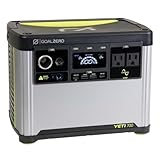
Goal Zero Yeti 700 Portable Power Station
- Capacity: 677 Wh LiFePO4
- Output: 600 W, 1,000 W surge
- Weight: 20.4 lb
- Our recharge: 0 to 80% in 102 min
Bottom Line : A rugged, water-resistant 20 lb station that discharged in the cold and runs quietly, held back by a 600 W inverter and slow charging.
Pros
- Water-resistant chassis with rubber port covers
- Discharged normally at 26°F
- 32.1 dBA under normal loads
- Folding handle
Cons
- 600 W inverter tripped on a 1,175 W kettle
- Slow: 102 minutes to 80 percent
- AC outlets too close for two big adapters
In Cold, Rough Camps
The test fridge ran for 10.5 hours on 546 Wh and a CPAP on 12V for 22.5 hours. It ran camp lighting, drone hubs and a Starlink terminal in 26°F morning air, and the folding aluminum handle makes it an easy, balanced carry that stacks neatly.
Fan noise stayed low: 32.1 dBA under normal loads and 40.2 dBA during a full recharge.
Emma then used it through a wet weekend of camping in the Lake District in October 2026, running camp lights and charging devices. It was barely audible under load, and its rugged handles made the weight easy to manage.
Where It Asks Something of You
The 600 W inverter tripped immediately on a 1,175 W kettle. Its internal 330 W charger took 1 hour 42 minutes to 80 percent, and a Boulder 200 W panel gave 178 W and needed 4 hours 18 minutes for a full charge. Charging is locked out below 32°F, and the two AC outlets sit too close together for two bulky adapters.
Spec Sheet vs Our Test
600 W inverter, 1,000 W surge. Goal Zero lists 600 W continuous. A 1,175 W kettle tripped it immediately, so the limit is real, but camp lighting, drone hubs and a Starlink terminal ran without trouble.
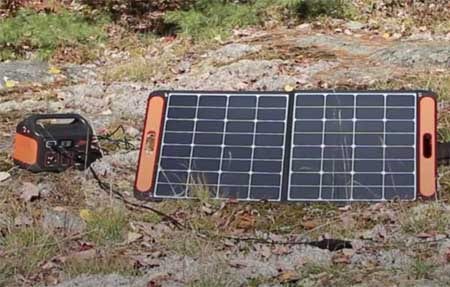
200 W solar input. Goal Zero lists a 200 W solar input. A Boulder 200W briefcase panel in about 975 W/m2 sun peaked at 178 W and needed 4 hours 18 minutes for a full recharge, and the 330 W internal charger took 1 hour 42 minutes to reach 80 percent.
Water resistant, works down to -4°F. The Yeti is water resistant and rated for discharge down to -4°F. At 26°F it ran our Starlink terminal without trouble, though the battery refused to recharge until it was warmed.
20.3 lb. Goal Zero lists 20.3 lb and our scale read 20.4 lb. The folding aluminum handle makes it an easy carry, but the two AC outlets are stacked too close for two bulky adapters.
Should You Buy the Goal Zero Yeti 700?
Pick the Yeti 700 when weather and rough handling worry you more than watts. Its 600 W inverter stops short of a kettle.
Campers and overlanders who want a tough, quiet station for rough weather.
Compare With
- Anker SOLIX C1000: our best overall portable power station.
- Bluetti Elite 200 V2: our best portable power station for power tools.
- DJI Power 1000 V2: our quietest portable power station.
- EcoFlow River 2 Pro: our best portable power station for CPAP.
- EcoFlow DELTA Pro 3: our best portable power station for home backup.
- Jackery 1000 Plus: our best portable power station for off-grid camping.
- EcoFlow DELTA 2 Max: our best portable power station for campervans.
- Jackery Explorer 300: our best portable power station for tent camping.
- Jackery Explorer 2000 Plus: our best portable power station for RVs.
See all ten, and how we tested them, in our best portable power stations guide. For every type of generator, start at our best generators guide.
Editor's Note, 5 November 2026: Updated to match our portable power stations guide: Emma ran it through a wet Lake District weekend, and its marks and overall are now hers. This station now scores 77 out of 100, ranks #8 and is our best rugged portable power station.
Editor's Note, 1 November 2026: Rewritten from the Lake Tahoe test log Ryan and John supplied on 1 November 2026, to match our rebuilt portable power stations guide. The score of 75 is now the average of four bench marks, and the earlier score and award on this page have been replaced.
Editor's Note, 20 October 2026: Renamed this pick's award to say what it is best for, to match our updated buying guide. Scores and rankings are unchanged.
Editor's Note, 17 October 2026: We removed the star rating and review count we had copied from a retailer's page. The only ratings on this page are our own.
Editor's Note: Updated 13 August 2026: product photography added, the High Speed Mode charging caveat rechecked, and the value comparison against the rest of the field refreshed.
Our Testers
This review was edited by Sean Williams and tested by our lead tester, Ryan Williams, and John Palmer.
- Sean Williams, Editor-in-Chief. Sean built the team of researchers and testers behind our reviews and edits every guide. His rule: we say what we actually found.
- Ryan Williams, Lead Tester. Ryan leads our field tests and our generator and solar testing.
- John Palmer, Tester. John tests our generators and power stations alongside Ryan.