BLUETTI Elite 200 V2 scored 85 out of 100 in our testing and ranks #2 in our best portable power stations guide as our best portable power station for power tools. It carried 2,480 W of heat gun and work light for 20 minutes.

What is the best portable power station for power tools?
The best portable power station for power tools is the Bluetti Elite 200 V2, which ran a 1,500 W heat gun and a 1,000 W work light together at 2,480 W for 20 minutes.

BLUETTI Elite 200 V2 Portable Power Station
- Capacity: 2,073.6 Wh LiFePO4
- Output: 2,600 W continuous
- Weight: 53.4 lb
- Our recharge: 0 to 80% in 52 min
Bottom Line : A 2 kWh station that carries heavy tool loads and charges in about 76 minutes, though it has no wheels and no 30 amp port.
Pros
- 2,480 W for 20 minutes without throttling
- 32.8 hours on our test fridge
- 0 to 80 percent in 52 minutes
- 12.8 ms UPS switchover
Cons
- 53.4 lb with no wheels
- No built-in 30 amp RV port
- Tripped at 2,880 W
Carrying Tool Loads
John ran a 1,500 W heat gun and a 1,000 W halogen work light together at 2,480 W for 20 minutes without thermal throttling. The test fridge ran for 32.8 hours on 1,705 Wh and a CPAP on 12V for 54 hours, when the run was stopped early.
Turbo wall charging reached 80 percent in 52 minutes and 100 percent in 1 hour 16 minutes. Five 200 W panels gave 910 W and a full charge in 2 hours 18 minutes. It kept a PC running on a 12.8 ms switchover during simulated blackouts.
John then took it to a cold fishing camp in Dorset in October 2026, at 38°F. It ran a heated blanket and a CPAP for three nights without reaching its limit, recharged from the wall to 80 percent in about 56 minutes and read 42 dBA with the fans spinning. It's a manageable carry for one strong person and easier with two.
Where It Asks Something of You
At 53.4 lb it's a two-person carry over any distance, and there are no wheels. Adding a 400 W shop vac took the load to 2,880 W and tripped the inverter after 18 seconds, and charging shut down below 32°F.
Spec Sheet vs Our Test
2,600 W continuous, power lifting to 3,600 W. Bluetti lists 2,600 W, with a Power Lifting mode up to 3,600 W. A heat gun at 1,500 W and a 1,000 W work light ran together at 2,480 W for 20 minutes without throttling, and a 400 W shop vac on top took the load to 2,880 W and tripped the inverter after 18 seconds.
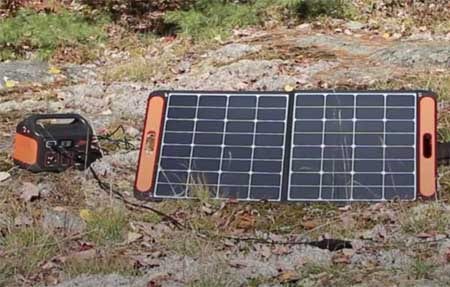
Turbo charging. On Turbo wall charging we reached 80 percent in 52 minutes and full in 1 hour 16 minutes. Five 200 W panels in series-parallel delivered 910 W and a full charge in 2 hours 18 minutes.
Under 15 ms UPS switchover. We measured 12.8 ms and a PC ran through simulated blackouts without dropping.
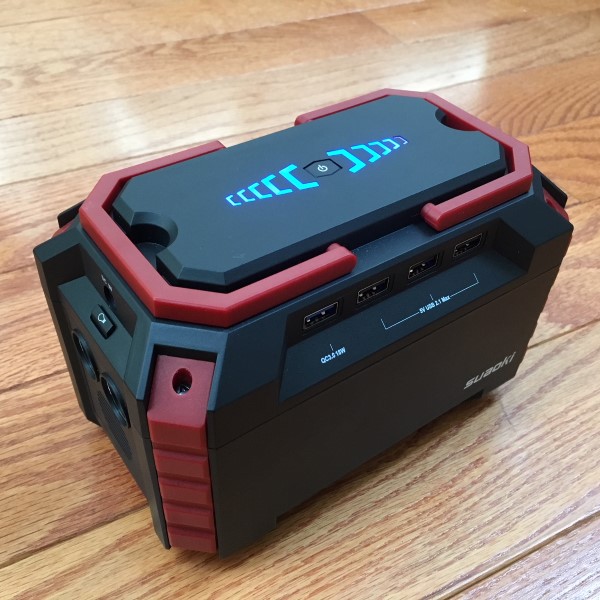
53.4 lb with no wheels. The deep side handles are comfortable, but carrying it solo further than about 40 yards is hard, and there's no built-in 30 amp RV port.
Should You Buy the Bluetti Elite 200 V2?
For tools and workshop backup, this is the one. It has no 30 amp port, so an RV is better served by the Jackery Explorer 2000 Plus.
Workshop, jobsite and cabin users who run heavy tools.
Compare With
- Anker SOLIX C1000: our best overall portable power station.
- DJI Power 1000 V2: our quietest portable power station.
- EcoFlow River 2 Pro: our best portable power station for CPAP.
- EcoFlow DELTA Pro 3: our best portable power station for home backup.
- Jackery 1000 Plus: our best portable power station for off-grid camping.
- EcoFlow DELTA 2 Max: our best portable power station for campervans.
- Goal Zero Yeti 700: our best rugged portable power station.
- Jackery Explorer 300: our best portable power station for tent camping.
- Jackery Explorer 2000 Plus: our best portable power station for RVs.
See all ten, and how we tested them, in our best portable power stations guide. For every type of generator, start at our best generators guide.
Editor's Note, 5 November 2026: New review, from the Lake Tahoe bench Ryan and John ran and our testers' later trips.
Our Testers
This review was edited by Sean Williams and tested by our lead tester, Ryan Williams, and John Palmer.
- Sean Williams, Editor-in-Chief. Sean built the team of researchers and testers behind our reviews and edits every guide. His rule: we say what we actually found.
- Ryan Williams, Lead Tester. Ryan leads our field tests and our generator and solar testing.
- John Palmer, Tester. John tests our generators and power stations alongside Ryan.