DJI Power 1000 V2 scored 82 out of 100 in our testing and ranks #3 in our best portable power stations guide as our quietest portable power station. It charged from 0 to 80 percent in 36 minutes 45 seconds.

What is the quietest portable power station?
The quietest portable power station is the DJI Power 1000 V2, which read 24.8 dBA at 1 meter under a 600 W load on our bench, and Sean found it close to DJI's 26 dB claim on his trip.

DJI Power 1000 V2 Portable Power Station
- Capacity: 1,024 Wh LiFePO4
- Output: up to 2,600 W
- Weight: 30.8 lb
- Our recharge: 0 to 80% in 36 min
Bottom Line : A quiet 1 kWh station with the fastest wall recharge of the ten, but only two AC outlets and proprietary solar and 12V adapters.
Pros
- 0 to 80 percent in 36 minutes 45 seconds
- 24.8 dBA under a 600 W load at 1 m
- 30.8 lb with an easy one-person carry
- 15.4 hours on our test fridge
Cons
- Only two AC outlets
- Solar and 12V need DJI adapter cables
- Won't accept charge below 32°F
On the Bench and in the Tent
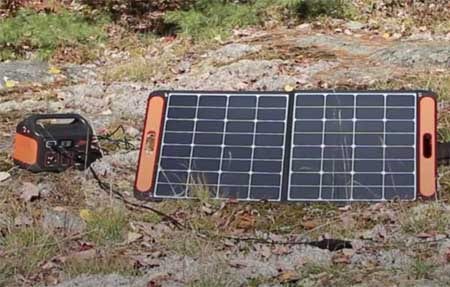
On the wall it drew a peak of 1,440 W and went from 0 to 80 percent in 36 minutes 45 seconds, full in 54 minutes 10 seconds. Two 400 W solar arrays filled it in 1 hour 28 minutes at 765 W of input.
It ran our test fridge for 15.4 hours on 801 Wh of delivered energy and a ResMed CPAP on 12V for 60.5 hours with the humidifier off. At 1 meter it read 24.8 dBA under a 600 W load, rising to 28.5 dBA at 2,200 W.
Sean then took it on a tech-heavy remote work trip in BC in September 2026, charging drone batteries and laptops and running a microwave. Sean found it close to DJI's 26 dB claim under a light load; it reached 80 percent from the wall in 37 minutes and was an easy one-person lift. His one complaint: there's no built-in flashlight.
Where It Asks Something of You
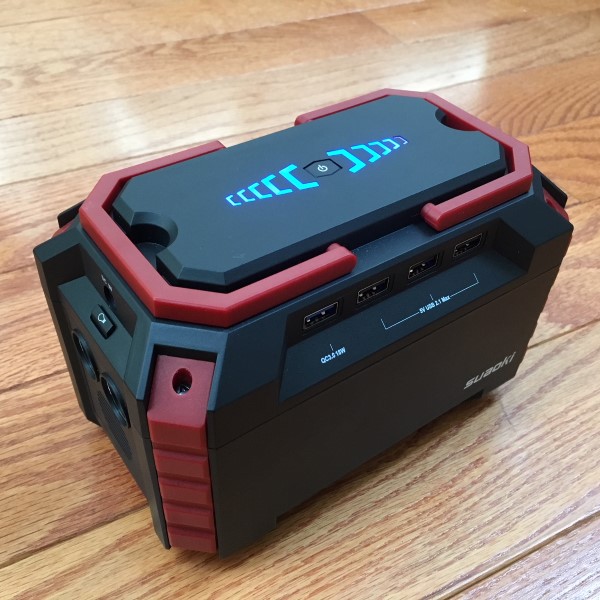
The faceplate has only two AC outlets, and using solar panels or a 12V car socket needs DJI's proprietary SDC adapter cables. In the cold it locked out AC and solar charging below 32°F until it was warmed. A 1,460 W kettle, a 600 W light and a drill ran together at 2,180 W, but when John added an 800 W heat gun the breaker tripped after 14 seconds.
Spec Sheet vs Our Test
Fast charging. On the wall it drew a peak of 1,440 W and reached 80 percent in 36 minutes 45 seconds and full in 54 minutes 10 seconds. Two 400 W solar arrays filled it in 1 hour 28 minutes at 765 W of input, and DJI's proprietary SDC adapter cables are what make that possible.
As low as 26 dB. DJI quotes 26 dB. At 1 meter from the cooling exhaust, inside a wall tent against a 22.4 dBA floor, it read 24.8 dBA under a 600 W load and 28.5 dBA at 2,200 W. The conditions differ from DJI's, but the station is as quiet as the claim suggests.
UPS switchover. We measured 18 ms on the oscilloscope, which kept an iMac and a Starlink Mini running without a reboot.
2,600 W output. DJI lists up to 2,600 W. It held 2,180 W from a kettle, a work light and a drill, and the breaker tripped after 14 seconds when John added an 800 W heat gun. That's a clean protective trip rather than a failure.
Should You Buy the DJI Power 1000 V2?
Buy the DJI if charge speed and silence rank first. Past 2,600 W, or if you need a 240 V outlet, go to the EcoFlow DELTA Pro 3.
Campers and van owners who want fast charging and near-silent running in a 1 kWh case.
Compare With
- Anker SOLIX C1000: our best overall portable power station.
- Bluetti Elite 200 V2: our best portable power station for power tools.
- EcoFlow River 2 Pro: our best portable power station for CPAP.
- EcoFlow DELTA Pro 3: our best portable power station for home backup.
- Jackery 1000 Plus: our best portable power station for off-grid camping.
- EcoFlow DELTA 2 Max: our best portable power station for campervans.
- Goal Zero Yeti 700: our best rugged portable power station.
- Jackery Explorer 300: our best portable power station for tent camping.
- Jackery Explorer 2000 Plus: our best portable power station for RVs.
See all ten, and how we tested them, in our best portable power stations guide. For every type of generator, start at our best generators guide.
Editor's Note, 5 November 2026: New review, from the Lake Tahoe bench Ryan and John ran and our testers' later trips.
Our Testers
This review was edited by Sean Williams and tested by our lead tester, Ryan Williams, and John Palmer.
- Sean Williams, Editor-in-Chief. Sean built the team of researchers and testers behind our reviews and edits every guide. His rule: we say what we actually found.
- Ryan Williams, Lead Tester. Ryan leads our field tests and our generator and solar testing.
- John Palmer, Tester. John tests our generators and power stations alongside Ryan.