Editor's Note, 17 October 2026: We removed the star rating and review count we had copied from a retailer's page. The only ratings on this page are our own.
Editor's Note: Updated 13 August 2026: corrected the battery chemistry, which previously read as an upgrade over itself. This model runs lithium-ion NMC cells with a two-year warranty. Weight corrected to 7.1 lb and product photography added.
The Jackery Explorer 300 Portable Power Station is our best buy for phones and laptops pick, and we rate it 85 out of 100.
Most people shopping for a power station buy too much battery. What actually dies on a camping trip is a phone, a camera battery and a laptop, and that adds up to a couple of hundred watt-hours, not a thousand. Jackery's smallest Explorer sits exactly on that number at 292Wh, weighs 7.1 pounds, and costs a fraction of the mid-size units. Check the chemistry before you buy: this model runs lithium-ion NMC cells with a two year warranty, where Jackery's separate Explorer 300 Plus moves to LiFePO4.
Scored on the guide's four metrics: Capacity and Output, Recharge Speed, Portability, Build and Features. Published specs, current prices and owner reports back each figure.
 Best Buy for Phones and Laptops
Jackery Explorer 300 Portable Power Station
- Capacity (Wh): 292Wh
- AC output (W): 300W rated, 600W peak surge
- Battery chemistry: Lithium ion (NMC)
- Recharge time: About 4 hours AC; 80% in 2.8 hours on a 100W panel
- Weight: 7.1 lb
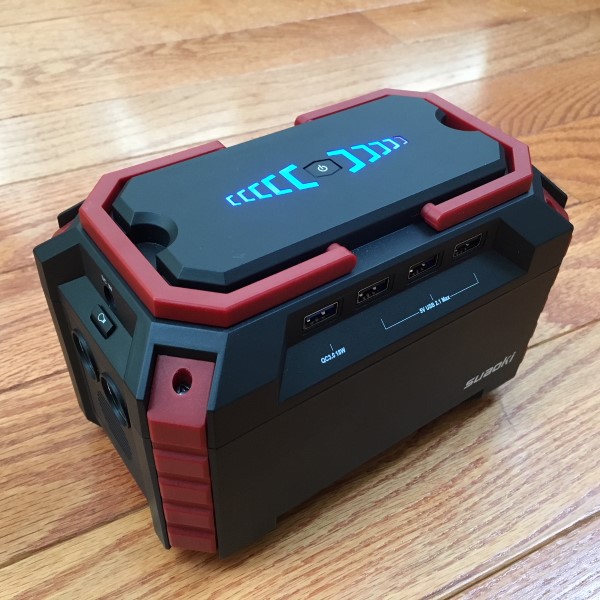
- Ports: 2 AC, 1 USB-C PD 100W, 2 USB-A, 1 120W car port
- Expansion: None
- Warranty: 2 years
Pros
- 7.1 pounds, the only unit here you can carry one-handed all day
- Two AC outlets and a 100W USB-C PD port in a case that fits a daypack
- 100W USB-C PD charges a laptop directly and refills the unit too
- Cheapest way into real AC power without stepping down to a power bank
Cons
- 300W ceiling shuts out kettles, heaters and most kitchen appliances
- 292Wh runs out fast if anything larger than a laptop is plugged in
- Two-year warranty is short next to five-year rivals in this roundup
Our Verdict: Jackery Explorer 300 Portable Power Station
Small battery, sane price, no pretensions.
The Explorer 300 is a phone-and-laptop machine, and it is honest about that.
Ask it to run a kettle and it will trip; ask it to keep four people connected for a weekend and it just works.
It scored 85 out of 100 across our four test metrics, and it took the best buy for phones and laptops award.
At 7.1 pounds it is the only station here you can carry one-handed all day, and that is what earns it the award.
The 300W ceiling shuts out kettles, heaters and most kitchen appliances, which is not what this one is for.
We would hand this one to campers who only need phones, cameras and a laptop kept alive.
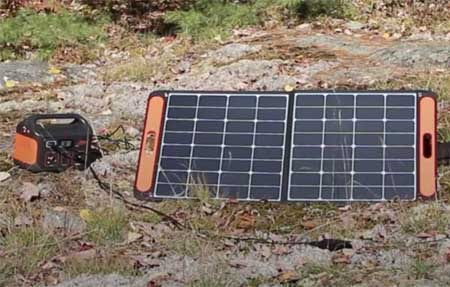
A classic grab-and-go unit. Feather light and tiny, it was perfect for tossing onto the picnic table to keep everyone phones, cameras and MacBooks topped off. It paired beautifully with the folding solar panels we tested the day before.
Top-Notch test team
Performance, Metric by Metric
Strongest on portability, weakest on capacity and output.
Here is how it did on every metric, with the rest of the field for comparison.
Capacity and Output
Jackery lists 292Wh of capacity. Rated output is 300W continuous, with a 600W peak surge.
That ceiling rules out kettles, hair dryers and most induction cooktops. Two AC outlets, a 100W USB-C PD port and two USB-A ports share the load. Owner reviews repeatedly flag CPAP use, which the 300W rating handles fine.
| Capacity and Output | Rating |
|---|---|
| Highest in this guide | 10/10 |
| Jackery Explorer 300 Portable Power Station | 5/10 |
| Guide average | 7.4/10 |
| Lowest in this guide | 4/10 |
Recharge Speed
Jackery quotes roughly four hours from a wall outlet. With a 100W solar panel, the listing claims 80 percent in about 2.8 hours.
A 40W panel stretches that same 80 percent out to 7.5 hours. USB-C PD input means a laptop charger can top it up in a pinch. Small batteries refill fast, which is the quiet advantage of buying less capacity.
| Recharge Speed | Rating |
|---|---|
| Highest in this guide | 10/10 |
| Jackery Explorer 300 Portable Power Station | 8/10 |
| Guide average | 8.3/10 |
| Lowest in this guide | 5/10 |
Portability
At 7.1 pounds this is genuinely one-hand luggage. Jackery claims it runs 17 percent lighter than the category average.
The moulded handle is part of the case, so nothing folds or rattles. It fits in a daypack, which almost no other AC-equipped unit does. Our team carried it to a picnic table without thinking about it.
| Portability | Rating |
|---|---|
| Highest in this guide | 10/10 |
| Jackery Explorer 300 Portable Power Station | 10/10 |
| Guide average | 7.5/10 |
| Lowest in this guide | 3/10 |
Build and Features
The pack is lithium-ion NMC, not the LiFePO4 chemistry the rest of this guide runs. NMC trades cycle life for weight, and the 7.1 pound carry is what that trade buys.
Warranty is two years, which trails the five-year terms rivals now offer. There is no app, no UPS mode and no expansion battery support.
| Build and Features | Rating |
|---|---|
| Highest in this guide | 10/10 |
| Jackery Explorer 300 Portable Power Station | 7/10 |
| Guide average | 8.1/10 |
| Lowest in this guide | 7/10 |
Should You Buy the Jackery Explorer 300 Portable Power Station?
Buy this if your camping power list is phones, headlamps, camera batteries and a laptop. That is a real list, and it is a small one.
292Wh translates to roughly 20 phone charges, or five to six full laptop refills, or a night of CPAP on a low setting. Two people can go a long weekend without a panel.
Skip it if you plan to run a fridge, a kettle or a power tool. The 300W rating is a hard wall, not a suggestion, and the Bluetti AC180 at 1800W is the sensible step up.
One ownership note: the warranty is two years, where Anker, Bluetti, EcoFlow and Jackery's own larger models all write five. On a battery you expect to keep, that gap is part of the price.
Worth Comparing Against
Three more from the field, for different jobs:
The Anker 521 Portable Power Station is our best budget pick. 256Wh and 300W continuous at 8.2 lb.
The Goal Zero Yeti 700 Portable Power Station is our toughest chassis pick. 677Wh and 600W continuous at 21 lb.
The EcoFlow River 2 Pro Portable Power Station is our best for weekend trips pick. 768Wh and 800W continuous at 18.2 lb (10.5 x 10.1 x 8.5 in).
Specifications
| Capacity (Wh) | 292Wh |
| AC output (W) | 300W rated, 600W peak surge |
| Battery chemistry | Lithium ion (NMC) |
| Recharge time | About 4 hours AC; 80% in 2.8 hours on a 100W panel |
| Weight | 7.1 lb |
| Ports | 2 AC, 1 USB-C PD 100W, 2 USB-A, 1 120W car port |
| Expansion | None |
| Warranty | 2 years |
Conclusion: Jackery Explorer 300 Portable Power Station
Tested against every other portable power station on this list, the Jackery Explorer 300 Portable Power Station came out as our best buy for phones and laptops pick at 85 out of 100.
At 7.1 pounds it is the only station here you can carry one-handed all day.
You do give something up. The 300W ceiling is a hard wall, not a suggestion.
This one is for campers who only need phones, cameras and a laptop kept alive.
Still weighing it up? See how it stacks against the full field in our 8 Best Portable Power Stations guide.