What is the best overall freeride snowboard?
The best overall freeride snowboard is the Nitro Pantera, scoring 99 with 10.0 for stability, edge bite and deep carving, and keeping its nose calm straight-lining the steep training apron off the T-bar.

Nitro Pantera
- Length tested: 160 cm
- Weight: 3,150 g
- Profile: Camber
- Flex: 9/10 (maker)
Bottom Line : A calm nose, absolute edge hold on salted ice and carves that release with real energy. It takes strong legs and tires you out when ridden slowly.
Pros
- Stability 10.0: the nose didn't vibrate or flutter straight-lining the steep apron
- Edge Bite 10.0: no lateral skidding on salted morning ice
- Deep Carving 10.0, with springy rebound out of the apex
- Chop 9.5: the rigid board bulldozed afternoon ruts
Cons
- Tiring to ride slowly or through tight, technical lines
- Lazy weight and a flat-base skid on firm snow earned a sharp edge catch
- The hard base wants scraping and a warm-temperature wax in wet slush
Who it's best for
Expert riders who want a very stiff, calm board and won't trade any of it away should start here, along with former racers and powerful carvers. Shaun led the testing and Ryan co-tested.
Why we love it
Stability (10.0). Straight-lining the steep, salted fall line off the T-bar apron, the nose didn't vibrate, hunt or flutter. The maker rates the flex 9 out of 10 and lists carbon stringers, and that stiffness showed in how still the board stayed.
Edge Bite on Ice (10.0). Shaun leaned into his shins on salted morning ice and the progressive sidecut the maker lists bit with immediate authority and no lateral skidding.
Deep Carving (10.0) and Chop (9.5). Deep, full-body carves loaded the board through the apex and released with enough rebound to launch an unweighted rider across the fall line. In chopped afternoon slush its 3,150 g and stiff camber bulldozed ruts and stayed on line.
What we didn't like
The Pantera asks for everything. The testers found it exhausting to ride slowly or through tight, technical lines, and lazy weight or a flat-base skid on firm snow earned a sharp edge catch, so keep your weight forward and your legs working. Its base is hard too: the maker says the Sintered Speed Formula II base is fast and durable, and the testers found it fast but in need of aggressive scraping and a warm-temperature wax to stop suction drag in wet afternoon slush.
Then there's the label. The maker calls it an all-mountain shape and the most versatile one. We rode it only on glacier ice, corn and slush, and there it was an expert's freeride board that rewards commitment and punishes a relaxed ride. Forgiveness and low-pace manners aren't scored, so read the 99 as the best for experts, not for everyone.
Should you buy it?
Yes, if you're an expert and steep, icy, chopped-up snow is your terrain. It scored 99 in the upper-mid price tier, three points over the Ride Deep Fake (96), which sits in the budget tier and rode smoother over rough snow. If your legs tire by lunch, the Highpath is easier on them.
Read our full Nitro Pantera review →

What is the best budget freeride snowboard?
The best budget freeride snowboard is the Ride Deep Fake, a budget-tier board that scored 96, with 10.0 for stability, and stayed flat and quiet over the rough, refrozen run-out where other boards chattered.

Ride Deep Fake
- Length tested: 157 cm
- Weight: 3,120 g
- Profile: Standard camber
- Shape: Directional twin
Bottom Line : The most vibration-free board we rode, from the budget tier. It feels muted and heavy underfoot, with little pop.
Pros
- Stability 10.0: flat, silent and glued to the snow on rough, refrozen ice
- Edge Bite 9.5 without an abrupt, catchy feel
- Chop 9.5: the heavy build punched through slush mounds without bouncing
- Quiet underfoot: no foot ache on icy ruts
Cons
- A muted, less lively feel with little ollie pop
- Extra swing weight makes quick kick-turns in tight spots feel heavy
- Second-heaviest board here at 3,120 g
Who it's best for
Hard chargers who prize a smooth, chatter-free ride on firm, uneven snow over bouncy freestyle energy should look here first. Shaun led and James co-tested.
Why we love it
Stability (10.0). The maker lists Metal Slim Wall construction, with metal in the sidewall to add dampening, and it worked: on rough, refrozen run-outs where other boards chattered our teeth, the Deep Fake stayed flat and quiet. The testers credit the metal in the build for filtering out glacier chatter.
Edge Bite on Ice (9.5) and Deep Carving (9.5). The maker lists a quadratic sidecut for smooth, catch-free turn initiation. The testers found it progressive: the board cut into hardpack with no abrupt moment of grab.
Chop (9.5). In afternoon slush mounds the heavy construction and directional nose punched through debris without bouncing or throwing the rider off balance.
What we didn't like
That muting is the cost. The maker says the metal sidewall adds dampening, durability and responsiveness, and we found the dampening but not the responsiveness: the board felt muted and "dead" underfoot, and popping a side hit or buttering the tail took real leg effort. The extra swing weight from the metal also made quick, spontaneous kick-turns in tight spots feel heavy. If you want a lively, bouncy board, look elsewhere.
Should you buy it?
Buy it if firm, uneven snow is your day and you want the most for the money. It scored 96 in the budget price tier, and only the Pantera, three points higher, beat it. The other budget board here, the Dynamiss, scored 82, so this is the one to buy.
Read our full Ride Deep Fake review →

What is the best freeride snowboard for carving?
The best freeride snowboard for carving is the K2 Alchemist, scoring 94 with 9.5 for deep carving, and firing out of a railed heelside carve with snap, where the Pantera's 10.0 asks even more of your legs.
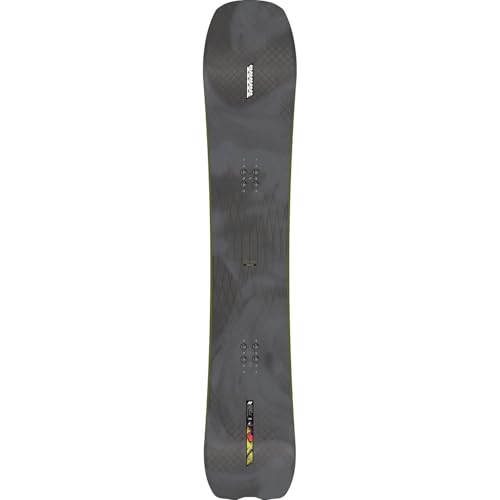
K2 Alchemist
- Length tested: 157 cm
- Weight: 2,920 g
- Base: Wax-infused sintered
- Nose: SpaceGlass
Bottom Line : Race-style edge bite with real snap out of the carve, from the mid-price tier. The stiff tail gives no help to a backseat landing.
Pros
- Deep Carving 9.5: the stiff tail loaded and fired out of heelside carves
- Edge Bite 9.5 on the firm training lanes
- Stability 9.5: tracked flat and calm
- Chop 9.0 through afternoon slush
Cons
- The stiff tail doesn't forgive a backseat landing
- The rigid structure passes sharp hits from rough ruts into your boots
- The base turned white and dry without routine hot waxing
Who it's best for
Technically strong freeriders with athletic legs, who want fast edge changes and carve pop on steep lines, will get the most from it. Shaun led and Ryan co-tested.
Why we love it
Deep Carving (9.5). Loading the stiff tail through a railed heelside carve stored a lot of energy, and it rocketed the rider out of the turn into the next edge with snappy, kinetic pop. The testers say the carbon matrix lets the nose twist slightly for predictable turn entry while the waist and tail stay rigid.
Stability (9.5). Blasting down the training lanes, the Alchemist tracked flat and calm. The maker lists a SpaceGlass nose, and the testers say it cut swing weight and silenced tip flap.
Edge Bite on Ice (9.5) and Chop (9.0). The edge held on the firm lanes with race-style authority, and the board sliced through afternoon slush cleanly. Rough ruts were the one place it gave back: the stiff structure sent sharp impacts into the boots.
What we didn't like
The tail is the trade-off. Land backseat coming off a roll, or fail to bring your hips forward in heavy chop, and the stiff tail doesn't flex to save you: the testers say it acts like an ejection spring and throws you off balance. Drive from the front foot and keep your hips over it.
The base needs care as well. The maker lists a wax-infused sintered base, and the testers' own base checks showed it turning white and dry, so it wants routine hot waxing.
Should you buy it?
Pick it if you carve for the exit and your legs can stay on top of a stiff tail. It scored 94 in the mid-price tier, five points under the Pantera and 230 g lighter. The Deep Fake, in the budget tier, scored two points higher but feels muted underfoot where the Alchemist feels lively.
Read our full K2 Alchemist review →
What is the best freeride snowboard for hardpack?
The best freeride snowboard for hardpack is the CAPiTA Black Snowboard of Death, where a rear-foot bump gave Shaun and Ryan the confidence to lean hard into heelside carves on salted morning hardpack, for 9.5 on edge bite and 93 overall.

CAPiTA Black Snowboard of Death
- Length tested: 159 cm
- Weight: 2,980 g
- Profile: Hybrid camber
- Flex: 6.5/10 (maker)
Bottom Line : Rear-foot grip on bulletproof snow and a base that out-glided the field, from the premium tier. The tail resists skids and the base wants waxing.
Pros
- Edge Bite 9.5: a rear-foot bump bit like a crampon on hardpack
- Stability 9.5 on the firm glacier lanes
- The base out-glided the other boards across the flat transitions
- The rockered nose floated easily in afternoon slush
Cons
- The stiff tail resists quick skids and slashes
- The factory base grind sucked in wet summer slush until waxed
- Stiff chassis demands active leg input in slush
- The only premium-tier board here
Who it's best for
Aggressive fall-line riders who want relentless edge hold on firm snow and a stiff platform under them should get this one. Shaun led and Ryan co-tested.
Why we love it
Edge Bite on Ice (9.5). The maker lists a progressive Death Grip sidecut. The testers describe it as an inverted bump under the rear binding, and on morning hardpack, where ordinary sidecuts wash out, it bit like a crampon.
Stability (9.5). The maker lists hybrid camber and a 0.8 inch setback. The testers found positive camber through the center, a flat section behind the back foot and a rockered nose, and the board stayed composed on the firm glacier lanes. The base consistently out-glided the other boards along the flat transitions.
Deep Carving (9.0) and Chop (9.0). Heelside carves were confident, though the tail locks into turns. In afternoon slush the rockered nose floated easily, though the stiff chassis wants active leg input to stay on track.
What we didn't like
The tail locks into turns. Breaking it loose for a quick, skidded speed check in steep terrain took aggressive muscular force. The maker lists a directional 6.5 out of 10 flex, and the tail on our board felt much stiffer than that number suggests.
The base is fast on cold morning snow, but the structured factory grind created suction in wet summer slush. A warm-temperature wax and a brass brush are the fix.
Should you buy it?
Only if hardpack is your terrain. It scored 93 and is the single premium-tier board here, tied with the mid-price Flagship, which beat it for chop (9.5 against 9.0) while the Black Snowboard of Death took edge bite (9.5 against 9.0).
Read our full CAPiTA Black Snowboard of Death review →
What is the best big mountain freeride snowboard?
The best big mountain freeride snowboard is the Jones Flagship, tied for the best chop plow-through of the ten at 9.5, and knifing through heavy afternoon ruts without being deflected, for 93 overall.
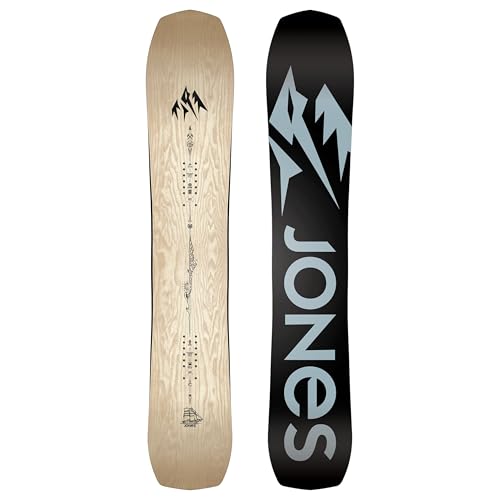
Jones Flagship
- Length tested: 161 cm
- Weight: 3,080 g
- Profile: Directional camber/rocker
- Flex: 8/10 (maker)
Bottom Line : Grounded in shifting snow and unmoved by afternoon ruts, from the mid-price tier. It feels heavy and uncooperative at a low pace.
Pros
- Chop 9.5, tied for the best of the ten, through heavy ruts and debris
- Stability 9.5: the nose refused to flutter through shifting snow
- Edge Bite 9.0 once tipped onto edge
- Felt grounded and composed on the steep upper apron
Cons
- Sluggish and heavy at a low pace
- A long turning radius fights tight, snappy carving adjustments
- Flat-basing across firm snow feels loose until you roll onto the edge
Who it's best for
Big-mountain riders and powerful riders who spend their days charging steep lines, heavy chop and open terrain are the audience. Shaun led and Ryan co-tested.
Why we love it
Stability (9.5). Straight-lining the upper apron through shifting snow textures, the Flagship felt grounded and the nose refused to flutter.
Chop (9.5). This is where it separates itself. In variable, chopped afternoon slush its 3,080 g and stiff nose acted like a freight train, knifing through heavy ruts and debris without being deflected.
Edge Bite on Ice (9.0). The maker lists Traction Tech. Once the board was tipped onto its edge, it gave solid grip on salted ice.
What we didn't like
The Flagship doesn't like flat bases or small turns. The maker lists a high 3D contour base, and in practice the turned-up contact points in the nose made flat-basing across firm snow feel loose and floating until we rolled our ankles and engaged the edge. Roll onto it early and the board settles.
Agility isn't its strength either. The long turning radius fights tight, snappy carving adjustments, and at a low pace it feels heavy and uncooperative. If quick arcs matter more than plowing, look at the Stratos.
Should you buy it?
A strong yes for steep, open terrain and heavy chop. It scored 93 in the mid-price tier, level with the premium Black Snowboard of Death, and 6 points under the Pantera. Tight, quick turning is the reason to look at another board.
Read our full Jones Flagship review →
What is the best agile freeride snowboard?
The best agile freeride snowboard is the Jones Stratos, letting Shaun and Amy tighten or extend a carving arc at will, for 9.5 on deep carving and 89 overall.

Jones Stratos
- Length tested: 159 cm
- Weight: 2,870 g
- Profile: Directional camber/rocker
- Flex: 6/10 (maker)
Bottom Line : Quick edge to edge with a springy exit, on a board lighter than the Flagship. Frozen chop bounces it, and the narrow waist drags large boots.
Pros
- Deep Carving 9.5: tighten or extend the arc at will
- Edge Bite 9.0: Traction Tech locked into carves instantly
- A springy, athletic exit from each turn
- Playful and nimble over afternoon slush berms
Cons
- Bounced and chattered in frozen afternoon chop (Chop 8.5)
- Narrow waist caused boot drag for US 10.5 boots on heelside carves
- Stability 8.5, a full point under the Flagship
Who it's best for
Freeriders who put snappy, tight carving arcs and a lively feel ahead of straight-line calm should try it. Shaun led and Amy co-tested.
Why we love it
Deep Carving (9.5). The testers describe a tighter sidecut than the Flagship's and a lively layup, and the Stratos snapped from edge to edge. Unlike the Flagship, it let the rider tighten or extend a carving arc at will, digging low, deep trenches and popping out of turns with athletic spring.
Edge Bite on Ice (9.0). The maker lists Traction Tech, and on the firm morning lanes it locked into carves instantly.
Stability (8.5) and Chop (8.5). The blunt, rockered nose floated over afternoon slush berms cleanly and felt playful and nimble.
What we didn't like
Heavy, frozen chop is its limit. The lighter chassis and softer, rockered nose got deflected and chattered where the heavier Flagship simply plowed through. The maker uses the same wording for the Stratos and the Flagship; the two don't ride alike, so don't buy this one as a stand-in for the other.
Boot size is a catch too. The narrow waist caused boot drag on aggressive heelside carves for riders in US 10.5 boots and up. That happened at our +21° front, -6° back stance. Steeper forward angles may help, but we didn't test them.
Should you buy it?
Buy it for quick, tight carving and a playful feel. It scored 89 in the upper-mid price tier, four points under the mid-price Flagship, so pay for the agility only if you want it.
Read our full Jones Stratos review →
What is the best camber freeride snowboard?
The best camber freeride snowboard is the Arbor Bryan Iguchi Pro, which scored 88, with a camber the testers felt through the whole running surface that kept it planted when setting edges down steep fall lines (the Pantera is camber too and scored higher, but it's the harder board to ride).

Arbor Bryan Iguchi Pro
- Length tested: 159 cm
- Weight: 3,020 g
- Profile: System camber
- Flex: 7/10 (maker)
Bottom Line : Planted camber, tenacious edge bite and a predictable arc. The wood-veneer topsheet is slick underfoot and the contact bumps can grab.
Pros
- Edge Bite 9.0: Grip Tech bumps clawed into salted morning ice
- Deep Carving 9.0: an unyielding, predictable arc from start to finish
- Stability 8.5: planted when setting an edge on steep lines
- A long nose gave plenty of surface area in slush
Cons
- The natural veneer topsheet is slick when you're unstrapped
- The contact bumps grabbed when we washed the tail out for a quick skid
- The blunt nose pushes snow rather than knifing through ruts (Chop 8.5)
Who it's best for
Traditionalists and powerful riders who want the stability, snap and locked-in feel of a full camber board are who it fits. Shaun led and James co-tested.
Why we love it
Edge Bite on Ice (9.0). The maker lists Grip Tech, extra contact points for firm snow. The testers found them under both the front and rear feet, and they gave claw-like bite on salted morning ice.
Deep Carving (9.0). The maker lists a System Camber profile. In deep carves the Iguchi Pro held an unyielding, predictable arc from initiation to exit.
Stability (8.5) and Chop (8.5). The testers found camber running fully through the running surface, which kept the board planted when setting edges down steep fall lines. In afternoon slush the elongated nose gave ample surface area, though its blunt shape pushed snow instead of knifing through ruts.
What we didn't like
Getting on and off the T-bar is awkward. The natural veneer topsheet is slick underfoot when you're unstrapped, so stepping off the T-bar without a stomp pad (a grippy pad you stick on the board) was precarious. Add one before your first day.
The Grip Tech bumps are the other snag. When we tried to wash out the tail for a quick skid, the extra contact points grabbed unpredictably and the board felt hooky. A light detune with a diamond file should take the edge off, though we didn't test that.
Should you buy it?
Take it if you want a camber board with extra grip under both feet. It scored 88 in the upper-mid price tier, five points under the mid-price Flagship and 1.0 lower for chop (8.5 against 9.5). That makes it a harder sell on score than the boards above.
Read our full Arbor Bryan Iguchi Pro review →
What is the best eco-friendly freeride snowboard?
The best eco-friendly freeride snowboard is the Salomon Highpath, a partly recycled build that scored 86 and carved cleanly and predictably with little strain on the legs.

Salomon Highpath
- Length tested: 159 cm
- Weight: 2,890 g
- Profile: Rock Out camber
- Shape: Tapered directional
Bottom Line : Smooth, easy carving on a damp, partly recycled build. It rides soft, the nose flutters when pushed and the tail gives way under heavy riders.
Pros
- Edge Bite 9.0: the quadratic sidecut locked onto firm morning snow easily
- Deep Carving 8.5: smooth, predictable and low on effort
- Chop 8.5: it soaked up slush chatter
- A partly recycled base and sidewall, with a bio-based resin
Cons
- Rides soft, around 6.5 to 7 out of 10 by the testers' feel
- The rockered nose fluttered when pushed hard on the training lanes
- The tail softened and washed out for heavier riders in laid-over carve exits
Who it's best for
Freeriders who want an intuitive, comfortable board that carves cleanly and spares their legs across variable snow are who it suits. Shaun led and James co-tested.
Why we love it
Edge Bite on Ice (9.0). The maker lists a quadratic sidecut, and it locked onto firm morning snow easily, with smooth, predictable carves.
Deep Carving (8.5). The maker lists Rock Out camber. The testers describe it as flat between the bindings, with camber underfoot and rocker at the tips, and it gave natural, intuitive turn initiation with minimal physical strain.
Stability (8.5) and Chop (8.5). The maker lists a basalt booster and a fiberglass damper. In slush they absorbed chatter smoothly, and the testers found it easy on the legs over a long session. The base and sidewall use recycled material and the resin is partly bio-based, per the maker.
What we didn't like
The flex is softer than the build suggests. The testers put it at about 6.5 to 7 out of 10. Pushed hard down the salted training lanes, the rockered nose fluttered, while the carbon boards here, such as the Pantera and Alchemist, kept their noses calm.
The tail is supportive for medium carves, but heavier riders, 200 lb and up, found it softened and washed out slightly in high-load, laid-over carve exits. Heavy riders who carve hard should look at a stiffer board.
Should you buy it?
Worth a look if comfort and the recycled build matter to you. It scored 86 in the upper-mid price tier, ten points under the budget Deep Fake, so it's a lifestyle choice, not a value one. Hard chargers will want the Flagship or Pantera.
Read our full Salomon Highpath review →
What is the best women's freeride snowboard?
The best women's freeride snowboard is the Lib Tech Dynamiss, the lightest board here at 2,740 g, scoring 82 and carving tightly and changing edges easily under Amy at 140 lb.
Lib Tech Dynamiss
- Length tested: 153 cm (women's)
- Weight: 2,740 g
- Profile: C3 camber
- Shape: Directional
Bottom Line : Light, agile and dependable on ice for lighter riders. The narrow waist drags large boots and the light nose gets bucked in frozen chop.
Pros
- Edge Bite 9.0: Magne-Traction edges cut cleanly into salted hardpack
- Lightest board here at 2,740 g
- Carved tightly and changed edges easily for Amy at 140 lb
- Active and easy to throw around in afternoon slush
Cons
- The narrow waist caused heel drag in US 10.5 boots on deep carves
- The light nose was deflected and bucked in frozen chop (Chop 8.0)
- Stability 8.0 and Deep Carving 8.0 trail the leaders
Who it's best for
Lighter riders, women and technical carvers in smaller boots, who want an ice-gripping camber board that's easy to throw around, are the audience. Amy led and Shaun co-tested.
Why we love it
Edge Bite on Ice (9.0). The maker lists Magne-Traction serrated edges, and on salted morning hardpack they cut into the ice cleanly. Edge hold was dependable again, as in our winter Dynamiss review of the 149, which scored the board 82, though in this field it tied six boards rather than leading. This summer test was on the 153.
Deep Carving (8.0). The maker lists an aggressive directional C3 camber contour. It gave snap and immediate tip-to-tail energy, and for Amy at 140 lb the board carved tightly and changed edges effortlessly.
Stability (8.0). In afternoon slush it was easy to maneuver, though its light build made it more active underfoot.
What we didn't like
Big boots are an issue. The narrow waist caused heel drag on deep carves in US 10.5 boots at our +21° front, -6° back stance. We didn't try other angles. The maker sells it as a women's board, the only one in this test, so check your boot size before you buy.
Frozen chop is another. When Shaun, at 175 lb, took it through frozen, rutted afternoon chop, the short nose and light core lacked the mass to plow through debris. It deflected and bucked where heavier boards stayed planted (Chop 8.0).
Should you buy it?
Yes, for lighter riders and smaller boots who want grip on ice. It scored 82 in the budget price tier, 14 points under the Deep Fake in the same tier. If you ride a bigger boot or weigh more, the Deep Fake is the better fit, though the maker sells it as a men's board.
Read our full Lib Tech Dynamiss review →
What is the best freeride snowboard for intermediate riders?
The best freeride snowboard for intermediate riders is the Lib Tech Cold Brew, which the maker lists for intermediate riders, scored 9.0 for edge bite, and rolled into turns with little effort from James.

Lib Tech Cold Brew
- Length tested: 157 cm
- Weight: 2,960 g
- Profile: C2 rocker/camber
- Flex: 6/10 (maker)
Bottom Line : Easy, catch-free turn initiation and dependable bite. The rocker center hunts on steep hard snow and washes out in laid-over carves.
Pros
- Edge Bite 9.0: Magne-Traction serrations held on firm morning hardpack
- Turns started with minimal lower-body effort
- The rockered center floated slush mounds with ease
- The TNT base was easy to look after
Cons
- Stability 7.5: the rockered center hunted for an edge on steep hard snow
- Deep Carving 7.5: it washed out in laid-over carves
- The base ran slower in wet afternoon slush than a high-grade sintered base
Who it's best for
Intermediate riders stepping into freeride, who want an easy-turning, floaty directional board, are who the maker aims it at. James led and Shaun co-tested.
Why we love it
Edge Bite on Ice (9.0). The maker lists seven Magne-Traction serrations for grip on hardpack and ice. On firm morning snow they gave dependable grip when the snow went slick.
Chop (8.0). The maker lists a directional C2 rocker and camber profile. In soft afternoon slush the rockered center and directional nose floated over mounds with ease, a comfortable way to cruise.
Stability (7.5) and Deep Carving (7.5). These are its two lowest scores, and the reasons are below. The upside of the same rocker center: turns started easily, forgiving and catch-free, with minimal lower-body effort.
What we didn't like
The maker lists the C2 profile for stability, and steep, firm snow found its limit. Straight-lining a steep fall line on morning ice, the rockered center made the board wander and hunt for an edge, and keeping it tracking flat took deliberate attention. In deep, laid-over carves heavier riders found the center washed out under load.
The TNT base is easy to maintain, as the maker says, but it ran noticeably slower in wet afternoon slush than a high-grade sintered base. Wax it for warm snow.
Should you buy it?
Take it as a stepping-stone into freeride, with limits. It scored 80 in the mid-price tier, the lowest of the ten, and none of our testers rode it as an intermediate, so we can't say it suits one. The Dynamiss scored two points higher from the budget tier, if your boots are small.
Read our full Lib Tech Cold Brew review →
How did we test the freeride snowboards?
We tested the freeride snowboards by riding all ten, two testers on each, off the T-bar on Horstman Glacier at Whistler Blackcomb in June and July 2026, then scoring stability, edge bite on ice, deep carving and chop plow-through.
A freeride board has one job: stay calm and hold an edge on steep, hard, broken-up snow. So every board met the same three phases of glacier snow. We rode hard, chemically salted training ice at 07:30, firm transition corn at midday, and heavy, rutted slush berms down the glacier run-out in the afternoon. The steepest runs were the salted fall line off the T-bar apron and the training lanes beside it.
Four testers rode them, and the lead and co-tester for each board are named in its section above. Shaun led eight boards, Amy led one and James led one, with Ryan, James, Amy and Shaun co-testing. Ryan is our heavy rider. James wears US men's 10.5 boots. Here are the testers, so you can match your own height and weight to a length:
| Tester | Height | Weight |
|---|---|---|
| Amy | 5 ft 7 in (170 cm) | 140 lb (64 kg) |
| James | 6 ft 1 in (185 cm) | 190 lb (86 kg) |
| Shaun | 5 ft 10 in (178 cm) | 175 lb (79 kg) |
| Ryan | 6 ft 2 in (188 cm) | 215 lb (98 kg) |
Every board went on the same Union Atlas Pro (Large) bindings, so binding flex couldn't change the results and all the vibration damping, edge roll and flex came from the boards. You can read about them in our best snowboard bindings guide. The stance was a directional freeride setup, 22 in (56 cm) wide, with +21° on the front foot and -6° on the back, and a 20 mm setback.
Plain-English words you'll see in this guide. Camber is an upward arch under the middle of the board that grips harder and pops. Rocker is the opposite, with the board raised between your feet or at the tips so it turns easier and floats. A directional board is built to ride one way, with a longer nose than tail. Sidecut is the curve cut into the board's edges that sets how it turns. A setback is a stance sitting behind the board's center. Edge bite is how well the edge holds on ice without skidding, and chop is broken, rutted snow. A fall line is the straight way down a slope, and flat-basing is riding with the board flat on the snow instead of on an edge. Boot drag is your boot catching the snow in a deep carve, and detuning is filing the edges so they grab less.
Two testers rode each board, and each board has one score out of 10 on four qualities:
- Stability: the steepest lane, ridden hard, noting whether the nose flapped or chattered or stayed calm
- Edge Bite on Ice: hard carves on the iciest morning snow, noting whether the edge held or skidded out
- Deep Carving: long, laid-over carves, noting whether the board held its arc to the end or washed out
- Chop Plow-Through: the same run through afternoon ruts and chopped slush, noting whether the nose cut through or got knocked off line
The overall score out of 100 is the plain average of the four scores, times 10, so no single quality outweighs another. There's one exception: the Lib Tech Dynamiss keeps the 82 from its published review, although its four summer scores average 82.5 and would round to 83; we kept 82 so the two Dynamiss pages agree. Weight is measured, not scored: we weighed every board without bindings on an Ohaus Valor 1000 digital bench scale, and it has a table and no rating chart. Price isn't scored either, so we group boards into price tiers instead. Specs such as profile, shape and flex come from the maker; every weight, score and result is ours. You can meet the testers at the bottom of this page.
Which freeride snowboard suits your riding?
The right freeride snowboard depends on the snow you ride most: pick by the row that matches you.
| If you are… | Buy |
|---|---|
| An expert who wants a very stiff, calm board and can drive it | Nitro Pantera |
| Riding firm, uneven snow and wanting the best score from the budget tier | Ride Deep Fake |
| Carving hard and wanting snap out of every turn | K2 Alchemist |
| Riding hardpack and ice and happy to pay for rear-foot grip | CAPiTA Black Snowboard of Death |
| Charging steep, open terrain and heavy chop | Jones Flagship |
| Wanting quick, tight carving arcs from a lighter board | Jones Stratos |
| Wanting a full camber board with grip bumps under both feet | Arbor Bryan Iguchi Pro |
| Wanting an easy-carving board with a recycled build | Salomon Highpath |
| A lighter rider, or a woman, in smaller boots who wants ice grip | Lib Tech Dynamiss |
| Stepping into freeride and wanting easy, catch-free turns | Lib Tech Cold Brew |
What did our freeride snowboard tests show?
Our freeride snowboard tests showed that stability and deep carving separated the boards most, with 2.5 points from best to worst, while edge bite separated them least at 1.0, and that the three heaviest boards were the three best at plowing chop.
Which freeride snowboards are the most stable?
The most stable freeride snowboards were the Nitro Pantera and the Ride Deep Fake, which both scored 10.0 for stability on the steep, salted training lanes.
Where we tested it. The steepest salted lane, ridden hard, noting whether the nose flapped or chattered or stayed calm.
What separated them. Stability had one of the two widest spreads, 2.5 points from the Pantera and Deep Fake at 10.0 to the Lib Tech Cold Brew at 7.5. The Alchemist, Black Snowboard of Death and Flagship scored 9.5, the Stratos, Iguchi Pro and Highpath scored 8.5, and the Dynamiss scored 8.0.
Weight helped but didn't decide it. The Iguchi Pro, at 3,020 g, scored 8.5, while the Alchemist, at 2,920 g, scored 9.5. The Cold Brew, the one board whose maker puts rocker between the feet, scored lowest, and the testers saw it hunt for an edge.
What it felt like. Straight-lining the steep apron, the Pantera's nose didn't flutter. The Highpath's rockered nose did when we pushed it hard down the same lanes.
| Board | What we found |
|---|---|
| Nitro Pantera | The nose didn't vibrate, hunt or flutter straight-lining the steep apron |
| Ride Deep Fake | Flat, silent and glued to the snow on rough, refrozen ice |
| K2 Alchemist | Tracked flat and calm down the training lanes |
| CAPiTA Black Snowboard of Death | Composed on the firm glacier lanes |
| Jones Flagship | The nose refused to flutter through shifting snow |
| Jones Stratos | Stable, with a playful, nimble feel |
| Arbor Bryan Iguchi Pro | Planted when setting edges on steep fall lines |
| Salomon Highpath | Rockered nose fluttered when pushed hard on the lanes |
| Lib Tech Dynamiss | More active underfoot because of its light build |
| Lib Tech Cold Brew | The rockered center hunted on steep, firm snow |
Which freeride snowboards have the best edge bite on ice?
The freeride snowboard with the best edge bite on ice was the Nitro Pantera, which scored 10.0 on salted morning ice with no lateral skidding.
Where we tested it. Hard carves on the iciest, salted morning snow, noting whether the edge held or skidded out.
What separated them. Edge bite had the narrowest spread, 1.0 point. The Pantera scored 10.0, the Deep Fake, Alchemist and Black Snowboard of Death scored 9.5, and the other six boards all scored 9.0.
A listed edge feature mostly didn't buy extra bite. The Flagship, Stratos, Iguchi Pro, Dynamiss and Cold Brew all list edge-grip features such as Traction Tech, Grip Tech or Magne-Traction, and all scored 9.0; only the Black Snowboard of Death, with its Death Grip sidecut, went higher at 9.5. The Highpath, with none that the maker lists, scored 9.0 too, and the Pantera and Deep Fake took the top two scores with none listed either.
What it felt like. Shaun leaned into his shins on the Pantera and it bit with no lateral skidding. Flat-basing the Flagship across the same firm snow felt loose until we rolled onto its edge.
| Board | What we found |
|---|---|
| Nitro Pantera | Bit with immediate authority; no lateral skidding on salted ice |
| Ride Deep Fake | Cut into hardpack with no abrupt moment of grab |
| K2 Alchemist | Held with race-style authority on the training lanes |
| CAPiTA Black Snowboard of Death | A rear-foot bump bit like a crampon on morning hardpack |
| Jones Flagship | Solid grip on salted ice once tipped onto edge |
| Jones Stratos | Locked into carves instantly on the firm lanes |
| Arbor Bryan Iguchi Pro | Claw-like bite from the extra contact points |
| Salomon Highpath | Locked onto firm morning snow with little effort |
| Lib Tech Dynamiss | Serrated edges cut into salted hardpack cleanly |
| Lib Tech Cold Brew | Dependable bite on firm morning hardpack |
Which freeride snowboards are the best for deep carving?
The best freeride snowboard for deep carving was the Nitro Pantera, which scored 10.0 and released from the apex of full-body carves with explosive rebound.
Where we tested it. Long, deep, laid-over carves, noting whether each board held its arc to the end or washed out.
What separated them. Deep carving shared the widest spread with stability, 2.5 points from the Pantera at 10.0 to the Cold Brew at 7.5. The Deep Fake, Alchemist and Stratos scored 9.5, the Black Snowboard of Death, Flagship and Iguchi Pro scored 9.0, the Highpath 8.5 and the Dynamiss 8.0.
Weight didn't decide it. The Stratos, 250 g lighter than the Deep Fake, matched its 9.5. The two lowest scores belong to the Dynamiss, the lightest board here, and the Cold Brew, with its rocker center.
What it felt like. The Stratos let us tighten or extend a carving arc at will. The Flagship's long turning radius fought tight adjustments.
| Board | What we found |
|---|---|
| Nitro Pantera | Full-body carves released with explosive rebound |
| Ride Deep Fake | Progressive turn initiation; held the arc on hardpack |
| K2 Alchemist | The stiff tail fired out of heelside carves |
| Jones Stratos | Tightened or extended the arc at will |
| CAPiTA Black Snowboard of Death | Confident heelside carves; the stiff tail locks into turns |
| Jones Flagship | Solid, but the long turning radius fought tight arcs |
| Arbor Bryan Iguchi Pro | An unyielding, predictable arc from start to finish |
| Salomon Highpath | Smooth, intuitive carves with little strain |
| Lib Tech Dynamiss | Carved tightly for Amy at 140 lb |
| Lib Tech Cold Brew | The rockered center washed out when laid over |
Which freeride snowboards are the best for chop?
The best freeride snowboards for chop were the Nitro Pantera, Ride Deep Fake and Jones Flagship, which tied at 9.5 plowing through rutted afternoon slush.
Where we tested it. The same run through afternoon ruts and chopped slush, noting whether the nose cut through or got knocked off line.
What separated them. Chop had a spread of 1.5 points. The Alchemist and Black Snowboard of Death scored 9.0, the Stratos, Iguchi Pro and Highpath scored 8.5, and the Dynamiss and Cold Brew scored 8.0.
This is where weight showed most. The three boards at 9.5 are the three heaviest, at 3,150 g, 3,120 g and 3,080 g. It still wasn't the whole story: the Cold Brew, at 2,960 g, scored below the lighter Stratos at 2,870 g.
What it felt like. Shaun took the Dynamiss through frozen, rutted afternoon chop and it deflected and bucked. The heavier boards stayed planted on the same snow.
| Board | What we found |
|---|---|
| Nitro Pantera | Bulldozed ruts and refused to deflect |
| Ride Deep Fake | Punched through slush mounds without bouncing |
| Jones Flagship | Knifed through heavy ruts and debris |
| K2 Alchemist | Sliced through slush; sharp hits reached the boots |
| CAPiTA Black Snowboard of Death | The rockered nose floated; the stiff chassis wanted leg input |
| Jones Stratos | Deflected and chattered in frozen chop |
| Arbor Bryan Iguchi Pro | The blunt nose pushed snow instead of cutting through |
| Salomon Highpath | Absorbed slush chatter smoothly |
| Lib Tech Dynamiss | The light nose was deflected and bucked in frozen ruts |
| Lib Tech Cold Brew | Floated over soft slush with ease |
How much do freeride snowboards weigh?
The freeride snowboards we weighed ranged from 2,740 g for the Lib Tech Dynamiss at 153 cm to 3,150 g for the Nitro Pantera at 160 cm.
Where we tested it. We weighed each board without bindings on an Ohaus Valor 1000 digital bench scale. Weight is measured and isn't part of the overall score, so it has a table and no rating chart.
What separated them. The spread from lightest to heaviest was 410 g. The boards come in different lengths, so compare weights with the length in the table. The Stratos is the second-lightest at 2,870 g and the Highpath the third at 2,890 g.
The two heaviest boards finished first and second, but light wasn't a handicap in every case. The Stratos finished sixth at 89, the Highpath eighth at 86, and the lightest board, the Dynamiss, finished ninth at 82.
| Board | Length ridden | Weight |
|---|---|---|
| Lib Tech Dynamiss | 153 cm (women's) | 2,740 g |
| Jones Stratos | 159 cm | 2,870 g |
| Salomon Highpath | 159 cm | 2,890 g |
| K2 Alchemist | 157 cm | 2,920 g |
| Lib Tech Cold Brew | 157 cm | 2,960 g |
| CAPiTA Black Snowboard of Death | 159 cm | 2,980 g |
| Arbor Bryan Iguchi Pro | 159 cm | 3,020 g |
| Jones Flagship | 161 cm | 3,080 g |
| Ride Deep Fake | 157 cm | 3,120 g |
| Nitro Pantera | 160 cm | 3,150 g |
What do people ask about freeride snowboards?
Short answers on freeride snowboards, taken from our own scores and test results.
What is a freeride snowboard?
A freeride snowboard is a directional board built to hold an edge and stay calm on steep, uneven snow. Nine of the ten makers list a directional shape or profile, and in our test the best of them were stiff, with camber or a camber-led profile. Expect a board that rewards commitment and wants strong legs.
What is the difference between freeride and all-mountain snowboards?
In our tests the freeride boards wanted more from the rider. The Pantera is sold by its maker as an all-mountain shape, and on the glacier it rode as an expert's freeride board that tires you out at a low pace. If you want one easygoing board for the whole mountain, read our best all-mountain snowboards guide instead.
What is the best freeride snowboard for intermediate riders?
We can't name one from testing, because none of our testers rode these boards as intermediates. The maker lists the Lib Tech Cold Brew for intermediate riders, and our testers found its turns easy and catch-free, though it scored lowest of the ten (80) and wandered on steep, firm snow. The Deep Fake scored 96, but the testers called it a board for hard chargers.
What length freeride snowboard should I buy?
Start with the maker's size chart for your height and weight, then use our riders as a cross-check. Shaun (5 ft 10 in, 175 lb) led eight boards at 157 to 161 cm, James (6 ft 1 in, 190 lb) rode the 157 cm Cold Brew, and Amy (5 ft 7 in, 140 lb) rode the 153 cm Dynamiss. Each board was tested at one length, so we can't say what a different length does.
Do freeride snowboards need waxing?
Some do: three boards asked for it in wet slush. The Pantera's hard base wanted aggressive scraping and a warm-temperature wax, the Black Snowboard of Death sucked in wet slush until we waxed it, and the Alchemist's base turned white and dry without routine hot waxing. The Cold Brew's TNT base was easy to look after, though it ran slower in wet slush.
What are the 10 best freeride snowboards?
The 10 best freeride snowboards are the ten ranked above, led by the Nitro Pantera at 99, then the Ride Deep Fake at 96 and the K2 Alchemist at 94.
For expert riders, buy the Nitro Pantera. If you want the best score from the budget tier, the Ride Deep Fake; if you carve first, the K2 Alchemist; if hardpack is the plan, the CAPiTA Black Snowboard of Death; and if chop and open terrain are the plan, the Jones Flagship. Prices move constantly on these, so use the Check Latest Prices buttons above for the current number.
Editor's Note, 10 November 2026: New guide. In June and July 2026 Shaun, Ryan, James and Amy rode ten freeride snowboards, two testers on each, off the T-bar on Horstman Glacier at Whistler Blackcomb, weighed each board, and scored each on stability, edge bite on ice, deep carving and chop plow-through.
Our Testers
This guide was written from the field notes of Shaun Taylor, Ryan Williams, James Ward and Amy Carter.
- Sean Williams, Editor-in-Chief. A former commercial outdoor copywriter and gear journalist who runs Top-Notch Outdoor as an independent publisher, with no brand-funded trips and no supplied ad copy.
- Ryan Williams, Lead Tester. A heavy fleet equipment mechanic and commercial vehicle technician. At 6 ft 2 in and 215 lb, he is our heavy, high-impact user. Ryan co-tested the Nitro Pantera, K2 Alchemist, CAPiTA Black Snowboard of Death and Jones Flagship.
- Amy Carter, Freestyle Snowboard Tester. An action sports videographer and terrain park builder, and our strongest snowboarder. Amy led testing of the Lib Tech Dynamiss and co-tested the Jones Stratos.
- James Ward, Alpine Ski & Fat Bike Tester. On skis since he was 3 and a former regional alpine racer, now a ski tuner and dryland fitness coach. James led testing of the Lib Tech Cold Brew, and co-tested the Ride Deep Fake, Arbor Bryan Iguchi Pro and Salomon Highpath.
- Shaun Taylor, Freeride Snowboard Tester. Raced banked slalom and halfpipe in the late 1980s and 1990s before turning to backcountry freeriding, and a finish carpenter by trade. Shaun led testing of eight boards: the Nitro Pantera, Ride Deep Fake, K2 Alchemist, CAPiTA Black Snowboard of Death, Jones Flagship, Jones Stratos, Arbor Bryan Iguchi Pro and Salomon Highpath. He co-tested the Lib Tech Dynamiss and Cold Brew.