

What is the best overall ski binding?
The best overall ski binding is the Atomic Strive 16 MN, which held through six flat drop landings at Whistler Blackcomb with no unwanted release and clicked shut with moderate force on steep traverses.

Atomic Strive 16 MN
- Weight: 1,125 g each
- DIN range: 7 to 16
- Brake width: 115 mm
- Boot soles: Alpine, GripWalk, touring
Bottom Line : The best all-round binding we tested: a 20 mm stand height, a metal heel and a crisp click-in, with no unwanted release in six drops. Its sliding plate wants a clean track.
Pros
- Hold 9.5: no unwanted release in six flat drop landings
- Power transfer and edge feel 9.5 from a very low toe
- Step-in 9.0, with moderate force on a steep traverse
- Takes alpine, GripWalk and touring boot soles
Cons
- The 115 mm brake overhangs a 102 mm waist by 6.5 mm a side
- The sliding plate needs to be kept clear of fine grit
- No setting below 7 on the DIN scale
Who it's best for
Tom led the testing, with Ryan co-testing, at shop-set DINs of 8.0 and 10.0. It suits aggressive freeriders who want a low stand height, a metal heel and the option of touring boots. Skiers who want a turntable heel, or whose range needs to start below 7, should look at the Look Pivot 2.0 15 GW.
Why we love it
Hold on Hard Landings (9.5). The metal-reinforced toe carriage and steel heel track held through six flat drop landings, with no unwanted release and no forward-pressure drift under heavy compressions.
Power Transfer & Edge Feel (9.5). The 20 mm stand height puts the boot sole almost on the topsheet. Tom noted fine edge detail and quick edge roll-over on hard snow.
Chop Damping (9.0) and Step-In (9.0). The low center of gravity and metal in the heel track calmed chopped spring snow without making the ski feel dead, and the heel snapped shut with moderate force on steep traverses.
What we didn't like
Match the brake to your ski. The 115 mm brake overhangs a 102 mm waist by 6.5 mm on each side, so a narrower brake suits a narrower ski.
Keep the sliding plate clean. Fine parking-lot grit stopped it centering cleanly. There is also no turntable heel, and the DIN range starts at 7.
Should you buy it?
Buy it if you ski hard and want the best all-round binding in our eight guides. It scores 92.5 and ranks first in our freeride guide. Look at the Look Pivot 2.0 15 GW if you want a turntable heel, and ask a certified shop whether the 7 to 16 range fits your setting.
Read our full Atomic Strive 16 MN review →

What is the best ski binding for beginners?
The best ski binding for beginners is the Look NX 11 GW, which Annie clicked shut on 5 of 5 slope attempts, with zero unwanted releases over five runs.

Look NX 11 GW
- Weight: 895 g each
- DIN range: 3.5 to 11
- Brake width: 90 mm
- Slope step-ins: 5 of 5
Bottom Line : Forgiving in and out, with a long heel lever that needs very little muscle. The plastic brake tabs can shear on a bench, and a cold length-adjust lever needs warming.
Pros
- Step-in ease 9.5 and step-out ease 9.5
- A long heel lever needs very little muscle
- No unwanted release over five runs
- Weighs 895 g each
Cons
- The plastic tabs holding the brake arms can shear if a brake catches on a bench
- The length-adjust lever went brittle at 19°F
- A little lateral play in the heel under heavy loads
Who it's best for
Annie led the testing, with James co-testing and running the bench checks. It suits new skiers who want a forgiving entry and exit. Advanced or heavy skiers who need rigid energy transfer on firm, aggressive carves should look further up this list.
Why we love it
Step-In Ease (9.5). It scored 5 of 5 on the flat and on the slope. The long heel lever means a pole presses it shut with little force, even with packed snow on the boot heel.
Step-Out Ease (9.5). A generous pole notch on the lever kept the tip from skidding off, and it released smoothly with light pressure.
Hold at Low DIN (8.5). The toe held through all five runs with no unwanted release and let go cleanly in a slow snowplow stumble.
What we didn't like
Treat the brake gently. James found that the brake arms sit in the composite heel body on molded plastic tabs, and a skier who catches a brake arm on a bench while stepping out backward can shear one. Step out forward near a bench.
In 19°F air the length-adjust lever at the rear of the track went brittle, and it took careful warming to avoid bending its locking teeth. The heel also showed slight lateral play under heavier loads.
Should you buy it?
Buy the NX 11 GW if you're new to skiing and want the most forgiving click-in we tested. It scores 91.5 and ranks first in our beginner guide. Aggressive or heavy skiers should start with the Atomic Strive 16 MN instead. A certified shop sets the DIN, so check the 3.5 to 11 range with one.
Read our full Look NX 11 GW review →

What is the best ski binding for heavy skiers?
The best ski binding for heavy skiers is the Marker Jester 18 Pro, which scored 10 out of 10 for hold, with no pre-release under Ryan's 215 lb on 6 to 8 foot drops.

Marker Jester 18 Pro
- Weight: 1,110 g each
- DIN range: 8 to 18
- Brake width: 110 mm
- Boot soles: Alpine, GripWalk, touring
Bottom Line : A tied-top hold under 215 lb on 6 to 8 foot drops, and a heavy magnesium build that quiets chop. It needs a hard stomp to close and starts at DIN 8.
Pros
- Hold 10.0: no pre-release in 6 to 8 foot drops under 215 lb
- Power transfer 9.5, with quick tip response on firm snow
- Chop damping 9.5 from heavy magnesium parts
- Anti Ice Rail scrapes slush off the boot
Cons
- Step-in 7.5: the heel needs a hard downward stomp
- The lowest DIN is 8, which rules out lighter skiers
- The height screw needed a feeler-gauge re-check after day three
Who it's best for
Ryan led the testing, with James co-testing, at shop-set DINs of 10.0 and 8.5. It suits heavy, high-impact freeriders and former racers on high-consequence terrain who like the direct feel of a conventional heel. Its range starts at 8, and it's not for easy cruising.
Why we love it
Hold on Hard Landings (10.0). The heavy horizontal toe spring and magnesium parts showed no side play or toe-wing flutter under Ryan's 215 lb on 6 to 8 foot drops into firm-to-slush compressions, with no pre-release.
Power Transfer & Edge Feel (9.5). The broad magnesium toe gave quick lateral response across a 102 mm waist on firm morning snow, with no lag at the tip.
Chop Damping (9.5). The heavy magnesium toe and heel quieted tip chatter and buzz through frozen afternoon ruts at speed.
What we didn't like
Closing the heel takes effort (7.5). The stiff heel needs a hard stomp to cam shut, and on a soft side hill that means planning your leg drive. The Anti Ice Rail on the toe does clear packed slush well.
Check the height screw. The manual screw wanted a feeler-gauge re-check after day three, to be sure vibration hadn't crept it. The scale starts at DIN 8.0, so average-weight and lighter skiers can't use this binding.
Should you buy it?
Heavy freeriders who want a 10.0 hold with a magnesium build should start here. It scores 91.5 and ranks second in our freeride guide. Skiers who need a lower range, or an easy click-in, should choose the Atomic Strive 16 MN above. Have a certified shop check the 8 to 18 range against your setting.
Read our full Marker Jester 18 Pro review →
What is the best ski binding for all-mountain skiing?
The best ski binding for all-mountain skiing is the Atomic Strive 14 GW, whose low toe gave Tom and James a close-to-the-snow edge on firm snow, at 530 g a pair less than the Look Pivot 2.0 15 GW.

Atomic Strive 14 GW
- Weight: 1,960 g pair
- DIN range: 5 to 14
- Brake width: 100 mm
- Tested at DIN: 8.0 and 8.5
Bottom Line : A close-to-the-snow edge feel, a light, positive click-in and 530 g less than the Pivot for the same 90. Its plastic parts want a shop check after a hard season.
Pros
- Edge Hold 9.5 from a low toe that keeps the boot near the ski
- Light, positive click-in: 10 of 10 on flat, 3 of 3 on steep
- Held James through hard carves, released when he crossed his tips on purpose
- Weighs 1,960 g a pair
Cons
- A small plastic clip under the sliding plate hopped out in wet slush
- Heel track showed 0.75 mm of fore-aft play after 18 hard days
- No screw to take play out of a worn boot sole
Who it's best for
Tom led the testing, with James co-testing. It suits advanced skiers on 88 to 100 mm skis who want a sharp, close-to-the-snow feel and an easy click-in. It's wrong for skiers who want the mass damping and sideways heel release of a metal turntable.
Why we love it
Edge Hold (9.5). A low toe keeps the boot close to the ski, and the micro-edging feel on firm groomed runs was exceptional.
Step-In (9.0). A light, positive snap and a wide heel funnel that steers the boot lugs into the toe jaws. It made all 10 flat tries and 3 of 3 on the 28-degree pitch.
Retention (9.0). It held James cleanly through hard, loaded turns and released when he crossed his tips deliberately in a recovery drill.
What we didn't like
Look at the plastic. In the shop, Tom found a small spring clip under the sliding plate. When boots with wet slush were forced in off-angle, the clip hopped out of its track and the binding failed the sideways release test until he popped it back. If you ski wet snow, have a shop look under the plate.
The heel track is polymer, not steel. After 18 hard days James measured 0.75 mm of fore-aft play on the center screw, and the toe height is fixed, so there is no screw to dial play out on worn boot soles. Damping is a step behind the Pivot (8.5 against 9.5).
In the shop, when boots with wet slush were forced in off-angle, that clip hopped out of its track.
Tom, in the testers' notes
Should you buy it?
This is the best all-rounder for an advanced skier, at 90 out of 100 and 530 g under the Pivot. If you drop cliffs, look at the Look Pivot 2.0 15 GW below, where the metal turntable damps and holds better. Ask a shop to check forward pressure and the sliding plate once a season.
Read our full Atomic Strive 14 GW review →
What is the best ski binding for park?
The best ski binding for park is the Marker Jester X 16 MWerks, which tied the Look Pivot 2.0 15 GW on 90 in our park test and clicked in 2.8 seconds faster, in 5.0 seconds.

Marker Jester X 16 MWerks
- Weight: 1,130 g each
- DIN range: 6 to 16
- Brake width: 90 mm
- Step-in time: 5.0 s
Bottom Line : A very low binding that tied the Pivot on 90 in the park test and clicked in 2.8 seconds faster. A twisted brake arm means replacing the whole forward heel track.
Pros
- Landing hold 9.5, with no pre-release in 25 laps
- Spin and swing feel 9.0 and rail and box toughness 9.0
- Step-in 8.5, at 5.0 seconds
- Weighs 1,130 g each, lighter than both Pivots
Cons
- The brake is molded into the forward heel track, so a twisted brake arm means a whole new track
- Wet, salted slush packed behind the sliding plate and hardened
- Skip it if you bend brake arms on urban rails
Who it's best for
Ryan co-tested it with James, and Annie sat out on its DIN 6 floor. It suits expert park, pipe and slopestyle riders who want the lowest center of gravity and a rigid, high-DIN chassis. Riders under 140 lb, and anyone who mangles brake arms on urban rails, should look elsewhere.
Why we love it
Landing Hold (9.5). The toe and the short heel kept forward pressure locked through eight harsh compression landings into rutted slush. Half a point under the Pivot decided the tie-break in the park guide.
Spin & Swing Feel (9.0). The single-cast toe and low carriage cut swing inertia on switch 540s compared with the standard Jester, and at 1,130 g it's lighter than both Pivots.
Rail & Box Toughness (9.0). The low stand height kept the base housings away from rail edges, and the magnesium inserts shrugged off hard iron coping hits.
What we didn't like
Mind the brake. To get the stand height down, Marker molded the brake into the forward heel-track plate. On the standard Jester a bent brake arm is a two-screw fix. Here a twisted arm from a rail hit means replacing the whole forward heel track.
Tight gaps around the heel spring guide rods let wet, salted slush pack behind the sliding plate and harden, which stopped it gliding sideways until it was rinsed off.
Should you buy it?
Choose the Jester X 16 MWerks if you want the lowest stand height without giving up much landing hold, and you would rather click in quickly than carry a Pivot's weight. It scores 90 and ranks second in our park guide. Skip it if you bend brake arms on rails.
Read our full Marker Jester X 16 MWerks review →
What is the best budget ski binding?
The best budget ski binding is the Atomic Stage 10 GW, which scored 9.5 for step-in ease, with 5 of 5 slope step-ins and no unwanted release over five runs.

Atomic Stage 10 GW
- Weight: 855 g each
- DIN range: 3 to 10
- Brake width: 100 mm
- Slope step-ins: 5 of 5
Bottom Line : A budget-tier binding that clicks in instantly and seats GripWalk soles on its own. Road grit in the toe tracks threw its release off by 1.2 DIN on one side until it was flushed.
Pros
- Step-in ease 9.5, with 5 of 5 clicks on the flat and the slope
- The toe adapts to the boot with no screwdriver
- No unwanted release over five runs
- Weighs 855 g each
Cons
- Road grit raised the toe's release by 1.2 DIN on the left side
- The heel track bows slightly when the ski flexes hard
- Chatter on icy morning patches
Who it's best for
Annie led the testing, with James co-testing. It suits new skiers at the budget end who want to click in fast. It's wrong for skiers who run near the top of its range, or who walk through gritty parking lots without wiping their soles.
Why we love it
Step-In Ease (9.5). It scored 5 of 5 on both the flat and the slope. The toe adapts automatically to GripWalk soles, and a light heel cup engaged straight away.
Step-Out Ease (9.0). A deep heel-lever recess took the pole tip cleanly, and it released with light downward pressure.
Boot Fit & Walking (9.0). The toe set its own height against GripWalk soles with no screwdriver work, and the boot sat snug on the slider.
What we didn't like
Wipe your boot soles. After walking through road-grit slush in the parking lot, fine particles worked into the toe wing tracks, and on the bench the left side's release torque read 1.2 DIN higher until the track was flushed with compressed air.
The thin plastic heel track also bowed 0.5 mm upward when the ski was fully decambered in a turn, and the light body passed chatter into the boots on icy morning patches.
It feels very light underfoot when carrying the skis, and clicking in is immediate. I didn't have to balance precariously on one foot while stomping to engage the heel.
Annie, in the testers' notes
Should you buy it?
Buy the Stage 10 GW if you're a new skier at the budget end and you wipe your soles. It scores 90 and ranks second in our beginner guide. Skiers who run a DIN near the top of its 3 to 10 range should ask a shop about a binding with a higher ceiling.
Read our full Atomic Stage 10 GW review →
What is the best ski binding for backcountry touring?
The best ski binding for backcountry touring is the ATK Raider 13 EVO, which weighed 390 g a foot with brakes, switched modes in 18 seconds and still scored 8.5 for downhill power.

ATK Raider 13 EVO
- Type: Pin
- DIN range: Up to 13
- Brake width: 102 mm
- Weight: 780 g pair
Bottom Line : A climb that feels almost weightless, with a descent that stays calm, and the fastest mode switch of the ten at 18 seconds. On a 102 mm ski the testers fitted ATK's spacer.
Pros
- Fastest mode switch in the backcountry guide: 18 seconds
- 390 g a foot with 102 mm brakes (780 g a pair)
- 14 mm of heel travel for a calm descent
- Open spring slots shed slush
Cons
- Needed ATK's aftermarket spacer for full heel response on the 102 mm skis
- The toe cam needed a quarter-turn for James's scuffed boot lugs
- No full alpine toe elasticity
Who it's best for
James led the test, with Tom co-testing. It suits dedicated backcountry skiers who want a very light climb without the harsh, rigid descent of a typical tech binding. It's the wrong buy for anyone who wants full alpine toe elasticity.
Why we love it
Uphill Efficiency (9.5). At 390 g a foot with brakes, skinning felt frictionless, and the magnetic heel flaps flip over with the handle of a ski pole.
Transitions (9.0). Eighteen seconds was the fastest switch in our touring test. Turning the heel engages the brake automatically, so there is no fiddly brake stopper to set.
Downhill Power (8.5) and Step-In (9.0). The 14 mm of elastic heel response soaked up ski flex, and the toe pulled the boot into place with little downward force.
What we didn't like
On the 102 mm skis James felt a slight dead band in heel power before the edge bit on firm snow. Fitting ATK's aftermarket composite spacer under the heel lug removed it, so plan for that part if your skis are wider than 100 mm.
The toe needs a careful first adjustment. On the bench Tom found James's moderately scuffed boot toe lugs slipped out during a hard kick turn until the front cam was adjusted a quarter turn. Worn boot lugs and this binding want a shop check together.
Mechanically, the Raider EVO 13 is a masterclass in CNC machining. 14 mm of true longitudinal spring travel in a 390-gram binding is exceptional engineering.
Tom, in the testers' notes
Should you buy it?
Choose it if you tour most days and want the best balance we found of climbing weight and downhill feel. It scores 90 and ranks first in our backcountry guide. Skip it if you want a full alpine toe, and plan on the spacer if your skis are wider than 100 mm.
Read our full ATK Raider 13 EVO review →
What is the best ski binding for big drops?
The best ski binding for big drops is the Look Pivot 2.0 15 GW, which held Ryan's 215 lb through 5-foot drops with zero unwanted pre-release and scored a perfect 10.0 for retention.

Look Pivot 2.0 15 GW
- Weight: 2,490 g pair
- Max DIN: 15
- Brake width: 105 mm
- Tested at DIN: 8.0 and 10.0
Bottom Line : The strongest hold and the calmest ride in our all-mountain test, with a 10.0 for retention. It's also the heaviest binding on this list and the hardest to click into on a steep pitch.
Pros
- Retention 10.0: no pre-release for Ryan off 5-foot drops
- No dead spots underfoot; edge drive was instant on hard snow
- All-metal housings soaked up chatter on refrozen wind ruts
- 45 mm of toe elasticity and 28 mm of heel travel
Cons
- Heaviest binding on this list at 2,490 g a pair
- Steep-slope step-in took work: 5 of 10 tries on a 28-degree pitch
- A plastic heel cover cracked in the cold, and a boot cuff chipped a brake arm
Who it's best for
Tom led the testing, with Ryan co-testing. It suits heavy, hard-charging skiers who land drops and ski chop fast, and who mostly click in on flat ground. It's the wrong binding for skiers under 140 lb, because its lowest DIN setting is 6.0.
Why we love it
Retention (10.0). The only perfect score of the all-mountain test. The toe gives 45 mm of lateral elasticity and the heel 28 mm of vertical travel, and together they carried Ryan's 215 lb off 5-foot drops with zero unwanted pre-release.
Damping (9.5). A cast-aluminum toe housing and a heavy steel turntable heel soaked up violent chatter across refrozen wind ruts.
Edge Hold (9.5). The short mounting footprint let the ski flex without dead spots, and lateral drive was instant on injected hard snow.
What we didn't like
Step-in is the honest flaw (7.0). The rotating heel needs the boot lined up exactly. On a 28-degree slope the testers got it on 5 of 10 tries, because the turntable swung out of line on the first attempts. The way around it: step in on flat ground, or drop the pole tip dead center into the metal notch.
Two hardware notes. At 11°F Ryan pried the heel lever down with a pole and cracked a plastic cover over the heel spring arm, which Tom calls cosmetic. And the 105 mm brakes dog-leg outward: on an 88 mm ski, Ryan's inside boot cuff hit the arm in tight carves and chipped the paint to bare metal.
On tight, feet-together carved turns down Gad Valley, my inside boot cuff smacked the brake arm hard enough to chip the black powder coat down to bare metal.
Ryan, in the testers' notes
Should you buy it?
If you land big drops and never want to think about pre-release, the Pivot 2.0 15 GW is the premium pick, and it ranks above the Atomic Strive 14 GW on retention. Lighter skiers should look elsewhere. Our brake was 105 mm on 88 mm skis, and this listing is the 105 mm version.
Read our full Look Pivot 2.0 15 GW review →
What is the best ski binding for durability?
The best ski binding for durability is the Look Pivot 2.0 18 GW, which was the toughest binding in our park test, with 10 out of 10 for toughness and zero structural damage in 25 laps.
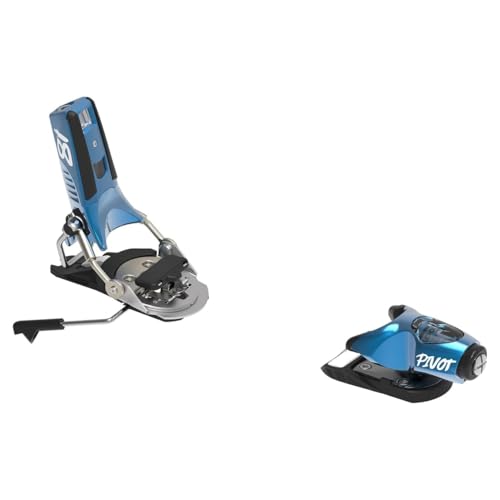
Look Pivot 2.0 18 GW
- Weight: 1,255 g each
- DIN range: 8 to 18
- Brake width: 95 mm
- Step-in time: 9.4 s
Bottom Line : The toughest binding in the park test, with zero pre-releases and zero structural damage in 25 laps. It's also the heaviest there at 1,255 g and the slowest to click into at 9.4 seconds.
Pros
- Rail and box toughness 10, the only 10 in the park test
- Landing hold 10, with no deflection under Ryan's 215 lb
- Spin and swing feel 9.0 at 1,255 g
- DIN range of 8 to 18
Cons
- Slowest step-in in the park test, 9.4 seconds (6.5)
- A false half-latch on soft slush landings
- The heel adjustment screw bound after rail slides
Who it's best for
James and Ryan tested it, and Annie sat out because her DIN is under its floor of 8. It suits heavy, high-impact park chargers and pro-level slopestyle skiers launching big jump lines. A certified shop sets your DIN, so check the range with one.
Why we love it
Landing Hold (10). No deflection and no heel lift under Ryan's 215 lb, stomping flat 25-foot kicker landings. It shares the top mark with the Pivot 2.0 15.
Rail & Box Toughness (10). The only perfect toughness score. Over 25 laps its steel and cast-metal build took direct rail slams with only superficial scrapes.
Spin & Swing Feel (9.0). A compact footprint keeps the swing weight centralized, though the steel toe adds slightly more pull than the Pivot 2.0 15's.
What we didn't like
Clicking in is a chore, and it's the lowest step-in score in the park test: 6.5, at 9.4 seconds. The steel heel spring needs immense downward leg drive to cam shut, and on soft landings the heel clicked halfway down and looked engaged while forward pressure stayed slack. Check the heel is fully shut before you drop in.
On square down-rails the heel adjustment rods flexed inward and the adjustment screw bound in its collar until it was freed with penetrating lubricant. Its lowest setting is DIN 8, which rules out most lighter riders by design.
Should you buy it?
If you wear gear out and a certified shop sets you at the top of its 8 to 18 range, this is the most durable binding we tested. It scores 89 and ranks third in our park guide. Everyone lighter should look at the Pivot 2.0 15 above. The brake we tested was 95 mm on an 88 mm ski.
Read our full Look Pivot 2.0 18 GW review →
What is the best ski binding for charging chop?
The best ski binding for charging chop is the Marker Jester 16, whose magnesium parts quieted refrozen crust and heavy chop and held Ryan's 215 lb through deep drops, with 9.0 for damping and 9.5 for retention.

Marker Jester 16
- Weight: 2,160 g pair
- Max DIN: 16
- Brake width: 90 mm
- Tested at DIN: 10.0 and 8.0
Bottom Line : Very strong retention and damping for a heavy skier, in a binding 330 g lighter than the Pivot 2.0 15. The step-in is stiff, and it's overbuilt for most 88 mm skis.
Pros
- Retention 9.5 under Ryan's 215 lb off deep drops
- Damping 9.0: magnesium parts quieted refrozen crust and chop
- Edge Hold 9.0 with no twist or lag
- 330 g lighter than the Pivot 2.0 15
Cons
- Stiff step-in: needs an aggressive downward stomp
- Toe height screw backed down a quarter turn in three days
- Slush froze behind the heel cam and locked it
Who it's best for
Ryan led the testing, with Tom co-testing. It suits heavy, aggressive skiers who charge chop and drops. It's the wrong binding for skiers under 160 lb, or for casual cruising speeds.
Why we love it
Retention (9.5). It held Ryan's 215 lb through deep drops and hard compressions with total mechanical security, second only to the Pivot.
Damping (9.0). The magnesium parts quieted refrozen sun crust and heavy chop.
Edge Hold (9.0). The toe and a cross-mounted spring drove power into the ski with no twisting lag.
What we didn't like
The step-in is stiff (8.0). The heel needs an aggressive downward stomp, and the force is high for lighter skiers. It also felt overbuilt on an 88 mm all-mountain ski unless skied hard.
Two things to watch. Tom found the manual toe height screw backed down a quarter turn after three days of chatter on hard snow, leaving a 0.4 mm gap, so check it with a feeler gauge every couple of weeks. And in wet snow that froze, ice packed behind the heel rollers and Ryan had to chip it out with a pocket screwdriver before he could step in.
I had to chip it out with a pocket screwdriver before I could step back in.
Ryan, in the testers' notes
Should you buy it?
Heavy skiers who ski hard get most of the Pivot's retention here in a lighter binding. It scores 88 and ranks third in our all-mountain guide. Skiers under 160 lb, or anyone who wants an effortless click-in, should look at the Tyrolia Attack 14 GW. Our brake was 90 mm, 2 mm over the ski waist.
Read our full Marker Jester 16 review →
How did we test the ski bindings?
We tested the ski bindings in eight separate guides, each with its own four scored qualities and one measured number, then gave every binding a single score that follows it across the site.
A ski binding has to click in, hold an edge, stay on until it should let go, and survive the day. Each guide scores the qualities that matter for its kind of skiing. The all-mountain, park and freeride guides score edge or power transfer, damping, hold and step-in. The beginner guide scores step-in and step-out ease, hold at a low DIN, and boot fit and walking. The backcountry guide scores uphill efficiency, transitions, downhill power and step-in.
The ten on this page were skied by Ryan, Tom, James and Annie. Every test pair had its release and forward pressure checked by a certified shop technician, who sets the DIN. The all-mountain guide used ten identical pairs of one ski at Snowbird and Alta in Utah; the freeride guide was tested at Whistler Blackcomb. Specs such as maximum DIN and the boot-sole standard come from the listing where it states them. Boot, DIN, brake width and every result come from the testers.
| Tester | Height | Weight | Age |
|---|---|---|---|
| Ryan | 6 ft 2 | 215 lb | 38 |
| Tom | 5 ft 11 | 178 lb | 36 |
| James | 5 ft 10 | 172 lb | 33 |
| Annie | 5 ft 6 | 135 lb | 31 |
Each card shows the four scores from the binding's home guide, out of 10 and rounded to the nearest half point, with the card's own weight and DIN spec. Weight is measured, not scored, on a calibrated bench scale (±0.5 g). The basis differs by guide, a pair in some and one binding in others, so each card says which. Weights aren't compared across guides.
The overall score out of 100 is the binding's one sitewide score. A binding that appears in more than one of our guides has one score everywhere: the average of its results across those guides, rounded to the nearest half point. The metric bars show the home guide's own test. Two groups of scores tie, and we broke each tie by the highest minimum metric on the card, then by variety of use: the NX 11 GW ranks above the Jester 18 Pro at 91.5 (lowest bar 8.5 against 7.5), and the Pivot 2.0 15 GW, with a 7.0 for step-in, comes last of the five-way tie at 90.0. The nine kids-only bindings are scored in our guides for kids and teens, not in this adult ranking.
Which ski binding suits your skiing?
The right ski binding depends on how you ski and how much you weigh: pick the row that matches you.
| If you're… | Buy |
|---|---|
| An aggressive skier who wants the best all-round binding we tested | Atomic Strive 16 MN |
| A new skier who wants the most forgiving click-in | Look NX 11 GW |
| Heavy and high-impact, on high-consequence terrain | Marker Jester 18 Pro |
| An advanced resort skier who wants a close-to-the-snow feel | Atomic Strive 14 GW |
| A park skier who wants a low stand height and a fast click-in | Marker Jester X 16 MWerks |
| A new skier at the budget end who wipes their boot soles | Atomic Stage 10 GW |
| A dedicated backcountry skier counting grams | ATK Raider 13 EVO |
| Landing big drops and never wanting to think about pre-release | Look Pivot 2.0 15 GW |
| Hard on gear, in the park or on rails, and set at the top of its range | Look Pivot 2.0 18 GW |
| Heavy and charging chop on a lighter binding than the Pivot | Marker Jester 16 |
What did our ski binding tests show?
Our ski binding tests showed that mass and metal won on hold, light and simple heels won on step-in, and the Atomic Strive 16 MN was the only binding to score 9.0 or better on all four of its qualities.
The overall chart ranks the ten by their sitewide score. The step-in and hold charts take each binding's score from its own home guide, so they compare the same quality tested in different guides, not one test.
How do the ten best ski bindings score overall?
The best ski binding overall is the Atomic Strive 16 MN at 92.5 out of 100, ahead of the Look NX 11 GW and Marker Jester 18 Pro at 91.5.
Where we tested it. Eight guides, each with its own conditions. A binding in more than one guide has one score: the average of its results, rounded to the nearest half point.
What separated them. Four bindings tied on 90.0 and are ordered by their lowest metric, then by variety of use. The Strive 16 MN, at 92.5, is the only binding on the list with no bar under 9.0.
The list mixes kinds of skiing on purpose. A beginner binding (NX 11, Stage 10) and a heavy freeride binding (Jester 18 Pro, Pivot 2.0 15) sit side by side because each scored near the top of its own test.
What it felt like. The scores that clustered at the top came from very different bindings: a 895 g beginner binding, a 780 g pair of pin bindings and a 2,490 g pair of all-metal ones.
| Binding | What we found |
|---|---|
| Atomic Strive 16 MN | 92.5, home guide: Best Freeride Ski Bindings |
| Look NX 11 GW | 91.5, home guide: Best Beginner Ski Bindings |
| Marker Jester 18 Pro | 91.5, home guide: Best Freeride Ski Bindings |
| Atomic Strive 14 GW | 90, home guide: Best All-Mountain Ski Bindings |
| Marker Jester X 16 MWerks | 90, home guide: Best Park Ski Bindings |
| Atomic Stage 10 GW | 90, home guide: Best Beginner Ski Bindings |
| ATK Raider 13 EVO | 90, home guide: Best Backcountry Ski Bindings |
| Look Pivot 2.0 15 GW | 90, home guide: Best All-Mountain Ski Bindings |
| Look Pivot 2.0 18 GW | 89, home guide: Best Park Ski Bindings |
| Marker Jester 16 | 88, home guide: Best All-Mountain Ski Bindings |
How easy are the best ski bindings to step into?
The easiest of the ten to step into were the Look NX 11 GW and Atomic Stage 10 GW, which each scored 9.5.
Where we tested it. Each binding's own guide: ten clicks on flat ground and three on a 28-degree pitch (all-mountain), 5 of 5 slope attempts (beginner), and timed clicks (park).
What separated them. The two beginner bindings made 5 of 5 slope step-ins and scored 9.5. The Strive 16 MN, Strive 14 GW and Raider 13 EVO followed at 9.0. At the bottom were the bindings with steel heels: the Pivot 2.0 15 GW at 7.0, with 5 of 10 tries on a 28-degree pitch, and the Pivot 2.0 18 GW at 6.5, with 9.4 seconds in the park test.
The Jester 18 Pro (7.5) and Jester 16 (8.0) need a hard downward stomp. The Jester X 16 MWerks clicked in in 5.0 seconds (8.5).
What it felt like. Mass trades against ease. The heaviest, most retentive bindings on this list were also the slowest to click into.
| Binding | What we found |
|---|---|
| Look NX 11 GW | Long heel lever, 5 of 5 on the slope |
| Atomic Stage 10 GW | Clicks in immediately, 5 of 5 on the slope |
| Atomic Strive 16 MN | Crisp snap, moderate force on a steep traverse |
| Atomic Strive 14 GW | Light, positive snap; 3 of 3 on the steep pitch |
| ATK Raider 13 EVO | Toe pulls the boot in with little downward force |
| Marker Jester X 16 MWerks | 5.0 seconds in the park test |
| Marker Jester 16 | Needs an aggressive downward stomp |
| Marker Jester 18 Pro | Stiff heel needs a hard stomp |
| Look Pivot 2.0 15 GW | 5 of 10 tries on a 28-degree pitch |
| Look Pivot 2.0 18 GW | 9.4 seconds, slowest in the park test |
How well do the best ski bindings hold on hard landings?
The best holds were the Marker Jester 18 Pro, Look Pivot 2.0 15 GW and Pivot 2.0 18 GW, which each scored 10.0.
Where we tested it. Drops and hard landings in four guides: 6 to 8 foot drops (freeride), 5-foot drops (all-mountain) and 25-foot kicker landings (park). The beginner and touring bindings are left out because they weren't tested on drops.
What separated them. Three bindings scored 10.0 with no pre-release under Ryan's 215 lb. The Strive 16 MN, Jester X 16 MWerks and Jester 16 followed at 9.5, and the Strive 14 GW at 9.0.
Every one of the seven was skied by Ryan or by James, our two highest-impact testers.
What it felt like. The testers describe the 10.0 bindings as bindings they stopped thinking about.
| Binding | What we found |
|---|---|
| Marker Jester 18 Pro | No pre-release, 6 to 8 foot drops, 215 lb |
| Look Pivot 2.0 15 GW | Zero pre-release off 5-foot drops, 215 lb |
| Look Pivot 2.0 18 GW | No deflection on flat 25-foot kicker landings |
| Atomic Strive 16 MN | No unwanted release in six flat drop landings |
| Marker Jester X 16 MWerks | No pre-release in 25 park laps |
| Marker Jester 16 | Total security through deep drops and compressions |
| Atomic Strive 14 GW | Held in hard turns; released on purpose |
Every Ski Binding Guide We Publish
Our ski binding guides cover each kind of skier, and each names its own winner.
- Best All-Mountain Ski Bindings: ten resort bindings on identical skis; our pick is the Look Pivot 2.0 15 GW (90 out of 100).
- Best Park Ski Bindings: ten bindings ridden on kickers, rails and boxes; our pick is the Look Pivot 2.0 15 GW (90 out of 100).
- Best Freeride Ski Bindings: ten bindings on steep, hard-landing terrain; our pick is the Atomic Strive 16 MN (92.5 out of 100).
- Best Beginner Ski Bindings: ten bindings tested for easy entry and a low-DIN hold; our pick is the Look NX 11 GW (91.5 out of 100).
- Best Backcountry Ski Bindings: ten pin, hybrid and frame touring bindings; our pick is the ATK Raider 13 EVO (90 out of 100).
- Best Ski Bindings for Kids Under 6: seven bindings for the youngest skiers; our pick is the Tyrolia JRS 7.5 GW (92.5 out of 100).
- Best Ski Bindings for Kids 6 to 12: ten bindings for school-age skiers; our pick is the Tyrolia SX 7.5 GW (92.5 out of 100).
- Best Ski Bindings for Teenagers: ten bindings for the step from junior to adult gear; our pick is the Salomon Stage 11 GW (86.5 out of 100).
Ski Binding Reviews (45)
Every ski binding review we've published, in alphabetical order, with its one sitewide score out of 100.
- ATK Raider 13 EVO review (90)
- Atomic Colt 5 GW review (90)
- Atomic Colt 7 GW review (89)
- Atomic Shift2 10 MN review (80)
- Atomic Shift2 13 MN review (82.5)
- Atomic Stage 10 GW review (90)
- Atomic Strive 10 GW review (82)
- Atomic Strive 14 GW review (90)
- Atomic Strive 16 MN review (92.5)
- Dynafit ST Radical review (80)
- Dynafit Superlite 150 review (77.5)
- Look NX 10 GW review (77.5)
- Look NX 11 GW review (91.5)
- Look NX 7 GW review (82)
- Look Pivot 2.0 11 GW review (82)
- Look Pivot 2.0 13 GW review (82.5)
- Look Pivot 2.0 15 GW review (90)
- Look Pivot 2.0 18 GW review (89)
- Look SPX 11 GW review (83.5)
- Look Team 4 GW review (91.5)
- Marker 4.5 review (87.5)
- Marker 7.0 Junior review (87.5)
- Marker Alpinist 12 review (82.5)
- Marker Baron EPF 13 review (62.5)
- Marker Duke PT 13 review (75)
- Marker Duke PT 16 review (86.5)
- Marker Free 7 JR (GW) review (81.5)
- Marker Griffon 13 review (84)
- Marker Griffon X 13 review (82.5)
- Marker Jester 16 review (88)
- Marker Jester 18 Pro review (91.5)
- Marker Jester X 16 MWerks review (90)
- Marker Kingpin 10 review (77.5)
- Marker Kingpin 13 review (80)
- Marker Race Junior 8 review (86.5)
- Marker Squire 10 review (77.5)
- Marker Squire 11 review (79)
- Salomon Stage 11 GW review (86.5)
- Tyrolia Attack 11 GW review (86.5)
- Tyrolia Attack 14 GW review (87.5)
- Tyrolia Attack LYT 11 GW review (85.5)
- Tyrolia JRS 7.5 GW review (92.5)
- Tyrolia Protector PR 13 GW review (82.5)
- Tyrolia SX 4.5 GW review (91.5)
- Tyrolia SX 7.5 GW review (92.5)
What do people ask about ski bindings?
These are common questions about ski bindings, answered from our own test results.
What is the best ski binding overall?
The Atomic Strive 16 MN, at 92.5 out of 100, is the best ski binding we tested. It held through six flat drop landings with no unwanted release, and it takes alpine, GripWalk and touring boot soles. Its DIN range is 7 to 16, so ask a certified shop whether that fits your setting.
Which ski binding is easiest to step into?
Among the ten on this page, the Look NX 11 GW and Atomic Stage 10 GW, which each scored 9.5 and made 5 of 5 slope step-ins. In our beginner test the Tyrolia Attack LYT 11 GW scored 10.0 for step-in ease, which is the highest we recorded; it sits lower overall at 85.5 and has its own review.
Who should set the DIN on my ski bindings?
A certified shop technician. DIN depends on your weight, height, boot sole length and ability, and a shop checks release on a calibrated tester. Ours did that for every binding in the guides, and each testers' settings are in the guide they were tested in. Check each binding's range against your own setting with a shop before you buy.
Do I need GripWalk or alpine bindings?
Match the binding to your boot sole. The Atomic Strive 16 MN and Marker Jester 18 Pro take alpine, GripWalk and touring soles. The other listings don't all state the sole standards, so check the listing and your boot before you order. Our testers wore GripWalk boots in the all-mountain test.
Where are the kids' ski bindings?
Kids' bindings have their own guides and scores, because junior bindings are sized by boot and DIN range. See Best Ski Bindings for Kids Under 6, Best Ski Bindings for Kids 6 to 12, Best Ski Bindings for Teenagers. The ranked ten on this page are adult-size bindings.
Are lighter ski bindings worse?
Lighter bindings gave up some damping in our tests: the three lightest all-mountain bindings scored lowest for damping (6.5 to 7.0). Weight alone doesn't settle hold, though. In our freeride test the 1,125 g Atomic Strive 16 MN held through six flat drop landings with no unwanted release.
What are the 10 best ski bindings?
The 10 best ski bindings are the ten ranked above, led by the Atomic Strive 16 MN.
Buy the Atomic Strive 16 MN if you ski hard and want one binding that does everything well. New skiers should choose the Look NX 11 GW or, at the budget end, the Atomic Stage 10 GW. Heavy skiers should look at the Marker Jester 18 Pro or the Marker Jester 16, resort skiers at the Atomic Strive 14 GW, park skiers at the Marker Jester X 16 MWerks, and backcountry skiers at the ATK Raider 13 EVO.
Editor's Note, 13 November 2026: New hub page. It ranks the ten best adult-size ski bindings from our eight ski binding guides by each binding's one sitewide score, from tests by Ryan, Tom, James and Annie, and lists our ski binding guides and reviews as they go live.
Our Testers
This page draws on the tests of Ryan Williams, Tom Harris, James Ward and Annie Ward in our ski binding guides.
- Sean Williams, Editor-in-Chief. A former commercial outdoor copywriter and gear journalist who runs Top-Notch Outdoor as an independent publisher, with no brand-funded trips and no supplied ad copy.
- Ryan Williams, Lead Tester. A heavy fleet equipment mechanic and commercial vehicle technician. At 6 ft 2 and 215 lb he is our heavy, high-impact user. Ryan led the testing on the Marker Jester 18 Pro, Marker Jester X 16 MWerks and Marker Jester 16 and co-tested the Atomic Strive 16 MN, Look Pivot 2.0 15 GW and Look Pivot 2.0 18 GW.
- Tom Harris, All-Mountain Ski Tester. A ski shop service manager and boot fitter. A strong advanced skier who loves bowls and glades. Tom led the testing on the Atomic Strive 16 MN, Atomic Strive 14 GW and Look Pivot 2.0 15 GW and co-tested the ATK Raider 13 EVO and Marker Jester 16.
- James Ward, Alpine Ski & Fat Bike Tester. On skis since he was 3 and a former regional alpine racer. Now a ski tuner and dryland fitness coach. James led the testing on the ATK Raider 13 EVO and Look Pivot 2.0 18 GW and co-tested the Look NX 11 GW, Marker Jester 18 Pro, Atomic Strive 14 GW, Marker Jester X 16 MWerks and Atomic Stage 10 GW.
- Annie Ward, Women’s All-Mountain Snowboard Tester. A freelance graphic designer and committed weekend all-mountain rider. Annie led the testing on the Look NX 11 GW and Atomic Stage 10 GW.


