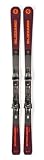
What are the best overall carving skis?
The best overall carving skis are the Head Supershape e-Original, which scored 9.5 out of 10 for edge grip, quickness and energy, and held glazed ice on Ego Bowl with no slip.

Head Supershape e-Original
- Length tested: 170 cm
- Weight: 3,435 g, one ski with binding
- Waist: 66 mm
- Sold as: Ski + binding
Bottom Line : The sharpest short-turn carver here, with joint-best edge grip on test. It's heavy with its binding on, it wants to turn all the time, and it bogs down in deep afternoon slush.
Pros
- Edge grip 9.5 and quickness 9.5, the joint best in the test
- Energy out of the turn 9.5, a strong spring into the next arc without feeling harsh
- A 12.1 m radius for tight, rhythmic turns
- A binding comes in the box
Cons
- The heaviest set on test, at 3,435 g for one ski with its binding
- A tall 33.5 mm stand height under the boot
- A 66 mm waist that gets pushed around in deep afternoon slush
Who it's best for
James led this test and Tom co-tested it. It suits advanced and expert skiers who love linking tight, powerful arcs on firm snow. Intermediates who skid their turns will fight it, and so will anyone who wants float in afternoon slush.
Why we love it
Edge Grip on Firm Snow (9.5). The ski locked onto glazed Ego Bowl ice like a slalom race ski. The 66 mm waist and the factory edge bevels, 1.0° on the base and 88° (2°) on the side, gave a bite that showed no slip.
Quickness Edge to Edge (9.5). The 12.1 m radius rolled from edge to edge with a snap through short, rhythmic turns on Dave Murray Downhill.
Energy Out of the Turn (9.5). Both testers felt a strong spring out of round turns that carried them into the next arc without feeling harsh. It also scored 9.0 for speed stability: the ski's EMC damping and Crossforce Carbon construction kept the tip quiet at speed, and only deep afternoon slush deflected it.
What we didn't like
This is a pure morning-groomer slalom scalpel; it wants to be turning constantly from top to bottom, which makes it exhilarating on crisp corduroy and a real leg burner on long, uninterrupted descents.
James, in the testers' notes
Weight is the trade-off. Tom weighed one ski as sold: a 2,270 g bare ski plus a 1,165 g binding makes 3,435 g, or 6,870 g a pair. The binding alone is about a third of that, and its 33.5 mm stand height feels tall if you ever stray outside the groomed runs. Check the binding on your own pair: the listing names a Protector 11 GW, and the testers' pair carried the Protector PR 13 GW.
The narrow 66 mm waist bogs down in deep afternoon slush piles. This is a ski for firm snow, and on long, uninterrupted runs it's tiring to keep turning.
Should you buy it?
Choose the Head Supershape e-Original if you're an advanced or expert skier who wants the tightest, grippiest carve on firm morning snow and doesn't mind a heavy set. If weight matters, the Hero Elite is 1,950 g with its plate, though it needs a binding. If you want something calmer through afternoon chop, take the Atomic Redster Q9.8 Revoshock S, and intermediates who skid should start with the Redster Q6.
Read our full Head Supershape e-Original review →

What are the best slalom carving skis for short turns?
The best slalom carving skis for short turns are the Rossignol Hero Elite ST Ti Konect, which scored 9.5 out of 10 for edge grip, quickness and energy, and weighed just 1,950 g for one ski with its plate.

Rossignol Hero Elite ST Ti Konect
- Length tested: 167 cm
- Weight: 1,950 g, one ski with plate
- Waist: 68 mm
- Sold as: Ski + plate
Bottom Line : Slalom-style quickness and ice bite in a light ski that's more forgiving than a race ski. It's sold with a plate but no binding, and it works best in short turns.
Pros
- Edge grip 9.5, quickness 9.5 and energy 9.5
- A light 1,950 g for one ski with its plate on
- Slightly more forgiving than a slalom race ski
- A 13.0 m radius that rewards a fast turn rhythm
Cons
- Sold with a plate but no binding: you must buy a compatible one
- Sharp factory edge bevels punish skidded turns
- Speed stability 8.5: the 13.0 m radius feels busy in long, fast turns
Who it's best for
Technical frontside skiers and amateur slalom racers who thrive on short, quick turns on firm snow are the target here. James led and Tom co-tested the pair. Skiers who prefer long, fast arcs, wear soft recreational boots or want one ski for chopped snow should pick something else.
Why we love it
Edge Grip on Firm Snow (9.5). The titanal layer and the central rail that stiffens the ski locked onto icy pitches with precision. Tom's bevel gauge found a race-room tune out of the wrapper, 0.5° on the base and 87° (3°) on the side.
Quickness Edge to Edge (9.5). The 68 mm waist and 13.0 m radius snapped between edges with little effort in tight, rhythmic turns.
Energy Out of the Turn (9.5). The tail rebound fired both testers smoothly from turn to turn without locking them into one rigid radius. Speed stability was 8.5: very calm in its short-to-medium sweet spot, though wide, fast arcs felt busier than on the Redster Q9.8.
What we didn't like
Slightly lighter and more forgiving than a FIS slalom ski, yet that 13.0 m sidecut demands continuous, high-cadence turning that will light up your quads on top-to-bottom laps.
James, in the testers' notes
Binding choice is limited. The ski is sold with its Konect plate and no binding, so you need one that fits the plate. The testers mounted the Look SPX 14 Konect GW.
Tom's bevel gauge check points to the second flaw: the sharp edge tune delivers instant ice bite, but it feels hooky if you pair it with soft boots or skid it flat. At 68 mm it also struggles in afternoon chop.
Should you buy it?
If you ski short, quick turns on firm snow in stiff boots, the Rossignol Hero Elite ST Ti Konect is yours, provided you'll buy a compatible binding. If you want one ski that stays calm in afternoon chop too, step to the Atomic Redster Q9.8 Revoshock S.
Read our full Rossignol Hero Elite ST Ti Konect review →

What are the best frontside carving skis for firm mornings and afternoon chop?
The best frontside carving skis for firm mornings and afternoon chop are the Atomic Redster Q9.8 Revoshock S, which scored 9.5 out of 10 for speed stability, the highest in the test, and stayed calm through afternoon chopped snow.

Atomic Redster Q9.8 Revoshock S
- Length tested: 166 cm
- Weight: 3,110 g, one ski with binding
- Waist: 84 mm
- Sold as: Ski + binding
Bottom Line : Race-grade grip and the calmest ride here, in a ski that handles chop. It's heavy at 3,110 g with its binding, and it wants to carve rather than smear.
Pros
- Speed stability 9.5, the best in the test
- Edge grip 9.0 on morning hardpack and ice
- Energy out of the turn 9.0, with a smooth, authoritative rebound
- An 84 mm waist that stays calm once the snow gets chopped
Cons
- Heavy, at 3,110 g for one ski with its binding
- Locked into a carving personality despite the 84 mm waist
- Demands assertive input from the skier
Who it's best for
Tom led and James co-tested the Q9.8, and both would hand it to advanced and expert frontside skiers who want true grip at 8:30 AM and calm through afternoon ruts. Lighter intermediates and anyone after a loose, easygoing cruiser will find it heavy work.
Why we love it
Speed Stability (9.5). The Revoshock S damping soaked up micro-chatter on frozen snow, and the ski plowed calmly through afternoon chopped snow. It's the highest stability score in the test.
Edge Grip on Firm Snow (9.0). The full camber, two titanal layers and sidewalls, with factory bevels of 0.8° on the base and 87° on the side, bit hard on morning hardpack and ice. It was a hair slower to roll onto its edge than the 66 and 68 mm slalom skis.
Energy Out of the Turn (9.0). The rebound out of short and medium carves was smooth, progressive and authoritative. The testers felt it planted and composed rather than twitchy. The Atomic I 12 GW binding that comes in the box delivered direct, low-slack power with tool-free sole-length adjustment.
At 3,110 g per ski with the I 12 GW binding attached, it feels glued to firm snow and afternoon chop, though passive or easygoing skiers will find it heavy and demanding if not driven with intent.
Tom, in the testers' notes
What we didn't like
Quickness, at 8.5, is the soft spot. The tight 13.6 m radius makes it agile for an 84 mm waist, but the wider tip and tail need a deliberate edge roll compared with the 68 mm carvers.
The other flaw is focus. Tom found that the full-length camber and zero rocker give it a narrow job: it wants to carve left and right rather than track straight or smear casually, and at 3,110 g with the binding it asks for effort.
Should you buy it?
The Atomic Redster Q9.8 Revoshock S is the right buy for an advanced or expert skier who wants true grip first thing and calm in afternoon ruts, and who'll drive the ski. If you'd rather turn tighter on firm snow, take the Head Supershape e-Original. Lighter intermediates should take the Redster Q6.
Read our full Atomic Redster Q9.8 Revoshock S review →
What are the best smooth race-style carving skis?
The best smooth race-style carving skis are the Nordica Dobermann Multipista 74 DC, which scored 9.0 out of 10 for both edge grip and speed stability, in a forgiving 74 mm waist.

Nordica Dobermann Multipista 74 DC
- Length tested: 170 cm
- Weight: 2,050 g, one ski with plate
- Waist: 74 mm
- Sold as: Ski + plate
Bottom Line : Race-room grip and damping in a ski that's easier to turn than a slalom race ski. It's sold with a plate and no binding, and it feels harsh outside the groomed runs.
Pros
- Edge grip 9.0 and speed stability 9.0
- A 74 mm waist, wider and more forgiving than the 66 to 68 mm slalom skis
- A touch of rocker that eases turn initiation
- A 2,050 g ski with its plate
Cons
- Sold with a plate that needs a matching binding, so you must buy one
- Feels harsh in choppy snow outside the groomed runs
- A stiff Double Core that developing intermediates won't enjoy
Who it's best for
Advanced and expert frontside skiers who find a 68 mm slalom ski twitchy will like this smoother, slightly wider alternative. James led and Ryan co-tested it. Developing intermediates who like lighter, softer skis should skip it.
Why we love it
Edge Grip on Firm Snow (9.0). The Double Core build has two titanal layers around two wood cores and an elastomer layer. With factory bevels of 0.9° on the base and 87.5° on the side, it gripped icy lanes tenaciously.
Speed Stability (9.0). The double titanal damping kept the 170 cm ski dead quiet at speed on firm snow and composed through afternoon push piles.
Quickness (8.5) and Energy (8.5). It was quick and predictable through medium-radius carves, and the slight rocker in the tip made turn initiation easier than on a pure race ski. The rebound was clean and controlled, and it rewards driving the ski through the middle of the turn without bucking you.
What we didn't like
That slightly forward stance makes it unusually easy to throw the tail sideways and scrub speed on groomers for a Dobermann; though its narrow 74 mm waist and stiff Double Core still feel harsh if you take it into choppy off-piste snow.
Ryan, in the testers' notes
The plate is the catch. Tom found that the pre-mounted FDT Race Plate Pro N puts the boot slightly forward compared with traditional race plates, so you must pair it with a compatible FDT system binding. The ski weighs 2,050 g with the plate alone, and 2,750 g once the testers mounted a Marker TPX 13 FDT GW.
It feels harsh in variable snow outside the groomed runs, where the narrow 74 mm waist and stiff core give no relief.
Should you buy it?
Take the Nordica Dobermann Multipista 74 DC if you're an advanced or expert skier who wants race-room hold with a forgiving 74 mm waist, and you'll buy the matching FDT binding. If you'd rather not shop for a binding, the Head Supershape e-Original and Atomic Redster Q9.8 come with one.
Read our full Nordica Dobermann Multipista 74 DC review →
What are the best on-piste carving skis for changing turn shapes?
The best on-piste carving skis for changing turn shapes are the Volkl Peregrine 80 Lowride, which scored 9.0 out of 10 for speed stability and let the testers vary the turn shape from short 14.0 m arcs to long, fast turns.

Volkl Peregrine 80 Lowride
- Length tested: 172 cm
- Weight: 2,890 g, one ski with binding
- Waist: 80 mm
- Sold as: Ski + binding
Bottom Line : A multi-radius carver with a low stand height that stays calm at speed and in chop. It lacks the ice bite of the narrow slalom skis and feels grabby when you ski slowly.
Pros
- Speed stability 9.0 and steady edge grip, 8.5
- A radius that changes along the ski: 25 m tip, 14.0 m center, 22 m tail
- A low binding rail that keeps the boot close to the snow
- A calm, composed ride through afternoon chop
Cons
- The long-radius tip feels grabby at very slow speeds
- The shallow shovel sinks in deep afternoon slush
- Gives up some ice bite to the narrow slalom skis
Who it's best for
Tom led the Peregrine 80, with James co-testing, and found a refined, low-fatigue all-day carver that handles afternoon chop. It fits intermediate to expert skiers. Ice-carving purists who want the snap of a 66 to 68 mm ski, and slow-speed cruisers, will want something else.
Why we love it
Speed Stability (9.0). The long tip and tail radii, 25 m and 22 m, tracked steadily at speed on open runs and sliced through afternoon chopped snow with calm composure.
Edge Grip on Firm Snow (8.5). The full sidewalls, a titanal band under the boot and a 14.0 m center radius held crisp carves on morning snow. It gave up a little on boilerplate ice to the narrower double-titanal carvers.
Quickness (8.5) and Energy (8.5). The carbon-tipped shovel trimmed swing weight, so the 80 mm waist rolled smoothly between short and medium turns. The rebound out of the tail was smooth and progressive, and it let the testers vary the turn shape from 14 m carves to longer arcs. The low-profile Lowride binding in the box kept the boot soles close to the snow.
What we didn't like
At slow speeds the long-radius tip can feel slightly grabby if you aren't driving forward, and in soft afternoon piles the shallow shovel tends to submarine rather than plane; keep it moving on firm snow and it shines.
Tom, in the testers' notes
The feel comes from the sidecut. Because it stretches the tip radius to 25 m and the tail to 22 m around a 14.0 m center radius, the 172 cm ski skis longer and faster than a traditional 14 m carver.
That's also why it's grabby at slow speeds, and it sinks in soft afternoon piles. It lacks the sharp ice bite of the narrower full-camber slalom carvers.
Should you buy it?
For one carver that handles short arcs and fast, long turns and stays calm in afternoon chop, the Volkl Peregrine 80 Lowride is the pick, if you ski with some pace. If maximum ice bite matters more, take the Head Supershape e-Original.
Read our full Volkl Peregrine 80 Lowride review →
What are the best carving skis for your own flat-ski binding?
The best carving skis for your own flat-ski binding are the Rossignol Arcade 84, which scored 8.5 out of 10 for edge grip and speed stability, and which you can mount with the flat-ski binding of your choice.

Rossignol Arcade 84
- Length tested: 176 cm
- Weight: 1,900 g, one bare ski
- Waist: 84 mm
- Sold as: Ski alone
Bottom Line : A wide-bodied carver sold as a bare ski, so you pick your own binding. It rolls onto edge with more effort than the narrower skis, and the 15.0 m radius chatters in long, fast turns.
Pros
- Edge grip 8.5 and speed stability 8.5
- A bare ski: you choose the binding
- Lively tail rebound out of turns
- A light 1,900 g for one bare ski
Cons
- Takes more roll effort than the 68 to 76 mm skis, quickness 8.0
- The 15.0 m radius chatters if stretched into long, fast turns
- The wide tail catches in tight bumps unless detuned
Who it's best for
If you want an 84 mm carving platform and the freedom to mount your own flat-ski binding, this is the ski, whether you ski at intermediate or expert level. Ryan led and Tom co-tested. A skier who wants a loose, buttery all-mountain twin should look elsewhere.
Why we love it
Edge Grip on Firm Snow (8.5). A titanal beam under the boot, full sidewalls and a central stiffening rail held a strong, trustworthy edge on firm morning snow.
Speed Stability (8.5). The ski felt solid and planted at speed on groomed runs and through afternoon push piles.
Energy (8.0) and Quickness (8.0). The wide tail gave a lively, springy rebound that kept momentum going from turn to turn. The 84 mm waist and 132 mm shovel take more roll effort than the 68 to 76 mm skis, though the 15.0 m radius carves clean medium arcs once tipped on edge.
What we didn't like
On groomed snow it rebounds out of turns like a pinball, though the slightly forward factory mount makes the 176 cm feel a touch short for tall experts and the 15.0 m sidecut chatters if you try to stretch it into long GS arcs.
Ryan, in the testers' notes
The maker calls this an all-mountain ski, but the testers say it skis like a wide-bodied carver: plenty of camber under the foot, a wide 120 mm tail and little taper hold it on carved arcs rather than loose, surfy smearing.
There's also a tuning chore. Tom says the factory edge tune and flared tail lock in hard, so if you plan to ski moguls or trees, lightly detune (dull) the tip and tail contact points. The 15.0 m radius also chatters in long, fast turns.
Should you buy it?
Choose the Rossignol Arcade 84 if you want a wide carving platform and you'd like to pick your own binding. Tall experts should know that Ryan, at 6 ft 2, found the 176 cm slightly short. If you'd rather have a set in one box, the Atomic Redster Q9.8 Revoshock S gives you a binding and more stability.
Read our full Rossignol Arcade 84 review →
What are the best carving skis for lighter skiers?
The best carving skis for lighter skiers are the Fischer The Curv GT 76, which scored 8.5 out of 10 for quickness in a light 2,540 g set, with a binding in the box.

Fischer The Curv GT 76
- Length tested: 159 cm
- Weight: 2,540 g, one ski with binding
- Waist: 76 mm
- Sold as: Ski + binding
Bottom Line : An approachable carving set for lighter skiers, with a binding included. It runs out of speed stability sooner than the heavier skis, and its 10 DIN binding caps out for heavy skiers.
Pros
- Quickness 8.5 in a 2,540 g set
- Edge grip 8.0, clean and predictable without feeling hooky
- A forgiving rebound for developing carvers
- A binding comes in the box, budget tier
Cons
- Speed stability 7.5: the tip flutters in afternoon ruts when pushed
- A 10 DIN binding and 159 cm length cap out for heavier skiers
- The flat tail feels planky in firm bumps
Who it's best for
Libby led the Curv GT 76 and Annie co-tested it: advancing intermediates through lighter advanced skiers will find an accessible, fun 76 mm carver. Heavy or aggressive experts who need a binding above 10 DIN and heavier metal damping should skip it.
Why we love it
Quickness Edge to Edge (8.5). The 13.5 m radius, which Tom says pairs tighter tip and tail radii with a longer one underfoot, rolled effortlessly from edge to edge in short turns, helped by the light 2,540 g set.
Edge Grip on Firm Snow (8.0). The titanal laminate, a fiber reinforcement and full sidewalls held a clean, predictable edge on firm morning snow without feeling overly hooky.
Energy (8.0). The rebound was lively and friendly on firm, smooth snow, and rewards developing carvers without punishing minor balance slips. The Fischer RSW 10 GW binding in the box was light and easy to step into with tool-free adjustment.
What we didn't like
Stay forward over the shovel on smooth groomers and it carves clean, energetic arcs; but if you sit backseat or venture into firm moguls, that flat tail feels noticeably planky.
Libby, in the testers' notes
Speed stability is the weak score, at 7.5. The ski is calm at moderate to brisk recreational speeds, but the 159 cm length and the lighter RSW 10 rail showed tip flutter when the testers pushed it hard through afternoon ruts.
The 10 DIN ceiling of the binding and the composite rail aren't meant for heavy skiers. The 159 cm length suited Libby at 5 ft 7 and Annie at 5 ft 6, but taller skiers would size up to 166 cm.
Should you buy it?
Buy the Fischer The Curv GT 76 if you're a lighter, advancing skier who wants a fun, accessible carver with the binding included, and a certified shop confirms its 10 DIN range suits you. Heavier or faster skiers should look at the Atomic Redster Q9.8 Revoshock S.
Read our full Fischer The Curv GT 76 review →
What are the best short carving skis for smaller advanced skiers?
The best short carving skis for smaller advanced skiers are the Elan Wingman 86 Black Edition, a lively bare 1,720 g ski with carbon and titanal snap, which we tested in the 160 cm length only.

Elan Wingman 86 Black Edition
- Length tested: 160 cm
- Weight: 1,720 g, one bare ski
- Waist: 85 mm at 160 cm
- Sold as: Ski alone
Bottom Line : A lively flat ski that moves smoothly into soft afternoon snow. The 160 cm listing is far too short for anyone over 180 cm tall, and its left and right skis aren't interchangeable.
Pros
- Quickness 8.0 in a short 160 cm length
- Crisp, snappy rebound, energy 8.0
- A bare 1,720 g ski: you pick the binding
- Moves smoothly from firm snow into soft afternoon snow
Cons
- The 160 cm listing is far too short for anyone over 180 cm tall
- Left and right skis are different: swapping feet ruins hardpack grip
- Speed stability 7.5: deflected in heavy afternoon chop
Who it's best for
Shorter, lighter advanced skiers (about 5 ft to 5 ft 6) who want a lively flat ski for firm to variable snow fit best, as Libby and Annie found when they led and co-tested it. Anyone over 180 cm tall shopping this 160 cm version, and pure narrow-waist ice carvers, should skip it.
Why we love it
Edge Grip on Firm Snow (8.0). The asymmetric build, with a cambered inside edge and a rockered outside edge, plus a titanal layer and two carbon rods, held a strong edge on firm morning snow, as long as the left and right skis stayed on their proper feet.
Quickness Edge to Edge (8.0). The short 160 cm length and 14.0 m radius flicked quickly between turns despite the 85 mm waist.
Energy Out of the Turn (8.0). The light wood core and carbon rods delivered crisp, snappy rebound out of medium turns. For Libby at 5 ft 7 and Annie at 5 ft 6, the 160 cm skied like a nimble short-radius carver.
What we didn't like
At 6'2" (188 cm), 160 cm is way too short; I folded the shovel on my first steep carve. Size up to 174 or 182 cm if you're tall; in the right size, it's a planted frontside ripper rather than a loose Ripstick.
Ryan, in the testers' notes
The first flaw is length. Ryan, at 6 ft 2 and 188 cm tall, found 160 cm dramatically undersized, and it overpowered the short shovel on steep pitches. Adults over 180 cm should buy the 174 or 182 cm version, which is a different listing.
The second flaw is the pairing. Tom found that the Black Edition adds carbon rods along the cambered inside edge, so swapping the left and right ski ruins hardpack grip. Keep each ski on its own foot. Tom also found the waist is 85 mm at 160 cm, not the 86 mm in the name.
Should you buy it?
Buy the Elan Wingman 86 Black Edition only if you're a shorter, lighter advanced skier who wants a lively flat ski, or look up the longer version. If you're over 180 cm tall, don't buy this 160 cm version; look for the 174 or 182 cm length.
Read our full Elan Wingman 86 Black Edition review →
What are the best carving skis for intermediates?
The best carving skis for intermediates are the Atomic Redster Q6, which carved clean arcs for the progressing skiers and forgave skidded turns, with a binding in the box.

Atomic Redster Q6
- Length tested: 172 cm
- Weight: 2,678 g, one ski with binding
- Waist: 79.5 mm
- Sold as: Ski + binding
Bottom Line : A forgiving, confidence-building carver for intermediates, sold with a binding. It hits a speed and vibration ceiling for heavy or aggressive skiers.
Pros
- Forgiving, with a smooth change from skidded to carved turns
- Quickness 8.0 from the 79.5 mm waist and 14.7 m radius
- A binding comes in the box
- Zero intimidation for progressing skiers
Cons
- Edge grip 7.5: slid a little on glazed Ego Bowl ice
- No Revoshock damping, so it's less calm than the Q9.8 when pushed
- A speed ceiling: it vibrates once pushed at expert pace
Who it's best for
Annie led the Q6 and Libby co-tested it. It's for progressing intermediates through solid recreational skiers who want an approachable, all-day 79.5 mm carver. Hard-charging experts and skiers around 215 lb should step up to the Redster Q9.8 Revoshock S.
Why we love it
Quickness Edge to Edge (8.0). The 79.5 mm waist and 14.7 m radius started turns smoothly and forgave skidded transitions easily.
Edge Grip on Firm Snow (7.5). The full camber, a titanal layer and sidewalls with 0.8° and 87° bevels held reliable edges on firm morning snow, though the grip slid slightly on glazed Ego Bowl ice compared with the Q9.8.
Energy (7.5) and Speed Stability (7.5). The rebound was gentle and predictable, which helps progressing skiers link carved turns without feeling overwhelmed. It stayed composed at intermediate cruising speeds. The Atomic M 12 GW binding in the box (DIN 4 to 12) clicked in with low effort and a smooth change between boot sole types.
Zero intimidation; it transitions smoothly from skidded turns into clean, round carves at moderate speeds before hitting a vibration ceiling once you push into expert territory.
Annie, in the testers' notes
What we didn't like
The limit is speed. The lighter poplar core and no Revoshock damping made it feel noticeably less damped than the Q9.8 when the testers pushed it fast through afternoon chop, and Annie felt the vibration ceiling at expert pace.
Tom points out that the base finish and edge bevels match the higher Redster models, but there are no damping modules.
Should you buy it?
A progressing intermediate who wants a forgiving carver with a binding included will like the Atomic Redster Q6, as long as you're not heavy or aggressive. If you want to grow into a faster ski, the Redster Q9.8 Revoshock S is the next step up.
Read our full Atomic Redster Q6 review →
What are the best lightweight carving skis for easy turns?
The best lightweight carving skis for easy turns are the Blizzard Stormbird 76 CA, which weighed a light 1,630 g for one bare ski and turned easily with little leg effort.

Blizzard Stormbird 76 CA
- Length tested: 170 cm
- Weight: 1,630 g, one bare ski
- Waist: 76 mm
- Sold as: Ski alone
Bottom Line : The easiest ski here to steer and the lightest, with the lowest edge grip and stability on test. It washes out on steep ice and chatters at speed.
Pros
- A 1,630 g bare ski, the lightest in the test
- Quickness 8.0: rolls from turn to turn with little leg effort
- Forgiving, low-fatigue turn initiation
- Budget tier
Cons
- Edge grip 7.0: washed out on steep, icy patches
- Speed stability 7.0, the lowest in the test
- Muted rebound out of the tail
Who it's best for
Beginners to intermediates, and lightweight, lower-speed cruisers who want an easy-steering 76 mm ski, are the fit. Annie led and Libby co-tested the pair. Aggressive carvers, heavier skiers and anyone who often skis firm, icy slopes at speed should skip it.
Why we love it
Quickness Edge to Edge (8.0). The 1,630 g bare weight and a slight rocker in the tip rolled the ski easily from turn to turn with minimal leg effort.
Energy Out of the Turn (7.5). The flex is mild and friendly. The rebound out of the tail is muted, and the ski releases smoothly without asking for athletic timing.
Edge Grip on Firm Snow (7.0). It held clean edges on soft morning snow, with factory bevels of 0.9° on the base and 87.5° on the side, but washed out noticeably on steep, icy patches.
Very easy and forgiving in medium-radius fall-line turns, though it feels longer than its 14.0 m radius suggests and takes extra effort to snap into tight, short-radius slalom arcs.
Annie, in the testers' notes
What we didn't like
With no titanal in the build, it has the lowest speed stability in the test, at 7.0. At 1,630 g a ski, the shovel chattered at speed on firm snow and deflected in afternoon push piles.
Unlike the titanal-reinforced Stormbird 76 Ti, the 76 CA relies on carbon and fiberglass stringers over a wood core, and Tom says it benefits from a fresh edge touch-up out of the wrapper.
Should you buy it?
Buy the Blizzard Stormbird 76 CA if you're a beginner or intermediate, or a lightweight cruiser, who wants the lightest, easiest-turning ski here. If you ski fast on firm or icy snow, step up to a metal-damped ski such as the Völkl Peregrine 80 Lowride or the Atomic Redster Q9.8 Revoshock S.
Read our full Blizzard Stormbird 76 CA review →
How did we test the carving skis?
We tested the carving skis by skiing each pair on the same firm, groomed test lanes, with two testers per pair, scoring edge grip on firm snow, quickness from edge to edge, speed stability and energy out of the turn, then weighing every ski as sold.
A carving ski has one main job: hold a clean arc on firm, groomed snow, then give you the energy to start the next one. Ryan, James, Tom, Libby and Annie skied ten pairs, two testers on each, a lead and a co-tester, at Whistler Blackcomb in British Columbia in March 2026 and May 2026.
Every pair got the same three runs. The firm morning lane was the upper and lower Dave Murray Downhill, skied from 8:30 to 10:00 AM. The icy patches were a steep, wind-scoured mid-pitch on Ego Bowl and Ptarmigan. The afternoon chop was the Lower Olympic and Garbanzo run-out after 1:30 PM, once the traffic had chewed it up.
March ran from -6°C to -2°C, with crisp, dense, machine-groomed snow at first chair, glazed and wind-buffed patches on the steep pitches, and scraped hardpack and loose granular piles by mid-afternoon. May ran from +1°C to +6°C, with firm, refrozen morning snow (about -1°C at the surface at 8:30 AM) breaking down into heavy, chopped spring snow by 1:30 PM.
Seven pairs came with a binding or a plate and three didn't, so the binding changed by ski. The five sets (the Supershape e-Original, Redster Q9.8, Peregrine 80, Curv GT 76 and Redster Q6) were skied as sold, with the binding in the box. The Hero Elite and the Dobermann are sold with a plate and no binding: the testers mounted a Look SPX 14 Konect GW on the Hero Elite and a Marker TPX 13 FDT GW on the Dobermann. The three bare skis (the Arcade 84, Wingman 86 and Stormbird 76 CA) carried a Tyrolia Attack 14 GW, with an 85 mm brake on the Stormbird and Arcade and a 95 mm brake on the Wingman, as set for these listings. Every ski was mounted on its factory recommended line.
A certified shop technician bench-verified every setting. The DIN, the release setting that decides how hard a fall has to be before the binding lets go, was set by the shop at 8.5 for James and Tom and 6.5 for Libby and Annie on the sets. The boots, heights, weights and levels are in the table below. You can read about the bindings in our ski binding guides.
| Tester | Height | Weight | Age | Level | Boots | Shop-set DIN on sets | Role |
|---|---|---|---|---|---|---|---|
| Ryan | 6 ft 2 | 215 lb | 38 | Expert | Lange XT3 Free 130 MV, Mondo 28.5, boot sole length 326 mm | n/a (no package set) | Heavy, high-impact charger; led 1, co-tested 1, plus the tall-rider check on the Wingman |
| James | 5 ft 10 | 172 lb | 33 | Expert | Nordica Promachine 130 | 8.5 | Former alpine ski racer and dryland coach; led 3, co-tested 2 |
| Tom | 5 ft 11 | 178 lb | 36 | Expert | Salomon S/Pro Supra BOA 120, Mondo 27.5, boot sole length 314 mm | 8.5 | Ski shop service manager and boot fitter; led 2, co-tested 3; bench inspector |
| Libby | 5 ft 7 | 142 lb | 30 | Expert | Nordica Promachine 115 W, Mondo 25.5, boot sole length 295 mm | 6.5 | Sierra ski patroller and trail builder; led 2, co-tested 2 |
| Annie | 5 ft 6 | 135 lb | 31 | Advanced-intermediate | Atomic Hawx Prime 105 S W, Mondo 24.5, boot sole length 285 mm | 6.5 | Recreational crossover baseline on skis; led 2, co-tested 2 |
The four scored qualities:
- Edge Grip on Firm Snow: linked carves on the same icy, firm lane, and whether the edge held or slid out
- Quickness Edge to Edge: short, quick turns on the same medium pitch, and how fast and easily the ski rolled from one edge to the other
- Speed Stability: the same fast, open run and the afternoon chop, and whether the ski stayed calm or chattered
- Energy Out of the Turn: round turns on one pitch, and how much the ski sprang the tester into the next turn
- Weight (measured, not scored): one ski, as sold, on a calibrated bench scale (±0.5 g)
The overall score is the plain average of the four scores times ten, rounded to the nearest half point. A ski that appears in more than one of our guides has one score everywhere: the average of its results across those guides. The metric bars show this guide's own test. Weights are for one ski as sold, so a ski with a binding or plate fitted isn't like for like with a bare ski. We label every weight as bare, with plate or with binding, and we don't rank by weight. Tom's bench checks are in the product sections. A few terms, in plain English: a bevel is the angle filed on the edge, and lower angles (a 0.5° base, an 87° side) give a sharper, grabbier edge than higher ones; the shovel is the front of the ski; rocker is the tip and tail curving up off the snow, and camber is the arch under the foot; the sidecut radius is the size of the circle a ski carves when it's tipped on edge, so a smaller number turns tighter; titanal is a light metal laminate. The waist and radius in each card are the figures for the length we skied, and every weight and every score comes from our testers. We don't score price; where a ski's value stands out we say so in tiers (budget, mid-price, premium), and the Check Latest Prices button shows the current number. You can meet the testers at the bottom of this page.
Which carving ski suits your skiing?
Pick the carving ski by the row below that matches your level, your weight and how much of your day is firm snow or chop.
| If you're… | Buy |
|---|---|
| An advanced or expert skier who wants the tightest, grippiest carve on firm snow | Head Supershape e-Original |
| Into quick, short slalom-style turns and happy to buy a binding for the plate | Rossignol Hero Elite ST Ti Konect |
| Wanting one carver that grips at 8:30 AM and stays calm in afternoon chop | Atomic Redster Q9.8 Revoshock S |
| Wanting race-room hold in a smoother, slightly wider 74 mm ski | Nordica Dobermann Multipista 74 DC |
| Wanting to change turn shape from short arcs to long, fast turns | Volkl Peregrine 80 Lowride |
| Wanting a wide carving ski and your own flat-ski binding | Rossignol Arcade 84 |
| A lighter, advancing skier who wants a carver with the binding included | Fischer The Curv GT 76 |
| Short or light, and an advanced skier who wants a lively flat ski | Elan Wingman 86 Black Edition |
| A progressing intermediate who wants a forgiving carver with a binding | Atomic Redster Q6 |
| A beginner or lightweight cruiser who wants the easiest-turning ski here | Blizzard Stormbird 76 CA |
What did our carving ski tests show?
Our carving ski tests showed that edge grip and speed stability separated the ten pairs most, by 2.5 points each, the Head Supershape e-Original and Rossignol Hero Elite tied for the top score on three of the four tests, and quickness was the closest test, at 1.5 points.
Each ski's four scores are also in its card above.
How well do carving skis hold an edge on firm snow?
The carving skis with the best edge grip on firm snow were the Head Supershape e-Original and Rossignol Hero Elite ST Ti Konect, which each scored 9.5.
Where we tested it. Linked carves on the same icy, firm lane for every pair: the Dave Murray Downhill at first chair, and the steep, wind-scoured pitch on Ego Bowl and Ptarmigan.
What separated them. The e-Original and Hero Elite scored 9.5, the Redster Q9.8 and Dobermann 9.0, the Peregrine 80 and Arcade 84 8.5, the Curv GT 76 and Wingman 86 8.0, the Redster Q6 7.5 and the Stormbird 76 CA 7.0. The spread is 2.5 points.
Waist width wasn't the whole story. The 84 mm Redster Q9.8 scored 9.0, level with the 74 mm Dobermann and ahead of the 76 and 80 mm skis, while the lowest score went to the Stormbird, the one pair with no titanal in its build. Tom's bench check mattered too: the Hero Elite arrived with a sharp race-room tune, and the Stormbird benefits from an edge touch-up out of the wrapper.
What it felt like. If your morning is glazed ice, buy for this score first. The two narrowest skis, at 66 and 68 mm, led here, and both scored 9.5 for quickness as well.
| Ski | What we found |
|---|---|
| Head Supershape e-Original | Locked onto glazed Ego Bowl ice with no slip |
| Rossignol Hero Elite ST Ti Konect | Held icy pitches with precision; a sharp race-room tune |
| Atomic Redster Q9.8 Revoshock S | Bit hard on hardpack and ice; a hair slower onto edge |
| Nordica Dobermann Multipista 74 DC | Gripped icy lanes tenaciously |
| Volkl Peregrine 80 Lowride | Crisp carves on morning snow; gave up a little on boilerplate ice |
| Rossignol Arcade 84 | A strong, trustworthy edge on firm morning snow |
| Fischer The Curv GT 76 | Clean, predictable hold without feeling hooky |
| Elan Wingman 86 Black Edition | Strong edge, if the left and right skis stay on the right feet |
| Atomic Redster Q6 | Reliable on morning snow; slid a little on glazed ice |
| Blizzard Stormbird 76 CA | Clean on soft morning snow; washed out on steep ice |
How quick are carving skis from edge to edge?
The carving skis that rolled from edge to edge fastest were the Head Supershape e-Original and Rossignol Hero Elite ST Ti Konect, which each scored 9.5.
Where we tested it. The same short, quick turns on one medium pitch for every pair, in the same rhythm.
What separated them. The e-Original and Hero Elite scored 9.5, four skis (the Redster Q9.8, Dobermann, Peregrine 80 and Curv GT 76) 8.5, and the Arcade 84, Wingman 86, Redster Q6 and Stormbird 76 CA 8.0. The spread is 1.5 points, the narrowest of the four scores.
The two 9.5s belong to the two narrowest waists, 66 and 68 mm, with radii of 12.1 and 13.0 m. The 84 mm Redster Q9.8 still scored 8.5, because its tight 13.6 m radius kept it agile.
What it felt like. This is the score that decides how tiring a day of short turns feels. The Stormbird scored 8.0 here despite weak grip: at 1,630 g bare it rolled easily with little leg effort.
| Ski | What we found |
|---|---|
| Head Supershape e-Original | A snap through short, rhythmic turns |
| Rossignol Hero Elite ST Ti Konect | Snapped between edges with little effort |
| Atomic Redster Q9.8 Revoshock S | Agile for 84 mm; the wide tip and tail need a deliberate roll |
| Nordica Dobermann Multipista 74 DC | Quick and predictable; the slight rocker eases turn start |
| Volkl Peregrine 80 Lowride | The carbon-tipped shovel rolled smoothly between turns |
| Fischer The Curv GT 76 | Rolled edge to edge in short turns in a light set |
| Rossignol Arcade 84 | More roll effort than the narrower skis; clean medium arcs |
| Elan Wingman 86 Black Edition | Short 160 cm length flicked between turns |
| Atomic Redster Q6 | Smooth turn start; forgave skidded transitions |
| Blizzard Stormbird 76 CA | Easy turn to turn; slow to snap into tight slalom arcs |
How stable are carving skis at speed?
The most stable carving ski at speed was the Atomic Redster Q9.8 Revoshock S, which scored 9.5.
Where we tested it. The same fast, open run and the same afternoon chop for every pair: the Lower Olympic and Garbanzo run-out after 1:30 PM.
What separated them. The Redster Q9.8 scored 9.5, the e-Original, Dobermann and Peregrine 80 9.0, the Hero Elite and Arcade 84 8.5, the Curv GT 76, Wingman 86 and Redster Q6 7.5, and the Stormbird 76 CA 7.0. The spread is 2.5 points, level with edge grip as the widest.
The lowest scores went to the Stormbird, which has no titanal, and to three skis the testers faulted for tip flutter, deflection or less damping than the Q9.8: the Curv GT 76, Wingman 86 and Redster Q6. Weight alone didn't decide it: the bare 1,900 g Arcade scored 8.5 and the 1,630 g Stormbird 7.0.
What it felt like. If your afternoons mean chewed-up snow, this is the score that separates a ski you enjoy from one you fight. The Redster Q9.8 plowed calmly through chopped snow, while the Stormbird's shovel chattered on firm snow and deflected in push piles.
| Ski | What we found |
|---|---|
| Atomic Redster Q9.8 Revoshock S | Soaked up chatter on frozen snow; calm through chopped snow |
| Head Supershape e-Original | A quiet tip at speed; deflected only in deep slush |
| Nordica Dobermann Multipista 74 DC | Dead quiet at speed; composed through push piles |
| Volkl Peregrine 80 Lowride | Tracked steadily on open runs; sliced through chop |
| Rossignol Hero Elite ST Ti Konect | Calm in short to medium turns; busier in wide, fast arcs |
| Rossignol Arcade 84 | Solid and planted; chattered in long, fast turns |
| Fischer The Curv GT 76 | Calm at brisk recreational pace; tip flutter in ruts |
| Elan Wingman 86 Black Edition | Smooth for the lighter testers; deflected in heavy chop |
| Atomic Redster Q6 | Composed at intermediate pace; less damped when pushed |
| Blizzard Stormbird 76 CA | The shovel chattered at speed and deflected in push piles |
How much energy do carving skis give out of the turn?
The carving skis with the most energy out of the turn were the Head Supershape e-Original and Rossignol Hero Elite ST Ti Konect, which each scored 9.5.
Where we tested it. Round turns on one pitch for every pair, judging how much each ski sprang the tester into the next turn.
What separated them. The e-Original and Hero Elite scored 9.5, the Redster Q9.8 9.0, the Dobermann and Peregrine 80 8.5, the Arcade 84, Curv GT 76 and Wingman 86 8.0, and the Redster Q6 and Stormbird 76 CA 7.5. The spread is 2.0 points.
More rebound isn't always better. The e-Original's energy was strong without feeling harsh, the Q9.8's was progressive and authoritative, and the two 7.5s gave a gentle rebound that suits developing skiers.
What it felt like. If you like a ski that pushes you into the next turn, buy for this score. If you want a ski that lets you rest, the gentle Redster Q6 and Stormbird are easier on the legs.
| Ski | What we found |
|---|---|
| Head Supershape e-Original | Strong spring into the next arc without feeling harsh |
| Rossignol Hero Elite ST Ti Konect | Snappy tail rebound without locking one radius |
| Atomic Redster Q9.8 Revoshock S | Smooth, progressive, authoritative; planted, not twitchy |
| Nordica Dobermann Multipista 74 DC | Clean, controlled rebound that rewards driving the ski |
| Volkl Peregrine 80 Lowride | Smooth rebound; turn shape varies easily |
| Rossignol Arcade 84 | Springy out of the wide tail |
| Fischer The Curv GT 76 | Lively and friendly on firm, smooth snow |
| Elan Wingman 86 Black Edition | Crisp, snappy rebound out of medium turns |
| Atomic Redster Q6 | Gentle and predictable for progressing skiers |
| Blizzard Stormbird 76 CA | Mild, muted rebound that asks for no timing |
How much do carving skis weigh?
The carving skis we weighed ranged from 1,630 g to 3,435 g for one ski as sold: bare skis from 1,630 to 1,900 g, skis with a plate from 1,950 to 2,050 g, and skis with a binding from 2,540 to 3,435 g.
Where we tested it. We weighed one ski of each pair, as sold, on a calibrated bench scale (±0.5 g). Weight is measured, not scored, so it's not in the overall number, and because a binding or plate adds a lot of mass, we don't rank the skis by weight.
What separated them. The binding is a large part of the total. Tom weighed the Head e-Original as a 2,270 g bare ski plus a 1,165 g binding, so the binding is about a third of its 3,435 g. On the Dobermann, mounting the testers' TPX 13 FDT binding took one ski from 2,050 g with its plate to 2,750 g.
What it felt like. Tom said the 3,110 g Redster Q9.8 set felt glued to firm snow, and it asked for effort from the skier; the e-Original was the heaviest set and a leg burner on long runs. The lightest bare skis were the easiest to turn, but the lightest of all, the 1,630 g Stormbird, was also the least stable.
| Ski | One ski, as sold | What is on it |
|---|---|---|
| Blizzard Stormbird 76 CA | 1,630 g | Bare ski |
| Elan Wingman 86 Black Edition | 1,720 g | Bare ski |
| Rossignol Arcade 84 | 1,900 g | Bare ski |
| Rossignol Hero Elite ST Ti Konect | 1,950 g | Plate, no binding |
| Nordica Dobermann Multipista 74 DC | 2,050 g | Plate, no binding |
| Fischer The Curv GT 76 | 2,540 g | Binding |
| Atomic Redster Q6 | 2,678 g | Binding |
| Volkl Peregrine 80 Lowride | 2,890 g | Binding |
| Atomic Redster Q9.8 Revoshock S | 3,110 g | Binding |
| Head Supershape e-Original | 3,435 g | Binding |
What do people ask about carving skis?
These are common questions about carving skis, answered from our own test results.
What is the difference between carving skis and frontside skis?
Carving skis and frontside skis are the same family of skis, built for firm, groomed snow, and carving skis lean narrower with a tighter sidecut radius. The ten we tested ran from 66 to 85 mm at the waist and from 12.1 to 15.0 m in radius.
The narrowest two, the Supershape e-Original at 66 mm and the Hero Elite at 68 mm, led for edge grip and quickness at 9.5. Among the widest, the 84 mm Redster Q9.8 led for speed stability at 9.5, so a wider frontside ski can be the calmer one.
What waist width should a carving ski have?
The sharpest carving in our test came from the narrow skis: the 66 mm e-Original, 68 mm Hero Elite and 74 mm Dobermann scored 9.0 or 9.5 for edge grip. The 84 mm Redster Q9.8 was calmest at speed (9.5), with the 66 mm e-Original, 74 mm Dobermann and 80 mm Peregrine 80 tied behind it at 9.0. The Wingman 86 measures 85 mm at the 160 cm we skied, and the Arcade 84 is 84 mm.
If your day is mostly firm snow, buy from the narrow end. If afternoons turn to chop, the 84 mm Redster Q9.8 held its edge as well as the 74 mm Dobermann and was calmer at speed.
How long should a carving ski be?
Pick the length by your height and weight, and check it on the page, because each ad is one length. Our testers skied these lengths: Libby (5 ft 7) and Annie (5 ft 6) 159 to 172 cm, James (5 ft 10) 166 to 172 cm, Tom (5 ft 11) 166 to 176 cm and Ryan (6 ft 2) 160 to 176 cm.
Ryan, at 188 cm tall, found the 160 cm Wingman dramatically too short and says to size up to 174 or 182 cm; he also found 176 cm slightly short on the Arcade 84. Tall skiers should read the length line on each card.
Do carving skis come with bindings?
Some do: five of our ten come with a binding (the e-Original, Redster Q9.8, Peregrine 80, Curv GT 76 and Redster Q6), two come with a plate and no binding (the Hero Elite and Dobermann), and three are bare skis (the Arcade 84, Wingman 86 and Stormbird 76 CA). A certified shop sets the DIN, so check the binding's range with a shop, and make sure your boot sole matches the binding (alpine or GripWalk).
Are carving skis good for intermediates?
Yes, if you pick a forgiving one. The Redster Q6 is the carving ski we'd pick for a progressing intermediate: Annie, our advanced-intermediate tester, led it and said it transitioned smoothly from skidded turns into clean, round carves. The Curv GT 76 and Stormbird 76 CA are also easy to turn. The e-Original, Hero Elite and Dobermann are wrong for intermediates who skid their turns.
Does a carving ski have to be heavy to be stable?
No, but a damping layer helps. The bare 1,900 g Arcade 84 scored 8.5 for speed stability and the 1,950 g Hero Elite with its plate also scored 8.5, while the 1,630 g Stormbird, with no titanal, scored 7.0. Weights aren't like for like, because some include a binding.
What are the 10 best carving skis?
The 10 best carving skis are the ten ranked above, led by the Head Supershape e-Original.
The best overall pick is the Head Supershape e-Original for advanced and expert skiers who live on firm snow. For quick slalom-style turns take the Rossignol Hero Elite ST Ti Konect, and for one carver that grips in the morning and stays calm in chop take the Atomic Redster Q9.8 Revoshock S. The Nordica Dobermann Multipista 74 DC is the forgiving race-room ski, and the Volkl Peregrine 80 Lowride changes turn shape. For your own flat-ski binding take the Rossignol Arcade 84, for lighter skiers the Fischer The Curv GT 76, for smaller advanced skiers the Elan Wingman 86 Black Edition, for intermediates the Atomic Redster Q6, and for the easiest turns the Blizzard Stormbird 76 CA.
Editor's Note, 16 November 2026: New guide. Ryan, James, Tom, Libby and Annie tested ten carving skis at Whistler Blackcomb in March and May 2026, scoring each on edge grip on firm snow, quickness from edge to edge, speed stability and energy out of the turn, and weighing one ski of each pair as sold.
Our Testers
This guide was written from the field notes of Ryan Williams, James Ward, Tom Harris, Libby Smith and Annie Ward.
- Sean Williams, Editor-in-Chief. A former commercial outdoor copywriter and gear journalist who now runs Top-Notch Outdoor as an independent publisher. He takes no brand-funded trips and runs no supplied ad copy.
- Ryan Williams, Lead Tester. At 6 ft 2 and 215 lb, he is our heavy, high-impact user. He led the Arcade 84 test and ran the tall-rider check on the Wingman.
- James Ward, Alpine Ski & Fat Bike Tester. A former alpine ski racer and dryland fitness coach. James led the e-Original, Hero Elite and Dobermann tests.
- Tom Harris, All-Mountain Ski Tester. A ski shop service manager and boot fitter, and a strong advanced skier who loves bowls and glades. Tom led the Redster Q9.8 and Peregrine 80 tests and ran the bench checks.
- Libby Smith, Freeride Ski & Fat Bike Tester. A Sierra ski patroller and trail builder. Libby led the Wingman 86 and Curv GT 76 tests.
- Annie Ward, Women’s All-Mountain Snowboard Tester. On skis, our recreational crossover baseline, who gave us the advanced-intermediate view. Annie led the Redster Q6 and Stormbird 76 CA tests.