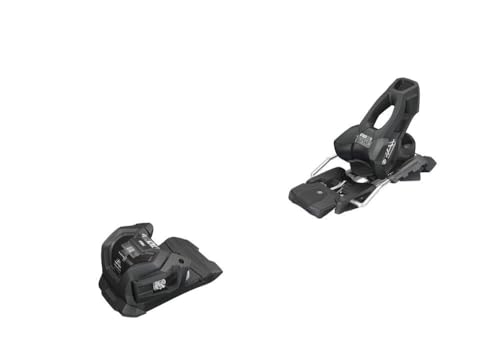
A teen tester led the Look Pivot 2.0 13 GW through our March and May 2026 Whistler Blackcomb teen tests, with Ryan Williams, James Ward and Tom Harris co-testing, and it logged zero unwanted releases. It scores 82.5 out of 100 and ranks #5 in our Best Ski Bindings for Teenagers guide as our Best Ski Binding for Teen Park and Big-Mountain Skiers.
Best Ski Binding for Teen Park and Big-Mountain Skiers
The best ski binding for teen park and big-mountain skiers is the Look Pivot 2.0 13 GW, which scored 9.5 out of 10 for edge power and for hold, with the most elastic travel in the test.

Look Pivot 2.0 13 GW
- Weight: 2,490 g (pair)
- DIN range: 4.5 to 13
- Brake width: 95 mm
- Boot soles: Alpine + GripWalk, adult Type A
Bottom Line : Nothing moved on it in heavy chop and big landings, and it had 0 unwanted releases. It's the heaviest binding here and the slowest to click into.
Pros
- 9.5 out of 10 for edge power and for hold
- 28 mm of vertical heel elasticity, per the listing
- 0 unwanted releases
- Metal-reinforced toe held up with no damage
Cons
- Slowest to click in, 7.0 out of 10
- Heaviest of the ten at 2,490 g a pair
Who it's best for
A high-level teen of about 145 lb and up in the park, moguls or big-mountain terrain whose feet have mostly stopped growing.
Why we love it
Hold was the best of the ten, at 9.5. The listing gives 28 mm of vertical heel travel and 45 mm of toe elasticity, and in the test boots stayed planted through violent bump compressions and heavy roller landings with no pre-release. The compact mounting footprint also lets the ski flex naturally underfoot.
Edge power matched it: the 19 mm stand height and metal-reinforced toe gave locked-in grip on steep hardpack, and the binding took our pole-tip-only release routine with no damage.
“Once you're in, nothing touches the suspension or ski flex in heavy chop and big landings.”
Ryan
What we didn't like
Step-in was the slowest of the ten. When soft May slush or loose snow bumped the rotating heel sideways, riders had to straighten the heel cup with a pole tip before clicking in. Tom adds two shop notes: never let a teen open the heel with the tail of the other ski, because the plastic bumper cap can crack, and swapping brake widths means taking the whole heel off the ski.
Should you buy it?
Buy it for a big, skilled teen who has stopped growing and values suspension above all. Under 130 lb, or if the family expects more boot-size changes, don't. The Look SPX 11 GW gives much of the bump control with an easier heel.
On the Snow
The Pivot uses a turntable heel, and it was the slowest chairlift re-entry in our test. In soft May slush, the heel could be knocked sideways, and a rider had to straighten the heel cup with a pole tip before clicking in. That is why step-in and step-out scored 7.0 out of 10, even though everything else on the ski worked as it should once a teen was locked in.
Edge power and hold are where the Pivot earned its 9.5 scores. The compact mounting footprint let the ski flex naturally underfoot, and the 19 mm stand height and metal-reinforced Race Aluminum toe gripped well on steep hardpack. Its 28 mm of vertical heel travel and 45 mm of toe elastic travel kept boots planted through hard bump compressions and heavy roller landings, with no pre-releases.
Our testers felt nothing in heavy chop or big landings touch the suspension or the ski's flex once they were in. Across the whole test there were zero unwanted releases, and after our pole-tip-only release protocol the toe, heel, brake and screws were all undamaged. Local volunteer teens rode them with a parent or guardian present and with written consent.
Where It Asks Something of You
The turntable asks for patience. In soft snow it needs its alignment checked, and it is fiddly to get square. The brake is 95 mm, and switching to a different brake width means unscrewing the entire heel assembly from the ski core, so plan on a full remount at the shop, not at the lift.
The range is narrow. The heel adjusts over 20 mm, which limits how much boot-size growth it covers, and at 2,490 g per pair, weighed on a calibrated bench scale (±0.5 g), it is the heaviest binding in our test. Our bench check also found the redesigned plastic heel bumper cap can crack under edge impacts, so teens should never stomp the heel lever open with the tail of another ski. Use a pole tip instead.
Spec Sheet vs Our Test
Full Action Toe. The listing claims 45 mm of elastic travel and a multi-directional release in the toe. Our testers found the toe kept boots steady through bump compressions, and there were no unwanted releases in the whole test. For a reader, that means the toe does the job the listing describes, and the trade-off is a heavier, metal-reinforced toe.
Turntable Heel. The listing says the heel rotates under the tibia for a consistent release. Our testers saw no unwanted releases, so the release side held up. The turntable is also what slowed step-in in soft snow, so expect more fiddling on a cold morning than you would with a fixed heel.
28 mm Vertical Elasticity. The listing says the 28 mm of vertical elasticity absorbs shocks and prevents premature release. On our bump lines and heavy roller landings, our testers saw zero pre-releases, and the travel kept the boot planted. For a reader who lands hard, that is the claim that matters most, and it held.
Shortest Mounting Zone. The listing says the short mounting zone gives the ski more natural flex. Our testers found the ski flexed uninterrupted underfoot, which is the reason we list it as the Pivot's best thing. For a freestyle or freeride teen, that means the ski feels like the ski, not the binding.
DIN Range 4.5 to 13. The listing prints a DIN range of 4.5 to 13. That is the range the binding is built to, not a setting for your teen. A certified shop technician sets and bench-checks DIN for every skier from their weight, height, age and boot sole length, so ask one to check that the range suits your teen before you buy.
Should You Buy the Look Pivot 2.0 13 GW?
Buy it if your teen skis park, mogul and big-mountain lines, weighs over 145 lb and has mostly stopped growing. It held our hardest bump and landing runs with zero unwanted releases, and it is the binding we would trust for a teen who lands big every day.
Don't buy it for a lighter teen, for a rider who hates a turntable step-in, or for a family that expects several boot-size upgrades without a remount. Teens under 130 lb may sit below the printed DIN range, so take that question to a certified shop technician before you order.
If your teen is more all-mountain than park, look at the Salomon Stage 11 GW. It has the easiest step-in of any 11 DIN binding we tested and a 30 mm heel track for growth, and it is the better pick for a teen who wants an easy click every time.
Compare With
- Salomon Stage 11 GW: our Best Overall Ski Binding for Teenagers.
- Tyrolia Attack LYT 11 GW: our Best Ski Binding for All-Mountain Teens.
- Marker Griffon 13: our Best Ski Binding for Hard-Charging Older Teens.
- Look SPX 11 GW: our Best Ski Binding for Teen Mogul Skiers.
- Atomic Strive 10 GW: our Best Ski Binding for Teens on 90 to 100 mm Skis.
- Look NX 7 GW: our Best Ski Binding for Small Teens in Adult Boots.
- Marker Free 7 JR: our Best Ski Binding for Teens Still in Junior Boots.
- Marker Squire 11: our Best Lightweight Adult-Size Ski Binding for Teens.
- Look NX 10 GW: our Best Step-Up Ski Binding for Light Teens.
See the full field, and how we tested it, in our best ski bindings for teenagers guide.
Editor's Note, 24 November 2026: New review, written from the same March and May 2026 Whistler Blackcomb tests as our teen ski binding guide.
Our Testers
- Ryan Williams, Lead Tester. A heavy fleet equipment mechanic and commercial vehicle technician. At 6 ft 2 and 215 lb, he is our heavy, high-impact user.
- James Ward, Alpine Ski & Fat Bike Tester. On skis since he was 3 and a former regional alpine racer. Now a ski tuner and dryland fitness coach.
- Tom Harris, All-Mountain Ski Tester. A ski shop service manager and boot fitter. A strong advanced skier who loves bowls and glades.