

Best Overall Ski Binding for Teenagers
The best overall ski binding for teenagers is the Salomon Stage 11 GW, which has the easiest step-in of the 11 DIN bindings we rode and a 30 mm heel track that leaves a growing teen room.

Salomon Stage 11 GW
- Weight: 1,720 g (pair)
- DIN range: 3.5 to 11
- Brake width: 90 mm
- Boot soles: Alpine + GripWalk, adult Type A
Bottom Line : Teens of 100 to 130 lb clicked in on every try, and the 30 mm heel track gives a growing foot room. It flexes in hard chop, so it isn't the pick for a teen who skis fast and rough.
Pros
- Easiest step-in of the 11 DIN bindings, 9.0 out of 10
- 30 mm heel track, about three boot sizes of growth
- 0 unwanted releases in the bumps
- Low 18.1 mm stand height
Cons
- Polymer chassis flexed in refrozen chop
- Adult Type A soles only
Who it's best for
A teen who skis intermediate runs, wears adult boots and could use the room to grow.
Why we love it
The roller-assisted heel let 100 to 130 lb teens lock in on all 10 icy-patch tries, and it stayed easy in the sticky May slush. Annie, who weighs 135 lb, says even the lightest teen clicked straight in on cold morning ice.
Nothing popped off in the bump lines, and the toe took small rollers for riders under 150 lb. Tom, our ski shop service manager, points out the 30 mm heel track: it gives a parent about 10 mm more boot-growth margin than the Marker and Look bindings here.
“Zero drama getting in or out, even our lightest teen clicked straight in on cold morning ice.”
Annie
What we didn't like
Pushed hard, the glass-fiber polyamide chassis shows its limits. The testers felt it flex through refrozen chop, and faster teens felt the lighter heel spring run out on firm roller landings. Tom calls it built for cruising rather than repeated park landings.
Should you buy it?
Take it when step-in and growth room matter most and your teen skis blue runs at a steady pace. A stronger, faster teen should look at the Tyrolia Attack LYT 11 GW first. The Stage 11 scored 80.0 out of 100 in this teen test; its 86.5 sitewide score averages that with its 92.5 in our beginner guide.
Read our full Salomon Stage 11 GW review →

Best Ski Binding for All-Mountain Teens
The best ski binding for all-mountain teens is the Tyrolia Attack LYT 11 GW, which scored 8.5 out of 10 for step-in, edge power and hold, and covers a 3 to 11 DIN span.
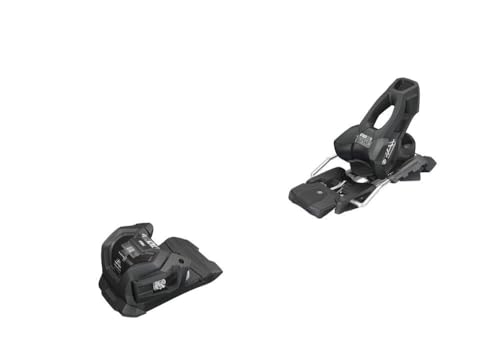
Tyrolia Attack LYT 11 GW
- Weight: 1,810 g (pair)
- DIN range: 3 to 11
- Brake width: 95 mm
- Boot soles: Alpine + GripWalk, adult Type A
Bottom Line : The most even binding here: no score below 8.0, no unwanted release, and a 17 mm stand height that keeps the boot low. It rejects junior Type C boot soles.
Pros
- 8.5 out of 10 for step-in, edge power and hold
- 17 mm stand height, low to the ski
- Switched between alpine and GripWalk soles with no screwdriver
- 0 unwanted releases
Cons
- Won't take junior Type C soles
- About 1 mm of unloaded vertical toe play on some GripWalk soles
Who it's best for
An all-mountain or park-curious teen in adult boots, size 24.5 Mondo and up, who wants low weight with room to grow.
Why we love it
It was the most consistent binding in the test. The spring-loaded auto-AFD handled alpine and GripWalk soles with no screwdriver height change, the heel engaged smoothly on all 10 icy-patch tries, and the low stand height gave quick edge-to-edge response on firm morning runs.
Teens and adults in the 120 to 160 lb range rode the mogul troughs and mid-mountain rollers with no pre-release. Tom adds that the lighter polyamide toe saves nearly 250 g a pair over the Marker Griffon 13.
“Super light on the chairlift and super low to the ski.”
Teen C, 15 to 17
What we didn't like
Soles are the catch. This binding takes adult Type A soles only, so a younger teen in junior Type C boots can't use it. Tom also found you can lift the boot toe by about 1 to 1.5 mm by hand on certain GripWalk soles, which vanishes under normal forward pressure, and a 170 lb-plus skier can flex the toe wings on ice.
Should you buy it?
Choose this for the teen who wants one binding to do most things. Our testers named it the best all-mountain teen binding, and it sits second here only because the Salomon Stage 11 GW has a higher sitewide average. If the boots are junior Type C or the teen is a heavy charger of 185 lb or more, skip it.
Read our full Tyrolia Attack LYT 11 GW review →

Best Ski Binding for Hard-Charging Older Teens
The best ski binding for hard-charging older teens is the Marker Griffon 13, which scored 9.5 out of 10 for edge power and had no wiggle in afternoon chop.

Marker Griffon 13
- Weight: 2,060 g (pair)
- DIN range: 4 to 13
- Brake width: 90 mm
- Boot soles: Multinorm: alpine, GripWalk, touring
Bottom Line : The strongest feel on the hill and 0 unwanted releases, but the heel is stiff to step into and the 4 DIN floor rules out lighter teens. Our testers' first pick for a big, aggressive teen.
Pros
- 9.5 out of 10 for edge power, no lateral slop
- 0 unwanted releases in the bumps and landings
- Takes alpine, GripWalk and touring soles
- Built to carry on into adulthood
Cons
- Firm heel stomp needed to click in
- 4 DIN floor and 20 mm heel track suit big, finished-growing feet
Who it's best for
A strong older teen, about 135 lb and up, who skis steep all-mountain terrain, park jumps or tracked-out snow.
Why we love it
Edge power is why it ranks among the best of the ten. On refrozen morning corn the testers felt zero lateral slop and immediate bite, and the wide screw pattern kept the 88 mm ski locked on rail through heavy afternoon push piles.
No heel lift, no housing rattle and no unwanted release across the bump pitch and the lower-mountain rollers. The stainless anti-ice rail scraped crust off the toe sole cleanly.
“Once you stomp into the heel, it feels welded to the ski, zero wiggle even in the nastiest afternoon chop.”
Teen D, 15 to 17
What we didn't like
Getting into it takes work. The heel wants an assertive, square stomp, and a 120 to 150 lb teen needed a second hit twice when wet May slush packed under the heel. Tom also saw new, unworn GripWalk soles test 0.5 DIN softer at the toe on the bench until the rubber ribs scuffed in, which is normal for the stainless gliding plate.
Should you buy it?
This is the binding for a big teen who will still be using it at 20. Lighter riders and fast-growing feet should pass: the DIN floor is 4 and the heel track gives about one to two shell sizes. A teen under 120 lb will do better on the Salomon Stage 11 GW.
Read our full Marker Griffon 13 review →
Best Ski Binding for Teen Mogul Skiers
The best ski binding for teen mogul skiers is the Look SPX 11 GW, which scored 9.0 out of 10 for hold and soaked up harsh mogul troughs with no false release.

Look SPX 11 GW
- Weight: 2,110 g (pair)
- DIN range: 3.5 to 11
- Brake width: 90 mm
- Boot soles: Alpine + GripWalk, adult Type A
Bottom Line : It handled the bumps better than any other 11 DIN binding we rode, with 0 unwanted releases. It's heavy and the heel is stiff for lighter riders.
Pros
- 9.0 out of 10 for hold and for edge power
- 0 unwanted releases through moguls and landings
- Multi-directional toe release, per the listing
Cons
- Stiff heel entry for teens under 125 lb
- About 300 g a pair heavier than the Tyrolia Attack LYT 11 GW
Who it's best for
A developing racer, mogul skier or freerider of about 125 to 170 lb who values a damped heel over low weight.
Why we love it
Through the bump pitch and off-balance roller landings the testers had no false release, and the heel absorbed the harsh compressions that rattle lighter bindings. James says it feels like a mini Pivot in the bumps.
Edge power was close behind: the oversized heel pivot transferred pressure with race-style authority on steep morning hardpack and through heavy May corn, with no twist in the binding.
“Feels like a mini-Pivot in the bumps, it eats up harsh compressions that rattle lighter bindings.”
James
What we didn't like
Weight tells against it. At 2,110 g a pair it's heavy for an 11 DIN binding, and the heel click-in is firm enough that riders under 125 lb had to clear every bit of wet snow off the heel welt first. Tom also warns that the forward-pressure window can read solid yellow when a boot sits at the forward stop, so a tech must check true spring compression, and that a heavy teen should have a shop check that polymer heel housing.
Should you buy it?
Pick this one for a mogul-loving teen with the weight to flex the heel. If the teen is small, pass: a lighter teen is better served by the Salomon Stage 11 GW or the Marker Squire 11. A park rider who counts grams on every spin should also look elsewhere.
Read our full Look SPX 11 GW review →
Best Ski Binding for Teen Park and Big-Mountain Skiers
The best ski binding for teen park and big-mountain skiers is the Look Pivot 2.0 13 GW, which scored 9.5 out of 10 for edge power and for hold, with the most elastic travel in the test.

Look Pivot 2.0 13 GW
- Weight: 2,490 g (pair)
- DIN range: 4.5 to 13
- Brake width: 95 mm
- Boot soles: Alpine + GripWalk, adult Type A
Bottom Line : Nothing moved on it in heavy chop and big landings, and it had 0 unwanted releases. It's the heaviest binding here and the slowest to click into.
Pros
- 9.5 out of 10 for edge power and for hold
- 28 mm of vertical heel elasticity, per the listing
- 0 unwanted releases
- Metal-reinforced toe held up with no damage
Cons
- Slowest to click in, 7.0 out of 10
- Heaviest of the ten at 2,490 g a pair
Who it's best for
A high-level teen of about 145 lb and up in the park, moguls or big-mountain terrain whose feet have mostly stopped growing.
Why we love it
Hold was the best of the ten, at 9.5. The listing gives 28 mm of vertical heel travel and 45 mm of toe elasticity, and in the test boots stayed planted through violent bump compressions and heavy roller landings with no pre-release. The compact mounting footprint also lets the ski flex naturally underfoot.
Edge power matched it: the 19 mm stand height and metal-reinforced toe gave locked-in grip on steep hardpack, and the binding took our pole-tip-only release routine with no damage.
“Once you're in, nothing touches the suspension or ski flex in heavy chop and big landings.”
Ryan
What we didn't like
Step-in was the slowest of the ten. When soft May slush or loose snow bumped the rotating heel sideways, riders had to straighten the heel cup with a pole tip before clicking in. Tom adds two shop notes: never let a teen open the heel with the tail of the other ski, because the plastic bumper cap can crack, and swapping brake widths means taking the whole heel off the ski.
Should you buy it?
Buy it for a big, skilled teen who has stopped growing and values suspension above all. Under 130 lb, or if the family expects more boot-size changes, don't. The Look SPX 11 GW gives much of the bump control with an easier heel.
Read our full Look Pivot 2.0 13 GW review →
Best Ski Binding for Teens on 90 to 100 mm Skis
The best ski binding for teens on 90 to 100 mm skis is the Atomic Strive 10 GW, which has a low LDN toe and a 100 mm brake sized for 90 to 100 mm skis.

Atomic Strive 10 GW
- Weight: 1,840 g (pair)
- DIN range: 3 to 10
- Brake width: 100 mm
- Boot soles: Alpine + GripWalk, adult Type A
Bottom Line : Low to the ski, easy to click into and quiet in the bumps for riders under 150 lb. The 10 DIN ceiling caps the long-term room, and the wide brake wants wider skis.
Pros
- Roller-assisted step-in, 8.5 out of 10
- Locking brakes clip skis together for carrying
- 0 unwanted releases for riders under 150 lb
Cons
- 10 DIN ceiling caps room to grow
- 100 mm brake sat 12 mm wider than our 88 mm skis
Who it's best for
A light-to-average teen, about 95 to 150 lb, on 90 to 100 mm all-mountain skis who wants a low, easy-handling binding.
Why we love it
It's a quiet, predictable binding. The dual-roller heel clicked in smoothly through icy morning drills, the click-and-lock brake arms kept skis fastened during walk-ups, and the low-profile toe gave intuitive carving on blue runs and steady tracking in soft afternoon snow.
Through the bump lines and small rollers there was no false release for riders under 150 lb. Teen B says it feels low to the ski and is easy to lock together when carrying skis.
“Low to the ski and easy to lock together when carrying skis through the village.”
Teen B, 13 to 15
What we didn't like
Check the width first. The 100 mm brake sat 12 mm wider than our 88 mm test skis, and Tom says hard carvers can brush the brake elbows at extreme lean angles, so pair it with skis of 90 to 100 mm. He also found a touch of spring-loaded vertical toe rock when you lift the lug by hand, normal for this auto-GripWalk toe design.
Should you buy it?
Go for it if your teen's skis are 90 to 100 mm wide and weigh under about 150 lb. If the teen is over about 155 lb or skis aggressively, the 10 DIN ceiling will run out, and the Tyrolia Attack LYT 11 GW has more headroom.
Read our full Atomic Strive 10 GW review →
Best Ski Binding for Small Teens in Adult Boots
The best ski binding for small teens in adult boots is the Look NX 7 GW, which scored 9.0 out of 10 for step-in and has the widest entry target of the ten.

Look NX 7 GW
- Weight: 1,540 g (pair)
- DIN range: 2 to 7
- Brake width: 93 mm
- Boot soles: Alpine + GripWalk, adult Type A
Bottom Line : Wonderful to click into, but our testers ranked it last: it chattered in chop, and its 7 DIN cap and adult-only soles give most teens about one season.
Pros
- 9.0 out of 10 for step-in, wide entry target
- 180 degree multi-directional toe release, per the listing
- Second lightest pair here at 1,540 g
Cons
- 6.5 out of 10 for edge power, hold and fit
- Rejects junior Type C soles
Who it's best for
A small teen of about 85 to 120 lb already in adult-sole boots, size 24.0 to 25.5, skiing mellow runs.
Why we love it
The very wide step-in zone and soft heel spring made entry effortless across all 10 icy-patch tries for 95 to 120 lb teens. The toe also gives a true 180 degree multi-directional release, per the maker.
On smooth morning blues it was nimble for a light teen, and it passed with no unwanted release. Teen A found it easy to step into on flat runs but twitchy once the afternoon bumps got chopped up.
“Easy to step into on flat groomers.”
Teen A, 13 to 15
What we didn't like
Everything past entry is where it slips. The composite construction chattered and flexed in refrozen afternoon chop, and limited vertical heel travel plus a 7 DIN cap left too little margin in bumps. Tom's verdict is that most teens get one season out of it before they need the 3 to 10 DIN Look NX 10 GW. Only adult Type A soles fit, despite the junior DIN scale.
Should you buy it?
Treat it as a one-season, small-teen binding. We rank it seventh by sitewide score because its 92.5 in our kids guide lifts the average, but in this teen test it scored 71.5 and our testers put it last. Anyone over 125 lb should skip to the Look NX 10 GW or Tyrolia Attack LYT 11 GW.
Read our full Look NX 7 GW review →
Best Ski Binding for Teens Still in Junior Boots
The best ski binding for teens still in junior boots is the Marker Free 7 JR, which is the only binding here that takes both adult Type A and junior Type C soles, with a 35 mm heel track.

Marker Free 7 JR
- Weight: 1,150 g (pair)
- DIN range: 2 to 7
- Brake width: 95 mm
- Boot soles: Alpine + GripWalk, adult Type A and junior Type C
Bottom Line : The lightest pair of the ten at 1,150 g, easy to step into and the only one for junior boots. A teen outgrows its 7 DIN ceiling at about 125 to 130 lb.
Pros
- Only binding here that fits junior Type C boots
- Lightest pair, 1,150 g
- 35 mm heel track
- Easy step-in, 9.0 out of 10
Cons
- 7 DIN ceiling outgrown above about 125 to 130 lb
- Junior chassis flexed under heavier riders
Who it's best for
A smaller early teen of about 85 to 125 lb moving from junior Type C boots to adult boots on 85 to 95 mm twin tips.
Why we love it
Step-in effort was the lowest in the test. The compact junior heel closed shut across all 10 icy-patch tries, even with snow packed into junior boot treads. It also accepts all four sole types (alpine and GripWalk, adult Type A and junior Type C), and has a 35 mm heel track.
In a low-speed backward-twisting tumble in soft May slush it released cleanly, and it had no unwanted release on normal moguls. At 1,150 g a pair it's the lightest binding here, and Teen A says it feels like nothing is on the ski.
“Feels like nothing is on the ski, super easy to step into and turn.”
Teen A, 13 to 15
What we didn't like
Know the weight limit before you buy. The lightweight junior chassis flexed clearly once rider weight neared 130 lb, and the 7 DIN cap restricts aggressive terrain. Tom says to treat 125 to 130 lb as the practical ceiling, not the 165 lb on retail spec sheets, because a heavier teen is likely to need more than a 7 DIN spring offers. A certified shop sets the DIN.
Should you buy it?
Pick it for a small teen with junior boots or a boot change coming. Any teen over 130 lb should step up to the Tyrolia Attack LYT 11 GW or Marker Squire 11. The Look NX 7 GW has a similar ceiling and won't take junior soles.
Read our full Marker Free 7 JR review →
Best Lightweight Adult-Size Ski Binding for Teens
The best lightweight adult-size ski binding for teens is the Marker Squire 11, which weighs 1,640 g a pair, the lightest 11 DIN binding in the test, and clicked in easily.

Marker Squire 11
- Weight: 1,640 g (pair)
- DIN range: 3 to 11
- Brake width: 100 mm
- Boot soles: Alpine + GripWalk, adult Type A
Bottom Line : Light, easy to step into and a 3 to 11 DIN span that suits growing teens, with solid scores of 8.0 or higher across the board. It feels less damped than the Griffon 13 in heavy chop.
Pros
- 1,640 g a pair, lightest of the 11 DIN bindings
- Hollow Linkage 2 heel cut step-in effort
- No score below 8.0 out of 10
- 0 unwanted releases
Cons
- 24 mm stand height sits higher than the Attack LYT 11 GW
- Lighter composite chassis flexes under heavy riders
Who it's best for
A light-to-midweight teen of about 100 to 155 lb on all-mountain or park skis who wants a light, effortless binding.
Why we love it
The Hollow Linkage 2 heel cut step-in force noticeably against the Griffon 13, and 120 to 150 lb teens clicked in on the first stomp on dry morning hardpack. Teen B says it's way easier to step into than the Griffon and the whole ski feels light to swing around.
The 3 to 11 DIN span covers a teen as they grow, and the stainless gliding plate handled both alpine and GripWalk soles across a 20 mm heel track. Retention was solid on medium rollers and bump lines for 120 to 150 lb riders, with no unwanted release.
“Way easier to step into than the Griffon, and the whole ski feels super light to swing around.”
Teen B, 13 to 15
What we didn't like
Heavy chop exposes the build. The 24 mm stand height felt higher off the snow than the 17 mm Attack LYT 11 GW, and the lighter composite chassis flexed when heavier testers pushed hard. Tom also says to inspect the plastic brake pedal on the heel if a teen skis park rails, because hard under-rotated switch landings can pop it off its clip.
Should you buy it?
Take it if your teen is light and wants low swing weight. A teen of 165 lb or more, or an aggressive skier, will overpower the composite heel housing and should look at the Marker Griffon 13. Our testers rated it fifth, so at its sitewide 79.0 it's a fair, not a standout, pick.
Read our full Marker Squire 11 review →
Best Step-Up Ski Binding for Light Teens
The best step-up ski binding for light teens is the Look NX 10 GW, which has a 3 to 10 DIN range and 180 degree multi-directional toe release for light teens already in adult boots.

Look NX 10 GW
- Weight: 1,600 g (pair)
- DIN range: 3 to 10
- Brake width: 93 mm
- Boot soles: Alpine + GripWalk, adult Type A
Bottom Line : Light, easy to step into and the natural step up from the NX 7. It flexes under riders of 145 lb and up, and its junior-line name hides that it takes adult soles only.
Pros
- Step-in 8.5 out of 10
- 3 to 10 DIN span on a 1,600 g pair
- Multi-directional FDC toe release, per the listing
Cons
- Adult Type A soles only, despite the junior-line label
- Flexed under 145 lb-plus testers on firm snow
Who it's best for
A lighter teen of about 90 to 140 lb already in adult boots, size 24.5 and up, who wants a light, budget-tier all-mountain binding.
Why we love it
Light entry resistance and a wide NX heel throw let 95 to 120 lb teens step in cleanly on dry snow, though they had to clear packed snow from the heel tread first. Teen A says it's super light and easy to click into once you tap the snow off your heel.
On blue runs the edge grip was clean and predictable for lighter teens. The toe releases upward through a true 180 degrees, which adds peace of mind on forward-twisting falls, and there was no unwanted release in the test.
“Super light and easy to click into once you tap the snow off your heel.”
Teen A, 13 to 15
What we didn't like
The label misleads. Despite its junior-line listing the binding takes adult Type A soles only, and Tom has seen parents assume it fits 22.5 or 23.5 Type C kids' boots. It won't. Check for an adult Type A lug on the boot sole before ordering, and note that the composite toe and heel flexed noticeably when 145 lb-plus testers carved hard.
Should you buy it?
Settle on it when your teen is light, in adult boots and needs a budget-tier step up from a 7 DIN binding. Heavier than about 150 lb or still in Type C boots, skip it. It's last by sitewide score, and its heel feels firmer and less damped in bumps than the Look SPX 11 GW.
Read our full Look NX 10 GW review →
How did we test the ski bindings for teenagers?
We tested the ski bindings for teenagers by mounting and bench-checking each one, having teens and adults click in and out ten times, skiing the same firm run, bump line and afternoon chop, scoring four qualities and weighing every pair.
A teen's binding has four jobs: let the skier click in alone, hold the boot through bumps and landings, grip the edge when the ski is pushed, and fit the boot now and as the foot grows. Tom, a ski shop service manager and boot fitter, jig-drilled and mounted every binding, checked forward pressure and ran release checks on a calibrated mechanical bench before anyone skied. Four local volunteer teens took part, each with a parent or guardian present and with written consent, and the adults repeated the runs where the DIN allowed it.
We tested at Whistler Blackcomb in March and May 2026. March ran from minus 6 to minus 1 degrees Celsius, with machine-groomed chalky hardpack at 8:30 AM breaking down into wind-buffed chalk and chewed-up afternoon snow. May ran from 2 to 8 degrees, with refrozen morning corn softening into heavy, wet spring slush by 1 PM. The runs were a firm, steep, groomed pitch, a mogul pitch and a stretch of afternoon chop and natural rollers.
Every binding went on identical fleet pairs of 88 mm test skis, mounted at the recommended line: 164 cm for the two younger teens, 172 cm for the older two teens and for Libby and Annie, and 179 cm for Tom, James and Ryan. Boots ran from 23.5 to 27.5 Mondo, swapped between alpine ISO 5355 and GripWalk ISO 23223 soles, in Type C and Type A where each binding allowed.
This page isn't DIN advice, and we ran no controlled release-force test on a teen. Tom set each rider's DIN from weight, height, age and boot sole length and checked it on the bench, and we don't print the numbers. Adults over 150 lb were barred from the 10 DIN bindings, and no adult rode the two 7 DIN junior bindings (Look NX 7 GW and Marker Free 7 JR). Where a brake width is noted, it's the width on the listing we checked. We broke ties on Hold on Bumps & Landings, which puts the Atomic Strive 10 GW (8.0) above the Look NX 7 GW (6.5).
The four scored qualities, and the testers:
| Tester | Age | Height, weight | Role |
|---|---|---|---|
| Tom Harris | 36 | 5 ft 11 in, 178 lb | All-Mountain Ski Tester, Whistler. Mounted and bench-checked every binding and set the DIN |
| James Ward | 33 | 5 ft 10 in, 172 lb | Alpine Ski & Fat Bike Tester, Calgary |
| Libby Smith | 30 | 5 ft 7 in, 142 lb | Freeride Ski & Fat Bike Tester, Truckee |
| Annie Ward | 31 | 5 ft 6 in, 135 lb | Women's All-Mountain Snowboard Tester, Calgary |
| Ryan Williams | 38 | 6 ft 2 in, 215 lb | Lead Tester, Squamish |
| Teen tester | Age | Weight band |
|---|---|---|
| Teen A | 13 to 15 | 90 to 120 lb |
| Teen B | 13 to 15 | 120 to 150 lb |
| Teen C | 15 to 17 | 120 to 150 lb |
| Teen D | 15 to 17 | over 150 lb |
- Step-In & Step-Out: ten click-ins on the same icy patch, how many took one stomp, and how packed snow affected the heel
- Edge Power & Stability: the same firm run, then the same afternoon chop: quick response, or a loose, chattery feel
- Hold on Bumps & Landings: unwanted releases, heel lift and rattle on the same bump pitch and rollers
- Fit & Adjustability: boot soles accepted, how much heel track there is, and how much DIN range a teen can use
- Weight (measured, not scored): each complete pair with brakes and mounting hardware, off the ski, on a calibrated bench scale (±0.5 g).
A binding that appears in more than one of our guides has one score everywhere: the average of its results across those guides. This is why the cards show a sitewide score while the metric bars show this guide's own test, so a binding's rank can differ from how our teen testers ranked it. Specs such as DIN range and brake width come from the listings; boot soles and heel tracks come from our testers' bench checks; the click-in counts and every result come from our testers. We don't score price; where a binding's value stands out we say so in tiers (budget, mid-price, premium), and the Check Latest Prices button shows the current number. You can meet the testers at the bottom of this page.
Which ski binding for teenagers suits your teen?
The right ski binding for a teenager depends on weight, boots and how hard they ski: pick the row that matches, then let a shop confirm.
| If you're… | Buy |
|---|---|
| Buying for a teen who needs the easiest step-in and growth room | Salomon Stage 11 GW |
| Wanting one binding for all-mountain and park, 24.5 Mondo boots and up | Tyrolia Attack LYT 11 GW |
| Buying for a big older teen who skis hard | Marker Griffon 13 |
| Buying for a teen who skis moguls | Look SPX 11 GW |
| Buying for a big, skilled park or big-mountain teen who has stopped growing | Look Pivot 2.0 13 GW |
| Fitting 90 to 100 mm skis on a light teen | Atomic Strive 10 GW |
| Buying for a small teen in adult boots for one season | Look NX 7 GW |
| Buying for a teen still in junior Type C boots | Marker Free 7 JR |
| Wanting the lightest 11 DIN binding for a light teen | Marker Squire 11 |
| Stepping a light teen up from a 7 DIN binding | Look NX 10 GW |
What did our tests of ski bindings for teenagers show?
Our tests showed that the Marker Griffon 13 and Look Pivot 2.0 13 GW were the strongest on the hill, the junior-line bindings were the easiest to click into but weakest in chop, and nothing came off in any test.
Each binding's four scores are also in its card above. These are this guide's own results, not the sitewide scores that set the order.
How easy is it for a teen to click into and out of a ski binding?
The easiest ski bindings for a teen to click into were the Salomon Stage 11 GW, Look NX 7 GW and Marker Free 7 JR, which each scored 9.0 out of 10.
Where we tested it. Ten click-ins per binding on the same icy patch with the same boots, then how the heel behaved when snow packed under it.
What separated them. The Stage 11, NX 7 and Free 7 JR scored 9.0. The Attack LYT 11 GW, Squire 11, Strive 10 and NX 10 scored 8.5. The Griffon 13 and SPX 11 scored 7.5, and the Pivot 2.0 13 GW scored 7.0.
Packed snow separated them. A 120 to 150 lb teen needed a second stomp twice on the Griffon in wet May slush, riders under 125 lb had to scrape the SPX heel clean first, and the Pivot's turntable heel needed a pole tip when slush bumped it sideways.
What it felt like. The Stage 11 and the two junior bindings took the least effort. The three firm-heeled bindings took a deliberate, square stomp.
| Binding | What we found |
|---|---|
| Salomon Stage 11 GW | Roller-assisted heel; 100 to 130 lb teens clicked in on all 10 tries. |
| Look NX 7 GW | Wide entry zone and soft spring, effortless for 95 to 120 lb teens. |
| Marker Free 7 JR | Lightest entry force; closed shut even with snow in the tread. |
| Tyrolia Attack LYT 11 GW | Smooth heel engagement on all 10 tries. |
| Atomic Strive 10 GW | Dual-roller heel clicked in smoothly. |
| Marker Squire 11 | First-stomp entry on dry snow; muted feel in slush. |
| Look NX 10 GW | Wide heel throw; clear snow from the tread first. |
| Marker Griffon 13 | Firm stomp; one teen needed a second hit twice. |
| Look SPX 11 GW | Stiff heel; riders under 125 lb scraped the welt first. |
| Look Pivot 2.0 13 GW | Slowest; pole tip needed to straighten the heel in slush. |
Which ski bindings give the best edge power for teens?
The ski bindings with the best edge power for teens were the Marker Griffon 13 and Look Pivot 2.0 13 GW, which each scored 9.5 out of 10.
Where we tested it. The same firm, steep morning run, then the same afternoon chop and push piles on the 88 mm test skis.
What separated them. The Griffon 13 and Pivot 2.0 13 GW scored 9.5. The SPX 11 scored 9.0, the Attack LYT 11 8.5, the Squire 11 and Strive 10 8.0, and the Stage 11 and NX 10 7.5. The Free 7 JR and NX 7 scored 6.5.
Rigid housings and a metal toe separated the top. The two junior-line bindings and the polymer-forward Stage 11 flexed in refrozen chop.
What it felt like. The top three felt welded to the ski. The Attack LYT 11, the lowest 11 DIN binding here at 17 mm, felt quick and low, and the NX 7 chattered once the chop got rough while the Free 7 JR flexed.
| Binding | What we found |
|---|---|
| Marker Griffon 13 | Zero lateral slop; immediate bite on refrozen corn. |
| Look Pivot 2.0 13 GW | Metal-reinforced toe and 19 mm stand height gripped steep hardpack. |
| Look SPX 11 GW | Oversized heel pivot, no twist when carving hardpack or May corn. |
| Tyrolia Attack LYT 11 GW | 17 mm stand height gave quick edge-to-edge response. |
| Atomic Strive 10 GW | Low toe, intuitive carving; predictable in soft snow. |
| Marker Squire 11 | Quick turn initiation; taller than the Attack in chop. |
| Salomon Stage 11 GW | Lively on blues; chassis flexed in refrozen chop. |
| Look NX 10 GW | Clean for light teens; flexed under 145 lb-plus testers. |
| Look NX 7 GW | Nimble on smooth snow; chattered in afternoon chop. |
| Marker Free 7 JR | Agile under 115 lb; flexed as weight neared 130 lb. |
Which ski bindings hold best on bumps and landings?
Every ski binding we tested had 0 unwanted releases, and the Griffon 13, SPX 11 and Pivot 2.0 13 GW held best on bumps and landings, scoring 9.0 to 9.5 out of 10.
Where we tested it. The same mogul pitch and the same lower-mountain rollers, counting every release without a fall and noting heel lift and rattle.
What separated them. The Pivot 2.0 scored 9.5, the Griffon 13 and SPX 11 scored 9.0, the Attack LYT 11 8.5, the Strive 10 and Squire 11 8.0, and the Stage 11 and NX 10 7.5. The Free 7 JR and NX 7 scored 6.5.
The Pivot and SPX have the most vertical heel travel on the listings. Faster teens felt the Stage 11's lighter spring run out on firm roller landings, and the 7 DIN ceiling left the junior bindings little margin for faster skiing.
What it felt like. The Pivot and SPX soaked up harsh compressions. The NX 7 felt twitchy once the afternoon bumps got chopped up.
| Binding | What we found |
|---|---|
| Look Pivot 2.0 13 GW | 0 releases; 28 mm heel travel per the listing kept boots planted. |
| Marker Griffon 13 | 0 releases, no heel lift or rattle. |
| Look SPX 11 GW | 0 releases; absorbed harsh mogul troughs. |
| Tyrolia Attack LYT 11 GW | 0 releases for 120 to 160 lb teens. |
| Atomic Strive 10 GW | 0 releases for riders under 150 lb. |
| Marker Squire 11 | 0 releases for 120 to 150 lb riders; some housing flex under heavier testers. |
| Salomon Stage 11 GW | 0 releases under 150 lb; spring ran out for faster testers. |
| Look NX 10 GW | 0 releases; firmer in moguls than the SPX 11. |
| Look NX 7 GW | 0 releases; little heel travel, twitchy in chopped bumps. |
| Marker Free 7 JR | 0 releases; 7 DIN cap restricts aggressive terrain. |
Which ski bindings fit a growing teen best?
The ski bindings that fit a growing teen best were the Salomon Stage 11 GW, Tyrolia Attack LYT 11 GW, Marker Griffon 13, Marker Squire 11 and Marker Free 7 JR, each scoring 8.0 out of 10.
Where we tested it. We checked each binding's printed DIN range, heel track and the boot sole types it accepts, in alpine and GripWalk, adult Type A and junior Type C.
What separated them. Five bindings scored 8.0. The SPX 11 and Strive 10 and NX 10 scored 7.5, the Pivot 2.0 7.0 and the NX 7 6.5.
The Stage 11 has a 30 mm heel track, the Free 7 JR 35 mm, and the Marker Squire 11 and Griffon 13 20 mm. Only the Free 7 JR accepted both junior Type C and adult Type A soles; the other nine need adult Type A soles.
The Pivot 2.0 and Griffon 13 have a 4.5 and 4 DIN floor that rules out lighter teens.
What it felt like. The fit scores come down to soles and DIN range. A teen in Type C boots has one choice here.
| Binding | What we found |
|---|---|
| Salomon Stage 11 GW | 30 mm heel track, about three boot sizes; adult Type A only. |
| Tyrolia Attack LYT 11 GW | 3 to 11 DIN; adult Type A only. |
| Marker Griffon 13 | Takes alpine, GripWalk and touring soles; 4 DIN floor. |
| Marker Free 7 JR | Takes Type A and Type C soles; 35 mm heel track. |
| Marker Squire 11 | 3 to 11 DIN; 20 mm heel track. |
| Look SPX 11 GW | 3.5 to 11 DIN; adult Type A only. |
| Atomic Strive 10 GW | 3 to 10 DIN; 10 DIN ceiling caps room to grow. |
| Look NX 10 GW | 3 to 10 DIN; adult Type A only. |
| Look Pivot 2.0 13 GW | 4.5 DIN floor; narrow growth range. |
| Look NX 7 GW | 2 to 7 DIN; adult Type A only. |
How much do ski bindings for teenagers weigh?
Ski bindings for teenagers weigh between 1,150 g and 2,490 g a pair, and the Marker Free 7 JR is the lightest.
Where we weighed it. Each complete pair was weighed with brakes and mounting hardware, off the ski, on a calibrated bench scale (±0.5 g).
What separated them. The two 7 DIN junior bindings are the lightest, at 1,150 g and 1,540 g. Among the 11 DIN bindings the Squire 11 (1,640 g) is lightest, and the Pivot 2.0 13 GW (2,490 g) is the heaviest binding here, 1,340 g more than the Free 7 JR. Tom says the lighter polyamide toe on the Attack LYT 11 GW saves nearly 250 g a pair over the Marker Griffon 13.
| Binding | Weight, pair |
|---|---|
| Marker Free 7 JR | 1,150 g |
| Look NX 7 GW | 1,540 g |
| Look NX 10 GW | 1,600 g |
| Marker Squire 11 | 1,640 g |
| Salomon Stage 11 GW | 1,720 g |
| Tyrolia Attack LYT 11 GW | 1,810 g |
| Atomic Strive 10 GW | 1,840 g |
| Marker Griffon 13 | 2,060 g |
| Look SPX 11 GW | 2,110 g |
| Look Pivot 2.0 13 GW | 2,490 g |
What do people ask about ski bindings for teenagers?
These are common questions about ski bindings for teenagers, answered from our own test results.
What DIN does a teenager need?
A certified shop technician sets the DIN from the skier's weight, height, age and boot sole length, and this page isn't DIN advice. Check a binding's range with a shop before you buy, and don't set it yourself.
What a parent can read is the range on the listing. Our two junior bindings top out at 7, the Look NX 10 GW and Atomic Strive 10 GW at 10, four bindings at 11 and the Marker Griffon 13 and Look Pivot 2.0 13 GW at 13. A shop decides which range fits your teen.
Should a teenager use a junior binding or an adult binding?
A small teen under about 125 to 130 lb can use a junior binding, but most teens outgrow one fast. Our testers say the 7 DIN Look NX 7 GW gives most teens about a season, and that the real ceiling for the Marker Free 7 JR is about 125 to 130 lb. Bigger teens do better on an adult binding with a low DIN floor, such as the Salomon Stage 11 GW or Tyrolia Attack LYT 11 GW.
Do teen ski boots fit any binding?
No. A boot has to match the sole the binding lists. Check the standard on the boot, alpine ISO 5355 or GripWalk ISO 23223, and the type, A for adult or C for junior. Only the Marker Free 7 JR took both types in our test, and the Look NX 10 GW, despite its junior-line label, took adult Type A only.
How much heel track does a growing teen need?
The heel track lets a binding move for a longer boot before a remount. The Marker Free 7 JR has 35 mm and the Salomon Stage 11 GW 30 mm, about three boot sizes, and the Marker Griffon 13 and Squire 11 have 20 mm. The Look Pivot 2.0 13 GW and Marker Griffon 13 limit growth, and a teen with fast-growing feet is better on the Stage 11.
What brake width does a teen's ski need?
Pick a brake close to the ski's waist. In our audit a brake up to 15 mm wider than the waist was acceptable. On our 88 mm test skis the brakes ranged from 2 to 12 mm wider in total. Tom says to pair the 100 mm Atomic Strive 10 GW with skis of 90 to 100 mm.
| Binding | Brake width | Wider than an 88 mm ski, in total |
|---|---|---|
| Look SPX 11 GW | 90 mm | 2 mm |
| Marker Griffon 13 | 90 mm | 2 mm |
| Salomon Stage 11 GW | 90 mm | 2 mm |
| Look NX 10 GW | 93 mm | 5 mm |
| Look NX 7 GW | 93 mm | 5 mm |
| Look Pivot 2.0 13 GW | 95 mm | 7 mm |
| Marker Free 7 JR | 95 mm | 7 mm |
| Tyrolia Attack LYT 11 GW | 95 mm | 7 mm |
| Atomic Strive 10 GW | 100 mm | 12 mm |
| Marker Squire 11 | 100 mm | 12 mm |
Which ski binding is best for a 13 to 15 year old, and which for a 15 to 17 year old?
For the lighter 13 to 15 year olds on our test, the Salomon Stage 11 GW and Marker Free 7 JR clicked in easiest. For the heavier 15 to 17 year olds, the Marker Griffon 13 and Look Pivot 2.0 13 GW held best. A shop decides which group your teen belongs in.
What are the 10 best ski bindings for teenagers?
The 10 best ski bindings for teenagers are the ten ranked above, led by the Salomon Stage 11 GW.
The best overall pick by sitewide score is the Salomon Stage 11 GW, easy to click into and generous with heel track. Our testers' own favorite for an all-mountain teen was the Tyrolia Attack LYT 11 GW, ranked second here, and for a big, hard-skiing older teen they chose the Marker Griffon 13. For moguls, take the Look SPX 11 GW, and for a big, skilled park or big-mountain teen the Look Pivot 2.0 13 GW. The Marker Free 7 JR is the only one for junior boots. Whichever you choose, have a shop check the boots, the skis and the setting first.
Editor's Note, 23 November 2026: New guide. In March and May 2026 at Whistler Blackcomb, Tom, James, Libby, Annie and Ryan tested ten ski bindings with four teens, scoring step-in and step-out, edge power, hold on bumps and landings and fit, and weighing every pair. No controlled release-force test was done on a teen.
Our Testers
This guide was written from the field notes of Tom Harris, James Ward, Libby Smith, Annie Ward and Ryan Williams. The four teens who tried the bindings were local volunteers, took part with a parent or guardian present and with written consent, and aren't named.
- Sean Williams, Editor-in-Chief. A former commercial outdoor copywriter and gear journalist who runs Top-Notch Outdoor as an independent publisher, with no brand-funded trips and no supplied ad copy.
- Tom Harris, All-Mountain Ski Tester. A ski shop service manager and boot fitter. A strong advanced skier who loves bowls and glades. Tom mounted and bench-checked every binding and set the DIN for each teen.
- James Ward, Alpine Ski & Fat Bike Tester. On skis since he was 3 and a former regional alpine racer. Now a ski tuner and dryland fitness coach. James led the Griffon 13 and Look SPX 11 GW tests.
- Libby Smith, Freeride Ski & Fat Bike Tester. A seasonal mountain bike trail builder and winter ski patroller, with several seasons of freeriding behind her. Libby led the Tyrolia Attack LYT 11 GW test and co-tested five others.
- Annie Ward, Women's All-Mountain Snowboard Tester. A freelance graphic designer and committed weekend all-mountain rider. Annie led the Stage 11, Squire 11 and Strive 10 tests and co-tested the Attack LYT 11 and Look NX 10.
- Ryan Williams, Lead Tester. A heavy fleet equipment mechanic and commercial vehicle technician. At 6 ft 2 and 215 lb, he is our heavy, high-impact user. Ryan led the Look Pivot 2.0 13 GW test.


