What is the best overall beginner snowboard?
The best overall beginner snowboard is the Burton Instigator, which scored 88, with the only perfect 10.0 for catch-free turning, and let our novice rider drop his knees flat onto the snow without catching an edge.

Burton Instigator
- Length tested: 155 cm
- Weight: 2,740 g
- Profile: PurePop camber
- Shape: Directional, 5 mm taper
Bottom Line : The easiest board we rode for a first week on snow. It runs out of answers once you want to carve hard.
Pros
- Catch-Free Turning 10.0: the only perfect score on test
- Low-Speed Control 9.5: side-slipping a steep pitch needed almost no edge angle
- Hand-flexed to a 3 out of 10 and the second-lightest board here at 2,740 g
- Base took two direct gravel hits near the T-bar track without gouging to the core
Cons
- Loose and washy on firm, salted morning snow once pushed
- The ultra-soft nose chatters on hard snow
- Room to Grow 7.5: Shaun expects riders to outgrow its carving inside a season
Who it's best for
Nervous first-timers, riders who panic about edge catches and anyone who wants a painless first week on snow should start here. Amy led the testing and our novice rider co-tested.
Why we love it
Catch-Free Turning (10.0). Amy found the base rounded off at the nose and tail, which keeps the steel edges clear of a flat surface. Our novice rider, who had six days on snow, rated it the easiest board he strapped into all week. On the other boards, if he relaxed his shins while sliding on his heels, the toe edge threatened to hook. On the Instigator that worry disappeared. He dropped his knees flat onto the snow on purpose to see whether it would trip him, and the board just drifted sideways.
Low-Speed Control (9.5). He side-slipped a steep pitch with almost no effort, and his calves didn't burn, because he never had to hold a high edge angle to stay in control. Amy hand-flexed the board to a true 3 out of 10, and the maker lists a torsionally soft biaxial fiberglass build with a twin flex.
Base Durability (8.0). The extruded base took two direct gravel hits near the T-bar track without gouging through to the core. It ran dry in the afternoon slush, so it needed a quick rub-on, warm-temperature wax to cut suction drag.
What we didn't like
Once our novice rider was off the board, Shaun took it down the firm morning lane. Push it hard or try to carve it on salted hardpack and it feels loose and washy. The rounded edges refuse to bite early in a turn, and the soft nose chatters.
That softness is why room to grow is its lowest score. Shaun's call was that a rider who learns to carve will outgrow it within a season.
Should you buy it?
Yes, if your first goal is staying upright and enjoying week one. It scored 88 in the budget price tier, level with the Arbor Element Decon, which turns almost as easily and grips firm snow better. Pick the Salomon Sight instead if you expect to progress fast.
Read our full Burton Instigator review →

What is the best rocker snowboard for beginners?
The best rocker snowboard for beginners is the Arbor Element Decon, which scored 88, with 9.5 for catch-free turning, and turned under the boots with lazy knee steering while its edge bumps still gave grip on firm morning snow.

Arbor Element Decon
- Length tested: 156 cm
- Weight: 2,890 g
- Base: Extruded
- Edge bumps: Grip Tech, 2.25 mm
Bottom Line : A surfy, easy-pivoting rocker board that still holds an edge on firm snow. It wanders when you flat-base on long flat run-outs.
Pros
- Catch-Free Turning 9.5: it started a turn from lazy knee steering, with no upper-body wind-up
- Grip Tech edge bumps gave a safety net on firm 8:00 AM hardpack where flat boards skated out
- Base Durability 8.5: zero scratches after scattered scree
- Ryan, at 215 lb, leaned into hard skidded stops with no buckling or chatter
Cons
- It wandered side to side when flat-based on the long flat run-out
- The topsheet is slick underfoot when you step off the T-bar without a stomp pad
- Room to Grow 8.0 is solid rather than special
Who it's best for
Beginners who want an easy-pivoting, surfy board with few catch points and enough edge hold for firm mornings should look here. James led the testing and Ryan co-tested.
Why we love it
Catch-Free Turning (9.5). The board balances on a center pivot, with the nose and tail rising gradually toward the tips. James could start a turn with lazy knee steering and zero upper-body wind-up. Rocker boards have a name for spinning easily and then sliding out on ice, and the Decon avoided that trap on the gentle pitch.
… the board rotates underneath your boots like a saucer
James and Ryan
Low-Speed Control (9.0). Ryan leaned his full 215 lb into hard skidded stops, and the middle of the board took the braking force without buckling or chattering. The Grip Tech bumps under the front and rear feet, which the maker lists at 2.25 mm, acted like mild outriggers. They gave an edge-bite safety net on firm 8:00 AM glacier hardpack where the flat boards skated out.
Base Durability (8.5). The extruded base felt harder and denser than most entry-level bases, and it had zero scratches after James ran over scattered scree. The factory finish was excellent.
What we didn't like
Flat-basing across the long, flat run-out toward the T-bar was a chore. Because the board pivots on its middle, it keeps wanting to hunt from side to side unless you rest it on a slight edge.
The natural wood topsheet is also slick underfoot, so a stomp pad would help when you step off the T-bar.
Should you buy it?
Pick it if firm mornings are part of your plan and you still want a board that turns without effort. It scored 88 in the budget price tier, tied with the Burton Instigator, half a point behind it for catch-free turning. The Head Daymaker LYT grips ice harder but forgives far less.
Read our full Arbor Element Decon review →

What is the best beginner freestyle snowboard?
The best beginner freestyle snowboard is the Ride Agenda, which scored 86, with the best base durability here at 9.0, and came through four hard days on the glacier with no gouges.
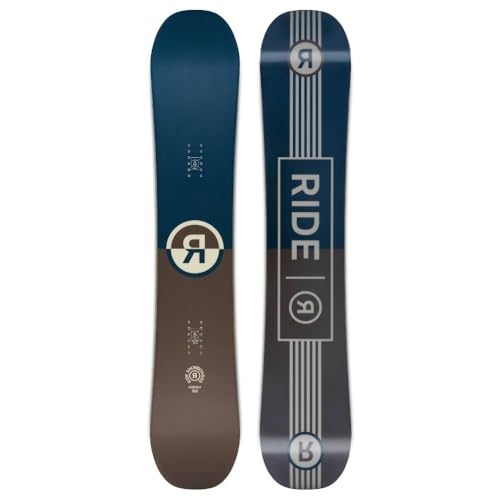
Ride Agenda
- Length tested: 155 cm
- Weight: 2,820 g
- Profile: Camber with rocker tips
- Shape: Twin
Bottom Line : A tough twin that supports switch riding and won't be outgrown after one season. It won't forgive a lazy stance.
Pros
- Base Durability 9.0: the best base score here, with no gouges after four hard glacier days
- The urethane Slimewalls took no chipping or delamination against the T-bar apron rails
- Room to Grow 8.5: it kept its pop when James, at 190 lb, hopped on
- Held wax well in wet slush
Cons
- Camber between the feet needs a basic grasp of weight distribution
- Our novice rider caught a heel edge within two laps
- Catch-Free Turning 8.5 sits below the rocker boards
Who it's best for
Progressing riders and athletic beginners who want a durable freestyle twin should buy it. Amy led the testing and James co-tested.
Why we love it
Base Durability (9.0). The extruded base survived four days of hard glacier riding with zero gouges, and it held wax surprisingly well in wet slush. The maker lists urethane Slimewalls, and while the crew rode tight against the T-bar apron rails and clacked tips waiting at the T-bar, the topsheet and sidewalls took no chipping or delamination.
This board does not feel like a disposable entry-level deck.
Amy and James
Room to Grow (8.5). A straightedge under the base shows mellow camber between the feet and subtle rocker just outside the binding inserts. Sliding down the gentle pitch, the sidewalls damped vibration from firm ice ruts with noticeably less harshness than standard sidewalls. When James, at 190 lb, hopped on, the board kept its pop and snapped off small side rolls without washing out on the landing.
What we didn't like
The camber is the catch. With real positive camber between the inserts, the Agenda doesn't let you get away with unconscious technique. Our novice rider took two laps on it and caught a heel edge when he leaned back lazily on a transition.
The maker calls it ideal for beginners and progressing intermediates. We'd narrow that to athletic beginners, because the crew found it asks for a basic understanding of weight distribution.
Should you buy it?
Buy it if you want a durable twin that supports learning switch and still feels right in your second season. It scored 86 in the budget price tier, a point ahead of the Nitro Prime Raw. Skip it if edge-catch panic is your main worry, and take the Instigator instead.
Read our full Ride Agenda review →
What is the best stable beginner snowboard?
The best stable beginner snowboard is the Nitro Prime Raw, which scored 85, with 9.0 for both catch-free turning and low-speed control, and tracked straighter than the Instigator off the T-bar track.

Nitro Prime Raw
- Length tested: 155 cm
- Weight: 2,780 g
- Shape: Directional twin
- Flex: 5/10 (maker)
Bottom Line : A planted, predictable board for cautious novices. The base runs slow in wet afternoon slush.
Pros
- Catch-Free Turning 9.0 and Low-Speed Control 9.0
- It tracked straight off the T-bar track and never felt twitchy
- Our novice rider linked four clean turns in a row on the gentle slope
- Pristine edges after the test
Cons
- Tip and tail fluttered on the steeper pitch in morning refreeze
- The extruded base developed suction drag in wet slush by 1:30 PM
- Base Durability 8.0 and Room to Grow 8.0 are average here
Who it's best for
First-timers and cautious novices who want an honest, predictable board that avoids edge catches without feeling loose should buy it. Shaun led the testing and our novice rider co-tested.
Why we love it
Catch-Free Turning (9.0). The base sits dead flat between the feet, with a smooth, early rise just before the contact points. Our novice rider came to it straight off the Instigator and found it the next natural step: nearly as easy to skid to a stop, but it tracked much straighter off the T-bar track and didn't feel twitchy. With the board planted flat and the tips safely off the snow, he linked four clean turns in a row down the gentle slope.
Low-Speed Control (9.0). Shaun hand-flexed it to a balanced 4 out of 10, while the maker lists 5 out of 10. Either way, it stays approachable, and the slightly longer nose gives a hint of direction without upsetting switch balance.
Base Durability (8.0). Edges came through pristine, with only hairline cosmetic scratches in the base structure from refrozen corn ice.
What we didn't like
Shaun took the Prime onto the steeper pitch during morning refreeze. Once he pushed past an easy cruising pace, the rockered tip and tail flapped and fluttered, which cut braking grip on hard ice.
The extruded base also runs slow. By 1:30 PM in wet slush it had developed noticeable suction drag, and it slowed our novice rider on the flat sections. Expect to rub on warm-temperature wax often.
Should you buy it?
Consider it if you want a planted board that's still easy to turn. It scored 85 in the budget price tier, level with three others. The K2 Standard turns with even less effort, so take that one if you're the most nervous rider in your group.
Read our full Nitro Prime Raw review →
What is the best beginner snowboard for nervous riders?
The best beginner snowboard for nervous riders is the K2 Standard, which scored 85, with 9.5 for catch-free turning, and let our novice rider panic, lean on his back foot and throw it sideways across salted hardpack without it catching.

K2 Standard
- Length tested: 155 cm
- Weight: 2,810 g
- Base: Extruded 2000
- Edge tune: Catch-Free Tune, 2° bevel
Bottom Line : The softest, most forgiving deck here for a first morning on snow. It folds the moment you try to carve.
Pros
- Catch-Free Turning 9.5: it never jerked or caught when our novice rider panicked
- Our novice rider's thighs hurt far less at the end of the day than on stiffer boards
- Low-Speed Control 9.0
- Edges stayed aligned with no burrs after the test
Cons
- Room to Grow 7.5: it hits a wall once you can carve
- The soft nose gives almost no rebound
- Heavier riders overpower the tail on hard stops
Who it's best for
Cautious beginners and weekend riders who want an effortless, confidence-building deck for falling-leaf practice and basic side-slips should pick it. Shaun led the testing and our novice rider co-tested.
Why we love it
Catch-Free Turning (9.5). Our novice rider spent a whole morning practicing falling leaf down the gentle pitch. Even when he panicked, leaned on his back foot and threw the board sideways across salted hardpack, it never jerked or caught. It slid across the snow and gave him time to get his balance back. The maker lists a Catch-Free Tune, a 2° bevel with a factory-detuned tip and tail.
Low-Speed Control (9.0). In our hands the core flexed very soft, about a 3 out of 10, with low torsional resistance, so you can twist the deck with two hands. Separately, our novice rider said his thighs ached far less by the end of the session than after the stiffer boards he'd ridden before.
Base Durability (8.0). The extruded base is soft and easy to repair. It picked up a few surface scuffs from hard glacier ruts, while the edges stayed perfectly aligned with zero burrs.
What we didn't like
Shaun and Ryan took the Standard onto the steeper pitch. The moment they put a real edge into firm snow, the board folded. The soft nose has virtually no rebound, and a heavier rider will overpower the tail on a hard stop.
So this is a board to learn on and then move on from, which is why room to grow is its lowest score, shared with the Instigator and the Ampage.
Should you buy it?
Week one is about not falling, and the Standard serves that goal: it matches the Decon and Ampage at 9.5 for catch-free turning and is softer than either. It scored 85 in the budget price tier, tied with three others, and matches the Instigator's softness at a slightly lower catch-free score. Anyone who learns quickly should look at the Sight instead.
Read our full K2 Standard review →
What is the best beginner to intermediate snowboard?
The best beginner to intermediate snowboard is the Salomon Sight, which scored 85, with the top room-to-grow score of 9.0 (tied with the Head Daymaker LYT), and held a clean, locked edge through medium-radius carves for Amy.

Salomon Sight
- Length tested: 153 cm
- Weight: 2,760 g
- Profile: Hybrid camber
- Shape: Tapered directional
Bottom Line : The beginner board you won't feel obsolete on after your first fifteen days. It reminds you when your ankles go lazy.
Pros
- Room to Grow 9.0, tied for the best here
- Real camber underfoot gave genuine carve hold and pop
- Our novice rider linked turns with more rhythm once he dialed in his weight
- Extruded base absorbed wax well and resisted suction drag in afternoon slush
Cons
- Camber means you can't ride with completely lazy ankles
- Our novice rider caught one toe edge on a flat-ground 180 attempt
- Catch-Free Turning 8.5 trails the softer boards
Who it's best for
Athletic beginners, former skateboarders and surfers, and fast learners who want to go straight into intermediate riding should buy it. Amy led the testing and our novice rider co-tested.
Why we love it
Room to Grow (9.0). Amy hand-flexed the Sight to a medium-soft 4 out of 10, with far more spring and spine than the K2 Standard or the Burton Instigator. Taking it through the lower run-out, she said it felt like a true intermediate all-mountain board, and it held a clean, locked edge through medium-radius carves.
Catch-Free Turning (8.5). This was the favorite among the boards that suit progressing riders. The camber between the feet meant our novice rider couldn't ride with completely lazy ankles, or it gently reminded him. Once he dialed in his weight, he linked turns with far more rhythm.
Base Durability (8.0). The extruded base held up cleanly across four days of salt and corn snow, absorbed wax well and resisted suction drag through the afternoon slush lanes.
What we didn't like
Our novice rider caught one toe edge during a lazy 180 attempt on flat ground. The Sight doesn't resist edge catches as completely as the Instigator does, and the crew's view was that it expects you to commit to your edges.
The maker sells it as an all-mountain board with a freeride-inspired shape. That fits what we saw: it's the one to buy if you'll keep improving, and the one to skip if you're still afraid of edges.
Should you buy it?
Go for it if you're athletic, learn fast and don't want to buy a second board next season. It scored 85 in the budget price tier, level with three others, and its 9.0 for room to grow ties for the top score. Take the K2 Standard instead if your priority is the softest possible first day.
Read our full Salomon Sight review →
What is the best budget beginner snowboard?
The best budget beginner snowboard is the Rossignol Ampage Vol 2, which scored 85 and is the cheapest board in this guide, with 9.5 for catch-free turning and a back-foot flick that spun it sideways to scrub speed.

Rossignol Ampage Vol 2
- Length tested: 155 cm
- Weight: 2,790 g
- Profile: AmpTek Auto Turn rocker
- Shape: Twin freestyle
Bottom Line : The cheapest of the ten and the softest to steer. It goes soft at the tips once the snow is firm.
Pros
- Catch-Free Turning 9.5: our novice rider found it easy to steer in tight spots
- Low-Speed Control 9.0: a flick of the back foot spun it sideways to scrub speed
- The cheapest board of the ten
- Extruded base showed minimal wear and the edges had no dings
Cons
- Tips flapped and the tail washed out on firm, salted ice
- No backbone for aggressive carves or heavier riders
- Room to Grow 7.5
Who it's best for
Lighter beginners, younger riders and casual novices who want a soft, stress-free board for cruising gentle slopes should take it. Amy led the testing and our novice rider co-tested.
Why we love it
Catch-Free Turning (9.5). The maker lists an AmpTek Auto Turn rocker. Our novice rider loved how easily it steered in tight spots. The twin shape keeps the tips light and nimble.
Low-Speed Control (9.0). When he felt he was heading too fast, he flicked his back foot and the board spun sideways at once to shave speed. It felt light and didn't fight back at all. Amy's bench flex check put it with the K2 Standard as the softest board we rode, a plush 3 out of 10.
Base Durability (8.0). The extruded base showed minimal wear, and the steel edges came through with no dings.
What we didn't like
Amy took the Ampage down the steeper morning pitch. On firm, salted ice it felt like a wet noodle. The soft tips flapped, vibration ran into her feet, and the tail washed out on firm heelside checks.
It lacks the backbone for aggressive carves or heavier riders, which holds room to grow at 7.5.
Should you buy it?
Money is the reason to own this one, and a gentle first season is the result. It scored 85 in the budget price tier, level with three others, and is the cheapest board here. If you weigh more than about 180 lb, the Evader is the same family with more backbone.
Read our full Rossignol Ampage Vol 2 review →
What is the best beginner snowboard for heavier riders?
The best beginner snowboard for heavier riders is the K2 Raygun (2023), which scored 84, and held its ground under Ryan at 6 ft 2 in and 215 lb, where the softer Ampage and Standard washed out their tails on hard stops.

K2 Raygun (2023)
- Length tested: 159 cm
- Weight: 2,930 g
- Core: Aspen
- Base: Extruded 2000
Bottom Line : A sturdy platform for taller, heavier beginners, and the heaviest board here. Lighter riders will find it slow to pivot.
Pros
- Held its tail under Ryan on hard stops
- Room to Grow 8.5: a 5 out of 10 flex with carbon in the build
- The rockered nose kept the front contact point from hooking as it rolled onto edge
- Sidewalls and edges stayed structurally flawless
Cons
- Amy, at 140 lb, found it heavy and slow to pivot in tight spots
- Heaviest board of the ten at 2,930 g
- The 2023 model has limited stock
Who it's best for
Taller, heavier beginners around 180 lb and up, who need a sturdy platform that won't feel like a floppy toy, should buy it. James led the testing and Ryan co-tested.
Why we love it
Low-Speed Control (8.5). The Raygun hand-flexed to an honest 5 out of 10 with solid backbone, and the maker lists a carbon build. Ryan overwhelmed the softer Ampage and Standard on hard stops, washing out their tails.
This is the big-guy beginner solution.
James and Ryan
Catch-Free Turning (8.5). The flat midsection gave Ryan a broad, stable footprint down the fall line. The rockered nose kept the front contact point from hooking when the board rolled onto edge.
Room to Grow (8.5). Ryan held his line down the fall line on it, which is the job a progressing rider needs from a board. The extruded base took routine scuffs from refrozen summer debris.
What we didn't like
When Amy (140 lb) rode the Raygun, she found it heavy and slow to pivot in tight spots. It needs a deliberate push to start a turn, which makes it a poor fit for smaller, lighter beginners and for absolute day-one novices.
This is the 2023 model, so check that your size is still in stock.
Should you buy it?
Tall or heavy riders get the most out of it: the Ampage and Standard washed out under Ryan, and the Raygun didn't. It scored 84 in the budget price tier, tied with the Daymaker and the Evader. If you're lighter, the Ampage or the Standard is the board you want.
Read our full K2 Raygun (2023) review →
What is the best beginner snowboard for icy conditions?
The best beginner snowboard for icy conditions is the Head Daymaker LYT, which scored 84, with 9.0 for room to grow, and bit into early morning hardpack like steel cleats, better than any rocker or flat board in the test.

Head Daymaker LYT
- Length tested: 159 cm
- Weight: 2,680 g
- Profile: Hybrid Camber DCT
- Shape: Twin directional
Bottom Line : The lightest board here and the best on ice. It's the least forgiving of lazy weight shifts.
Pros
- Room to Grow 9.0, tied for the best here
- Dual camber zones held ice better than any rocker or flat board
- Lightest board of the ten at 2,680 g
- Tough base against glacier scree
Cons
- Catch-Free Turning 8.0 is the lowest score here
- Our novice rider caught an edge when he leaned back on a transition
- Narrow waist caused toe drag in James's US 10.5 boots
Who it's best for
Athletic beginners learning on icy terrain who prize edge grip and want a light, energetic board should look here. Shaun led the testing and James co-tested.
Why we love it
Room to Grow (9.0). The maker lists a Hybrid Camber DCT profile with camber under each binding and a flat, narrowed middle. Shaun described it as two separate boards linked by a torsion bar. The narrow waist let us twist the deck with our boots to steer at slow speeds.
It holds ice significantly better than any rocker or flat board in this test.
Shaun and James
Low-Speed Control (8.5). The lightweight LYT core makes it the featherweight of the group at 2,680 g bare, so it swings quickly.
Base Durability (8.0). The extruded base proved tough against glacier scree. The topsheet edges took faint cosmetic scratches from bumps while waiting at the T-bar.
What we didn't like
Our novice rider caught an edge on the Daymaker when he leaned back during a heel-to-toe transition. The dual camber zones bite hard, and they demand real edge discipline.
James, in US 10.5 boots, felt slight toe drag in deep carves because of the narrow waist. The crew's advice is that riders in size 10 boots and up should look at the wide model. The maker also sells this board to advanced riders, which fits what we saw.
Should you buy it?
Pick it only if your mornings are icy and you're already athletic. It scored 84 in the budget price tier, level with the Raygun and the Evader, and it's the lightest board here. Anyone who panics on edges will be happier on the Instigator or the Standard.
Read our full Head Daymaker LYT review →
What is the best all-mountain snowboard for beginners?
The best all-mountain snowboard for beginners is the Rossignol Evader, which scored 84, with 9.0 for catch-free turning, and gave James and Ryan a stable tail where the Ampage flapped.

Rossignol Evader
- Length tested: 159 cm
- Weight: 2,910 g
- Profile: 70% rocker, 30% camber
- Flex: Directional, stiffer tail
Bottom Line : The Ampage's grown-up cousin, with more backbone for average-to-heavier riders. The base runs slow in warm slush.
Pros
- Catch-Free Turning 9.0: the rockered nose started turns smoothly
- A stiffer tail gave a stable platform for skidded turns
- Base and edges came through the test clean
- Tracked securely off the T-bar track
Cons
- The base felt notably slow in warm afternoon slush
- Suction drag on flat run-outs without frequent waxing
- Room to Grow 8.0 trails the Sight, Daymaker, Agenda and Raygun
Who it's best for
Budget-minded, average-to-heavier beginners who want a directional all-mountain board with more backbone than an ultra-soft twin should buy it. James led the testing and Ryan co-tested.
Why we love it
Catch-Free Turning (9.0). The maker lists a blend of 70% rocker and 30% camber. On the gentle pitch the rockered nose started turns smoothly, and the mellow camber underfoot kept the board tracking securely off the T-bar track.
The Evader is the grown-up version of the Ampage.
James and Ryan
Low-Speed Control (8.5). James hand-flexed it to a 4 out of 10 with a stiffened tail and a wider waist on the 159. Where the Ampage's tail flapped under James, the Evader's stiffer tail gave a stable platform to finish skidded turns without washing out.
Base Durability (8.0). Clean bill of health: the base and edges shrugged off summer glacier debris with no core shots and no edge separation.
What we didn't like
The extruded base is durable and scratch-resistant, but by early afternoon in warm summer slush it felt notably slow. James and Ryan both felt suction drag on the flat run-outs and needed frequent rub-on waxing to keep moving.
The maker calls the flex softer up front for easy turn entry and stiffer in the rear, and that held up. It isn't the softest or the most carvable board here, so it trails on both ends.
Should you buy it?
Think of it as the board for an average-to-heavy beginner who wants a stiffer tail than the Ampage but a softer flex than the Raygun. It scored 84 in the budget price tier, level with two others. Lighter riders should choose the Ampage, and anyone who wants to carve soon should choose the Sight.
Read our full Rossignol Evader review →
How did we test the beginner snowboards?
We tested the beginner snowboards in two parts on Horstman Glacier at Whistler Blackcomb in June and July 2026: a real novice rode five of them, and our four testers rode all ten with deliberate bad habits, then scored catch-free turning, low-speed control, base durability and room to grow.
Part one is the novice. Our novice rider had exactly six days on snow when he joined the crew. He can link hesitant turns on gentle slopes, but he still struggles with falling leaf braking on his toe edge, flat-basing across the flat run-outs and panicking about edge catches when he's tired. He rode five boards back to back on the gentle teaching pitch off the T-bar: the Instigator, Prime Raw, Standard, Sight and Ampage. He also took short runs on the Agenda and the Daymaker. He wore Burton Moto boots in US 9.5, a soft beginner flex.
Part two is the bad-habits test. Amy, James, Shaun and Ryan took turns riding every board the way a nervous beginner might: straight-legged turns, a flat base on hard morning ice with no ankle tension, weight sitting back in skidded stops and off-axis landings. Ryan, at 215 lb, also checked whether the softer boards buckle or twist under a heavy rider. One rider with six days on snow is a small sample, so read his notes as one beginner's view. The crew's bad habits are an imitation, not a real beginner, and we say which is which.
Every board met the same glacier snow: salted, rock-hard morning hardpack from 7:30 to 9:30 AM, then corn snow on the teaching pitch from 11:00 AM to 2:30 PM, then deep, wet afternoon slush along the run-out, which tested how much each un-waxed base dragged. Amy wore Vans Hi-Standard Pro boots, James Ride Fuse, and Shaun and Ryan Burton Ion. Here are the testers, so you can match your own size to a length:
| Tester | Height | Weight | Boots |
|---|---|---|---|
| Amy | 5 ft 7 in (170 cm) | 140 lb (64 kg) | US 10 |
| James | 6 ft 1 in (185 cm) | 190 lb (86 kg) | US 10.5 |
| Shaun | 5 ft 10 in (178 cm) | 175 lb (79 kg) | US 10.5 |
| Ryan | 6 ft 2 in (188 cm) | 215 lb (98 kg) | US 10.5 |
Every board wore the same Burton Freestyle Re:Flex bindings in Large, so the bindings couldn't change the results; you can read our verdict on them in the best budget snowboard bindings guide. The stance was 21.5 in (55 cm) wide, with +15° and -9° on directional shapes and +12° and -12° on true twins.
Plain-English words you'll see in this guide. An edge catch is when an edge digs in and trips you. Falling leaf is a slow zigzag slide down the slope on your heel or toe edge, and a side-slip is a straight slide sideways. Camber is an upward arch under the middle of the board that grips harder and pops, rocker is the opposite, a raised nose, tail or middle that turns easier and catches less, and a flat profile has neither. A twin board rides the same both ways, and a directional board has a longer nose. Flat-basing is riding with the board flat on the snow instead of on an edge, backseat means your weight has fallen behind your rear foot, and suction drag is wet snow gripping a dry base. A flex of 3 out of 10 is very soft and 5 is medium; our flex numbers are hand-flex calls, not lab measurements.
Each board has one score out of 10 on four qualities:
- Catch-Free Turning: slow, linked turns on the gentle pitch, noting how easily the board rolled into a turn without catching an edge
- Low-Speed Control: skidding, scrubbing speed and stopping on easy snow, noting how little effort it took
- Base Durability: scratches and gouges after all our days, and how well the base still glided without fresh wax
- Room to Grow: first carves and small jumps on the steeper lanes, noting whether the board still supported us as we got better
The overall score out of 100 is the plain average of the four scores, times 10, so no single quality outweighs another. Weight is measured, not scored: we weighed every board without bindings on an Ohaus Valor 1000 digital bench scale, and it has a table and no rating chart. Price isn't scored either, so we group boards into price tiers, and all ten here are in the budget tier. Specs such as profile and shape come from the maker; every weight, score and result is ours. You can meet the testers at the bottom of this page.
Which beginner snowboard suits your riding?
You pick a beginner snowboard by how nervous you're and how fast you expect to progress; the table matches each kind of rider to a board.
| If you are… | Buy |
|---|---|
| Afraid of edge catches and want the easiest first week | Burton Instigator |
| After a surfy, easy-turning board that still holds an edge on firm mornings | Arbor Element Decon |
| After a tough twin to learn switch riding and jibs on | Ride Agenda |
| After a planted board that tracks straight without feeling stiff | Nitro Prime Raw |
| The most cautious rider in the group, riding gentle slopes | K2 Standard |
| Athletic, a fast learner, and not wanting a second board next season | Salomon Sight |
| A lighter rider on the lowest outlay | Rossignol Ampage Vol 2 |
| Tall or heavy, around 180 lb and up, and needing a sturdy board | K2 Raygun (2023) |
| Riding icy mornings and wanting the lightest board with edge grip | Head Daymaker LYT |
| An average-to-heavier rider who wants a stiffer tail but a softer flex than the Raygun | Rossignol Evader |
What did our beginner snowboard tests show?
Our beginner snowboard tests showed that the softest boards were the easiest to turn and the quickest to outgrow, and that the three boards that caught our novice rider's edge were all among the four lowest scorers for catch-free turning.
Which beginner snowboards are the most catch-free?
The most catch-free beginner snowboard was the Burton Instigator, the only board to score 10.0, with the Arbor Element Decon, K2 Standard and Rossignol Ampage Vol 2 next at 9.5.
Where we tested it. Slow, linked turns on the gentle teaching pitch, plus our novice rider's toe-edge and heel-edge falling-leaf practice, and the crew's bad-habit runs: straight legs, a flat base and weight sitting back.
What separated them. Catch-free turning had the widest spread, 2.0 points, from the Instigator at 10.0 to the Head Daymaker LYT at 8.0. Three boards scored 9.5, the Nitro Prime Raw and Rossignol Evader scored 9.0, and the Ride Agenda, Salomon Sight and K2 Raygun scored 8.5.
Our novice rider caught an edge on three boards: a heel edge on the Agenda, a toe edge on the Sight and an edge on the Daymaker. They scored 8.5, 8.5 and 8.0, three of the four lowest scores, and all three have camber under the feet. On the Instigator and Standard our notes record no catch at all, and the Ampage joined them at 9.5 or higher.
What it felt like. On the Instigator our novice rider tried to trip the board with his knees flat on the snow, and it didn't catch. The Daymaker felt like two boards linked by a torsion bar, and it bit hard when he sat back.
| Board | What we found |
|---|---|
| Burton Instigator | Our novice rider couldn't trip it, even with his knees flat on the snow |
| Arbor Element Decon | Started a turn from lazy knee steering and pivoted like a saucer |
| K2 Standard | Never caught when our novice rider panicked and threw it sideways |
| Rossignol Ampage Vol 2 | Easy for our novice rider to steer in tight spots |
| Nitro Prime Raw | Planted flat with the tips off the snow; four clean turns in a row for our novice rider |
| Rossignol Evader | The rockered nose started turns smoothly |
| Ride Agenda | Camber between the feet caught a heel edge when our novice rider leaned back |
| Salomon Sight | Camber asked for awake ankles; one toe edge caught on a lazy 180 |
| K2 Raygun (2023) | The rockered nose kept the front contact point from hooking |
| Head Daymaker LYT | Dual camber bit hard; it caught our novice rider when he leaned back |
Which beginner snowboards are the easiest to slow down?
The easiest beginner snowboard to slow down was the Burton Instigator, which scored 9.5 for low-speed control, with four boards behind it at 9.0.
Where we tested it. Skidding, scrubbing speed and stopping on easy snow, mostly on the gentle teaching pitch, with Ryan's heavy skidded stops as the stress check.
What separated them. Low-speed control tied with base durability for the narrowest spread, 1.0 points. After the Instigator at 9.5, the Decon, Prime Raw, Standard and Ampage scored 9.0, and five boards, the Agenda, Sight, Raygun, Daymaker and Evader, scored 8.5.
Nobody scored below 8.5, so slowing down was easy on every board here. What separated them was effort: the Standard and Ampage needed the least from the feet, and the Raygun took more push from a lighter rider than from a heavier one.
What it felt like. The Ampage spun sideways at the flick of a back foot. The Decon took Ryan's full weight without chatter.
| Board | What we found |
|---|---|
| Burton Instigator | Side-slipped a steep pitch with almost no calf burn |
| Arbor Element Decon | Took 215 lb of braking force in hard skidded stops with no chatter |
| Nitro Prime Raw | Almost as easy to skid to a stop as the Instigator |
| K2 Standard | Very soft, and our novice rider's thighs ached less afterward |
| Rossignol Ampage Vol 2 | A flick of the back foot spun it sideways to scrub speed |
| Ride Agenda | Absorbed ice-rut vibration while sliding falling leaf |
| Salomon Sight | Needed a small adjustment to weight before it settled |
| K2 Raygun (2023) | Held its tail on hard stops under Ryan; slow to pivot for Amy |
| Head Daymaker LYT | Light and quick to swing, with a narrow waist for slow steering |
| Rossignol Evader | The stiffer tail finished skidded turns without washing out |
Which beginner snowboards have the most durable bases?
The beginner snowboard with the most durable base was the Ride Agenda, which scored 9.0 and came through four hard glacier days with no gouges.
Where we tested it. Every day on the glacier, including gravel hits near the T-bar track, scree on the run-out, refrozen corn and wet slush, noting scratches, gouges and how well the base still glided without fresh wax.
What separated them. Base durability had a 1.0 spread. The Agenda scored 9.0, the Decon 8.5, and the other eight boards all scored 8.0.
Glide was the real separator. The Prime Raw and the Evader developed noticeable suction drag in wet afternoon slush and slowed down on the flat run-outs, while the Agenda and the Sight held wax well. Plan to rub on warm-temperature wax for slush days with any of these.
What it felt like. The Decon showed no scratches after the scree, and the Agenda showed no gouges after four days.
| Board | What we found |
|---|---|
| Ride Agenda | No gouges in four hard days and it held wax in wet slush |
| Arbor Element Decon | Hard, dense base with zero scratches after scree |
| Burton Instigator | Two gravel hits near the T-bar track, no core shots |
| Nitro Prime Raw | Pristine edges; hairline scratches from refrozen corn |
| K2 Standard | Soft, easy to repair, a few scuffs and no burrs |
| Salomon Sight | Four days of salt and corn, and the base took wax well |
| Rossignol Ampage Vol 2 | Minimal wear and no dings in the edges |
| K2 Raygun (2023) | Routine scuffs; sidewalls and edges flawless |
| Head Daymaker LYT | Tough against scree; faint topsheet scratches |
| Rossignol Evader | No core shots or edge separations |
Which beginner snowboards have the most room to grow?
The beginner snowboards with the most room to grow were the Salomon Sight and the Head Daymaker LYT, which tied at 9.0 for first carves and small jumps on the steeper lanes.
Where we tested it. First carves and small jumps on the steeper lanes, with the crew riding the way a progressing beginner would, noting whether the board still supported us as we got better.
What separated them. Room to grow had a 1.5 spread, from 9.0 down to 7.5. The Agenda and Raygun scored 8.5, the Decon, Prime Raw and Evader 8.0, and the Instigator, Standard and Ampage 7.5.
The three boards our hands called a 3 out of 10, the Instigator, Standard and Ampage, are the three at 7.5, and they also had three of the top four catch-free scores. The two boards with the best room to grow scored 8.5 or lower for catch-free turning. A board that forgives everything has less to teach you later.
What it felt like. The Sight held a locked edge through medium-radius carves for Amy. The Standard folded the moment Shaun put an edge into firm snow.
| Board | What we found |
|---|---|
| Salomon Sight | Real camber gave carve hold and pop; felt like an intermediate board |
| Head Daymaker LYT | Held ice better than any rocker or flat board |
| Ride Agenda | Kept its pop for a 190 lb rider and snapped off small rolls |
| K2 Raygun (2023) | Supported a 215 lb rider down the fall line |
| Arbor Element Decon | Edge bumps gave grip, though the rocker wandered on flats |
| Nitro Prime Raw | Predictable but average once the pitch steepened |
| Rossignol Evader | The stiffer tail gave a stable base for progression |
| Burton Instigator | Loose and washy on firm snow; carving runs out fast |
| K2 Standard | Folded when we put an edge into firm snow |
| Rossignol Ampage Vol 2 | Tips flapped and the tail washed out on firm ice |
How much do beginner snowboards weigh?
The beginner snowboards we weighed ranged from 2,680 g for the Head Daymaker LYT at 159 cm to 2,930 g for the K2 Raygun at 159 cm.
Where we tested it. We weighed each board without bindings on an Ohaus Valor 1000 digital bench scale. Weight is measured and isn't part of the overall score, so it has a table and no rating chart.
What separated them. The spread from lightest to heaviest was 250 g. The boards come in different lengths, so compare weights with the length in the table. The Instigator, at 2,740 g, is the second-lightest board.
Weight didn't decide the ranking: the lightest board finished ninth at 84, and the heaviest finished eighth at 84. What the weight did show was how the board felt for a lighter rider, since Amy found the Raygun heavy to pivot.
| Board | Length ridden | Weight |
|---|---|---|
| Head Daymaker LYT | 159 cm | 2,680 g |
| Burton Instigator | 155 cm | 2,740 g |
| Salomon Sight | 153 cm | 2,760 g |
| Nitro Prime Raw | 155 cm | 2,780 g |
| Rossignol Ampage Vol 2 | 155 cm | 2,790 g |
| K2 Standard | 155 cm | 2,810 g |
| Ride Agenda | 155 cm | 2,820 g |
| Arbor Element Decon | 156 cm | 2,890 g |
| Rossignol Evader | 159 cm | 2,910 g |
| K2 Raygun (2023) | 159 cm | 2,930 g |
What do people ask about beginner snowboards?
Short answers on beginner snowboards, taken from our own scores and test results.
What makes a snowboard good for beginners?
A good beginner snowboard rolls into a turn without catching an edge and slows down with little effort. Those two qualities decided most of our scores, and the Instigator scored 10.0 and 9.5 on them. A beginner board should also have room to grow, because the softest boards we rode hit a ceiling once our crew started carving.
Should a beginner buy the softest snowboard?
A beginner should buy the softest board only if week one is the priority. The three softest boards, which our hands called a 3 out of 10, the Instigator, Standard and Ampage, scored 9.5 or higher for catch-free turning and 7.5 for room to grow. If you expect to progress quickly, the Sight, at 9.0 for room to grow, costs you a little forgiveness now to save buying again later.
Is camber or rocker better for a beginner?
Rocker is better for a beginner who is afraid of edge catches, and camber is better for one who wants to carve soon. The soft, rockered and rounded-base boards led catch-free turning, and our novice rider caught an edge on three cambered boards, the Agenda, Sight and Daymaker. Those same camber boards gave the best grip and room to grow. Our best all-mountain snowboards guide covers the next step up.
What length of beginner snowboard should you buy?
You should buy the length that matches your height and weight on the maker's chart, and we can't improve on that, because each board here was tested at one length. For reference, Amy (5 ft 7 in, 140 lb) led the 153 and 155 cm boards, Shaun (5 ft 10 in, 175 lb) led the 155 and 159 cm boards, and Ryan (6 ft 2 in, 215 lb) co-tested the 156 and 159 cm boards. James (US 10.5 boots) felt toe drag on the narrow-waisted Daymaker, so riders with larger boots should check the wide model.
Can a beginner snowboard handle freestyle?
A beginner snowboard can handle basic freestyle if it's a twin, and the Ride Agenda is the best we rode. It scored 9.0 for base durability and took the T-bar apron rails with no chipping, and it supported James's small side rolls. For bigger plans, see our best freestyle snowboards.
What are the 10 best beginner snowboards?
The 10 best beginner snowboards are the ten ranked above, led by the Burton Instigator and the Arbor Element Decon at 88, then the Ride Agenda at 86 and four boards at 85.
For your first week, buy the Burton Instigator. If you want a surfy board that holds an edge, the Arbor Element Decon; if you want a tough twin, the Ride Agenda; if you want a board you won't outgrow, the Salomon Sight; and if you want the cheapest, the Rossignol Ampage Vol 2. Prices move constantly on these, so use the Check Latest Prices buttons above for the current number.
Editor's Note, 10 November 2026: New guide. In June and July 2026 Amy, James, Shaun and Ryan rode ten beginner snowboards, a lead tester and a co-tester on each, off the T-bar on Horstman Glacier at Whistler Blackcomb, and a novice rider with six days on snow rode five of them back to back and took short runs on two more. We weighed each board and scored it on catch-free turning, low-speed control, base durability and room to grow.
Our Testers
This guide was written from the field notes of Amy Carter, James Ward, Shaun Taylor and Ryan Williams. A novice rider with six days on snow also rode five of the boards back to back, plus short runs on two more, and is credited in the copy as our novice rider.
- Sean Williams, Editor-in-Chief. A former commercial outdoor copywriter and gear journalist who runs Top-Notch Outdoor as an independent publisher, with no brand-funded trips and no supplied ad copy.
- Ryan Williams, Lead Tester. A heavy fleet equipment mechanic and commercial vehicle technician. At 6 ft 2 in and 215 lb, he is our heavy, high-impact user. Ryan co-tested the Arbor Element Decon, K2 Raygun and Rossignol Evader.
- Amy Carter, Freestyle Snowboard Tester. An action sports videographer and terrain park builder, and our strongest snowboarder. Amy led testing of the Burton Instigator, Ride Agenda, Salomon Sight and Rossignol Ampage Vol 2.
- James Ward, Alpine Ski & Fat Bike Tester. On skis since he was 3 and a former regional alpine racer, now a ski tuner and dryland fitness coach. James led testing of the Arbor Element Decon, K2 Raygun and Rossignol Evader, and co-tested the Ride Agenda and Head Daymaker LYT.
- Shaun Taylor, Freeride Snowboard Tester. Raced banked slalom and halfpipe in the late 1980s and 1990s before turning to backcountry freeriding, and a finish carpenter by trade. Shaun led testing of the Nitro Prime Raw, K2 Standard and Head Daymaker LYT.