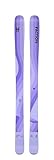
James and Ryan took the Armada Antimatter 114 through open bowls, storm chop and firm run-outs at Alta, Snowbird and Whistler, and it planed on top of 30 cm of fresh snow with a smooth, predictable lift. It scores 86.5 out of 100 and ranks #2 in our best powder skis guide as our Best Powder Ski for Open Bowls.

What is the best powder ski for open bowls?
The best powder ski for open bowls is the Armada Antimatter 114, which planed on top of 30 cm of storm snow with smooth, predictable lift and stayed quiet through afternoon ruts at 2,030 g a ski.

Armada Antimatter 114
- Weight: 2,030 g (one ski)
- Length skied: 187 and 193 cm
- Waist: 114 mm
- Radius: 21 m (187 cm)
Bottom Line : The best mix of metal-backed stability and a loose, easy-releasing tail. The 114 mm platform feels bulky in tight trees and slow edge to edge on firm run-outs.
Pros
- Float 9.0, on 30 cm of storm snow
- Crud & chop 9.0 and playfulness 8.5
- Looser and more slashable than the Sender 110
- No damage after the test
Cons
- 114 mm feels wide when you thread tight trees
- Slower edge to edge on firm run-outs than the 108 to 110 mm skis
- Heavy tip pressure can make the shovel over-hook
Who it's best for
Aimed at advanced to expert freeriders who want a creative, metal-damped storm ski for open bowls and natural terrain. The testers say skiers who put firm snow first and tight-tree specialists should look narrower.
Why we love it
Float in Powder (9.0). The deep tip and tail rocker and the 114 mm waist planed on top of 30 cm of fresh snow with a smooth, predictable lift.
Crud & Chop Stability (9.0). The shaped titanal under the foot and the full-length sidewalls kept this 2,030 g ski quiet and composed through afternoon ruts.
Playfulness & Pivot (8.5). The progressive shape and generous tail rocker made slashing, pivoting in open bowls and popping off natural features noticeably looser than on the Sender 110.
In open bowls it blends metal-backed stability with an easy-releasing tail, though its 114 mm width feels noticeably wider when threading tight trees, and traditional front-of-boot chargers should ease off heavy tip pressure so the shovel doesn't over-hook.
James, in the testers' notes
What we didn't like
At 114 mm the Antimatter changed direction more slowly from edge to edge than the 108 to 110 mm skis, and Firm-Snow Versatility was its lowest score at 8.0, although the full sidewalls still held reliable grip on the scraped run-out.
Tom's bench note adds that the factory mount line sits slightly further forward than on traditional directional powder skis.
Should you buy it?
Open bowls are where the Antimatter 114 earns its place: it slashes without giving up its damping. Tight-tree skiers and anyone who spends the afternoon on firm snow should look at a narrower ski.
On the Snow
Our testers ran the 187 and 193 cm skis in March 2026 at Alta and Snowbird in Utah, and at Whistler Blackcomb in British Columbia in March and May. Every float score was logged in more than 15 cm of fresh snow. James was the lead tester and Ryan the co-tester, both on a Tyrolia Attack 14 GW binding with a 120 mm brake, set to a DIN of 8.5 for testing. A certified shop sets yours.
Float came first. The ski planed on top of 30 cm of storm snow, and it earned a 9.0 for float in powder. The Maverick 115 CTi scored the same 9.0, and the Antimatter's 114 mm waist sits between it and the narrower Sender 110.
Chop came next. In heavy afternoon ruts the ski stayed quiet and composed, and it scored 9.0 for crud and chop stability. The shaped Titanal under the foot and the full-length sidewalls did most of that work.
In open bowls it pivoted and slashed looser than the Sender 110, the ski that flattened chop at 2,200 g. The tail released easily and the ski popped off natural features. That is where it scored 8.5 for playfulness and pivot.
Where It Asks Something of You
The 114 mm waist is the trade. When our testers threaded tight trees, the ski felt noticeably wider than the 108 to 110 mm models, and it asked for more care between trunks.
Firm snow is its weakest area, at 8.0 for firm-snow versatility. At 114 mm it changes direction more slowly from edge to edge, although the full-length sidewalls still held reliable grip on the scraped run-out.
Setup matters too. Traditional front-of-boot chargers should ease off heavy tip pressure, or the shovel can over-hook. The bench check also found the factory recommended mount line sits slightly further forward than on traditional directional powder skis, so ask your shop to check the line before you bind it.
Spec Sheet vs Our Test
Waist width (114 mm). The maker lists 138, 114 and 132 mm at 187 cm. Our testers found the waist planed well in 30 cm of storm snow, and the 9.0 float score backs up the width. What it means for you: this is a real open-bowl platform, and a narrower ski is the better buy for trees.
Turn radius (21 m). The maker lists a 21 m radius at 187 cm, tighter than the Sender 110 at 20.0 m. Our testers scored playfulness and pivot at 8.5 and found it looser than the Sender in open bowls. What it means for you: it turns more readily than the heavier ski, without giving up stability at speed.
Weight (2,030 g per ski). We weighed one ski, with no binding, on a calibrated bench scale (±0.5 g). That puts it between the 2,200 g Sender 110 and the 1,750 g Atomic Bent 110. What it means for you: a damp, stable ride in chop, with a little more work to pivot than the lightest twins.
Titanal construction (metal underfoot, full-length sidewalls, 2.1 mm heat-treated edges). The bench check confirmed the build. Our testers found it held reliable grip on firm run-outs and stayed composed in ruts. What it means for you: the metal adds calm in rough snow, at the expense of some quickness on firm snow.
Should You Buy the Armada Antimatter 114?
Yes, if you ride open bowls and natural terrain and want a ski that slashes without losing its damping. It suits advanced-to-expert freeriders who want a metal-damped 114 mm ski for storm days.
Skip it if you ski groomers first or mostly tight trees. The 114 mm width is bulky between trunks, and on firm run-outs it changes edges more slowly than the 108 to 110 mm skis. For the trees, our Atomic Bent 110 review covers our lightest pick at 1,750 g. For one ski that also carves a firm run-out, see our Blizzard Rustler 11 review.
If you want the same metal stability on a narrower ski for heavy, tracked-out resort snow, compare it with our Rossignol Sender 110 review. We skied the 187 and 193 cm lengths, so ask a shop to check the length that suits your height and skiing.
Compare With
- Atomic Maverick 115 CTi: our Best Overall Powder Ski.
- Rossignol Sender 110: our Best Powder Ski for Resort Powder Days.
- Blizzard Rustler 11: our Best All-Mountain Powder Ski.
- Atomic Bent Chetler 120: our Best Powder Ski for Deep Snow.
- Blizzard Canvas 108: our Best Playful Powder Ski.
- Fischer Ranger 108: our Best Powder Ski for Variable Snow.
- Armada Whitewalker 116: our Best Freestyle Powder Ski.
- Nordica Unleashed 108: our Best Powder Ski for Firm Snow.
- Atomic Bent 110: our Best Lightweight Powder Ski.
See the full field, and how we tested it, in our best powder skis guide.
Editor's Note, 17 November 2026: New review, written from the same March and May 2026 powder tests as our best powder skis guide.
Our Testers
- James Ward, Alpine Ski & Fat Bike Tester. On skis since he was 3 and a former regional alpine racer. Now a ski tuner and dryland fitness coach.
- Ryan Williams, Lead Tester. A heavy fleet equipment mechanic and commercial vehicle technician. At 6 ft 2 and 215 lb, he is our heavy, high-impact user.
- Tom Harris, All-Mountain Ski Tester. A ski shop service manager and boot fitter. A strong advanced skier who loves bowls and glades.