Editor's Note, 16 October 2026: We re-read the Smokemont and Big Meadows pages. Smokemont now states only that generators are not allowed 8 pm to 8 am, so we removed its 60 dB and generator-free notes. Big Meadows now states quiet hours of 10 pm to 6 am. Park-by-park hours for 19 parks are in our national park generator rules.
Editor's Note, 11 October 2026: We rewrote this guide from scratch. The old version told readers the National Park Service sets 10 am to 6 pm quiet hours in every park, which is not what the regulations or the parks say. This one uses the federal rule, each campground's own posted generator hours, and your generator's noise rating.
Yes, you can use a generator at most developed campgrounds, inside the hours that campground sets and under 60 decibels on the A-weighted scale measured 50 feet away. That limit is federal for National Park Service land (36 CFR 2.12). The hours are not: every park writes its own.
Backcountry is different. In undeveloped areas of a national park, running a portable engine needs a permit.
What the Federal Rule Actually Says
The National Park Service rule on audio disturbances bans operating "motorized equipment or machinery such as an electric generating plant" in two ways. A generator can't exceed 60 dB(A) at 50 feet, and below that level it still can't make noise that is "unreasonable" for the place, the time of day and the people nearby.
Two details catch campers out.
The 60 dB test is at 50 feet. Most makers quote noise at 23 feet or less, sometimes at idle, so the number on the box isn't the number the rule uses. The next section converts it.
Passing 60 dB isn't a licence. The second test has no number. A generator at 52 dB(A) can still be "unreasonable" at 6 am next to a tent.
In nondeveloped areas the same section is blunter: operating "any type of portable motor or engine, or device powered by a portable motor or engine" needs a permit. That covers a generator at a backcountry site.
Generator Hours Change Park by Park
The federal rule sets the noise ceiling. Each superintendent sets when you may run one. These are the posted rules at four campgrounds, taken from each campground's own National Park Service page on 11 October 2026.
| Campground | Generator hours | Hours a day | Quiet hours | Extra rules |
|---|---|---|---|---|
| Mammoth, Yellowstone | 8 am to 8 pm | 12 | 10 pm to 6 am | 60 dB limit; off when the site is unoccupied |
| Smokemont, Great Smoky Mountains | 8 am to 8 pm | 12 | 10 pm to 6 am | Generators not allowed 8 pm to 8 am |
| Big Meadows, Shenandoah | 8 to 10 am and 4 to 7 pm | 5 | 10 pm to 6 am | 60 dB limit; "generator-free" areas |
| D.H. Day, Sleeping Bear Dunes | 9 am to 6 pm | 9 | 10 pm to 6 am | Sites 1 to 31 only |
Four campgrounds, three different schedules, and a spread of 5 to 12 hours a day. Mount Rainier's campground regulations (a December 2018 PDF, so confirm they still stand) split the day into three two-hour windows: 8 to 10 am, 12 to 2 pm and 5 to 7 pm.
Here's the thing: two generator-free loops can sit on either side of a loop where you're allowed to run one. Read the campground's own page and the map you're given at the gate. Nothing else is current.
Will Your Generator Pass 60 dB at 50 Feet?
Probably, if it's an inverter model, and you can estimate it without a meter. Sound in open air falls about 6.7 dB between 23 feet and 50 feet, because 50 is a little over twice 23. Subtract 6.7 from the maker's figure at 23 feet and you have a fair guide to the 50 foot level.
| Generator | Maker's rating | Distance | Estimated at 50 ft |
|---|---|---|---|
| Honda EU2200i | 48 to 57 dBA | 23 ft | about 41 to 50 dBA |
| Champion 2500-Watt Dual Fuel | 53 dBA | 23 ft | about 46 dBA |
| Champion 4000-Watt Dual Fuel RV | 64 dBA | 23 ft | about 57 dBA |
| Yamaha EF2200iS | 57 to 65 dBA | 23 ft | about 50 to 58 dBA |
The ratings are each maker's own, transcribed from its spec sheet; we don't own a sound meter and we haven't measured these units. The conversion is physics for open ground. Trees, a hillside or a neighbour's camper will bounce sound back and add to it. Treat the right-hand column as "comfortably under" or "close to the line", not a pass certificate.
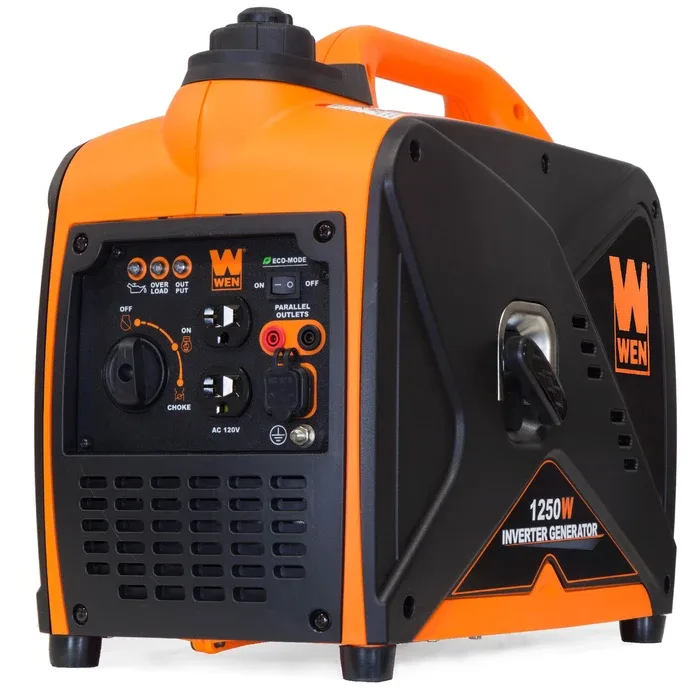
What it shows is how little room the loudest units leave. A Champion 4000 or a Yamaha at full load sits within a few dB of the limit at 50 feet. A Honda EU2200i sits about 10 dB under at the top of its range. Our noise and runtime database lists the rating next to the load and the distance it was made at, and the best quiet generators guide ranks the models that stay well clear.
Forest Service, BLM, State Parks and Private Campgrounds
National Park rules don't apply on other land, and there is no single national generator rule for it. For the parks themselves, our national park generator rules table lists posted hours and banned loops at 19 of them.
National forests. Generators are generally governed by site and district rules. In fire season a forest supervisor can ban them outright. The Forest Service's fire prohibitions include operating an internal combustion engine, and a generator is one. A fire restriction order posted at the trailhead overrides anything you read online.
State parks and private campgrounds. Each sets its own hours and its own noise language, and many are stricter than the Park Service. Booking confirmations and the rules sheet at check-in carry them.
Ask before you go, and ask a specific question: "What hours can I run a generator, and is there a decibel limit?" The answer takes a campground host ten seconds.
Run It Safely Once You're Allowed To
A generator at a campsite is the same carbon monoxide hazard as one at a house. The US Consumer Product Safety Commission says an average of nearly 100 people die each year from CO poisoning caused by portable generators. Its advice is to run them outdoors, at least 20 feet from homes and buildings, with the exhaust pointed away from windows, doors and vents (CPSC).
A tent or a camper is a smaller, leakier space than a house. We treat 20 feet as the minimum and downwind as the rule. Never run one under an awning, in a vestibule or in the bed of a closed truck.
One more habit: run a battery CO alarm inside the camper. It isn't a substitute for distance, but it is the only warning you get if the exhaust drifts back.
If the Campground Says No
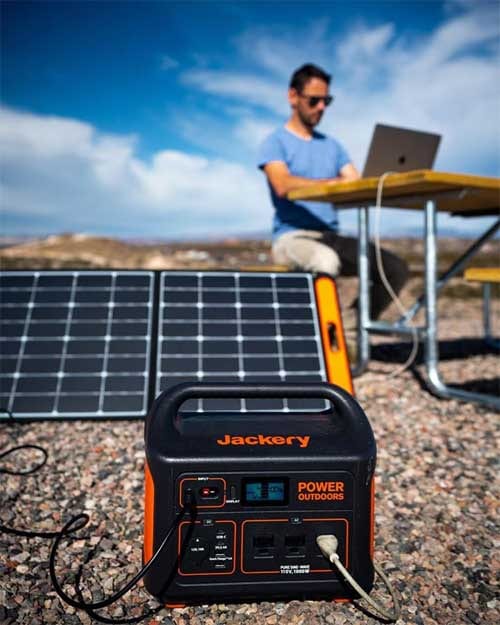
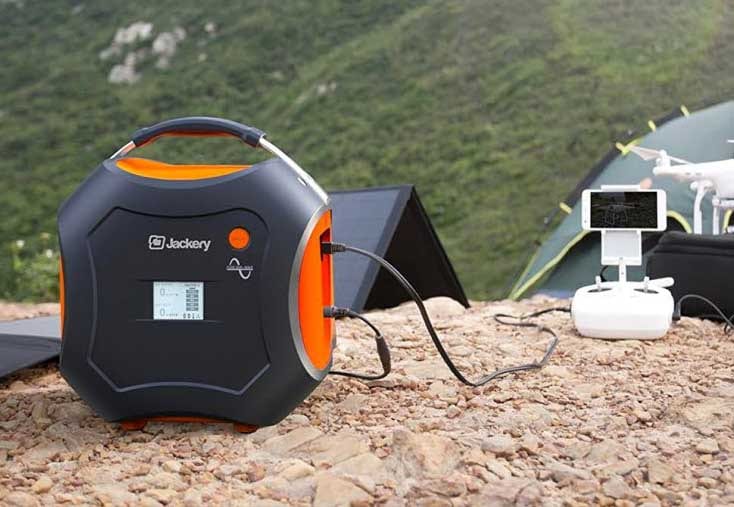
Then you need power that doesn't count as an engine. A battery power station makes no exhaust and no engine noise, so it has no generator hours to break. It runs a phone, a laptop and lights for a weekend, not an air conditioner for a week.
Our best solar generators guide covers the ones worth carrying, and how long a solar generator lasts explains how many trips the battery is good for. If you're sizing for a camper rather than a tent, start with what size generator a camper needs.
What We'd Do
If your campgrounds allow generators in daytime windows, buy the quietest one that covers your load and run it only when you need to. Our best camping generators guide ranks ten, and the Honda EU2200i review covers the model our guides use as the quiet benchmark.
For every type of generator, start at our best generators guide. Camping in an RV? Our best generators for RVs logged decibels at 23 ft with a 15,000 BTU air conditioner running, and our best inverter generators guide covers ten quiet ones.
Look: most campers don't need a generator at all on a night away from a hookup. A power bank and a lantern cover it, and nobody next door ever hears you.
Generator at a Campsite FAQ
Can you run a generator at a campsite overnight?
Almost never. National Park Service campgrounds set quiet hours, usually 10 pm to 6 am, and the four we checked either bar generators overnight or limit them to a daytime window. Private campgrounds are similar. Check the posted hours before you plan to run a fridge or a CPAP overnight, and use a battery for that.
What is the decibel limit for generators in national parks?
60 decibels on the A-weighted scale, measured 50 feet from the generator, under 36 CFR 2.12. Noise below that level is still prohibited if it is unreasonable for the place and time. Individual campgrounds can set lower limits.
Can I use a generator in the backcountry or at a dispersed site?
In a national park's undeveloped areas, you need a permit to operate a portable motor or engine. On national forest and BLM land there is no single rule: check the district's page and any fire restriction order, because an internal combustion engine can be banned during fire danger.
How far should a generator be from a tent?
The CPSC's figure is at least 20 feet from homes and buildings, exhaust facing away. We apply the same distance to tents and campers, and keep the exhaust pointed away from the sleeping area and downwind.