Most car emergency kits are a bag of cheap jumper cables and a foil blanket that rips the first time you unfold it. You only find out what's missing when you're stuck on a forest road or a frozen highway shoulder.
This is a kit built from what has actually got a driver out of trouble. Ryan keeps one in his own rig for two jobs: getting himself unstuck on unmaintained forest roads, and staying alive at the side of the road in a winter blizzard. Everything below is in it, and he's used the key pieces for real: three tire repairs, at least seven jump starts and a four-hour wait in a whiteout.
Below you'll find the full list in four groups, the four things he's actually used and how, and how to pack it so it works when it's cold.
The Short List
- Recovery and repair: a lithium jump starter and backup cables, a 12V compressor, a tire plug kit, a kinetic recovery strap, tape, zip ties and a multi-tool
- Warmth and shelter: a wool blanket, an insulated tarp and two breathable bivvies, plus gloves and a hat
- Light, signal and tools: a rechargeable headlamp, road flares, a folding shovel and a glass breaker
- First aid, food and water: a hiker first aid kit with a tourniquet and clotting gauze, emergency ration bars and 3 liters of water
It all lives in a sealed 50 liter heavy-duty tote, apart from the glass breaker, which belongs within reach of the driver's seat.
Recovery and Repair
This half of the kit gets the car moving again. It's the part Ryan has used most.
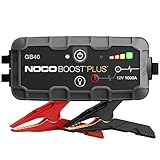
- A lithium jump starter. Ryan carries the NOCO Boost Plus GB40 (1,000 amps). It's the item he's used most.
- Heavy jumper cables as a backup. A set of 4-gauge, 20 foot cables. A lithium pack can be too cold to work in a deep freeze; cables and a willing driver don't need a battery of their own.
- A 12V air compressor. The VIAIR 88P, which clamps straight onto the car battery.
- A tire plug kit. A Blackjack plug kit with the T-handle reamer and insertion tool. With the compressor, it fixes a puncture without fitting the spare.
- A kinetic recovery strap. A 30 foot, 2 inch strap rated to 10,000 lb, with two 3/4 inch soft shackles. Ryan hooks it to frame recovery points.
- Tape, ties and tools. A full roll of Gorilla tape, a pack of heavy UV-rated zip ties, a Leatherman Wave Plus and a 10 inch adjustable wrench.
Warmth and Shelter
If you're stuck in snow, the engine may not be a safe source of heat (see below). This is what keeps you warm instead.
- A wool blanket. A genuine surplus wool military blanket. Ryan picks wool because it stays warm even when it's wet.
- An insulated tarp. An Arcturus heavy-duty insulated all-weather tarp. In our blanket testing it worked as a ground barrier on snow and as a staked windbreak.
- Two breathable bivvies. Two SOL Escape Bivvies. In our emergency bivvy test it was the only one that didn't leave Ryan damp with his own sweat.
- Gloves and a hat. A pair of insulated leather work gloves and a fleece watch cap.
Light, Signal and Tools
- A rechargeable headlamp. The Black Diamond Storm 500-R, with its AAA battery tray as a backup for when the charge runs out.
- Road flares. Three Orion 30-minute road flares.
- A folding shovel. A Gerber folding entrenching tool, for digging tires out of mud and clearing snow away from the exhaust pipe.
- A glass breaker and seatbelt cutter. A spring-loaded center punch with a belt cutter, kept in the center console, not the trunk. If you need it, you can't get out to fetch it.
Nothing beats thermal fire for stopping highway traffic in snow.
Ryan, our lead tester
First Aid, Food and Water
- A first aid kit, upgraded. An Adventure Medical Kits Mountain Series Hiker kit, with a SWAT-T tourniquet and QuikClot clotting gauze added.
- Emergency ration bars. Four Datrex 3,600 calorie ration bars. Ryan chose them because they won't spoil in 120°F summer heat or freeze solid in winter.
- Water. 3 liters in heavy Nalgene bottles, each filled to leave 1.5 inches of space at the top so a freeze can't split them.
What Ryan Has Actually Used
These are the items that have done real work, from Ryan's own trips.
The tire plug kit and compressor: three times
Two screw punctures on remote gravel logging roads, and a sidewall puncture on a stranded pickup truck in the Black Hills, fixed and inflated in 12 minutes without mounting the undersized spare.
One caution from us: a plug in a sidewall is a get-you-home repair, not a permanent one. Get that tire replaced.
The jump starter: more times than he can count
Once for his own rig, after a dash cam left running overnight drained the battery at a cold trailhead. The rest for other people: at least six hikers with dead batteries in sub-zero trailhead parking lots.
The wool blanket and headlamp: a four-hour whiteout
Ryan broke down on I-90 in a whiteout blizzard and waited four hours for a flatbed. Snow had blocked the exhaust pipe, so running the engine for heat wasn't safe. The wool blanket kept him warm and the headlamp gave him light.
The recovery strap: an icy ditch
On a ski area access road, he pulled an all-wheel-drive crossover out of an icy ditch, using the soft shackles on proper frame recovery points.
How to Pack a Car Emergency Kit
- Use one sealed, heavy-duty tote. Ryan's is a 50 liter Roughneck. One box means you grab everything at once.
- Keep the glass breaker in the cabin. In the center console, where the driver can reach it.
- Leave room in the water bottles. About 1.5 inches at the top, so they don't split when they freeze.
- Carry cables as well as a lithium jump starter. A frozen lithium pack is the day you'll want cables.
- Pack the shovel even in summer. It digs out mud as well as snow.
Car Emergency Kit FAQ
What is the most important thing in a car emergency kit?
For most drivers, a jump starter. It's the item Ryan has used most by far, for his own car and for at least six other people's in sub-zero parking lots. Add a tire plug kit and a 12V compressor and you can fix the two breakdowns Ryan has dealt with most.
Should I run the engine for heat if I'm stuck in snow?
Check the exhaust first. In Ryan's whiteout breakdown on I-90, snow blocked the exhaust pipe, so running the engine for heat wasn't safe. Clearing snow from the exhaust is one of the jobs his folding shovel is for, and his wool blanket and bivvies are there for when the engine has to stay off.
What food should go in a car emergency kit?
Food that survives the car. Ryan uses Datrex 3,600 calorie ration bars because they won't spoil in 120°F summer heat or freeze solid in winter, unlike most snacks left in a trunk.
The Bottom Line
Build the kit around the breakdowns that actually happen: a dead battery, a puncture, a car stuck in mud or snow, and a long wait in the cold. A jump starter, a plug kit and compressor, a recovery strap and real warmth cover most of it. For the warmth half, start with our best emergency bivvy guide.
Editor's Note, 17 October 2026: New guide, built from the kit Ryan carries in his own vehicle and the times he has used it.
Our Testers
This guide was edited by Sean Williams and built from the kit of Ryan Williams.
- Sean Williams, Editor-in-Chief. Sean built the team of researchers and testers behind our reviews and sets the rule the site runs on: we buy what we test, and we say what we found.
- Ryan Williams, Lead Tester. A heavy fleet equipment mechanic and commercial vehicle technician by trade, Ryan tests our generators, family tents and emergency gear.
