Most tent regrets trace back to one shopping habit: buying by the number on the box. A tent labelled for four people is measured for four bodies lying shoulder to shoulder with no room for bags, boots, or the reality that people move in their sleep. That is why so many campers feel cramped in a shelter that looked roomy online. Buying the right tent is really about matching four things to how you actually camp, and once you understand them you will never be caught out by a misleading label again.
Our team has pitched, packed, and slept in tents across everything from calm summer meadows to wet, windy autumn nights, which is where you learn which features earn their keep and which just add weight and cost.
This guide walks you through the four decisions that matter most: capacity and how to read the sizing honestly, season rating and what it really promises, weight and how much you are willing to carry, and build quality, from pole material to seams and waterproofing. By the end you will know exactly which tent fits the way you camp.
Table of Contents
- How to Choose Tents for Camping Tent Buying Guide
- How Often Will You Use Your Tent?
- In What Weather Conditions Are You Planning To Camp?
- How Long Are You Prepared To Spend On Set-Up?
- How Many People Will Be Sleeping In Your Tent?
- What’s Your Budget?
- How Will You Transport Your Tent?
- Other Things To Consider
- Tent Buying Guide: Buying Tips
- Types Of Tent
- Related Buying Guides
How to Choose Tents for Camping Tent Buying Guide
For The Best Hints & Tips On Buying Your Cosy ‘Home Away From Home’
Buying the right tent comes down to matching four things to how you actually camp: capacity, season rating, weight and build quality.
Pick a tent rated for one or two more people than your group, choose a three-season model for most trips (four-season for winter), and keep it under 2lbs if you backpack.
Then check the fly, poles, zips and floor for quality before you buy.
This guide walks you through every question that matters, from how often you camp to the tent types worth knowing.
We wrote it as a team so we could pool 237 years of collective experience.
We made every mistake in the book, so you don't have to.
How Often Will You Use Your Tent?
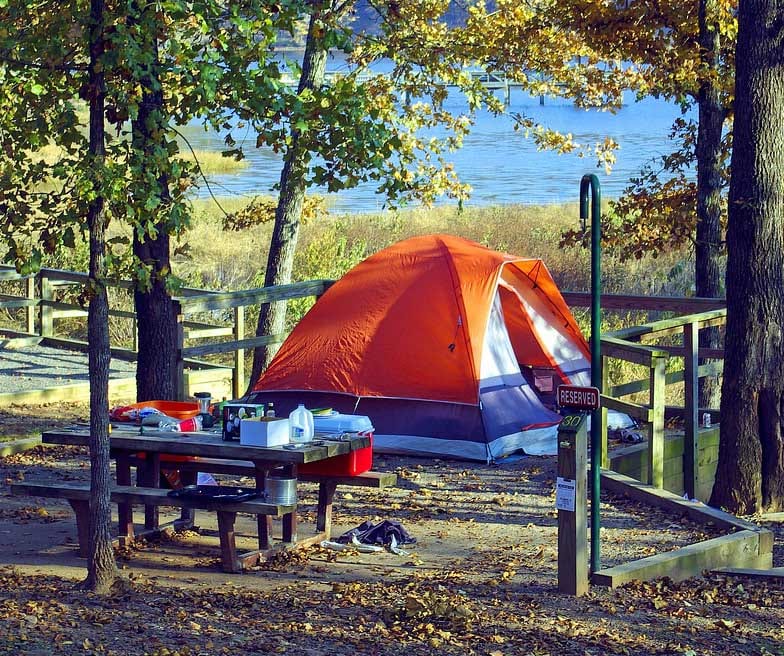
Start by working out how often you plan to camp.
Is this a treat for a rare weekend away?
A regular Friday night escape with friends?
Or a three-week summer trip with the kids in tow?
For rare trips, a small tent does the job.
You won't need expensive features when your trips are short and few.
Here's the deal:
If you camp often, spend a few extra dollars on durability so the tent lasts.
Camping with friends who might join you? Count everyone in and plan for comfort.
And for trips with the kids, look for home comforts like space, room dividers and vestibules.
Those features turn a good trip into one you remember for the right reasons.
In What Weather Conditions Are You Planning To Camp?
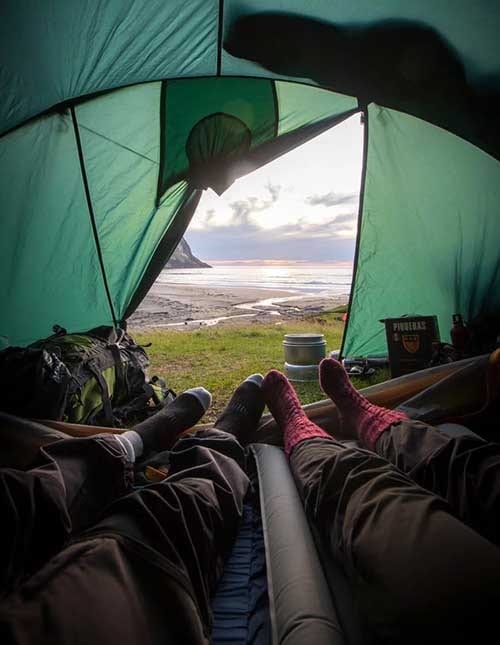
Weather protection means different things to different campers.
But everyone shares one goal: staying dry in the rain.
Camping with a group somewhere hot? Focus on space and ventilation.
Camping alone in winter? You'll want a cozy tent with just enough room to hole up.
Here's the thing:
A geodesic design gives you the best protection against wind, rain and even snow.
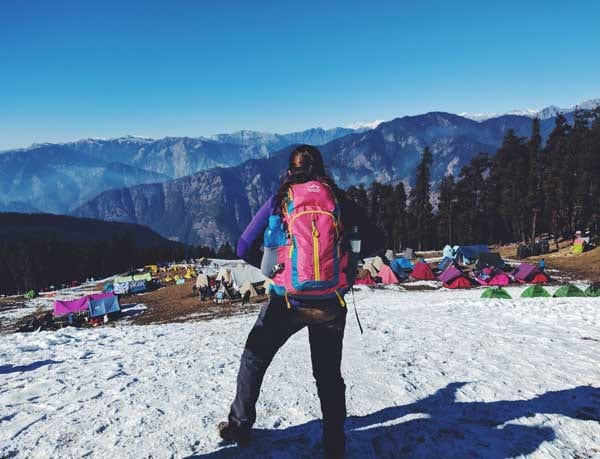
Might you camp in winter?
Then decide between a three-season tent and a four-season one.
Look out for two things at a minimum.
Bathtub flooring with welded seams, so damp can't seep up from the ground.
And a full-coverage rainfly. On that, we all agree.
How Long Are You Prepared To Spend On Set-Up?
Pitching for the kids in the back yard? You'll want something quick and simple.
No storms to weather, no storage areas to set up.
Away for three weeks with the family? You probably won't mind spending the first evening on setup.
Time invested up front makes the coming weeks so much easier.
A more involved design pays you back in comfort later.
Good news:
You can now buy super easy set-up tents.
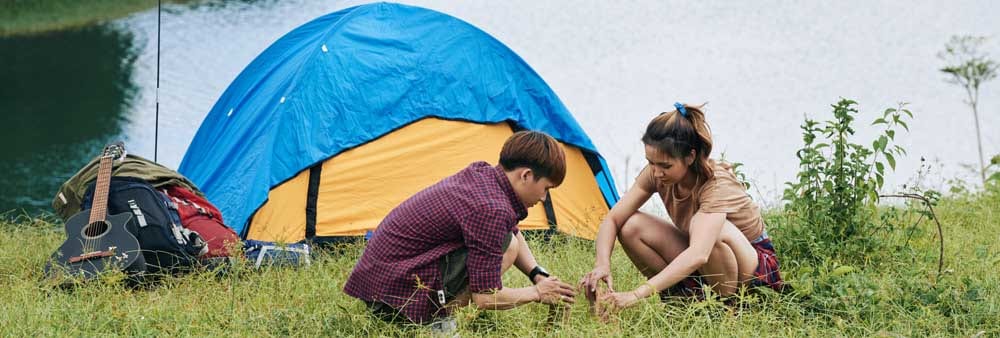
Here are two to know.
Pop Up Tents
You know the kind. Like baby beach tents.
You take them out of the bag and internal coil springs snap them into shape in seconds.
The catch? They can be a challenge to fit back in the bag.
Our advice: have someone logical read the instructions and work as a team.
Bottom line: they're great for festivals or home camping.
Quick Opening Tents
Manufacturers often quote how many minutes a tent takes to set up.
Don't believe everything you read.
In our experience, those times run optimistic.
So: practice the setup at home and add a few minutes to the quoted figure.
That way you're never caught short or pushed for time on site.
How Many People Will Be Sleeping In Your Tent?
A tent is a long-term investment.
So don't buy for the next trip alone.
Think about the trip after that, and the one after that.
Think about the friends who might join you for an impromptu chillout.
Here's the kicker:
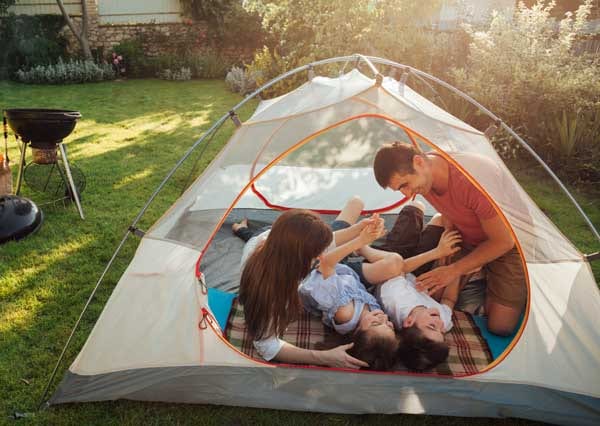
Some tents give you flexible sleeping space and storage, so you can cover every scenario.
The bottom line:
Aim for plenty of floor space per person, enough to sleep, hang out and store your kit.
Oh, and maybe the dog.
That's not all: add one or two extra person capacity for wiggle room, then multiply out.
The market runs from 6 Person Tents right up to 15 person tents.
And remember, you can always run two smaller tents instead.
An 8 person tent is an excellent middle ground.
What’s Your Budget?
Whatever your budget, the goal is the most bang for your buck.
The watchword is value, not price.
So: seek out recommendations from people who've actually used the tents you're eyeing.
Trust the ones who give you honest, unbiased help.
Do your homework and you'll end up with a tent you're happy with for the long haul.
How Will You Transport Your Tent?
Backpacking
On a backpacking trail, space is at a premium.
So dig into the specs, especially packed size and weight.
Here's our rule: a backpacking tent should weigh no more than 2lbs.
Anything heavier is a chore to pack and carry.
Smaller tents are also easier to set up and to find a pitch for.
Car Camping
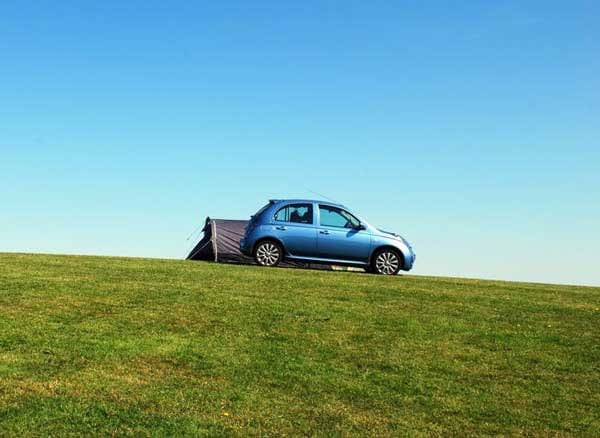
Taking the car? Then weight and packed size matter far less.
As long as your pitch is close to the vehicle, you can carry a bigger, heavier tent without a second thought.
Other Things To Consider
Power Source
Not everyone wants to unplug when they camp.
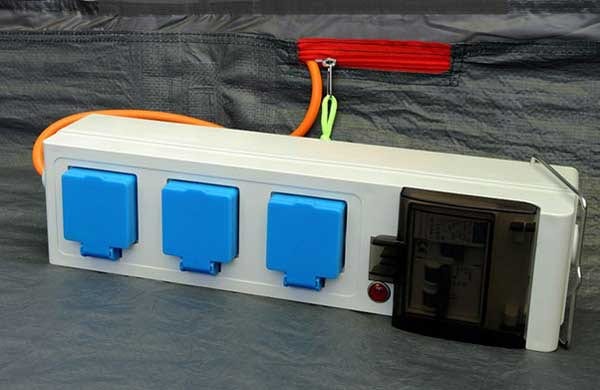
Most family tents include a zipped opening for a power cable.
That lets you run a mains cable inside to power devices and chargers.
A super handy feature to look out for.
Rainfly
The rainfly is your main line of defense between the inner tent and the elements.
It has to be strong and durable.
Here's what you need to know:
It's usually nylon with a polyurethane coating.
Check the hydrostatic head, the standard measure of water resistance.
Aim for no less than 1,500mm. That's the point where fabric counts as waterproof.
Tent Poles
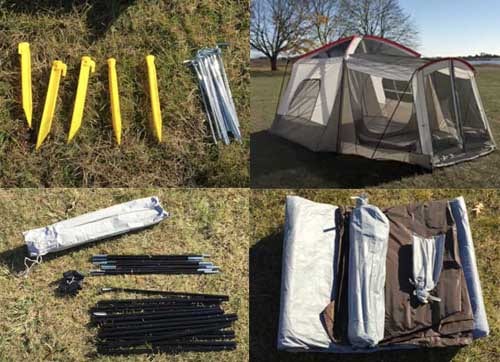
Poles are usually aluminum with an elasticated inner cord, which makes folding and storage easy.
Look out for color-coded poles.
They match to different parts of the tent, so setup is more straightforward.
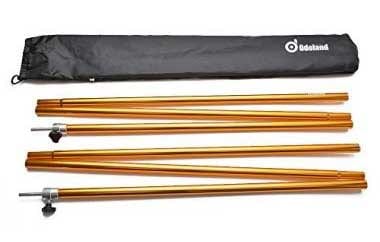
Other materials include carbon composite and fiberglass, which is lighter but tends to shatter.
Aluminum is the strongest and most durable of the options.
The good news is:
If you break a pole, most outdoor shops sell replacements or repair kits.
Groundsheet
Your rainfly protects you from above.
Your groundsheet protects you from below: dirt, debris and moisture.
The watchword here is durability.
The fabric needs to be sturdy and fully waterproof.
Backpacking and some technical tents feature a removable groundsheet to save weight.
Doors
You'll generally choose between a single door and a double door tent.
Single doors mean lighter construction.
Double doors give you more flexible access.
Bottom line:
Every door should have a fine mesh covering, which improves ventilation and keeps out bugs and insects.
Ventilation
Even miles from anywhere, ventilation is easy to overlook, and it matters.
Want to keep the air fresh for large groups?
Go for mesh-paneled ventilation windows.
They cut condensation and improve airflow, both important when you're sleeping in an enclosed space.
Choose a tent with a roof vent and keep it open at night to maximize circulation.
Guy Lines
Guy lines run around the outside of a tent to keep it stable and upright.
Opt for fluorescent or bright guy lines.
They show up on night-time trips to the bathroom.
Beyond that, weigh weight against user-friendliness.
Strength isn't a worry. The lightest cord we found still has a breaking strength of 200 lbs.
You won't meet that kind of force, even on the worst winter night.
Zippers
Dynamite comes in small parcels.
Tent zippers are no exception.
Buy a cheap tent and the zippers are often the first thing to fail, which makes the rest of your investment worthless.
Think about the stress a zipper takes.
It keeps the tent taut and survives constant comings and goings.
That's why it has to be durable.
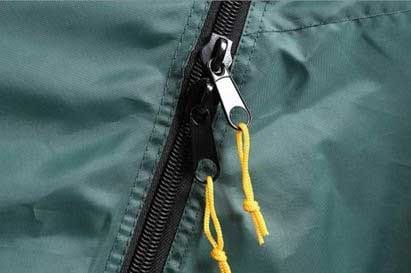
Be on the lookout for quality fastenings.
And for some form of manufacturer guarantee, so your tent lasts for years.
Double zippers are a strong sign of quality.
Used correctly, they lengthen the lifespan of your tent considerably.
Packability
Car camping with a group? Size and weight won't be a big deal, since you'll have help carrying it.
But:
If you're backpacking alone or as a couple, think hard about packability.
Lighter tents usually cost more, because the fabric is thinner and more specialized.
As we said earlier, 2lbs is your limit for comfortable backpacking.
Vestibules
A vestibule is covered space at the front, sides or rear of your tent, outside the sleeping area.
Sizes vary a lot, so think about how you'll use it.
Do you have a dog, with food bowls and gear?
For longer stays, will you need somewhere to stash walking boots?
What about food, camping cookware and clothes?
Planning this out gives you maximum organization, which is crucial when space is limited.
Want to max out your storage?
Opt for a vestibule with a square-shaped floor plan.
Some tents also add zipped or tinted windows and curtains to block out the light.
Double/ Single Wall
Single wall tents use one layer of waterproof, breathable fabric.
They're generally lighter and quicker to set up than double-walled tents.
Need to save money?
The cheaper option is a double-walled tent, where the rainfly sits separate from the inner sleeping area.
Double-walled tents are a bit heavier, but they ventilate better and stay drier in damp conditions.
Tent Buying Guide: Buying Tips
- Look after your tent well, and it will look after you. When you've finished your trip, dry out your tent (to prevent mildew and mold) and carefully fold to pack it up. Store it somewhere dry and cool, like a closet or garage.
- Apply seam sealer annually to keep those joins in tiptop condition.
- Suspend a flashlight from the ceiling while it's still light, so you're not fumbling in the pitch black later.
- Carefully choose the location of your camping setup. Look for level ground clear of rocks and debris that can damage your groundsheet.
- Traveling with a brand new tent? Do a test pitch in your back yard first. You'll confirm you have every pole and part, and it makes pitching on site so much easier.
- Always zip your door(s) shut. Forget once and your tent fills with bugs and insects you'll have to clear out later. We all learned this the hard way.
- If space allows, take along some form of mat to trap debris at the entrance. A small dustpan and brush keeps things tidy as you go.
- Bring along a mallet (rarely included, always necessary) and consider upgrading to titanium stakes for extra strength.
- The critical features to weigh are your expected weather, party size, build quality, trip length and packability.
Gentle Warning
Tents can be highly flammable.
Keep naked flame away from your camping area and take care when cooking inside.
Types Of Tent
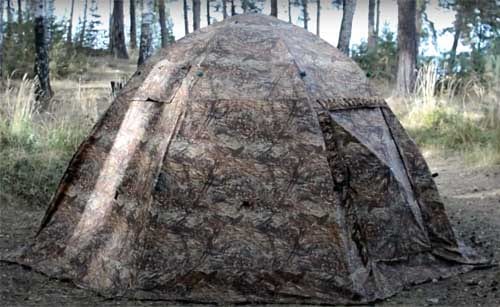
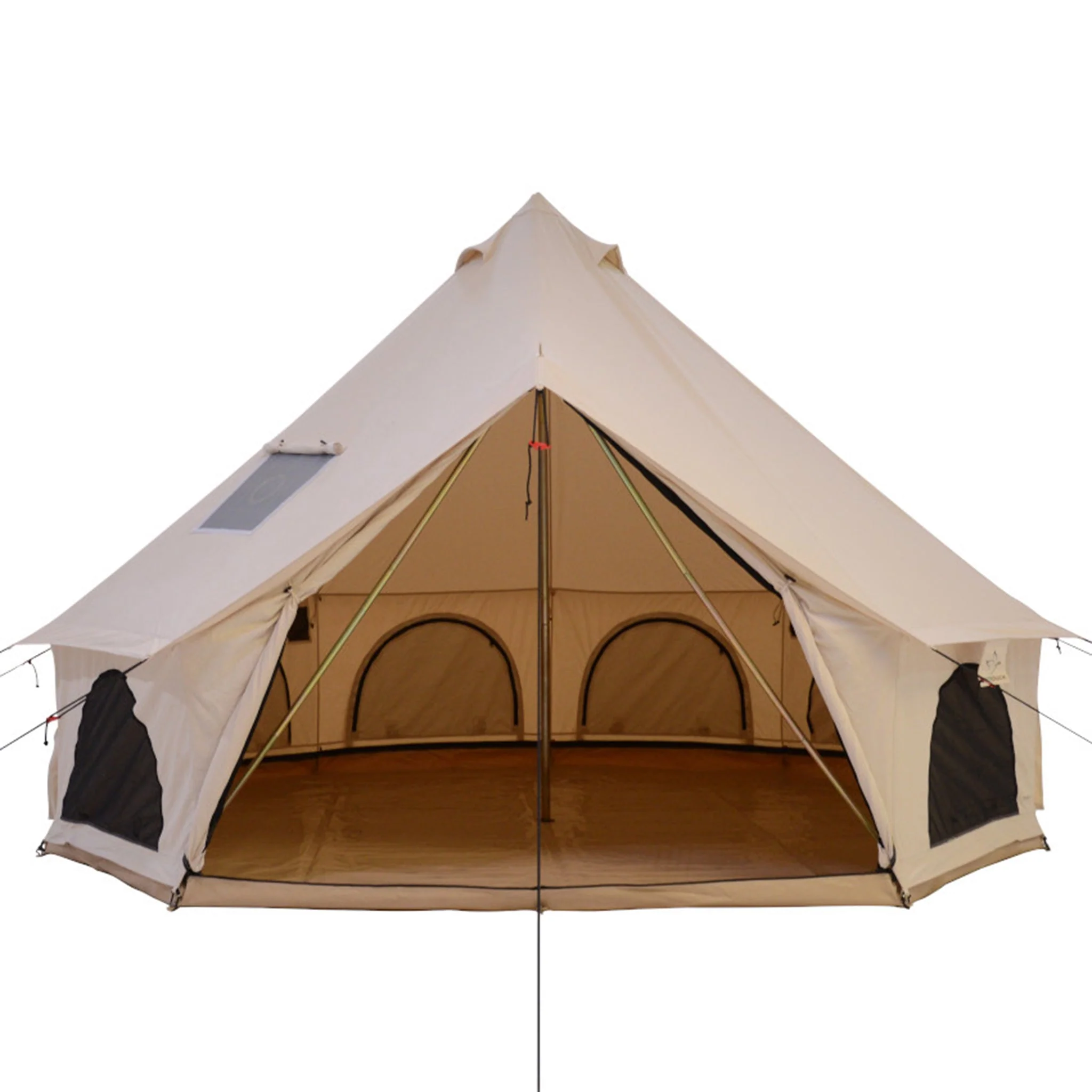
Tents come in six basic designs.
Here they are.
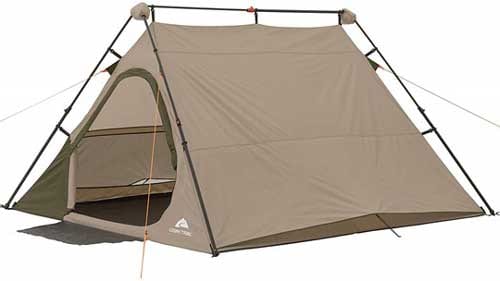
‘A’ Frame/ Ridge Tents
Often the cheapest of the bunch, these tend to use poorer-quality materials.
They're light to carry but prone to wind damage.
Typically they have a pole at each end and a cross or ridge pole forming the roof.
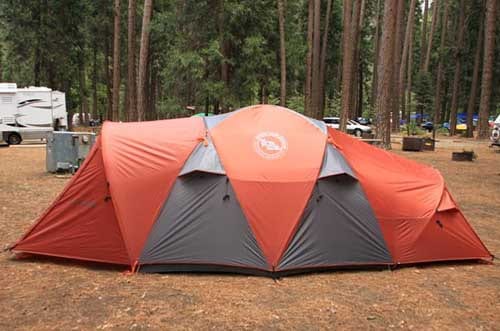
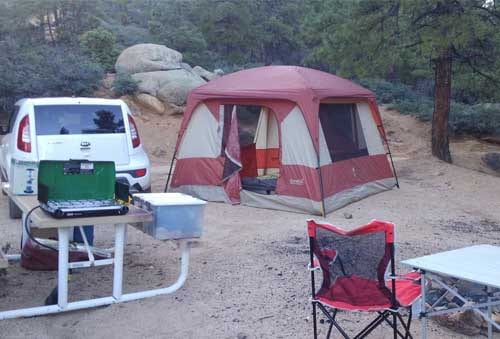
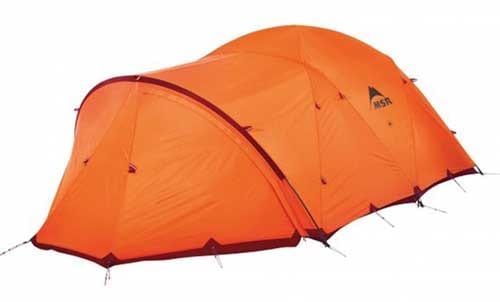
Dome Tents
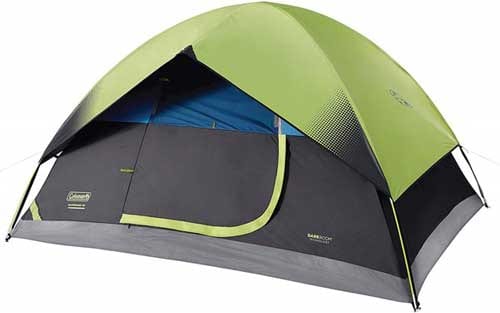
Dome tents usually have two or more poles that cross at the top, visible from the outside.
They have arched ceilings and are usually easy to pitch.
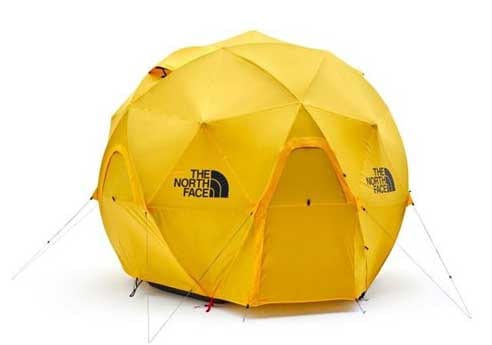
Geodesic Tents
Named after their triangular design, these are similar to dome tents.
But the crossed poles, generally at least seven, create triangle shapes.
Geodesic design gives you maximum stability against the elements, which makes it excellent for winter.
Tunnel Tent
Similar to dome tents, tunnel tents are a firm favorite for family camping.
They're usually super easy to set up.
The poles arch to form the tunnel and need pegging as you pitch, since they aren't freestanding.
They also tend to have a higher space-to-weight ratio than other designs.
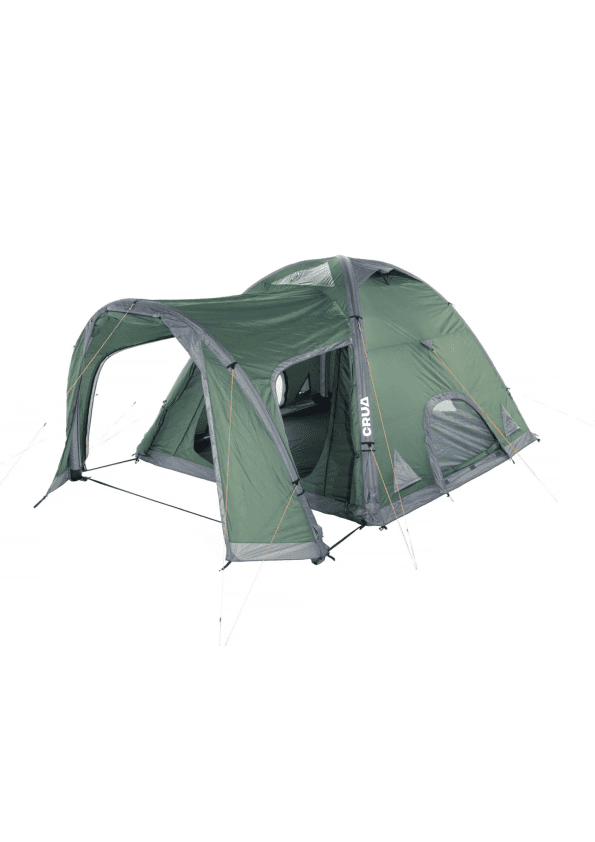
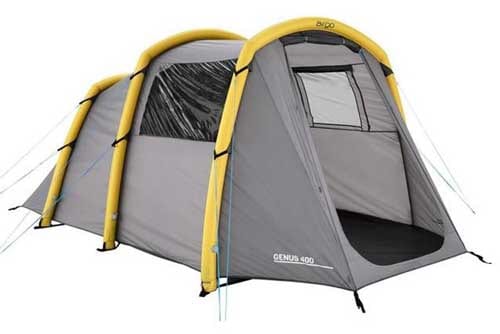
Inflatable Tent
The name says it all. These use inflatable beams instead of poles.
They're straightforward to set up, even with just one person.
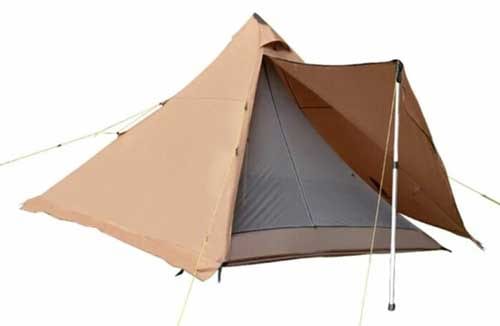
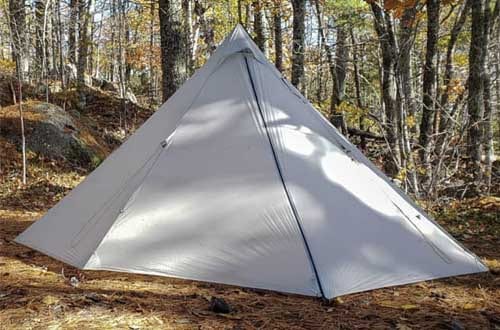
Pyramid or TeePee
These are a simple design, usually a rainfly attached to a central pole.
You get a lot of space for the weight.
The trade-off? The lack of a floor can be a problem, especially in wet weather.
And Finally...
Armed with a budget and some answers to the questions above, you're ready to shop.
It's over to you now.
The team here at TopNotch hope this guide helps you make the best choice. Safe and happy travels.