


Here you have our TopNotch team comprehensive Review and Buyers Guide for the very best Small Generators in 2020.
In this guide we’ll show you:
- The three best generators this season
- A comparative review of the top 10
- Important features to consider
- Expert tips for buying
- Lots more...
Do you want to know about differing noise levels you must consider when you’re choosing a small generator for your next camping trip?
(Some campsites actually stipulate acceptable noise levels - so beware).
Keep scrolling to learn more about that.
Let’s dive in and get started
I’m sure you realize that either during an emergency at home or on an outdoor trip, small generators are an invaluable piece of kit.
Table of Contents
- Best Small Quiet Generator
- Cheap Small Generator
- Best Small Inverter Generator
- Best Small Dual-Fuel Generator
- Best Small Generator For RV
- Best Boat Generator
- Best Small Generator For Home
- Best Small Gas Generator
- Best Small Generator For Camping
- Best Portable Small Generator
- Buyers Guide:
- How To Choose The Best Small Generator
- Frequently Asked Questions (FAQs)
- Our Analysis, Comparisons & Test Results
- Our Final Verdict: 10 Best Small Generators 2026
- Conclusion: Best Small Generator
From powering up the refrigerator at home, trips with the RV, or even charging the smaller electronic appliances, these are designed for versatile use.
We chose the top 10 models on the market and headed out for our outdoor testing trips.
We took them through a series of tests to judge the overall performance.
Whilst all of them are small, portable and feature-rich, we tested them in detail to find out how good they are as a super dependable source of power.
Frankly, we don’t want a noisy generator..
So, yes.
We also paid a lot of attention to choosing the best small quiet generators for this review.
It was a fun testing trip, but…
…it turned out that choosing between these closely matched products wasn’t as easy as we first thought.
They all have more pros than cons.
By a Country Mile...
So let’s get down to business and see what we have in store for you.
 Best Small Quiet Generator
Honda EU2200i Inverter Generator
- Running watts: 1800 W
- Starting watts: 2200 W
- Noise: 48 to 57 dBA
- Runtime at 1/4 load: up to 8.1 hr
- Fuel: Gasoline
- Weight: about 47 lb
- Parallel capable: Yes, cables extra
- Warranty: 3 years
Bottom Line : The quietest and most reliable unit in this group, but you pay a real premium for the Honda name.
Pros
- Quietest unit at low load
- Best long-term reliability record
- Commercial-grade engine
- Strong resale value
Cons
- Costs two to three times the budget rivals
- Parallel cables not included
- Gas only, no propane option
A 2200 starting watt, 1800 running watt inverter built around Honda's GXR120 engine, which is why it starts on the first pull for years and holds its resale value. GXR120 commercial-grade engine is the same family used in Honda's pro equipment. Fit and finish, panel latches, and fuel valve feel a step above the budget field.
Sells for roughly 1,100 to 1,200 dollars, two to three times the price of the WEN or Pulsar for similar wattage. The quietest and most reliable unit in this group, but you pay a real premium for the Honda name. It scores 92 out of 100.
Mine has started first pull every camping trip for three seasons and you can hold a normal conversation next to it. The price still stings and I had to buy a soft-start kit before it would run my rooftop AC.
Ryan, Top-Notch field tester
Read our full Honda EU2200i Inverter Generator review →
 Cheap Small Generator
WEN 56225i 2250-Watt Inverter Generator
- Running watts: 1800 W
- Starting watts: 2250 W
- Noise: 53 dBA at 1/4 load
- Runtime at 1/4 load: up to 9.4 hr
- Fuel: Gasoline
- Fuel tank: 1 gal
- Weight: about 49 lb
- Warranty: 2 years
Bottom Line : The best dollars-per-watt pick here, quiet and capable for the price, just not built for years of heavy use.
Pros
- Lowest price per watt here
- Fuel shutoff for clean storage
- Quiet at low load
- Large happy owner base
Cons
- Lighter-duty engine and housing
- Some early-failure reports
- Gas only
A 2250 starting watt, 1800 running watt inverter that costs roughly a third of the Honda and covers most camping and light backup needs. Typically sells around 400 dollars, the clear budget winner in this group. Includes a fuel shutoff that runs the carburetor dry, a feature usually found on pricier units.
1800 watts continuous, 2250 watts starting surge. The best dollars-per-watt pick here, quiet and capable for the price, just not built for years of heavy use. It scores 86 out of 100.
For the money it does everything I need on weekends and it is genuinely quiet at low throttle. It does not feel as solidly built as the Honda, so I baby it and drain the fuel before storage.
Emma, Top-Notch field tester
Read our full WEN 56225i 2250-Watt Inverter Generator review →
 Best Small Inverter Generator
Yamaha EF2200iS Inverter Generator
- Running watts: 1800 W
- Starting watts: 2200 W
- Noise: 57 to 65 dBA
- Runtime at 1/4 load: up to 10.5 hr
- Fuel: Gasoline
- Weight: about 55 lb
- CO sensor: Yes
- Warranty: 3 years
Bottom Line : Nearly Honda-grade build and clean power with the longest runtime here, a strong pick if you find it below Honda money.
Pros
- Near Honda build quality
- Longest runtime here
- Clean, stable power
- 3-year warranty
Cons
- Priced close to the Honda
- Louder than Honda at full load
- Can be hard to find in stock
A 2200 starting watt, 1800 running watt inverter with a Yamaha OHV engine and Smart Throttle, aimed squarely at buyers cross-shopping the Honda. Yamaha OHV engine and tidy internal layout, one of the best-built units here. Panel, latches, and handle feel premium and close to the Honda.
Priced close to the Honda, usually 900 to 1,100 dollars, so it competes on quality not price. Nearly Honda-grade build and clean power with the longest runtime here, a strong pick if you find it below Honda money. It scores 88 out of 100.
The power is rock steady and it ran my fridge and fan all night on one tank. It costs almost as much as the Honda and gets a bit louder than I expected once I load it up.
Shaun, Top-Notch field tester
Read our full Yamaha EF2200iS Inverter Generator review →
Champion 2500-Watt Dual-Fuel Inverter Generator
- Running watts (gas): 1850 W
- Running watts (propane): 1665 W
- Starting watts: 2500 W
- Noise: 53 dBA at 23 ft
- Runtime (gas, 1/4 load): up to 11.5 hr
- Fuel: Gasoline or propane
- Weight: about 39 lb
- Warranty: 3 years
Bottom Line : Runs on gas or propane and is light and quiet, but you lose about 200 running watts when you switch to propane.
Pros
- Runs on gas or propane
- Light at 39 lb
- Quiet at 53 dBA
- CO shutoff and 3-year warranty
Cons
- About 200 fewer running watts on propane
- Lighter-duty build than Honda or Yamaha
- Propane regulator adds a little bulk
A 39-pound dual-fuel inverter with CO Shield that gives you fuel flexibility, useful when gasoline is hard to find or you already keep propane tanks. Usually 550 to 650 dollars, more than the WEN but far below the Honda. Dual-fuel flexibility means you can burn cheap propane you may already own.
CO Shield auto-shutoff cuts the engine if carbon monoxide climbs. Runs on gas or propane and is light and quiet, but you lose about 200 running watts when you switch to propane. It scores 84 out of 100.
I love that I can run it off the same propane tank as my grill when the gas cans run dry. Just know you lose a chunk of power on propane, so I keep gasoline in it for the heavier stuff.
James, Top-Notch field tester
Read our full Champion 2500-Watt Dual-Fuel Inverter Generator review →
Westinghouse iGen2550 Inverter Generator
- Running watts (gas): 1900 W
- Running watts (propane): 1700 W
- Starting watts: 2550 W
- Noise: as low as 52 dBA
- Runtime at 1/4 load: up to 12 hr
- Fuel: Gasoline or propane
- RV outlet: TT-30R 30A
- Weight: about 42 lb
Bottom Line : The built-in 30A RV outlet makes it the easy plug-in RV pick, though the build feels lighter-duty than the leaders.
Pros
- Built-in 30A RV outlet
- Runs on gas or propane
- Quiet at low load
- Reasonable price
Cons
- Lighter-duty build
- Recoil start only
- Still needs soft-start for RV AC
A dual-fuel inverter with a TT-30R RV outlet on the panel, so you can plug a camper straight in without an adapter dogbone. Usually 450 to 550 dollars, good value given the RV outlet and dual fuel. Built-in 30A TT-30R outlet saves buying a separate adapter for RV use.
CO sensor shuts the engine down if carbon monoxide gets dangerous. The built-in 30A RV outlet makes it the easy plug-in RV pick, though the build feels lighter-duty than the leaders. It scores 80 out of 100.
Plugging my trailer straight into the 30 amp outlet is so much simpler than the dogbone dance. It still would not spin up my air conditioner until I added a soft-start, and the plastic feels a little cheap.
Annie, Top-Notch field tester
Read our full Westinghouse iGen2550 Inverter Generator review →
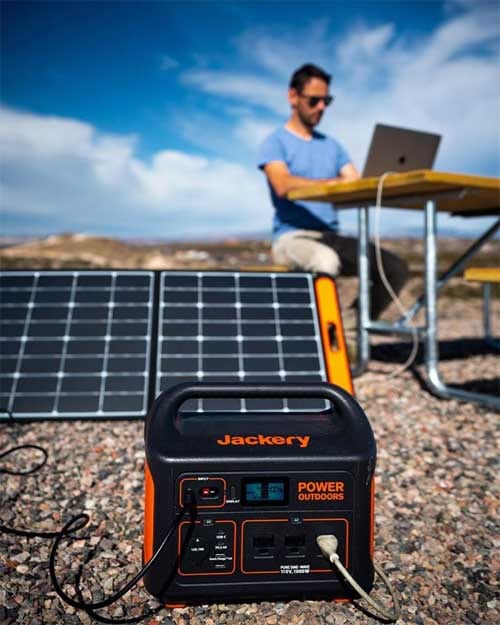
Jackery Explorer 1000 v2 Portable Power Station
- Capacity: 1070 Wh
- AC output: 1500 W, 3000 W surge
- Battery: LiFePO4, 4000 cycles
- Noise: near silent
- Recharge (wall): about 1.7 hr
- Fuel: None, battery only
- Weight: about 24 lb
- Solar: Panels sold separately
Bottom Line : A silent battery, not a fuel generator, so it is ideal on a boat but it runs out and needs recharging rather than refueling.
Pros
- Silent and fume-free
- Safe to run indoors and on a boat
- Long-life LiFePO4 battery
- Fast 1.7-hour recharge
Cons
- Not a generator, it stores energy rather than making it
- Runs down and must be recharged
- High cost per watt-hour
A 1070Wh LiFePO4 battery with a 1500W pure sine inverter, it makes zero noise and zero fumes, which is exactly what you want in an enclosed cabin. Effectively silent aside from a quiet cooling fan under heavy load. No exhaust, so it is safe to run inside a cabin, tent, or boat where a gas unit would be deadly.
Around 700 to 800 dollars for 1070Wh, more per usable watt-hour than a gas unit. A silent battery, not a fuel generator, so it is ideal on a boat but it runs out and needs recharging rather than refueling. It scores 86 out of 100.
On the boat it is perfect, no fumes, no noise, and I recharge it at the dock. Just remember it is a battery, so when the 1070 watt-hours are gone you are waiting on a recharge, not topping up a tank.
Ryan, Top-Notch field tester
Read our full Jackery Explorer 1000 v2 Portable Power Station review →
Generac GP2500i Portable Inverter Generator
- Running watts: 2200 W
- Starting watts: 2500 W
- Noise: about 60 dBA at 1/4 load
- Runtime at 1/4 load: up to 8 hr
- Fuel: Gasoline
- Engine: 98cc OHV
- Weight: about 48 lb
- CO shutoff: COsense
Bottom Line : The highest running watts in the gas group, but it is the loudest inverter here and the build is mid-pack.
Pros
- Most running watts of the gas units
- COsense safety shutoff
- Long 100-hour oil interval
- Good home-backup headroom
Cons
- Loudest inverter here
- Mid-pack build quality
- Some early-failure reports
A 2500 starting watt, 2200 running watt inverter with COsense, the strongest continuous output among the gasoline units listed. 2200 watts continuous, 2500 watts starting, the strongest gas output in this group. Enough to run a fridge plus lights and a few extras at once.
Rated about 60 dBA at quarter load, the loudest inverter in this lineup. The highest running watts in the gas group, but it is the loudest inverter here and the build is mid-pack. It scores 76 out of 100.
It has the most usable power of the gas units and ran my fridge and a couple of lamps without complaint. It is clearly the loudest of the bunch, so I would not want it right outside a bedroom window.
Emma, Top-Notch field tester
Read our full Generac GP2500i Portable Inverter Generator review →
Pulsar PG2300iS Portable Inverter Generator
Bottom Line : A cheap, compact gas unit that covers the basics, but the runtime is short and the build is budget.
Pros
- One of the cheapest units here
- Compact and light
- Parallel capable
- Strong owner rating
Cons
- Short runtime, about 4.8 hr at half load
- This variant has no CO sensor
- Budget build and louder than rivals
A 2300 starting watt, 1800 running watt inverter with an 80cc engine, one of the least expensive ways into a quiet inverter. Usually 350 to 450 dollars, among the cheapest units here. Over 400 owner reviews average 4.5 stars, praising quiet operation and easy starting.
Rated about 59 dBA, on the louder side of this group. A cheap, compact gas unit that covers the basics, but the runtime is short and the build is budget. It scores 78 out of 100.
For what I paid it starts easily and runs my essentials on a weekend trip. The tank is small so I am refueling sooner than I would like, and this version does not have the carbon monoxide sensor.
Shaun, Top-Notch field tester
Read our full Pulsar PG2300iS Portable Inverter Generator review →
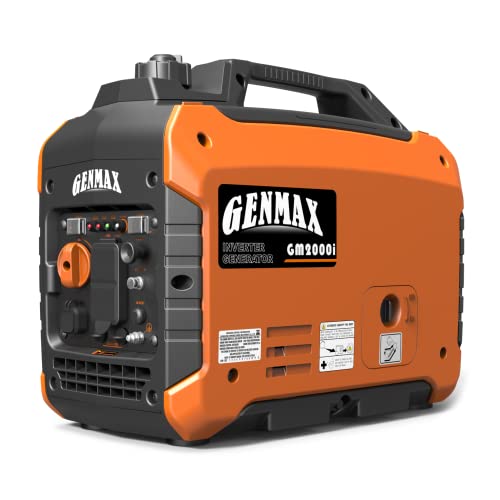
GENMAX GM2000i Ultra-Quiet Inverter Generator
- Running watts: 1600 W
- Starting watts: 2000 W
- Noise: about 58 to 60 dBA
- Runtime at 1/4 load: up to 10 hr
- Fuel: Gasoline
- Engine: 79.7cc OHV
- Weight: about 34 lb
- CO alert: Yes
Bottom Line : Light and cheap for backpacking-style camping, but it has the lowest running watts here so keep loads small.
Pros
- Lightest gas unit at 34 lb
- CO alert shutoff
- Low price
- Easy to carry and store
Cons
- Lowest running watts here
- Budget build and shorter track record
- Gas only
A 34-pound, 2000 starting watt, 1600 running watt inverter with a CO alert, the lightest gas unit in this lineup. Usually 350 to 450 dollars, priced with the budget field. 34-pound weight makes it the easiest gas unit here to carry to a campsite.
CO alert automatically shuts the engine down at unsafe carbon monoxide levels. Light and cheap for backpacking-style camping, but it has the lowest running watts here so keep loads small. It scores 76 out of 100.
It is light enough that carrying it from the truck to camp is no chore and it kept my lights and phones going all evening. Just do not expect to run anything hungry, 1600 watts goes fast.
James, Top-Notch field tester
Read our full GENMAX GM2000i Ultra-Quiet Inverter Generator review →
Champion 2500-Watt Ultralight Inverter Generator
- Running watts: 1850 W
- Starting watts: 2500 W
- Noise: 53 dBA at 23 ft
- Runtime at 1/4 load: up to 11.5 hr
- Fuel: Gasoline
- Engine: 79cc OHV
- Weight: about 39 lb
- Warranty: 3 years
Bottom Line : One of the lightest 2500-watt units around with strong running watts, a good gas-only pick if you do not need dual fuel.
Pros
- Light at 39 lb
- Strong 1850 running watts
- Quiet at 53 dBA
- Free 3-year warranty
Cons
- Gas only, no propane
- Lighter-duty build than the majors
- Needs soft-start for RV AC
A 39-pound gasoline inverter with CO Shield and a free 3-year warranty, the single-fuel sibling to the dual-fuel Champion above. Usually 450 to 550 dollars, competitive for the wattage and weight. Free 3-year warranty plus lifetime technical support.
CO Shield auto-shutoff protects against carbon monoxide buildup. One of the lightest 2500-watt units around with strong running watts, a good gas-only pick if you do not need dual fuel. It scores 82 out of 100.
It is easy to lift into the truck and put out solid power for its size, and it stayed quiet all weekend. I do wish it ran on propane too, since that is the only thing the dual-fuel version has over it.
Annie, Top-Notch field tester
Read our full Champion 2500-Watt Ultralight Inverter Generator review →
Buyers Guide:
How To Choose The Best Small Generator
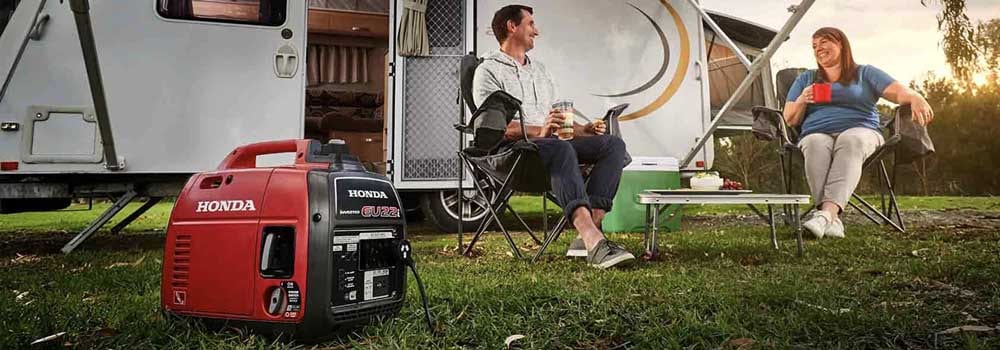
Whether you’ll be handling an emergency situation during a hurricane or heading off-grid for your next adventure, having a steady and reliable power source at hand is going to make life a whole lot easier.
Considering the wide range of products on the market, selecting the best small and quiet generator isn’t necessarily a walk in the park.
Ever noticed how some products offer deal-breaking features at one end while compromising in other key areas?
But, with a well-defined set of guidelines, making the right choice can be quick and easy.
So what do we have here?
We’ve outlined all the important points - from the power factor to portability - that’ll help you to learn more about what to look for when you’re choosing your next small generator.
What Are The Different Types Of Generator?
When it comes to small generators, there are four main options to choose from.
- Home-based standby generators are permanently installed and run on natural gas or propane.
- Portable generators that you can carry anywhere, other than an enclosed space.
- Inverter generators that offer more efficiency and quieter performance.
- Portable power stations that consist of a battery that needs to be charged.
Now, your choice will depend on your purpose, as well as your budget.
For indoor use, the first option is the best. These offer the highest power outputs - but the costs are higher too.
On the other hand, for campers and RV owners, the small portable models are a great choice.
Next comes the inverter generators that offer better efficiency and advanced exhaust technology that suppresses noise.
They’re portable but are priced higher.
Lastly, if you want noiseless, emission-free power, the power stations are the best option.
But note: Their power output is limited and periodic recharging is also necessary.

Features To Look Out For
Most of the small generators come with a whole range of features.
Here are a few you need to check out...
- To start with, the fuel tank size of a generator is a super important factor to consider. The larger the size, the longer the time interval between refueling. We’d advise you choose a model that offers at least 6-7 hours of running time when delivering 50% of the peak load. Do keep in mind, with a larger tank, your generator will also be heavier.
- You need to determine the number of outlets you’ll need from your generator. For that, you’ve to check out the number of appliances you’ll be connecting at one time. Most models come with 120V AC outlets along with one or more USB ports.
- Make sure the generator delivers steady power that’s safe for sensitive electronic equipment like tablets and laptops. Sudden power surges and voltage fluctuations can be damaging for smaller pieces of equipment.
- Most importantly, the design of the generator should give you good portability. Check the product weight to make sure your generator isn’t too heavy for your intended use. Ergonomic carrying handles are provided on most of the models. For easier transportation over rough outdoors, wheels are a better choice.
Product & Specifications Explained
When it comes to generators, there’re quite a few specifications that manufacturers use in the datasheets. It’s best to have some understanding of these before you make your choice.
- The Continuous Rating is the amount of power in Watts the generator can supply continuously for a few hours. The Maximum Rating is the power it can supply for brief intervals which can range from 5 to 15 minutes depending on the model. This is often needed to cover the starting load for electrical motors
- The engine displacement, the RPM and the BHP should be marked by the manufacturer. Other components of an engine include a governor for speed control and a lubrication mechanism with an oil filter.
- The load on the generator should never be more than its power output. Loads can be classified into two types. Resistive loads don’t have an electric motor and they include items like coffee makers, stereos, toasters, and TVs. Reactive loads are more complex as they come with an electric motor. Appliances like air conditioners, refrigerators, compressors and well pumps have reactive loads.
Things To Consider
Once you’ve learned about the main features of small generators, there are a few minor things to consider too...
Firstly, you need to determine your power requirements. Portable generators can vary between 900 to 5,000 watts and the possible output also impacts the price.
Determine whether you need power for your home appliances during an outage or for just a few electronics on a camping trip.
For this, you’ll need to find the running wattage of all your appliances running simultaneously and also the highest starting wattage.
Next, you’ll need to consider the noise factor and decibel levels at peak power.
Keep in mind that a generator with an advanced muffler design will operate more silently for you.
Fact check: A diesel generator will be louder than a gasoline operated model.
Fuel type is also an important choice to make. While gas generators are more common, diesel generators offer higher efficiency.
Other options include a dual fuel generator or a small propane generator.
If pulling a recoil cord is not something you’d look forward to, a generator with an electric start will be a perfect choice.
However, you'll have to pay a higher price for this very useful feature.
Jargon Buster
Power - The generators produce an AC voltage and the power is rated in Watts.
The simplest way to check the peak power is to look at the model number.
As an example, if we take the ig800w model number, note that it delivers 800 Watts of peak power.
However, a generator should not be run at its peak power for more than a few minutes. So it’s mostly run at the rated power which is 90% of the Peak power.
Voltage regulation - Basically, this describes the ability of a generator to maintain the voltage output (within a narrow band).
It’s generally expressed as a percentage above or below the rated voltage.
The generators offering better regulation are a good choice if you have sensitive equipment. They do come with a higher price tag though.
Inverter technology, So what’s so special about an inverter generator?
Actually, these use three steps to deliver their output power with less harmonic distortion. The AC power from an engine is converted into DC through an alternator.
This is then converted back to AC by the inverter.
The output of these small generators is more controlled which in turn leads to better efficiency.
If you want to explore this deeper, check out this link.
TopNotch Top Tips
Last but not the least, here are a few great tips for choosing the right generator.
- While choosing the best small generator for an rv, keep in mind that higher power delivery comes with bigger dimensions. So, if you want to carry it around, you’ll need to compromise between power and weight. However, if you keep it stationary, weight isn’t an issue.
- Note that a generator requires maintenance to help it run smoothly and last longer. Check for detailed maintenance schedules and procedures from the manufacturer. Also, check for the guidelines about selection of fuel oil and lubricating oil.
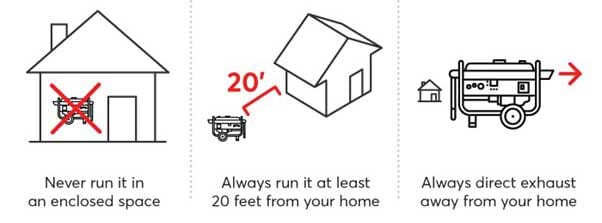
- Let me stress the fact that generators must be operated with attention to safety. Check the model you choose has adequate features for safe operation. Operating the generator in the right environment, preventing overloading and minimizing refueling hazards are some other essential aspects you need to be aware of.
Frequently Asked Questions (FAQs)
Q What is the best small generator?
In this review, we’ve presented the top ten generators - taking into account every feature and specification. You won’t go wrong choosing any one of these small generators.
Q What size of generator do I need?
Keep in mind that appliances like pumps, air conditioners, and refrigerators need more power (surge wattage) as they’re starting up.
For home use, take into account the nature and duration of power outages in your area. If you live in an area affected by frequent blizzards and hurricanes, a generator of larger capacity would be a better choice.
Q What size generator do I need to run a refrigerator and freezer?
A good rule of thumb is that the best small diesel generators are those that deliver slightly more power than your needs.
This will not only reduce the chances of your generator overloading but it’ll also operate more quietly.
In general, small generators with a capacity between 2500 to 3500 Watts will be a good choice for running a refrigerator.
Round-Up
So here you are with all the information to help you choose the perfect generator at your fingertips.
We’ve done all the hard work by carrying these around two National parks for several days to deliver our very favorite three top choices in this category.
So whether it’s a prolonged power outage or the next camping trip you’re needing it for, we’re ready to offer you the best power solutions.
Check out the next section to see the comparative analysis of our top products under each metric.
Running short of time? No worries.
We’ve mentioned the top three products at the start as well as the end of this review. Check those out!
Our Analysis, Comparisons & Test Results
We tested every small generator on this list against the same five things that decide which one earns its place.
Here is how the field compared on each.
Value for Money
The WEN 56225i 2250-Watt Inverter Generator leads the field for value for money at 10 out of 10, and the Jackery Explorer 1000 v2 Portable Power Station trails at 6.
| Small Generator | Value for Money |
|---|---|
| WEN 56225i 2250-Watt Inverter Generator | 10/10 |
| Champion 2500-Watt Dual-Fuel Inverter Generator | 8/10 |
| Westinghouse iGen2550 Inverter Generator | 8/10 |
| Pulsar PG2300iS Portable Inverter Generator | 8/10 |
| GENMAX GM2000i Ultra-Quiet Inverter Generator | 8/10 |
| Champion 2500-Watt Ultralight Inverter Generator | 8/10 |
| Generac GP2500i Portable Inverter Generator | 7/10 |
| Honda EU2200i Inverter Generator | 6/10 |
| Yamaha EF2200iS Inverter Generator | 6/10 |
| Jackery Explorer 1000 v2 Portable Power Station | 6/10 |
Output Power
The Honda EU2200i Inverter Generator leads the field for output power at 8 out of 10, and the GENMAX GM2000i Ultra-Quiet Inverter Generator trails at 6.
| Small Generator | Output Power |
|---|---|
| Honda EU2200i Inverter Generator | 8/10 |
| Yamaha EF2200iS Inverter Generator | 8/10 |
| Champion 2500-Watt Dual-Fuel Inverter Generator | 8/10 |
| Generac GP2500i Portable Inverter Generator | 8/10 |
| Champion 2500-Watt Ultralight Inverter Generator | 8/10 |
| WEN 56225i 2250-Watt Inverter Generator | 7/10 |
| Westinghouse iGen2550 Inverter Generator | 7/10 |
| Jackery Explorer 1000 v2 Portable Power Station | 7/10 |
| Pulsar PG2300iS Portable Inverter Generator | 7/10 |
| GENMAX GM2000i Ultra-Quiet Inverter Generator | 6/10 |
Durability/Workmanship
The Honda EU2200i Inverter Generator leads the field for durability/workmanship at 10 out of 10, and the GENMAX GM2000i Ultra-Quiet Inverter Generator trails at 6.
| Small Generator | Durability/Workmanship |
|---|---|
| Honda EU2200i Inverter Generator | 10/10 |
| Yamaha EF2200iS Inverter Generator | 9/10 |
| Jackery Explorer 1000 v2 Portable Power Station | 9/10 |
| WEN 56225i 2250-Watt Inverter Generator | 8/10 |
| Champion 2500-Watt Dual-Fuel Inverter Generator | 7/10 |
| Champion 2500-Watt Ultralight Inverter Generator | 7/10 |
| Westinghouse iGen2550 Inverter Generator | 6/10 |
| Generac GP2500i Portable Inverter Generator | 6/10 |
| Pulsar PG2300iS Portable Inverter Generator | 6/10 |
| GENMAX GM2000i Ultra-Quiet Inverter Generator | 6/10 |
Dependability and Reliability
The Honda EU2200i Inverter Generator leads the field for dependability and reliability at 10 out of 10, and the GENMAX GM2000i Ultra-Quiet Inverter Generator trails at 6.
| Small Generator | Dependability and Reliability |
|---|---|
| Honda EU2200i Inverter Generator | 10/10 |
| Yamaha EF2200iS Inverter Generator | 9/10 |
| Jackery Explorer 1000 v2 Portable Power Station | 9/10 |
| WEN 56225i 2250-Watt Inverter Generator | 8/10 |
| Champion 2500-Watt Dual-Fuel Inverter Generator | 7/10 |
| Champion 2500-Watt Ultralight Inverter Generator | 7/10 |
| Westinghouse iGen2550 Inverter Generator | 6/10 |
| Generac GP2500i Portable Inverter Generator | 6/10 |
| Pulsar PG2300iS Portable Inverter Generator | 6/10 |
| GENMAX GM2000i Ultra-Quiet Inverter Generator | 6/10 |
Noise
The Honda EU2200i Inverter Generator leads the field for noise at 10 out of 10, and the Generac GP2500i Portable Inverter Generator trails at 5.
| Small Generator | Noise |
|---|---|
| Honda EU2200i Inverter Generator | 10/10 |
| Jackery Explorer 1000 v2 Portable Power Station | 10/10 |
| WEN 56225i 2250-Watt Inverter Generator | 8/10 |
| Yamaha EF2200iS Inverter Generator | 8/10 |
| Champion 2500-Watt Dual-Fuel Inverter Generator | 8/10 |
| Westinghouse iGen2550 Inverter Generator | 8/10 |
| Champion 2500-Watt Ultralight Inverter Generator | 8/10 |
| GENMAX GM2000i Ultra-Quiet Inverter Generator | 7/10 |
| Pulsar PG2300iS Portable Inverter Generator | 6/10 |
| Generac GP2500i Portable Inverter Generator | 5/10 |
Our Final Verdict: 10 Best Small Generators 2026
After testing the field, three small generators stood out.
The Honda EU2200i Inverter Generator is our best small quiet generator. The quietest and most reliable unit in this group, but you pay a real premium for the Honda name.
The Yamaha EF2200iS Inverter Generator is our best small inverter generator. Nearly Honda-grade build and clean power with the longest runtime here, a strong pick if you find it below Honda money.
The WEN 56225i 2250-Watt Inverter Generator is our cheap small generator. The best dollars-per-watt pick here, quiet and capable for the price, just not built for years of heavy use.
Conclusion: Best Small Generator
Once upon a time, you might have thought selecting the best small generator was a challenge right?
But after reading through this comprehensive TopNotch review, you’re now more than equipped to make the perfect choice of generator for all your needs.
In reality, a capable generator is not only a dependable source of clean power but can also be a life-saver during emergencies.
So our team left no stone unturned to deliver you a thorough review of the top generators available this season.
Whether you’re looking for small generators for camping or for your RV, we’ve got you covered in terms of performance, durability, value, and dependability.
In the end, the tried and tested Honda eu2000i emerged as our Top Pick. No surprises there.
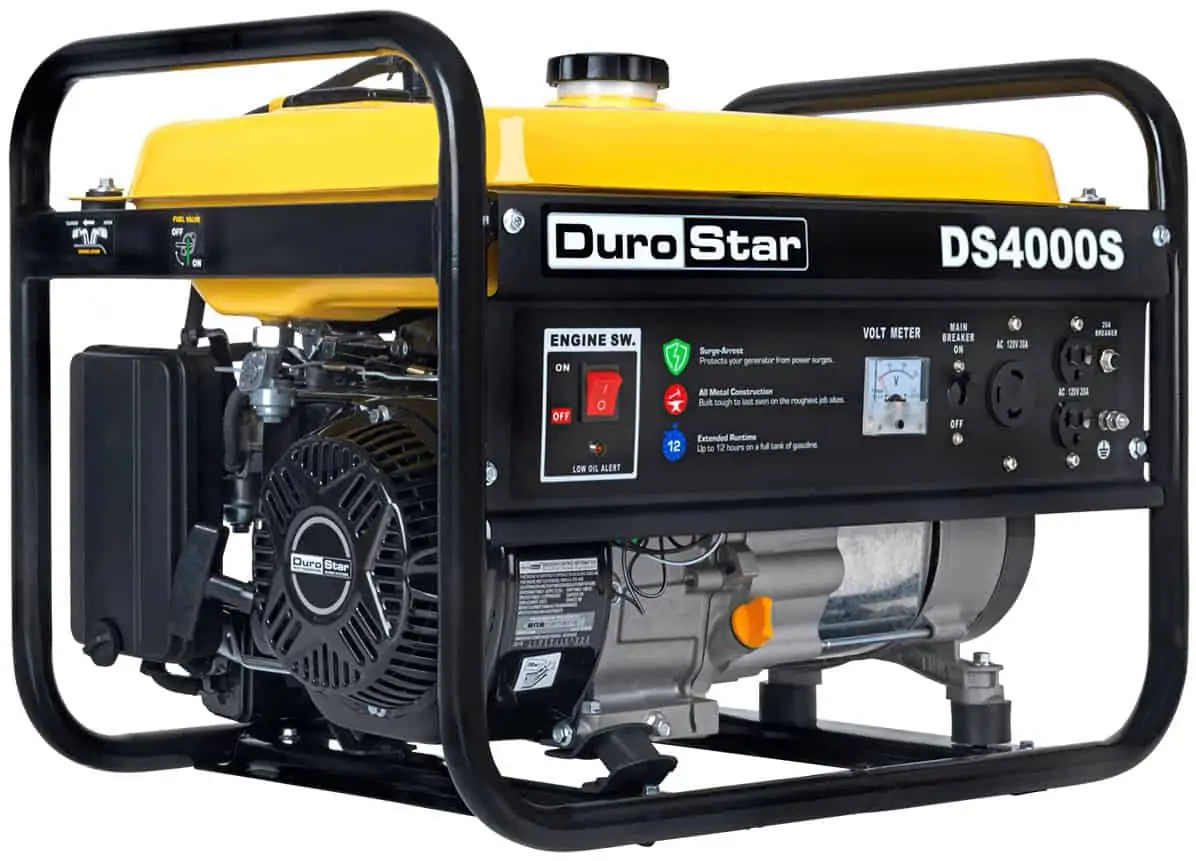
The Durostar ds4000s stood out as our Top-Notch Choice with its great overall performance.
We chose the Wen 56200i as the TopNotch Best Value product.
Now that’s a surprise hit for sure.
We hope you enjoyed reading our article.
We have to admit we enjoyed the testing trip as much as we love bringing this review to you.
So our choices of the top three small generators are all here.
Go ahead and take your pick...
Individual reviews in Camp Electronics
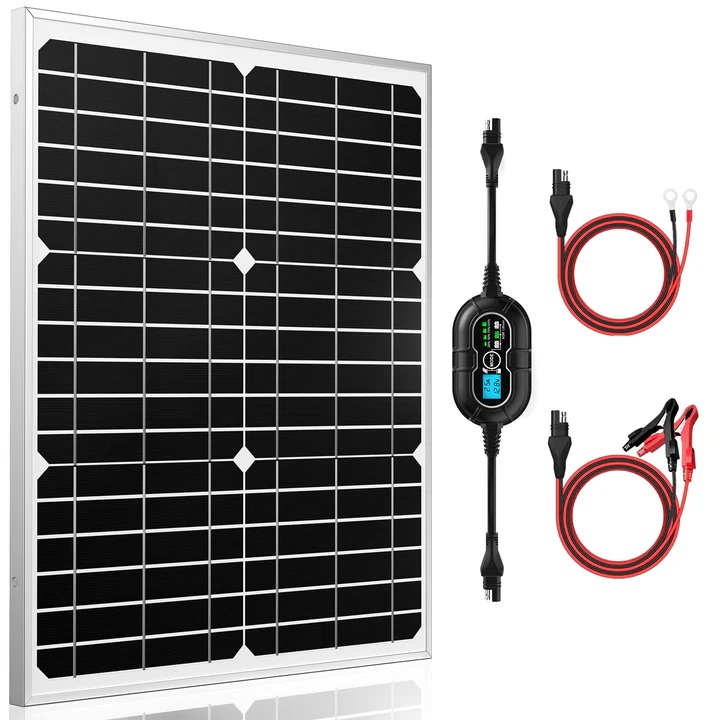
Cheap Off Grid Solar Panel Kits (2026) Suner Power Definitive Review
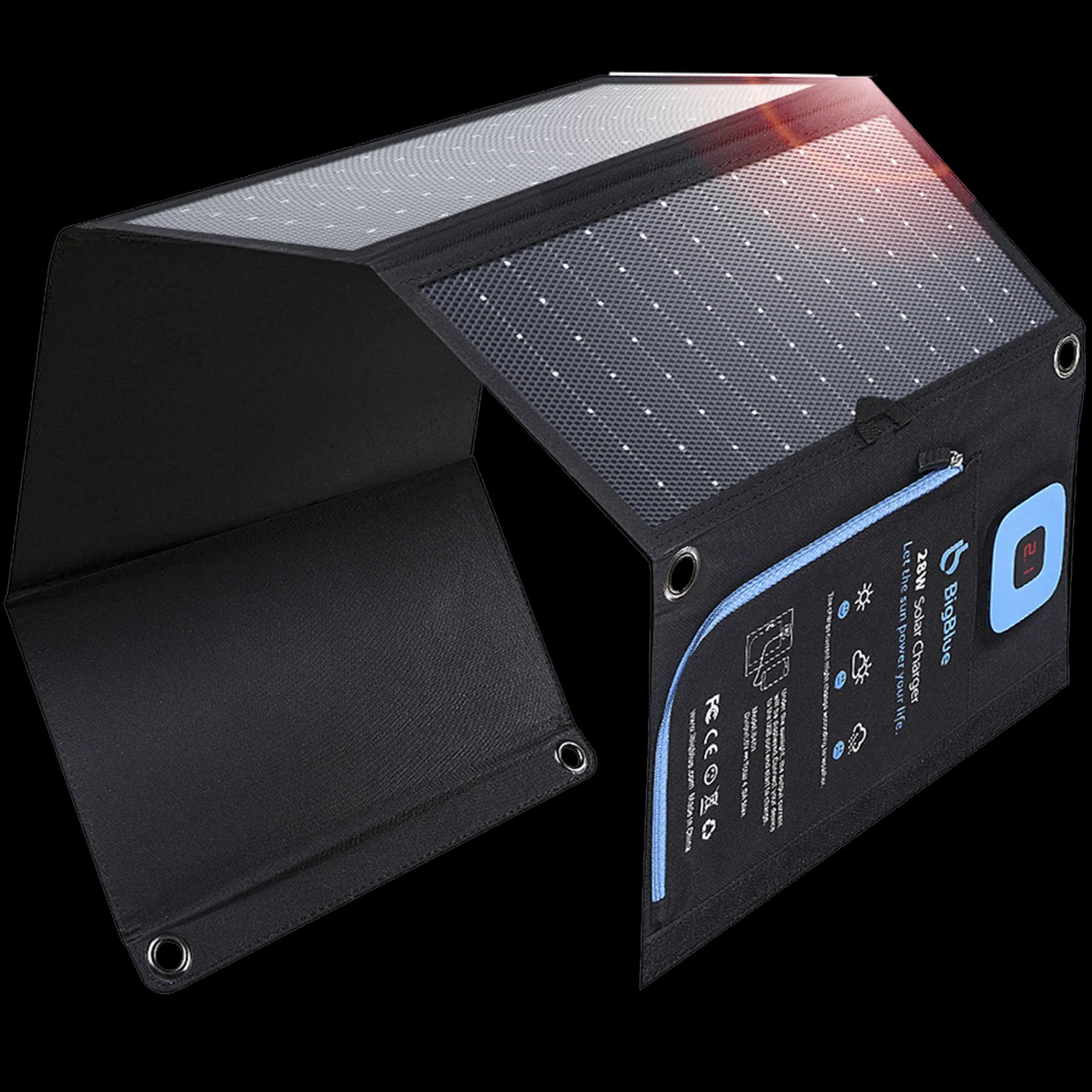
Big Blue Solar Charger: Definitive Review (2026)
Garmin eTrex 20x: Definitive Review (2026)
Jackery Solar Panel: Definitive Review (2026)
Garmin GPSMAP 66ST: Definitive Review (2026)
Coleman Xtreme Cooler: Definitive Review (2026)
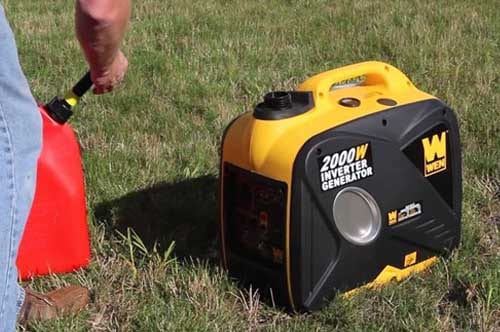
Wen 56200i (2000 Watt Inverter Generator): Definitive Review 2026