To choose a kayak paddle, match the length to your height and your boat's width.
Most paddlers land between 210cm and 260cm: shorter for a narrow boat, longer for a wide one or a taller frame.
Then pick a light blade (nylon, fiberglass, or carbon), a comfortable shaft, and set a small feather angle if you paddle in wind.
Below I walk through every factor I test for, plus a height-and-width sizing chart you can use in seconds.
The paddle is your engine on the water.
It is also the piece of gear most people overlook.
Get the length, blade, and shaft right and the boat almost paddles itself.
Get them wrong and you fight the water on every stroke.
Here is what this guide covers:
- Features to weigh when choosing your next paddle;
- Options for different materials and designs;
- A kayak paddle size chart by height and boat width;
- How your skill level shapes the paddle you need;
- Lots more...
Kayaks and canoes look similar, but they are not the same craft.
Kayaks have a streamlined hull that keeps them stable and quick.
Canoes sit flatter and feel less agile by comparison.
The biggest split is how you power them: canoeists use single-blade paddles, while kayakers use a double-bladed "kayak paddle."
Your paddle is the link between your body and the water.
Every bit of force you put in travels through it to move you forward.
That is why I never treat it as an afterthought, especially for anyone planning to paddle seriously.
A good paddle has a well-shaped shaft that feels comfortable for hours and blades tuned for clean, efficient strokes.
Blade shape and material both change how the paddle performs.
Some blades are fiberglass-reinforced nylon, some are carbon, and each has its place. More on that below.
Let me run through everything I check before I commit to a paddle.
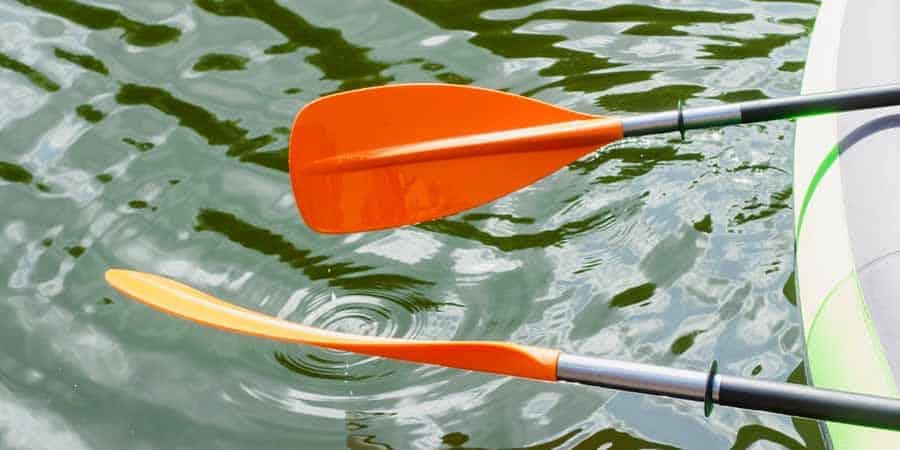
Table of Contents
- Consider these things:
- What's the best paddle blade material?
- What Type of Kayak Paddle Should I Get?
- A note about Sit-In vs Sit-On-Top Kayaks
- Paddle Weight Limits Explained
- Kayak Paddles Blade Shapes & Sizes Explained
- Kayak Paddle Sizing Chart
- Conclusion:
- How To Choose The Best Kayak Paddle
- Related Buying Guides
Consider these things:
Paddle Length:
Length makes the biggest difference of any single factor.
As a rule, kayak paddles run from 210cm to 270cm.
Where you land inside that range depends on two things: your height and your boat's width.
Here is the trap most beginners fall into: a paddle that is too short forces you to over-reach and bang your knuckles on the deck.
Too short also means strained shoulders and a boat that wanders off line.
Your strength, your paddling style, and your blade choice all factor in too, whether you fish or just cruise.
Keep one rule above all: your paddle should be longer than your boat is wide.
Paddle Weight:
This is the total weight of the paddle.
Lighter paddles are easier to carry and far easier to swing stroke after stroke.
But do not chase light weight alone: a paddle still has to be durable enough that it will not snap on you mid-trip.
A lighter paddle noticeably improves performance for recreational paddlers, though the lightest models cost the most.
The Paddle Blade:
Lighter is better here too, and the blade is where it matters most.
You lift the blade higher than the shaft on every stroke, so a light blade saves your arms all day.
Blade length runs from roughly 108cm to 125cm, so which is best?
It depends on the paddling you do.
For solo casual trips, I choose a shorter blade for sharper maneuverability.
Here is when I size up instead: on group trips or long endurance days, a longer blade eases the effort per stroke.
An adjustable blade length gives you the best of both.
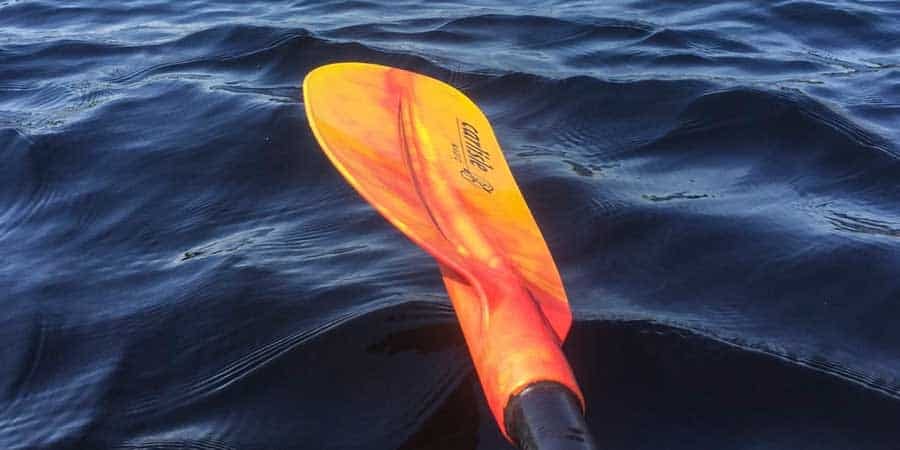
A feathered paddle sets the blades on different planes.
That cuts wind resistance and adds speed and efficiency.
For touring in open water, a feathered paddle makes those windy stretches far easier.
Basic paddles use symmetrical blades, while experienced paddlers often prefer asymmetrical blades for their extra surface area and efficiency.
If you plan on plenty of kayak touring, that efficiency adds up over the miles.
Dihedral blades have a ridge down the center that lets water flow evenly for a smoother stroke.
Now for the materials.
"Plastic blades" is really a catch-all term, and you have several real options.
Nylon blades are the most common and a favorite among recreational kayakers.
Fiberglass-reinforced nylon blades flex a little, which is part of why they are so popular.
They are not indestructible, though: they can crack, especially after long spells baking in the sun.
They are cheap, so how long they last comes down to how you care for them.
Carbon fiber blades are the other end of the scale.
They are lighter than fiberglass and, as you would expect, pricier.
Serious kayakers favor carbon for performance: near-effortless catches through the water and less body strain over a long day.
The Paddle Shaft:
Like the blade, the shaft shapes how the paddle feels and performs.
You can run a bent or straight shaft, in a range of materials to suit your style.
Aluminum is the most common shaft.
It is light and inexpensive, which makes it a go-to for all kinds of kayakers.
A solid aluminum shaft lasts for years and paddles comfortably, so it is worth choosing carefully.
One warning: aluminum swings hot or cold fast, so wear gloves if you paddle in winter.
Fiberglass is the next step up.
It is light and strong, popular with performance paddlers for its easy, efficient feel, and cheaper than carbon.
A fiberglass shaft can sit close to aluminum on price while giving you more in return.
Then there is the carbon fiber shaft.
Carbon is much lighter than the other two, and among the priciest as a result.
Pair it with a carbon blade and you have a paddle fit for the Olympics.
With good technique, a carbon shaft also keeps shoulder strain and fatigue at bay, which is why most serious paddlers reach for it.
On shaft shape: a straight shaft is both the most basic choice and a favorite of advanced kayakers.
It suits adventure paddling too.
Here is why the pros like it: a straight shaft gives more freedom to maneuver the boat, in rough water or calm.
A bent shaft is the friendlier pick for beginners.
Its curve takes pressure off your wrists and helps ward off aches and strain.
Material:
Every maker claims their material is best, but it comes down to your preference.
If low weight matters most, go with a lighter shaft like aluminum.
If you will trade weight for toughness, a composite shaft suits you better.
Want a balance of both? Fiberglass sits in the middle.
Each material has trade-offs: fiberglass is light but can break, aluminum is strong yet less durable long-term, and composite lands between the two.
The Grip: Triangular rubber grips are common with recreational and competitive paddlers alike.
They come in various thicknesses, and the right one often tracks your hand size.
Bigger hands usually want a thicker grip for a comfortable hold.
Foam grips mold to your hand and give great support on long sessions.
Foam has a catch, though: it soaks up saltwater, erodes over time, and can feel unstable when wet.
Some paddlers find foam slippery, while others love how easy it is to hold no matter how much water comes over the side.
Optional finger grooves can be added to foam handles to rest your fingers more naturally.
Many makers offer two grip sizes, so you can swap in a shorter grip if one side of the kayak sits lower. Reviews on sites like Amazon usually flag this.
A synthetic alternative to foam is "dry grip," now embraced by most major kayak brands.
DryGrip mimics the best of rubber handles without the maintenance, though some paddlers online still prefer the old materials. Go figure.

What's the best paddle blade material?
Material is a crucial call, because it shapes how comfortable your paddling feels and whether you enjoy it at all.
The three main options are carbon, fiberglass, and aluminum.
All three can make excellent paddles, but subtle differences make each better for certain paddlers.
Plastic is the budget pick, though it does not last as long as fiberglass and can crack under stress.
Fiberglass costs more but takes abuse far better, and its thinner blades can be easier to control if you are new.
Here is a detail that trips people up: fiberglass blades can look thicker at the front, but that is just edge reinforcement.
Thinner fiberglass blades actually weigh less overall.
Aluminum paddles can be pricey and often carry a thinner blade.
Aluminum damages easily unless it is properly anodized before machining.
Anodizing hardens the surface and resists dents, so a well-made aluminum paddle can look new after hundreds of hours on the water.
Remember that kayak paddles are a universal product, built to fit many boats.
Unless you have your heart set on one style, it is hard to go badly wrong with any option here.
What still surprises me is how many people love kayaking yet never notice their paddle is holding them back.
Often they grabbed whatever fit the budget online, not realizing how big the gap is between a great paddle and a middling one.
You only feel it once you borrow a better paddle and think, so that is what I have been missing.
That was me with my first cheap paddle, until a fellow kayaker handed me theirs.
Plenty of makers claim theirs is the best solution for you, so it pays to compare.
Now let me break down each style of kayak paddle, with its pluses and minuses.
What Type of Kayak Paddle Should I Get?
There are three broad types of kayak paddle: recreational, touring, and racing. Your choice mostly follows the paddling you plan to do.
A beginner usually wants a recreational paddle to learn the basics. It is shorter and lighter, around 37 inches, and easier to control in calm water.
The touring paddle is built for longer distances on lakes, rivers, and bays, so it runs longer and heavier, 41 inches and up.
It was made for touring kayakers who cover real distance.
Today intermediate paddlers pick it to get a solid workout while still enjoying a relaxed ride.
What paddlers love about the touring paddle is its flexibility.
It lets you paddle in a low or high arm position.
For a vertical, high-angle stroke, use the short end; for a relaxed, low-effort stroke, use the longer end.
Finally, there is the racing paddle.
It is also built for distance but favors speed over comfort, and appeals to advanced paddlers.
It uses heavily curved blades that slice through the water, usually on a featherless shaft.
Advanced kayakers also like spoon-shaped racing blades, which grip the water more effectively.
Some call the racing paddle a "propeller" for how it drives you forward, like a plane.
Racing paddles are not cheap, so put in the practice before you invest in one.
A note about Sit-In vs Sit-On-Top Kayaks
Your first call is whether the paddle serves an open or closed hull, meaning a sit-on-top or sit-in kayak.
Sit-in kayaks cost more because they add features like sealed bulkheads and better storage.
They are closed boats with a "cockpit" you sit inside, and you can add a spray skirt to keep splashes out.
The cockpit also holds adjustable foot pedals to fit your leg length.
Sit-on-top kayaks are simpler, need less skill, and usually cost less.
If you are a beginner after an easy start, this is your best bet.
Sit-on-tops carry fewer features and may be an inflatable kayak, which is part of why they are affordable.
Watch one thing with sit-on-tops: buy from a reputable maker.
Plenty of poor inflatable models will not hold up or could sink after a hard hit underwater.
That matters in choppy water or against a current, where you rely on the boat's strength.
The best sit-on-tops are durable and add features that make your time afloat better, like storage compartments, multiple air chambers for stability, and footpegs.

Paddle Weight Limits Explained
Kayaking suits people of all ages and skill levels.
Whether you cross the lake for an easy day trip or run whitewater with friends, your paddle and kayak have to match the conditions.
Many paddles list weight recommendations alongside their matching kayaks.
Exceed that limit on either one and you risk a worse ride, or worse: unstable control of the boat and your gear.
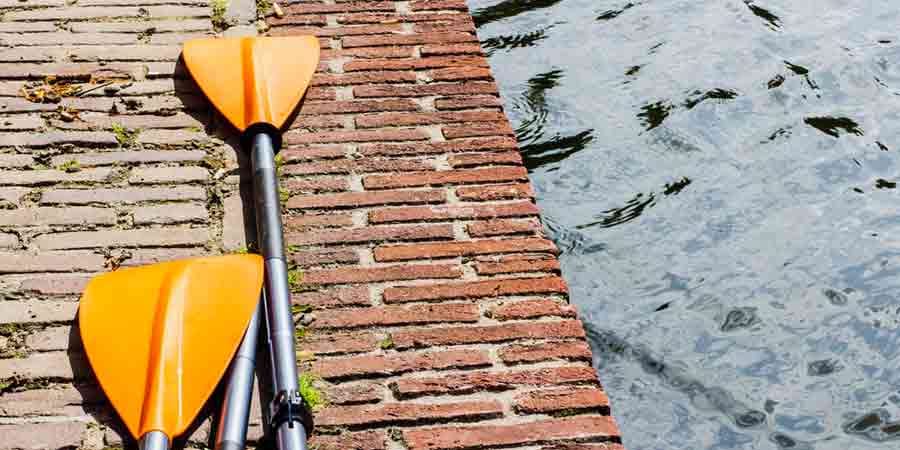
Kayak Paddles Blade Shapes & Sizes Explained
Blade shape and size matter more than they look, and they are usually the first thing people notice.
Still, shape should rarely be your only consideration.
A blade shape can:
- provide lift and efficiency
- affect maneuverability and tracking; the larger it is, the faster you go
So how do they work?
Blades come in three profiles: concave, flat, or convex.
Concave blades (spoon blades) have rounded edges that slice through the water, so each stroke takes less muscle.
Here is where each shines: for the least effort, reach for a concave blade.
Flat blades suit large-cockpit or heavily loaded boats, giving more support and less drag.
Convex blades (wing blades) create more lift per stroke, which eases paddling but takes more energy and time to move forward.
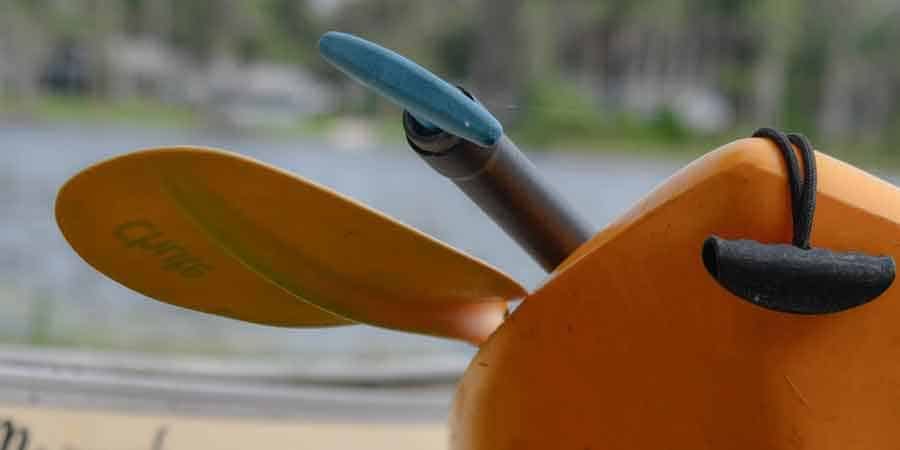
Want easy strokes with less muscle? Choose concave blades. Chasing the ultimate paddling experience? Go convex.
A side note: some makers now offer combination paddles, with one convex blade and one concave.
How many blades should you have?
Most modern kayak paddles are two-bladed, though single-blade paddles can be just as efficient.
Kayak Paddle Sizing Chart
The right length keeps you comfortable in the seat, easy to maneuver, and moving well with no strain or injury risk.
So how do you decide on the best kayak paddle length?
Here is the simple method I use: cross your height against your kayak's width.
Find your recommended kayak paddle length by height and boat width below.
| Kayak Width | |||
| Height Range | 23"-28" | 29"-32" | Over 32" |
| Under 5'5" - recommended kayak paddle lengths | 220cm | 220-230cm | 230-240cm |
| 5'5"-5'11"- recommended kayak paddle lengths | 220-230cm | 230-240cm | 240-250cm |
| Over 6'- recommended kayak paddle lengths | 220-230cm | 230-240cm | 250-260cm |

Conclusion:
How To Choose The Best Kayak Paddle
The best paddle is not the most expensive or the most popular one.
It is the one that fits your paddling style and experience level, and moves you forward safely and efficiently.
By now you know what to weigh, from paddle length to blades, shaft, and grip.
And do not forget the sizing chart above for quick reference.
If this helped, share it with other paddlers who could use it. Good luck with your next purchase.
That's all from BoatPriority.com…
Head over to our social channels and join the fun there.
Related: Best Kayak Paddle - (2026)

![Are Kayaking Gloves Necessary? [Tips To Warm You Up While Kayaking]](/images/2021/07/Are-Kayaking-Gloves-Necessary-01.jpg)