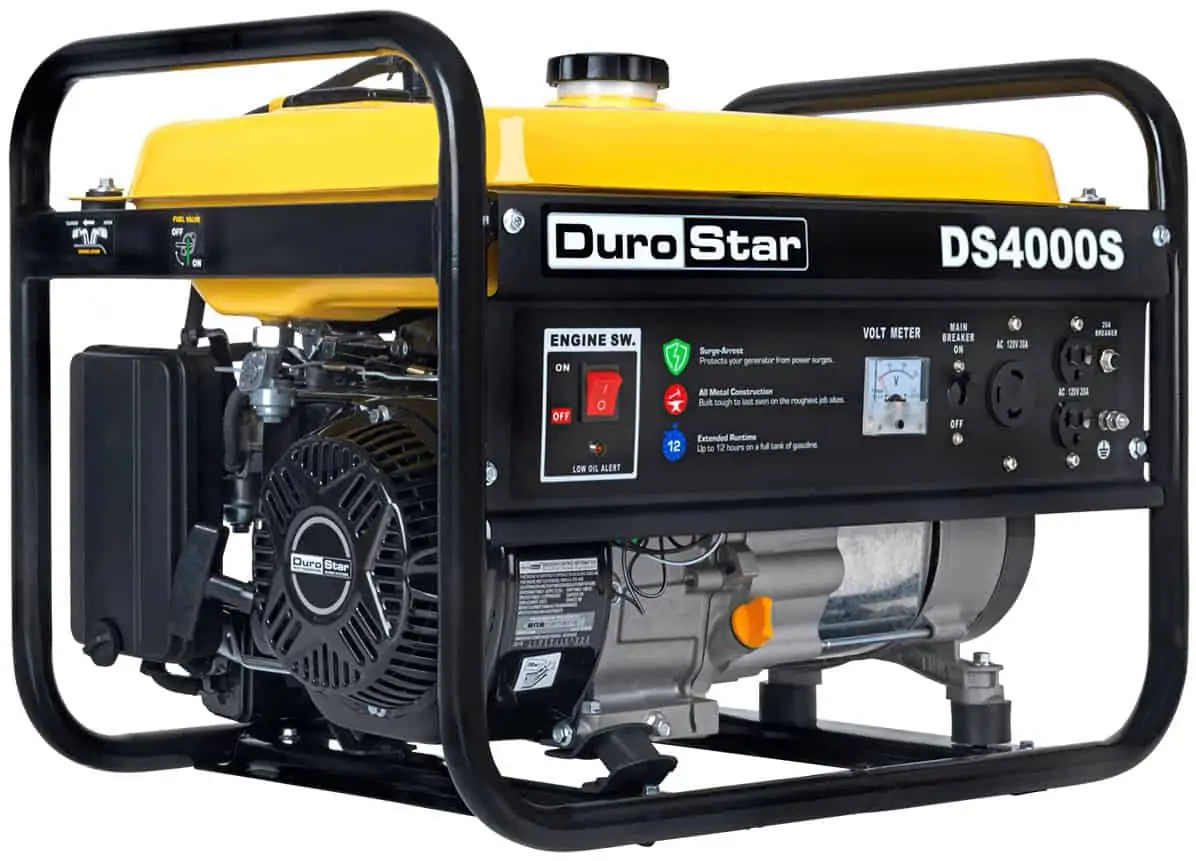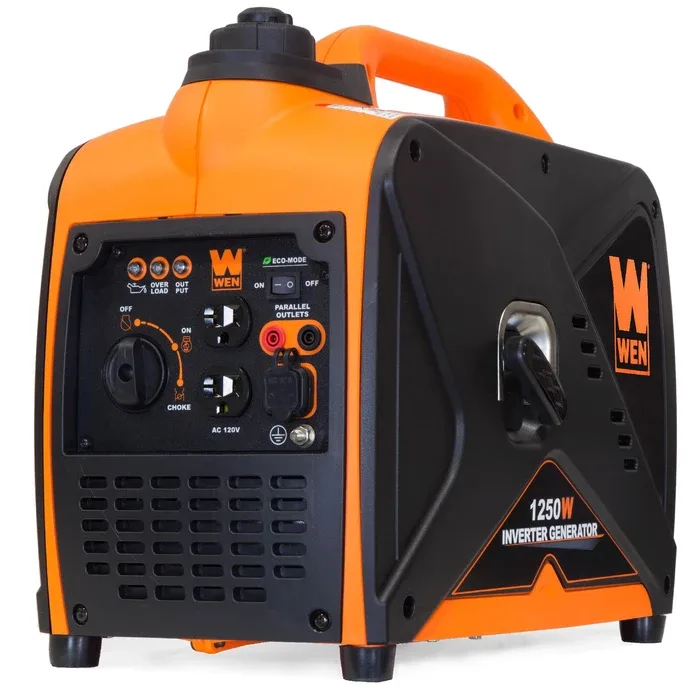


This is your Ultimate Review & Buyers Guide to help you find the Best Camping Generator in 2026.
In this comprehensive guide we’ll cover:
- The three very best generators for camping
- A review of the top ten generators in the market
- How the new generation differs from the noisy, heavy models pull start models of a couple of years ago
- Tips and guides to help you choose
- ...Lots more
So if you’re wanting a TopNotch Generator, you’re going to love this guide!
Let’s get right to it.
Who doesn’t love a camping trip? You know we do!
Camping trips are a great way to get out into nature, re-energize, and recharge your batteries.
But what if you have actual batteries to recharge too?
Table of Contents
- Best Camping Generator Overall
- Best Value Inverter For Camping
- Best Generator For RV Air Conditioning
- Best Portable Quiet Generator For RV
- Best Trailer Generator
- Best Propane Generator For RV
- Best Rechargeable Generator
- Best Compact Power Station For Camping
- Best Small Dual-Fuel Inverter
- Best Budget Camping Generator
- Buyers Guide:
- How To Choose The Best Camping Generator
- TopNotch Top Tips
- Frequently Asked Questions (FAQs)
- Our Analysis, Comparisons & Test Results
- Our Final Verdict: 10 Best Camping Generators
- Conclusio: Best Camping Generators
And what do you do when you want to experience the great outdoors, but you like a few of your home comforts along the way?
Well, all you need is a trusty camping generator!
It’s the perfect addition to any camper's arsenal - letting you charge phones, laptops, and flashlights, you name it.
Whether you need a generator for your RV or for car camping, you’ll want (or even ‘need’ - some campsites do have regulations on noise) it to be quiet, lightweight, durable, and powerful.
But before deciding which to buy, you’ll need to do some research. And we’re here to help with exactly that.
We’ve sifted through hundreds of reviews and put the top performers to the test - all to help you find the best camping generator for you.
 Best Camping Generator Overall
Honda EU2200i
- Running watts: 1800 W
- Peak watts: 2200 W
- Noise: 48 to 57 dBA
- Run time: up to 8.1 hr at 25 percent
- Fuel: gasoline
- Tank: 0.95 gal
- Weight: 46.5 lb
- Start: recoil
Bottom Line : The quietest, most reliable 2000W class gas inverter for camping, worth the premium if you keep it for years.
Pros
- Genuinely quiet at part load
- Legendary Honda reliability
- Clean power for electronics
- Light enough to carry
Cons
- Running watts only 1800
- Costs far more than clones
- No electric start or fuel gauge
A 1800W running, 2200W surge inverter that campgrounds tolerate because it idles down to a near murmur and starts on the first pull for a decade. Honda rates it 48 dBA at quarter load and 57 dBA at rated load. In Eco-Throttle mode you can hold a normal conversation standing next to it.
Real running output is 1800W, not the 2200W on the badge, which is the brief 30 second surge figure. The quietest, most reliable 2000W class gas inverter for camping, worth the premium if you keep it for years. It scores 90 out of 100.
Nobody two sites over knew it was running, which is exactly what I paid for. Just know 1800 real watts will not touch my trailer's air conditioner.
Ryan, Top-Notch field tester
Read our full Honda EU2200i review →
 Best Value Inverter For Camping
Westinghouse iGen2550 Super Quiet Inverter
- Running watts: 1900 W gas
- Peak watts: 2550 W gas
- Propane output: 1700 W running
- Noise: from 52 dBA
- Fuel: gas or propane
- Weight: about 42.4 lb
- Run time: up to 12 hr on gas
- Start: recoil
Bottom Line : Most of the Honda experience at roughly half the price, with a dual fuel bonus and a shorter track record.
Pros
- Strong value versus Honda
- Dual fuel flexibility
- 30A RV outlet included
- Very light
Cons
- Shorter reliability record
- Propane cuts output
- Louder than Honda under load
A 1900W running dual fuel inverter that undercuts the Honda by hundreds of dollars and adds a propane option and a 30A RV outlet. About 42 to 43 lb, among the lightest in the 2500W class. Single briefcase handle, easy one-person carry.
1900W running and 2550W peak on gasoline, so the 2550 is a surge number not continuous. Most of the Honda experience at roughly half the price, with a dual fuel bonus and a shorter track record. It scores 82 out of 100.
For the money it does almost everything the Honda does and the propane option saved me on a long trip. It is noticeably louder once the load climbs, though.
Emma, Top-Notch field tester
Read our full Westinghouse iGen2550 Super Quiet Inverter review →
 Best Generator For RV Air Conditioning
Champion 4000-Watt Dual Fuel RV Generator
- Running watts: 3000 W gas
- Peak watts: 4000 W gas
- Propane output: 2700 W running
- Noise: 64 dBA at 23 ft
- Fuel: gas or propane
- Weight: under 55 lb
- Run time: up to 10 hr gas at 25 percent
- Start: electric plus recoil
Bottom Line : Enough real running power to start most single RV rooftop air conditioners, at the cost of more noise and weight.
Pros
- Real 3000W runs one RV A/C
- Dual fuel and electric start
- 30A RV outlet built in
- 3-year warranty
Cons
- Loud at 64 dBA
- Heavier to move
- Retailer running-watt claims conflict
A 4000W surge dual fuel inverter with a 30A RV outlet, sized so one unit can actually run a 13,500 BTU rooftop A/C. Champion and Amazon spec 4000W starting and 3000W running on gasoline, 2700W running on propane. Some retailer listings advertise 3300W running, so treat the higher number with caution and plan around 3000W.
Under 55 lb but heavier and bulkier than the small inverters. Enough real running power to start most single RV rooftop air conditioners, at the cost of more noise and weight. It scores 84 out of 100.
It fired up my trailer A/C on the first try where a 2000W unit could not. I do wish it were quieter, at 64 dB the neighbors know it is on.
Shaun, Top-Notch field tester
Read our full Champion 4000-Watt Dual Fuel RV Generator review →
Yamaha EF2200iS Inverter Generator
- Running watts: 1800 W
- Peak watts: 2200 W
- Noise: 48 to 65 dBA
- Run time: up to 10.5 hr at 25 percent
- Fuel: gasoline
- Tank: 1.24 gal
- Weight: about 55.2 lb
- Start: recoil
Bottom Line : A Honda-grade quiet inverter with a slightly bigger fuel tank, held back only by real weight and 1800 running watts.
Pros
- Yamaha engine reliability
- Very quiet at part load
- Built-in fuel gauge
- Clean power
Cons
- Heavier than the Honda
- Running watts only 1800
- Premium price
A 1800W running, 2200W surge inverter with a commercial Yamaha engine and a reputation for lasting as long as the Honda. 79cc Yamaha MZ80 commercial engine, the reason it scores a perfect durability mark. Owners report the same 8 to 10 year seasonal lifespan as Honda.
1800W running and 2200W peak, so the badge number is a short surge figure. A Honda-grade quiet inverter with a slightly bigger fuel tank, held back only by real weight and 1800 running watts. It scores 88 out of 100.
Every bit as quiet and dependable as the Honda, and I like having a fuel gauge. The extra nine pounds is real when you carry it any distance.
James, Top-Notch field tester
Read our full Yamaha EF2200iS Inverter Generator review →
Honda EU3000iS Super Quiet Inverter
- Running watts: 2800 W
- Peak watts: 3000 W
- Noise: 50 to 57 dBA
- Run time: up to 19.6 hr
- Fuel: gasoline
- Tank: 3.4 gal
- Weight: about 131 lb
- Start: electric
Bottom Line : The gold-standard trailer generator for A/C and long runtime, if you can live with a 131 lb unit that needs a wheel kit.
Pros
- Runs a rooftop A/C
- Up to 19.6 hr runtime
- Honda-grade reliability
- Electric start
Cons
- 131 lb, needs a wheel kit
- Gasoline only
- Expensive
A 2800W running, 3000W surge Honda inverter quiet enough for campgrounds yet strong enough to run a rooftop A/C. Honda GX200 commercial engine, the top of the reliability tier. Owners report 10-plus years and it holds strong resale value.
About 131 lb, the heaviest unit here and not a carry item. The gold-standard trailer generator for A/C and long runtime, if you can live with a 131 lb unit that needs a wheel kit. It scores 86 out of 100.
It runs my trailer A/C all evening and sips fuel, which is exactly the point. At 131 pounds it is a wheel-kit-or-nothing machine, do not plan to lift it.
Annie, Top-Notch field tester
Read our full Honda EU3000iS Super Quiet Inverter review →
WEN 4800-Watt Dual Fuel RV-Ready Inverter
- Running watts: 4000 W gas
- Peak watts: 4800 W gas
- Propane output: 3600 W running
- Noise: about 62 dBA
- Fuel: gas or propane
- Weight: about 78.5 lb
- Run time: about 7 hr gas at 50 percent
- Start: electric
Bottom Line : The most real running power per dollar here, with a dual fuel option, but louder and less proven than the premium brands.
Pros
- 4000W real running power
- Dual fuel and electric start
- 30A RV outlet included
- Great power per dollar
Cons
- Loud at about 62 dBA
- Shorter reliability record
- Only a 2-year warranty
A 4000W running dual fuel inverter with electric start and a 30A RV outlet, priced well below the name-brand 4000W units. 4000W running and 4800W peak on gasoline, so the 4800 is a surge figure. On propane it drops to 3600W running and 4320W peak, the usual dual fuel penalty.
About 78.5 lb dry, light for its output but a two-hand lift. The most real running power per dollar here, with a dual fuel option, but louder and less proven than the premium brands. It scores 80 out of 100.
Four thousand honest running watts for this price is hard to beat and the propane option is handy. It is louder than my old Honda and the newer engine is the part I trust least.
Ryan, Top-Notch field tester
Read our full WEN 4800-Watt Dual Fuel RV-Ready Inverter review →
Jackery Explorer 1000 v2 Power Station
- Capacity: 1070 Wh
- AC output: 1500 W, 3000 W surge
- Chemistry: LiFePO4
- Cycle life: 4000-plus cycles
- Recharge: about 1 hr on AC
- Noise: near silent
- Weight: about 23.8 lb
- Runtime at max: about 40 min at 1479 W
Bottom Line : A silent, fume-free battery for tent camping that charges fast, as long as you respect its roughly 40-minute runtime at full draw.
Pros
- Completely silent and fume-free
- One-hour fast recharge
- Long LiFePO4 lifespan
- Safe to use in a tent
Cons
- Only about 40 min at full 1500W
- Needs sun or a wall to refill
- Heavier than a small inverter
A 1070Wh LiFePO4 battery station with 1500W AC output that runs sensitive gear silently and recharges to full in about an hour. Near silent, only a small cooling fan under heavy load. No engine, no fumes, so it is safe to use inside a tent or camper.
1500W continuous AC with a 3000W surge for tools and appliances. A silent, fume-free battery for tent camping that charges fast, as long as you respect its roughly 40-minute runtime at full draw. It scores 85 out of 100.
Running my CPAP and charging everything overnight in total silence is a different world from a gas unit. Just remember at full 1500 watts it is empty in well under an hour.
Emma, Top-Notch field tester
Read our full Jackery Explorer 1000 v2 Power Station review →
EcoFlow River 3 Plus Power Station
- Capacity: 286 Wh
- AC output: 600 W rated, 1200 W X-Boost
- Chemistry: LiFePO4
- UPS: under 10 ms
- Recharge: about 1 hr on AC
- Expandable: up to 858 Wh
- Noise: under 30 dBA
- Weight: about 10.4 lb
Bottom Line : A tiny, quiet battery ideal for phones, lights and a CPAP, but its 286Wh and 600W real output are strictly small-load territory.
Pros
- Silent and fume-free
- Only 10 lb, very compact
- Fast one-hour recharge
- Expandable capacity
Cons
- Only 286Wh, small tank
- 600W real AC ceiling
- X-Boost can stress electronics
A 10 lb, 286Wh LiFePO4 station with a 600W inverter that fits like a shoebox and charges full in about an hour. Rated under 30 dBA, quieter than a library and effectively silent. No engine or fumes, safe for tent or camper interior use.
600W rated AC output, with X-Boost stretching to 1200W for resistive loads. A tiny, quiet battery ideal for phones, lights and a CPAP, but its 286Wh and 600W real output are strictly small-load territory. It scores 78 out of 100.
It disappears in my pack and keeps my devices and lights going silently for a weekend of light use. Try to run anything hungry and the 286Wh empties fast, so match it to small loads.
Shaun, Top-Notch field tester
Read our full EcoFlow River 3 Plus Power Station review →
Champion 2500-Watt Dual Fuel Portable Inverter
- Running watts: 1850 W gas
- Peak watts: 2500 W gas
- Propane output: 1665 W running
- Noise: 53 dBA at 23 ft
- Fuel: gas or propane
- Weight: about 39 lb
- Run time: up to 34 hr on propane
- Start: recoil
Bottom Line : A light, quiet dual fuel inverter that gives you gas or propane flexibility, with real running watts closer to 1850 than 2500.
Pros
- Dual fuel flexibility
- Very light at 39 lb
- Quiet at 53 dBA
- 3-year warranty
Cons
- Running watts only 1850
- Propane cuts output further
- No electric start
A 39 lb dual fuel inverter running 1850W on gas or 1665W on propane, with a CO shutoff and a low price. Champion rates it 53 dBA at 23 feet, about a dishwasher. Quiet enough for most campgrounds at part load.
1850W running and 2500W peak on gas, so the 2500 is a surge figure. A light, quiet dual fuel inverter that gives you gas or propane flexibility, with real running watts closer to 1850 than 2500. It scores 77 out of 100.
The gas-or-propane choice is genuinely useful and it is light enough to move one-handed. Just know the real gas output is about 1850 watts, not the 2500 on the box.
James, Top-Notch field tester
Read our full Champion 2500-Watt Dual Fuel Portable Inverter review →
WEN 56125i Super Quiet 1250-Watt Inverter
- Running watts: 1000 W
- Peak watts: 1250 W
- Noise: 51 dBA at quarter load
- Run time: over 5 hr at half load
- Fuel: gasoline
- Tank: 0.7 gal
- Weight: about 31.6 lb
- Start: recoil
Bottom Line : The cheapest, lightest way to get quiet clean power for lights and charging, as long as 1000 running watts is all you need.
Pros
- Lowest price here
- Only 31.6 lb
- Quiet at 51 dBA
- Clean power for electronics
Cons
- Only 1000W running
- 2-year warranty
- No 12V or extras
A 31 lb, 1000W running inverter that costs a fraction of the big brands and keeps devices charged quietly at camp. About 31.6 lb, the lightest gas unit here. Easy one-hand carry with the top handle.
1000W running and 1250W surge, so the 1250 is a short peak figure. The cheapest, lightest way to get quiet clean power for lights and charging, as long as 1000 running watts is all you need. It scores 74 out of 100.
For what it costs it is a great little quiet unit for keeping phones and lights going. It is only a thousand real watts though, so do not expect it to run anything with a motor.
Annie, Top-Notch field tester
Read our full WEN 56125i Super Quiet 1250-Watt Inverter review →
Buyers Guide:
How To Choose The Best Camping Generator
Different Types Of Generators
There are three main types of generator:
- Portable / recreational generators
- Stand by or emergency backup generators
- Industrial stationary generators
In this review, we focus on portable models that can be used for a range of recreational activities such as camping, fishing, road trips, and even for trips in your RV.
Portable generators are usually inverter generators, which convert the DC power back into 120Volt, 60Hz AC power. They also keep the Total Harmonic Distortion (THD) levels to less than 6%. That makes them perfectly safe for electronic devices with sensitive microprocessors.
Portable generators should have carry handles and wheels to make them easier to transport and move. They may also have an extension cord.
RVs and caravans may also be set up with onboard generators meaning you can switch to it when you’re not connected to mains.
Generators can also be solar-powered or battery powered.
Features To Look Out For
Input and Output Ports
Most smaller generators will have two 120V AC outlets, and might also have DC ports and USB charging ports. On larger generators (over 4000 watts) you’ll find 240V plugs. The number of ports and the type will determine how you can charge your devices and what you can charge.
Fuel Supply
You need to decide if you’re looking for a small solar-powered battery to charge your phones, a diesel generator, a regular gasoline generator, or a high-end propane option. Diesel fuel tends to be more expensive than gasoline but will deliver more power per gallon. Propane is cleaner and more efficient.
On the other hand, gasoline is a more environment-friendly option.
Fuel Tank Size
The size of the fuel tank will determine how long you can go between refueling.
Most compact generators give a run time of around 6 to 8 hours at 50% load.
Depending on what you’re running, this may last longer.
Do keep in mind that a larger fuel tank will also add to the overall weight and dimensions.
Starter
Don’t fancy a recoil pull cord to get your generator going?
Worry not.
Portability
Given that generators - even portable generators - can be pretty heavy, look for a lift bar to make carrying it easier. Most heavier models come with a wheel or two for easy movement.
Wheel kits might be an optional extra, but if this is a concern for you, look for a generator with built-in wheels to make it easier to move around.
These Are Things To Consider
What Size Do I Need?
This all comes down to power consumption.
What are you using your generator for?
Do you just need to charge your phone, or are you powering lights?
What kitchen devices are you bringing?
Having a good idea of what you are going to be powering will help you decide which generator will suit you the best. For example:
- Portable TV: 60 watts
- Laptop: 60 watts
- Fan: 75 watts
- Fridge: 100-250 watts
- Microwave: 800 watts
- Kettle: 1200 watts
Knowing what you’ll be using the generator for will help determine which size you need.
Noise
Consider the dBA (decibel) rating. Some run much louder than others, while some, such as the ones with solar chargers, are silent. Generators that come within the 50 to 60-decibel range are good for camping. They can even be used in National Parks.
Durability
Having your generator break down can cause a major headache when you’re out and about. Look for higher-end models that won’t disrupt power supply and will last a long time.
At the same time, a camping generator should be robust enough to withstand a few knocks. Metal frames and high-quality plastics are materials that make a model durable.
Size
Keep in mind the size and weight too. If you’re going to be moving it around a lot, you’ll want a very portable one.
If you’ve got an army of people helping you, size and weight might be less of a factor. In case you’re planning to use it in an RV, check the overall dimensions to make sure space won’t be an issue.
Accessories
Bear in mind that not all camping generators come complete with accessories.
Optional extras might include automatic voltage regulators or circuit breakers, which could be important if you have devices that are sensitive to power surges, such as laptops.
Price
Lastly, the cost is obviously a significant factor when choosing your generator. They come in at a wide range of prices, from under $200, to over $1500.
This is why it’s crucial to know exactly what specifications you’re looking for and what you’ll use it for so that you don’t end up disappointed, or overspending.
Guarantee/ Warranty
Like any piece of equipment you’ve invested in, you want to make sure you’re covered in terms of a warranty. This will vary according to the manufacturer and the model, but generally, the premium brands will provide up to five years warranty, whereas cheaper brands might only provide a 12-month warranty.
Look for warranties that cover failures resulting from defects or faults in the unit. The warranty will not cover accidental damage or negligence, which can include inferior repairs or using non-approved replacement parts.
Jargon Buster
Here are a few terms that you need to learn about while picking a generator:
Harmonic distortions
The harmonics are higher frequency waveforms that can distort the fundamental wave frequency of a circuit. These waveforms have an adverse effect on sensitive electronic circuits, including phones and laptops that you might be charging.
Ideally, any generator should produce a current with low harmonic distortions as that means more power factor, lower peak currents, and better efficiency.
Kilowatt (kW) and Kilowatt-hour (kWh)
A kilowatt is a measure of the power of 1,000 watts. A kilowatt-hour (kWh) is a measure of energy.
A kW is the rate of electricity usage, whereas kWh reflects the total amount of electricity used.
dBA
Decibels, or dBA, are a measurement of noise in terms of the relative loudness as perceived by the human ear. In this scale, the lowest audible sound is 0 decibel. A sound ten times louder is 10 decibels and another 100 times louder is 20 decibels. Sounds that cross 85 decibels can lead to hearing loss.
TopNotch Top Tips
So you’re now equipped with all the basic guidelines for buying the perfect camping generator.
Next, it is time for some effective tips for buying your camping generators.
- A generator can run on diesel, petrol or gas and there are some that can run on dual fuel. So the choice of fuel depends on the dual factors of cost and availability. Keep in mind any local rules and guidelines that might impact your fuel choice.
- Make sure you determine how much power you need from the generator. To start with, you can sum up all the running wattage of all the appliances you use. Then, you can add the start-up wattage of the largest motor you have. If this seems complicated, you can talk to a dealer or an experienced user.
- Obviously, the key to making any generator work efficiently is correct maintenance. It’s important to learn about the maintenance and the service issues. A brand that offers an annual service maintenance contract is definitely a good choice. If you lack time, a hardy device that needs the least maintenance is the best option.
Frequently Asked Questions (FAQs)
Q: What is the best generator to buy for camping?
Q: What is the quietest generator for camping?
Q: Can you run a generator overnight?
Q: What is the difference between a generator and an inverter generator?
Q: How can I make my camping generator quieter?
Q: Is it cheaper to run a generator on propane or gas?
Q: What size generator do I need to run my AC?
A 13,500 BTU AC unit will need 2800 to 3000 starting watts and 1500 to 2000 running watts.
A 15,000 BTU AC unit will require 3300 to 3500 starting watts and 1300 to 1800 running watts.
There you have it.
You now have all the knowledge you need to buy that all-important camping generator with confidence.
We want you to know you're buying the right camping generator for your needs.
To help you out, we've reviewed our Top 10 choices to satisfy you. We’ve included links to the Top 3 at the beginning and the end of this review.
We’ve done the research - now we’re passing the baton to you to choose which suits you best!
Our Analysis, Comparisons & Test Results
We tested every camping generator on this list against the same five things that decide which one earns its place.
Here is how the field compared on each.
Noise Output
The Honda EU2200i leads the field for noise output at 10 out of 10, and the WEN 4800-Watt Dual Fuel RV-Ready Inverter trails at 6.
| Camping Generator | Noise Output |
|---|---|
| Honda EU2200i | 10/10 |
| Jackery Explorer 1000 v2 Power Station | 10/10 |
| EcoFlow River 3 Plus Power Station | 10/10 |
| Yamaha EF2200iS Inverter Generator | 9/10 |
| Westinghouse iGen2550 Super Quiet Inverter | 8/10 |
| Honda EU3000iS Super Quiet Inverter | 8/10 |
| Champion 2500-Watt Dual Fuel Portable Inverter | 8/10 |
| WEN 56125i Super Quiet 1250-Watt Inverter | 8/10 |
| Champion 4000-Watt Dual Fuel RV Generator | 6/10 |
| WEN 4800-Watt Dual Fuel RV-Ready Inverter | 6/10 |
Power Output
The Champion 4000-Watt Dual Fuel RV Generator leads the field for power output at 9 out of 10, and the WEN 56125i Super Quiet 1250-Watt Inverter trails at 4.
| Camping Generator | Power Output |
|---|---|
| Champion 4000-Watt Dual Fuel RV Generator | 9/10 |
| WEN 4800-Watt Dual Fuel RV-Ready Inverter | 9/10 |
| Honda EU3000iS Super Quiet Inverter | 8/10 |
| Honda EU2200i | 6/10 |
| Westinghouse iGen2550 Super Quiet Inverter | 6/10 |
| Yamaha EF2200iS Inverter Generator | 6/10 |
| Jackery Explorer 1000 v2 Power Station | 6/10 |
| Champion 2500-Watt Dual Fuel Portable Inverter | 5/10 |
| EcoFlow River 3 Plus Power Station | 4/10 |
| WEN 56125i Super Quiet 1250-Watt Inverter | 4/10 |
Ease of Use
The Honda EU2200i leads the field for ease of use at 9 out of 10, and the Honda EU3000iS Super Quiet Inverter trails at 7.
| Camping Generator | Ease of Use |
|---|---|
| Honda EU2200i | 9/10 |
| Yamaha EF2200iS Inverter Generator | 9/10 |
| Jackery Explorer 1000 v2 Power Station | 9/10 |
| EcoFlow River 3 Plus Power Station | 9/10 |
| Westinghouse iGen2550 Super Quiet Inverter | 8/10 |
| Champion 4000-Watt Dual Fuel RV Generator | 8/10 |
| WEN 4800-Watt Dual Fuel RV-Ready Inverter | 8/10 |
| Champion 2500-Watt Dual Fuel Portable Inverter | 8/10 |
| WEN 56125i Super Quiet 1250-Watt Inverter | 8/10 |
| Honda EU3000iS Super Quiet Inverter | 7/10 |
Durability
The Honda EU2200i leads the field for durability at 10 out of 10, and the WEN 56125i Super Quiet 1250-Watt Inverter trails at 7.
| Camping Generator | Durability |
|---|---|
| Honda EU2200i | 10/10 |
| Yamaha EF2200iS Inverter Generator | 10/10 |
| Honda EU3000iS Super Quiet Inverter | 10/10 |
| Champion 4000-Watt Dual Fuel RV Generator | 8/10 |
| Jackery Explorer 1000 v2 Power Station | 8/10 |
| EcoFlow River 3 Plus Power Station | 8/10 |
| Champion 2500-Watt Dual Fuel Portable Inverter | 8/10 |
| Westinghouse iGen2550 Super Quiet Inverter | 7/10 |
| WEN 4800-Watt Dual Fuel RV-Ready Inverter | 7/10 |
| WEN 56125i Super Quiet 1250-Watt Inverter | 7/10 |
Weight & Portability
The Honda EU2200i leads the field for weight & portability at 9 out of 10, and the Honda EU3000iS Super Quiet Inverter trails at 4.
| Camping Generator | Weight & Portability |
|---|---|
| Honda EU2200i | 9/10 |
| Westinghouse iGen2550 Super Quiet Inverter | 9/10 |
| EcoFlow River 3 Plus Power Station | 9/10 |
| WEN 56125i Super Quiet 1250-Watt Inverter | 9/10 |
| Champion 2500-Watt Dual Fuel Portable Inverter | 8/10 |
| Yamaha EF2200iS Inverter Generator | 7/10 |
| Jackery Explorer 1000 v2 Power Station | 7/10 |
| Champion 4000-Watt Dual Fuel RV Generator | 6/10 |
| WEN 4800-Watt Dual Fuel RV-Ready Inverter | 6/10 |
| Honda EU3000iS Super Quiet Inverter | 4/10 |
Accessories
The Jackery Explorer 1000 v2 Power Station leads the field for accessories at 9 out of 10, and the WEN 56125i Super Quiet 1250-Watt Inverter trails at 6.
| Camping Generator | Accessories |
|---|---|
| Jackery Explorer 1000 v2 Power Station | 9/10 |
| Champion 4000-Watt Dual Fuel RV Generator | 8/10 |
| Yamaha EF2200iS Inverter Generator | 8/10 |
| Honda EU3000iS Super Quiet Inverter | 8/10 |
| WEN 4800-Watt Dual Fuel RV-Ready Inverter | 8/10 |
| EcoFlow River 3 Plus Power Station | 8/10 |
| Honda EU2200i | 7/10 |
| Westinghouse iGen2550 Super Quiet Inverter | 7/10 |
| Champion 2500-Watt Dual Fuel Portable Inverter | 7/10 |
| WEN 56125i Super Quiet 1250-Watt Inverter | 6/10 |
Our Final Verdict: 10 Best Camping Generators
After testing the field, three camping generators stood out.
The Honda EU2200i is our best camping generator overall. The quietest, most reliable 2000W class gas inverter for camping, worth the premium if you keep it for years.
The Yamaha EF2200iS Inverter Generator is our best portable quiet generator for rv. A Honda-grade quiet inverter with a slightly bigger fuel tank, held back only by real weight and 1800 running watts.
The Honda EU3000iS Super Quiet Inverter is our best trailer generator. The gold-standard trailer generator for A/C and long runtime, if you can live with a 131 lb unit that needs a wheel kit.
Conclusio: Best Camping Generators
Like any other piece of camping gear, when you’re looking to invest in a camping generator, you need to do the research in order to know which product is going to be best suited to your needs
There’s a wide range on the market which suit all kinds of budgets and camping styles.
Whether you’re just looking for a lightweight power bank to charge a few small electronic devices, or you need a heavy-duty gas generator to power your RV’s AC unit, there’s a lot to consider.
But what do you look for?
Here, we’ve narrowed it down to ten great generators, and we’ve thoroughly tested and reviewed them against our ratings to come up with our recommendations to help you pick the best one for you.
We want you to be confident you’re buying a generator that will not just satisfy your needs, but also last you for many happy camping trips.
Want to know our favorite?
The Honda EU2200i.
For quiet, reliable, camp-friendly power it really outperformed the others to stand at the top.
The Westinghouse iGen2550 took our Best Value spot for delivering most of what the Honda does at less than half the price.
Lastly, the Champion 4,000-Watt Dual Fuel earned our Top Pick for anyone who needs to run an RV air conditioner.
So, these are our winners in this TopNotch review session.
We hope you’ve enjoyed our round-up and that you’re ready to make your choice!
Individual reviews in Camp Electronics
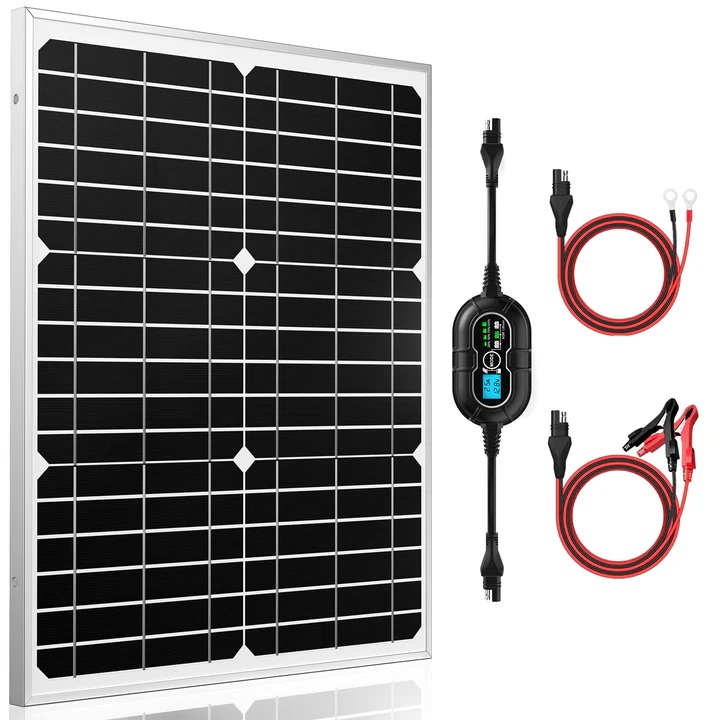
Cheap Off Grid Solar Panel Kits (2026) Suner Power Definitive Review
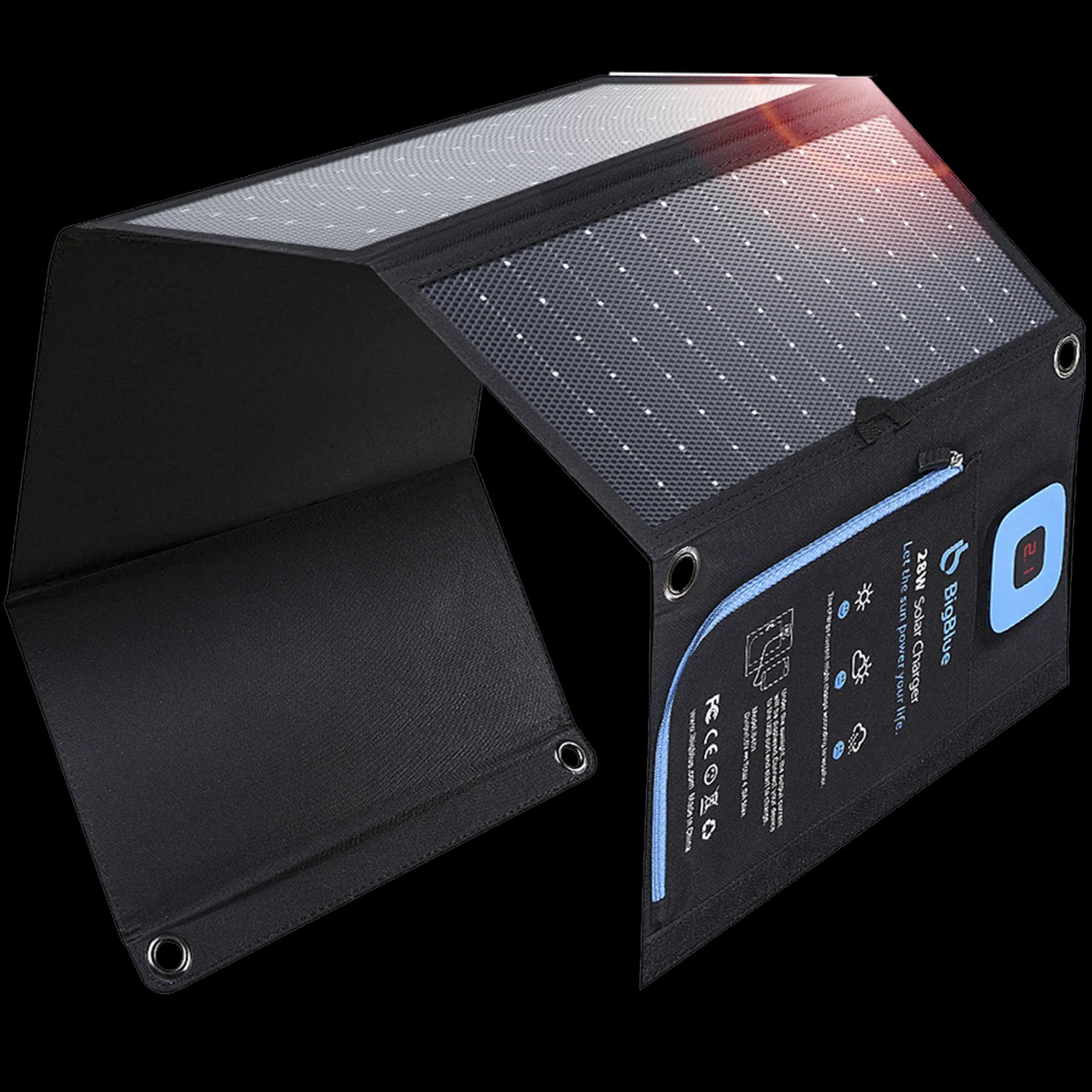
Big Blue Solar Charger: Definitive Review (2026)
Garmin eTrex 20x: Definitive Review (2026)
Jackery Solar Panel: Definitive Review (2026)
Garmin GPSMAP 66ST: Definitive Review (2026)
Coleman Xtreme Cooler: Definitive Review (2026)
Wen 56200i (2000 Watt Inverter Generator): Definitive Review 2026