



We recently analyzed 47 of the most popular rechargeable flashlights on the market today.
Our goal?
To compare, test and rate them to find the best 10 rechargeable flashlights on the market in 2020 - no matter what your requirement.
In this new guide you’ll learn about:
- Battery life and run rate
- Beam quality and brightness
- Durability and features
- Lots more...
Perhaps you’re planning on an epic backpacking trip, and need the best rechargeable flashlight under $100?
Or maybe you’re looking forward to a weekend of camping with friends?
Whatever your circumstances there’ll be a flashlight here to meet your needs.
Keep reading for our review for some of the best LED rechargeable flashlights on the market today.
Let’s shine some light on them...
Table of Contents
- Best Rechargeable Flashlight Overall
- Best Value EDC Rechargeable Flashlight
- Best Brightest Rechargeable Flashlight
- Best Tactical Rechargeable Flashlight
- Best Duty Rechargeable Flashlight
- Best Camping Flashlight
- Best Waterproof Rechargeable Flashlight
- Best Budget Rechargeable Flashlight
- Best Rechargeable Pen Light
- Best Rechargeable Keychain Flashlight
- Buyer's Guide: How to Buy A Rechargeable Flashlight
- Frequently Asked Questions
- Our Analysis, Comparisons & Test Results
- Our Final Verdict: 10 Best Rechargeable Flashlights 2026
- Conclusion: 10 Best Rechargeable Flashlights
 Best Rechargeable Flashlight Overall
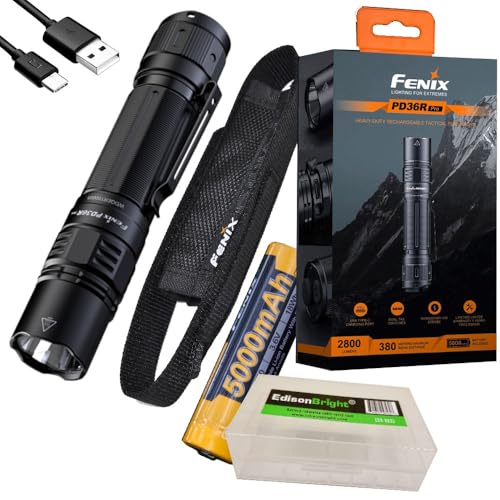
Fenix PD36R Pro
Bottom Line : The most complete tactical EDC here, with a genuine 21700 cell, USB-C, and a beam that stays usable long after the turbo burst fades.
Pros
- Removable 21700 cell you can swap in the field
- Standard USB-C, no proprietary cable
- Sustained output near 1,000 lumens for 2 plus hours
- Long throw for a pocket light
Cons
- 2,800 lumen peak is a short burst only
- Cool tint, not for reading or camp ambiance
- USB-C flap can trap grit
A pocket-size 2,800 lumen tactical light running a removable 5,000mAh 21700 cell with side USB-C charging, so it earns the overall spot on balance rather than raw peak. The 2,800 lumen Turbo is a burst rating, not sustained, and it steps down within minutes once the head passes about 60C. In practice Turbo drops from 2,800 to near 1,000 lumens after a few minutes, then holds close to 1,000 for over 2 hours.
Dual switch layout puts a tail switch for momentary tactical use and a side button for mode changes. The most complete tactical EDC here, with a genuine 21700 cell, USB-C, and a beam that stays usable long after the turbo burst fades. It scores 91 out of 100.
The throw genuinely surprised me for something this pocketable, and being able to drop in a spare 21700 is the real selling point. Just do not expect 2,800 lumens to last, it settles to about a grand within minutes.
Ryan, Top-Notch field tester
Read our full Fenix PD36R Pro review →
 Best Value EDC Rechargeable Flashlight
Olight Baton 4
- Max output: 1,300 lumens (burst)
- Sustained mid: 300 lumens, about 73 min
- Throw: about 170 m
- Battery: proprietary Olight 16340
- Charging: magnetic MCC cable
- Water rating: IPX8
- Weight: very light, pocket class
Bottom Line : A tiny, well-built pocket light that is a joy to carry, held back only by a short turbo and Olight's proprietary magnetic charging.
Pros
- Tiny and genuinely pocketable
- Excellent build and finish for the size
- Magnetic tail for hands-free use
- Simple one-button interface
Cons
- Turbo lasts only about 90 seconds
- Proprietary 16340 cell and magnetic charging
- Modest throw
A thumb-size 1,300 lumen EDC on a proprietary 16340 cell with magnetic MCC charging, earning its value spot on pocketability and polish rather than runtime. Single side e-switch with an intuitive interface, easy one-hand operation. Magnetic tailcap lets it stick to metal for hands-free lighting.
Rated IPX8 waterproof and built with a stainless bezel and anti-slip texture on the tube. A tiny, well-built pocket light that is a joy to carry, held back only by a short turbo and Olight's proprietary magnetic charging. It scores 88 out of 100.
I forget it is in my pocket, and the magnetic tail is more useful than I expected for working under a sink. The catch is the turbo fades fast and you are locked into Olight's cable and battery.
Emma, Top-Notch field tester
Read our full Olight Baton 4 review →
 Best Brightest Rechargeable Flashlight
Nitecore EDC29
Bottom Line : The brightest peak in the group by a wide margin, but that 6,500 lumen figure is a headline burst measured in seconds, not a way to actually light your path.
Pros
- Highest peak output in the group
- USB-C, no proprietary cable
- OLED display for runtime and charge
- Slim flat body carries well
Cons
- 6,500 lumens lasts only about 10 to 15 seconds
- Sealed battery, no field swap
- Display adds complexity and a failure point
A flat-bodied EDC with dual UHi LEDs claiming 6,500 lumens on a sealed 2,500mAh cell, earning the brightness award on peak while the honest working number is far lower. The 6,500 lumen turbo is a burst only and holds roughly 10 to 15 seconds before heat forces a step-down. After the burst there is a slow decline over nearly 2 hours from the High level before a sharp drop.
Built-in 2,500mAh cell, sealed and charged by USB-C, so no swapping in the field. The brightest peak in the group by a wide margin, but that 6,500 lumen figure is a headline burst measured in seconds, not a way to actually light your path. It scores 87 out of 100.
The 6,500 lumen blast is genuinely startling for a second or two, and the little screen telling me exact runtime is great. Just know that peak is a party trick, you live at about 1,200 lumens.
Shaun, Top-Notch field tester
Read our full Nitecore EDC29 review →
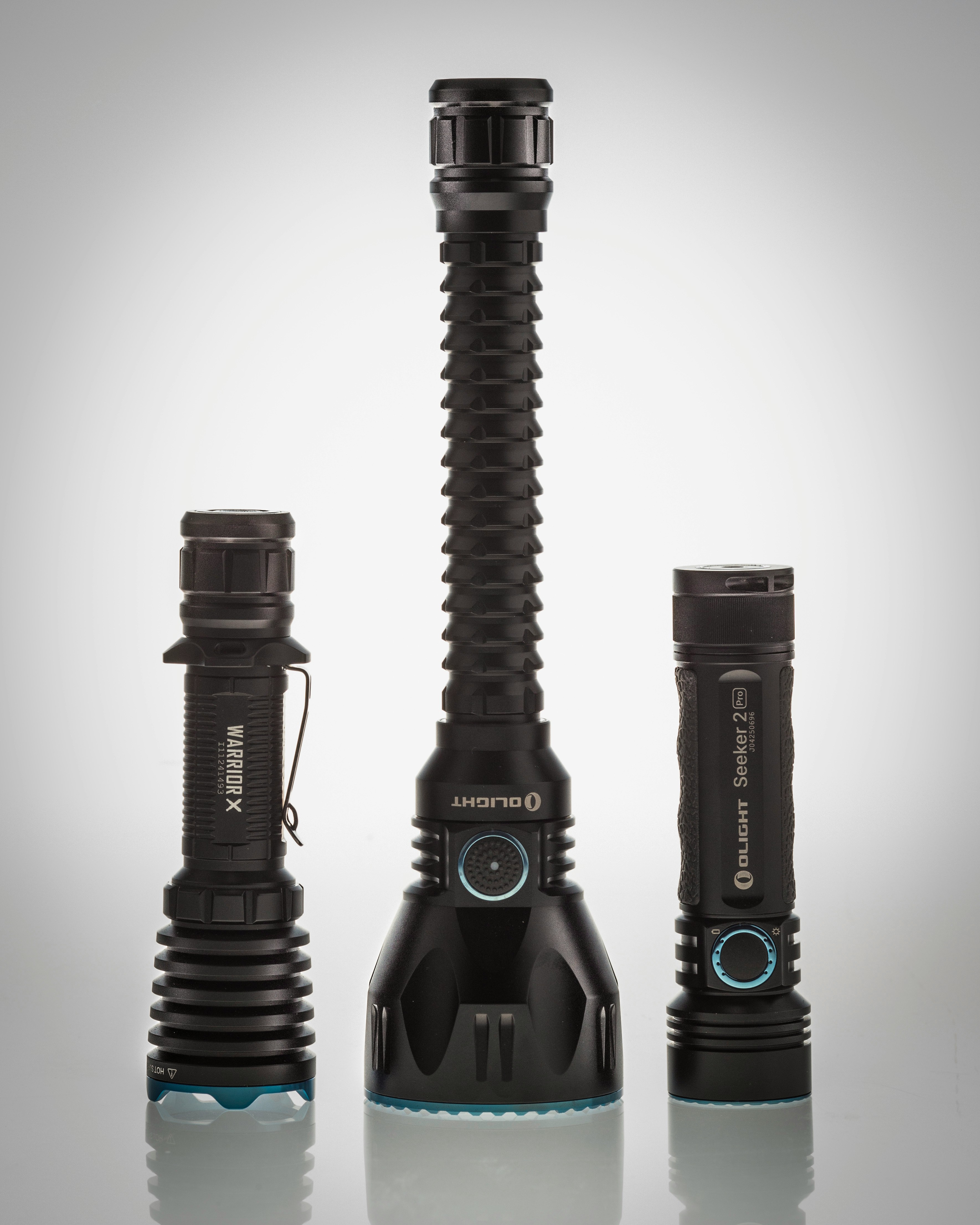
Olight Warrior 3S
Bottom Line : A well-regulated dual-switch tactical light with a big 5,000mAh cell, dinged only by a proximity sensor that dims it at the wrong moment and proprietary charging.
Pros
- Large 5,000mAh 21700 cell
- Well-regulated 800 lumen sustained output
- Dual-switch tactical interface
- Proximity sensor prevents overheating
Cons
- Proximity sensor can dim it unexpectedly
- Proprietary MCC3 magnetic charging only
- Grey anodizing wears relatively easily
A 2,300 lumen dual-switch tactical light on a customized 21700 5,000mAh cell with a proximity sensor, earning the tactical award on regulation and runtime. The 2,300 lumen Turbo is a short burst; the light steps down to a regulated 800 lumens after about 2.5 minutes. Reviewers note a well-regulated driver with no visible PWM, so the sustained output is steady not flickery.
Balanced beam with a defined hotspot and good spill, suited to tactical and search use. A well-regulated dual-switch tactical light with a big 5,000mAh cell, dinged only by a proximity sensor that dims it at the wrong moment and proprietary charging. It scores 86 out of 100.
The regulation is excellent, 800 lumens held rock steady for hours on a search. My one gripe is the proximity sensor dimming the beam when I bring it near my hand, though a double-click sorts it.
James, Top-Notch field tester
Read our full Olight Warrior 3S review →
Streamlight ProTac HL-X USB
Bottom Line : The toughest and most dependable light here, with a throwy duty beam and the flexibility to run rechargeable or CR123A cells, though its peak is modest by 2026 standards.
Pros
- Toughest build and best field reputation
- Dual-fuel: rechargeable or CR123A
- Standard USB-C on the pack
- Throwy 35,000 candela duty beam
Cons
- Peak output modest for 2026
- TEN-TAP programming has a learning curve
- Cool tint only
A duty-grade 1,300 lumen tactical light that runs a USB-C SL-B26 pack or two CR123A cells, earning the duty award on ruggedness and dual-fuel flexibility. Machined 6000-series aluminum with a Type II military-spec hard anodized finish. Streamlight duty lights have a long field reputation for surviving abuse, which is why it scores top here.
SL-B26 pack charges over USB-C directly, no proprietary magnetic cable. The toughest and most dependable light here, with a throwy duty beam and the flexibility to run rechargeable or CR123A cells, though its peak is modest by 2026 standards. It scores 85 out of 100.
This is the one I would trust to keep working after being dropped on concrete, and the CR123A backup option is peace of mind. It is not the brightest anymore, but 1,300 lumens for a real 90 minutes beats a bigger number that lasts seconds.
Annie, Top-Notch field tester
Read our full Streamlight ProTac HL-X USB review →
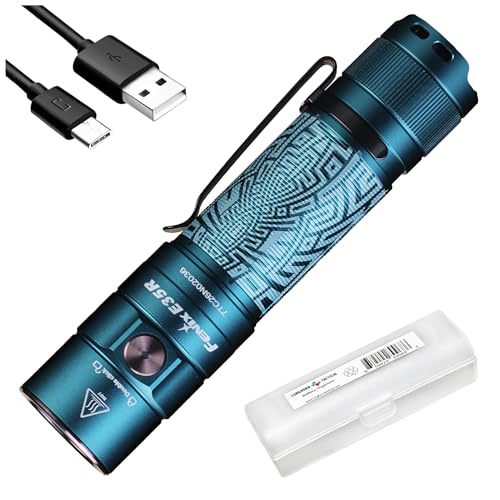
Fenix E35R
Bottom Line : A compact 3,100 lumen camp and EDC light with clean USB-C charging and a wide mode range, whose big peak is again a brief burst that settles far lower.
Pros
- Wide Eco to 3,100 lumen range
- Removable 21700 with spare-battery bundle
- Standard USB-C charging
- Compact 4.72 inch body
Cons
- 3,100 lumen peak is a short burst
- Cool tint, not warm for camp
- USB-C flap can wear
A 4.72 inch 3,100 lumen light on a removable 21700 cell with side USB-C, earning the camping pick on its wide Eco-to-Turbo range and pocketable size. The 3,100 lumen Turbo is a burst rating; High and Turbo are temperature-regulated and step down as the head heats. An intelligent downshift lowers output as voltage drops, protecting runtime toward the end of a charge.
Standard USB-C charging, no proprietary cable. A compact 3,100 lumen camp and EDC light with clean USB-C charging and a wide mode range, whose big peak is again a brief burst that settles far lower. It scores 84 out of 100.
The Eco mode lasting nearly three days meant I barely thought about charging on a weekend trip, and the size disappears in a jacket pocket. Turbo is more of a quick look-over-there button than something you leave running.
Ryan, Top-Notch field tester
Read our full Fenix E35R review →
Coast G60R
Bottom Line : A rugged twist-focus light sold as a two-pack, with a sealed USB-C battery and a modest but honest 1,000 lumens that does not oversell a burst number.
Pros
- Twist focus flood-to-spot optic
- Rugged, submersible IP67 build
- Standard USB-C charging
- Sold as a value two-pack
Cons
- Only 1,000 lumens, modest peak
- Sealed battery, no field swap
- Larger and heavier than photos suggest
A 1,000 lumen twist-focus light on a sealed Coast ZITHION-X cell with under-tailcap USB-C, earning the waterproof pick on its rugged sealed build and value two-pack. Rugged aluminum construction that owners describe as very well made. Waterproof to full submersion at about 1m (IP67 class), the reason for its award.
Maximum 1,000 lumens, the most modest peak among the mid-pack lights here. A rugged twist-focus light sold as a two-pack, with a sealed USB-C battery and a modest but honest 1,000 lumens that does not oversell a burst number. It scores 82 out of 100.
The twist focus is genuinely handy, wide flood for the tent then spot to check a noise outside. It is bigger and heavier in the hand than the listing photos led me to expect, and 1,000 lumens is plenty rather than dazzling.
Emma, Top-Notch field tester
Read our full Coast G60R review →
WUBEN C3
Bottom Line : A lot of features for the money, with USB-C, IP68 sealing and a removable 18650, let down mainly by weak runtime once you push it on High.
Pros
- Removable 18650 plus USB-C
- IP68 and 1.5m impact rating
- Very affordable, often under 30 dollars
- Six modes with status indicator
Cons
- Weak runtime on High
- Step-down under sustained use
- Finish a step below premium brands
A sub-30-dollar 1,200 lumen compact on a removable 18650 with USB-C and IP68 sealing, earning the budget pick by packing premium touches at a low price. Simple mode cycling with an indicator that changes color for charge and battery status. Compact 4.78 inch body, shorter than a smartphone, easy to carry.
USB-C charging and a removable 18650, both uncommon at this price. A lot of features for the money, with USB-C, IP68 sealing and a removable 18650, let down mainly by weak runtime once you push it on High. It scores 78 out of 100.
For the price it is hard to argue with USB-C, a removable 18650 and IP68 all in one. The honest catch is that High drains it quickly and steps down, so I treat it as a burst light not a runtime champ.
Shaun, Top-Notch field tester
Read our full WUBEN C3 review →
Streamlight Stylus Pro USB
Bottom Line : A slim, dependable pen light that shines for inspection and close work, with modest brightness and older micro-USB-era charging rather than the raw output of the EDC lights.
Pros
- Slim marker-size pen form
- Simple, dependable two-mode operation
- Charges from any USB source
- Included nylon holster
Cons
- Only 350 lumens
- IPX4 splash rating, not submersible
- Basic feature set
A marker-size 350 lumen rechargeable penlight built for inspectors and close work, earning the penlight award on form factor and simplicity rather than output. Pocket-clip pen body is about the size of a marker, easy to carry and aim one-handed. Simple two-mode operation with a tail switch.
Maximum 350 lumens, the lowest peak among the main lights here, which is why brightness scores low. A slim, dependable pen light that shines for inspection and close work, with modest brightness and older micro-USB-era charging rather than the raw output of the EDC lights. It scores 79 out of 100.
It clips in a shirt pocket and disappears, then gives a clean beam right where I need it for reading a panel. Do not buy it for lumens, 350 is the point, and it is only splash resistant so keep it out of the rain.
James, Top-Notch field tester
Read our full Streamlight Stylus Pro USB review →
Olight i1R 2 Pro EOS
- Max output: 180 lumens (brief)
- Low runtime: 5 lumens, up to 12 hr
- Throw: about 48 m
- Battery: built-in 130mAh, sealed
- Charging: USB-C, about 100 min
- Length: 2.02 in
- Weight: 0.78 oz
Bottom Line : A featherweight keychain light that is always with you, with modest output and a tiny built-in cell that you cannot replace when it eventually wears out.
Pros
- Tiny and always on your keys
- USB-C charging, no disassembly
- Dead-simple twist interface
- strong for its size and price
Cons
- Only 180 lumens, and briefly
- Sealed non-replaceable battery
- Very short high runtime on the 130mAh cell
A 2-inch, 0.78 oz keychain light with twist activation, USB-C, and 180 lumens, earning the keychain award purely on how effortlessly it rides on a keyring. Twist-head activation, no buttons, one of the simplest interfaces possible. At 2.02 inches and 0.78 oz it does not feel burdensome on a keychain.
Maximum 180 lumens, about 20 percent higher than the older i1R 2, but still low overall. A featherweight keychain light that is always with you, with modest output and a tiny built-in cell that you cannot replace when it eventually wears out. It scores 76 out of 100.
It weighs nothing on my keys and the USB-C top-up is painless, so it is genuinely always there when I need it. The trade-offs are obvious though, 180 lumens does not last and the sealed battery means it is disposable in the long run.
Annie, Top-Notch field tester
Read our full Olight i1R 2 Pro EOS review →
Buyer's Guide:
How to Buy A Rechargeable Flashlight
The TopNotch Outdoor Rechargeable Flashlight Buyer’s Guide is designed to help you work out which rechargeable flashlight is most perfect for you.
Whether you need a flashlight with a super long run-time or a water-resistant flashlight with high light output, we’re going to provide all the information you need to help make your choice.
The experts agree that taking a flashlight on any kind of outdoor trip is a must, with The American Hiking Society including them on their list of 10 essentials.
Types Of Rechargeable Flashlight
Rechargeable flashlights can be broken down into two main categories:
- Everyday
- Tactical
Everyday flashlights do pretty much what the name suggests. They’re designed for daily use, with a range of features designed to suit your needs and budget. If you’re looking to buy your first rechargeable flashlight, this is a great place to start.
Everyday flashlights also come in a wide variety of different sizes - from tiny flashlights which will fit comfortably around your neck on a lanyard, to larger versions, with built-in chunky handles.
But what does tactical mean?
Now we get to the slightly more technical flashlights. Tactical rechargeable flashlights have been designed for use by professionals such as the police, and the military.
They use the highest quality materials such as anodized aluminum or alloy, as well as offering powerful light outputs.
They’ll often be waterproof and shockproof as well.
Tactical flashlights will usually be of medium size, so you can easily place them in a pocket or belt holster for quick access.
Basically, tactical flashlights are designed to take everything you throw at them and still come out the other side shining brightly.
Light Output
Flashlight manufacturers measure the light output of each flashlight in lumens. While you might see other terms such as ‘candela’, lumens is a pretty universal measurement so we’ll stick with that.
These days, the majority use LEDs as their light source rather than incandescent bulbs.
As if that’s not enough...
The rechargeable LED flashlights we reviewed offer around 600 - 1,000 lumens of brightness.
Many flashlights have adjustable levels so you can toggle between different brightnesses.
If you’re after a high lumen rechargeable flashlight, the last one in our review offers up to a huge 3,500 lumens of brightness.
That’s a lot.
Run Time
The run time of any flashlight will depend on the light output you choose to use.
Your run time will be lower when you’re using the brightest light output.
If you’re planning on taking longer trips and want to maximize your run time, select a flashlight with multiple brightness settings. Make sure you keep your flashlight on the lowest setting you’re comfortable with.
Beam Quality
The quality of your flashlight’s beam will depend on a few factors including the type and quality of LED and lens used by the manufacturer. This will affect the beam distance and beam flood.
But wait, what are those?
Beam distance is how far the beam of light reaches, and beam flood is the width that the light covers.
Let me tell you more good news...
Many of the flashlights we reviewed give the option to adjust the focus.
Also - usually, increasing the beam distance will decrease the beam flood and vice versa.
Water Resistance
This can be a useful feature for some users, although it’s often not vital. If you take your flashlight on camping trips in rainy conditions, or on fishing trips… or anywhere around water, then selecting a flashlight with at least some level of water resistance is sensible.
Water-resistance is usually measured on the IP rating scale. Higher numbers indicate a better degree of water resistance.
Want to know the best part?
If this is an important feature for you, then select the best rechargeable flashlight your budget can afford and you should find it will have a high IP rating too. There is often a strong correlation. You can read more about the IP rating in our Features section further down.
Ease Of Use
When you’re trying to turn your flashlight on in the dark, ease of use becomes pretty important.
Luckily, most rechargeable flashlights are super simple to operate.
Most flashlights feature an on/ off touch button on the trunk or tail of the flashlight, which can be operated with your thumb or finger.
Often, a USB rechargeable tactical flashlight will have a programmable power button that allows you to select which mode you want the flashlight to turn on with, and you can cycle through the different modes easily.
Size
This is an obvious but important consideration.
Let me tell you more...
If you’re going ultralight backpacking, then small rechargeable flashlights will be your best bet. Having a lightweight flashlight that fits in your pocket or backpack will help shave ounces off your pack weight.
On the other hand, if you need a car rechargeable flashlight, then selecting something heavier and chunkier will likely suit you better.
Of course, the best-case scenario is to have a few of the best rechargeable flashlights in different sizes to choose from. This way, you can match the size of the flashlight to the type of application in any given scenario.
Design
While most flashlights look pretty similar at first glance, there are a few design differences to bear in mind.
Some flashlights offer a non-slip, rubberized coating on the trunk. As well as offering excellent grip in all conditions, this can also help reduce some of the heat generated when you’re using your flashlight for extended periods on a high setting.
All but one of the flashlights we reviewed is based around a classic flashlight shape.
But why exactly is that?
This is a compact and easy-to-hold design which is why it’s stood the test of time so well.
Features
Let’s take a look at some of the different features you can expect to see while selecting the best rechargeable LED flashlight for your needs:
- Charging Method
- Magnetic Base
- Dual Power
- Variable Light Settings
- IP Rating
Now let’s take a look at each of those in a little more detail.
Charging Method
Rechargeable flashlights can usually be charged in a few different ways. Some require that you remove the batteries from the torch, and plug each battery into a micro USB charger.
Unless you have multiple chargers, you’ll need to charge each battery separately, and this can increase the time needed.
On the other hand…
Some flashlights can be plugged directly into a USB charger.
So you don’t need to remove the batteries or charge them up separately.
Lastly, you could choose a rechargeable flashlight with a docking station.
No faffing with cables, simply place the base of the flashlight in the dock and it’ll start charging immediately.
Magnetic Base
Only one of the rechargeable flashlights in our review has a magnetic base, but it’s an interesting and useful feature for some users. It allows you to attach the flashlight to any metal surface, and it’ll stick.
Let me tell you why that’s useful.
If you’re setting up camp in the dark, simply stick the base of your flashlight to your car - and you have instant illumination.
Dual Power
This simply means that you can choose to power your flashlight with regular batteries, as well as using the rechargeable batteries supplied.
Why is this a good idea?
While having a rechargeable flashlight is a great idea, what exactly do you do if you run out of power away from home?
On a longer thru-hiking trip, for example, you might go for a few days before you get to an overnight stop with power - and the chance to recharge your flashlight.
If you have a dual power flashlight, it’s easy to switch to standard batteries for a day or so, then recharge when you get the chance.
Variable Light Settings
If a flashlight offers this feature, it means you can adjust the brightness level, usually selecting from low, medium, and high. The lumen output for each of these settings will depend on the manufacturer.
But wait… what’s the benefit of that?
It means you can use a lower light setting in enclosed areas, like your tent. The brightest setting here will likely be too bright.
Using a lower light setting will also prolong your battery life.
The brightest settings are useful if you need to illuminate a large outdoor area, or are trying to locate something in the distance.
IP Rating
As we mentioned briefly when discussing water resistance, many rechargeable flashlight manufacturers now state the IP rating for each product. IP stands for Ingress Protection.
An IP rating scores how well a flashlight repels dust, and water.
The ratings for dust protection range from 0-6, and for water resistance from 0-8.
As an example, one of the flashlights we reviewed has a rating of IP65. You might see a rating of IPX7. Here, the flashlight doesn’t have a rating for dust protection, but it rated 7 for water resistance.
Why is that important?
If you know your flashlight will be subjected to both dusty and wet conditions (possibly on separate trips), then it’s important to select a flashlight with the highest IP rating (for both categories) your budget can afford.
Frequently Asked Questions
Q. Which Is The Perfect Flashlight?
Q. What Is A Rechargeable Flashlight?
Q. What Are LED Flashlights?
Q. Are Rechargeable Flashlights Waterproof?
Round-Up
You can rest easy knowing you have all the knowledge and information you need to buy your rechargeable flashlight with confidence.
We want you to know that you're buying the right camping mattress for your needs. We’ve reviewed 10 products in detail, and narrowed it down to our favorite top three - you can find the links at the beginning and end of this review.
Now you know what to look for, it’s time to find your best flashlight.
Whether that means the best waterproof flashlight, the best handheld flashlight or the best keychain flashlight, knowing what you’re looking for is half the battle.
But before we get there - let’s see how the 10 best rechargeable flashlights compare!
Our Analysis, Comparisons & Test Results
We tested every rechargeable flashlight on this list against the same five things that decide which one earns its place.
Here is how the field compared on each.
Battery Life
The Fenix PD36R Pro leads the field for battery life at 8 out of 10, and the Olight i1R 2 Pro EOS trails at 6.
| Rechargeable Flashlight | Battery Life |
|---|---|
| Fenix PD36R Pro | 8/10 |
| Olight Baton 4 | 8/10 |
| Olight Warrior 3S | 8/10 |
| Streamlight ProTac HL-X USB | 8/10 |
| Fenix E35R | 8/10 |
| Coast G60R | 8/10 |
| Streamlight Stylus Pro USB | 8/10 |
| Nitecore EDC29 | 7/10 |
| WUBEN C3 | 7/10 |
| Olight i1R 2 Pro EOS | 6/10 |
Brightness
The Nitecore EDC29 leads the field for brightness at 10 out of 10, and the Olight i1R 2 Pro EOS trails at 5.
| Rechargeable Flashlight | Brightness |
|---|---|
| Nitecore EDC29 | 10/10 |
| Fenix PD36R Pro | 9/10 |
| Olight Warrior 3S | 9/10 |
| Fenix E35R | 9/10 |
| Olight Baton 4 | 8/10 |
| Streamlight ProTac HL-X USB | 8/10 |
| Coast G60R | 7/10 |
| WUBEN C3 | 7/10 |
| Streamlight Stylus Pro USB | 5/10 |
| Olight i1R 2 Pro EOS | 5/10 |
Beam Quality
The Fenix PD36R Pro leads the field for beam quality at 9 out of 10, and the Olight i1R 2 Pro EOS trails at 6.
| Rechargeable Flashlight | Beam Quality |
|---|---|
| Fenix PD36R Pro | 9/10 |
| Streamlight ProTac HL-X USB | 9/10 |
| Olight Baton 4 | 8/10 |
| Nitecore EDC29 | 8/10 |
| Olight Warrior 3S | 8/10 |
| Fenix E35R | 8/10 |
| Coast G60R | 8/10 |
| WUBEN C3 | 7/10 |
| Streamlight Stylus Pro USB | 7/10 |
| Olight i1R 2 Pro EOS | 6/10 |
Ease of Use
The Olight Baton 4 leads the field for ease of use at 9 out of 10, and the WUBEN C3 trails at 8.
| Rechargeable Flashlight | Ease of Use |
|---|---|
| Olight Baton 4 | 9/10 |
| Olight Warrior 3S | 9/10 |
| Streamlight Stylus Pro USB | 9/10 |
| Olight i1R 2 Pro EOS | 9/10 |
| Fenix PD36R Pro | 8/10 |
| Nitecore EDC29 | 8/10 |
| Streamlight ProTac HL-X USB | 8/10 |
| Fenix E35R | 8/10 |
| Coast G60R | 8/10 |
| WUBEN C3 | 8/10 |
Durability
The Streamlight ProTac HL-X USB leads the field for durability at 10 out of 10, and the Olight i1R 2 Pro EOS trails at 7.
| Rechargeable Flashlight | Durability |
|---|---|
| Streamlight ProTac HL-X USB | 10/10 |
| Fenix PD36R Pro | 9/10 |
| Olight Warrior 3S | 9/10 |
| Fenix E35R | 9/10 |
| Coast G60R | 9/10 |
| Olight Baton 4 | 8/10 |
| Nitecore EDC29 | 8/10 |
| Streamlight Stylus Pro USB | 8/10 |
| WUBEN C3 | 7/10 |
| Olight i1R 2 Pro EOS | 7/10 |
Features
The Fenix PD36R Pro leads the field for features at 9 out of 10, and the Streamlight Stylus Pro USB trails at 6.
| Rechargeable Flashlight | Features |
|---|---|
| Fenix PD36R Pro | 9/10 |
| Olight Baton 4 | 9/10 |
| Nitecore EDC29 | 9/10 |
| Olight Warrior 3S | 9/10 |
| Streamlight ProTac HL-X USB | 8/10 |
| Fenix E35R | 8/10 |
| Coast G60R | 8/10 |
| WUBEN C3 | 7/10 |
| Olight i1R 2 Pro EOS | 7/10 |
| Streamlight Stylus Pro USB | 6/10 |
Our Final Verdict: 10 Best Rechargeable Flashlights 2026
After testing the field, three rechargeable flashlights stood out.
The Fenix PD36R Pro is our best rechargeable flashlight overall. The most complete tactical EDC here, with a genuine 21700 cell, USB-C, and a beam that stays usable long after the turbo burst fades.
The Olight Baton 4 is our best value edc rechargeable flashlight. A tiny, well-built pocket light that is a joy to carry, held back only by a short turbo and Olight's proprietary magnetic charging.
The Nitecore EDC29 is our best brightest rechargeable flashlight. The brightest peak in the group by a wide margin, but that 6,500 lumen figure is a headline burst measured in seconds, not a way to actually light your path.
Conclusion:
10 Best Rechargeable Flashlights
So there we go.
Our detailed review will hopefully have provided you with all the information you need to select the very best flashlight - one which is going to suit you and your needs perfectly.
We only include products we consider to be the best of the best.
Our rigorous testing process, covering fundamentals like brightness, ease of use, and durability, means it’s even easier for you to find your perfect flashlight.
It’s down to you now.
Which rechargeable LED flashlight(s) from our top 10 are you going to buy today?
We hope you found our review helpful, Emma certainly spent a lot of time putting it together.
Individual reviews in Camp Electronics
Cheap Off Grid Solar Panel Kits (2026) Suner Power Definitive Review
Big Blue Solar Charger: Definitive Review (2026)
Garmin eTrex 20x: Definitive Review (2026)
Jackery Solar Panel: Definitive Review (2026)
Garmin GPSMAP 66ST: Definitive Review (2026)
Coleman Xtreme Cooler: Definitive Review (2026)
Wen 56200i (2000 Watt Inverter Generator): Definitive Review 2026