

Table of Contents
- Best Handheld GPS
- Best Budget Handheld GPS
- Best Waterproof GPS
- Best Handheld GPS For Hunting
- Best Handheld GPS For Hiking
- Best Handheld GPS For Fishing
- Best For Backpacking Navigation And Messaging
- Buyers Guide:
- How To Choose The Best Handheld GPS
- Frequently Asked Questions
- Our Analysis, Comparisons & Test Results
- Our Final Verdict: 10 Best Handheld GPS
- Conclusion: The Best Handheld GPS
 Best Handheld GPS
Garmin GPSMAP 67 Rugged Multi-Band Handheld
- Display: 3 in, 240 by 400 px transflective
- Battery: internal, up to 180 hr GPS
- Weight: about 8.1 oz
- GNSS: multi-band, multi-GNSS
- Water rating: IPX7
- Sensors: altimeter, 3-axis compass
- Memory: 16 GB internal
Bottom Line : The most accurate button GPS Garmin sells, held back only by an aging screen resolution.
Pros
- Multi-band accuracy near the top of the class
- Battery life past 130 hours
- Reliable buttons in bad weather
- Rugged IPX7 build
Cons
- Low-resolution 240 by 400 screen
- Menus overwhelm first-time users
- No messaging without stepping up to the 67i
A rugged multi-band, multi-GNSS handheld with an internal battery rated past 130 hours, so it locks on tight in canyons and keeps working for days. Multi-band, multi-GNSS receiver reads GPS, GLONASS, Galileo, QZSS and BeiDou at once. Reviewers report accuracy within about six feet with multi-band on.
The 3 inch transflective screen gets easier to read as sunlight gets brighter. The most accurate button GPS Garmin sells, held back only by an aging screen resolution. It scores 90 out of 100.
The lock it holds in tight canyons is the best I have used, and the battery just refuses to quit. I only wish the screen looked as modern as the guts inside it.
Ryan, Top-Notch field tester
Read our full Garmin GPSMAP 67 Rugged Multi-Band Handheld review →
 Best Budget Handheld GPS
Garmin eTrex 22x Rugged Handheld GPS
- Display: 2.2 in, 240 by 320 px color
- Battery: 2 AA, up to 25 hr
- Weight: about 5 oz with batteries
- GNSS: GPS and GLONASS
- Water rating: IPX7
- Memory: 8 GB internal, microSD slot
Bottom Line : A cheap, light, dependable entry point that trades multi-band accuracy for AA simplicity.
Pros
- Low price for a real mapping GPS
- Light and pocketable at about 5 oz
- AA batteries you can swap anywhere
- Sunlight-readable color screen
Cons
- No multi-band, so less accurate in tough terrain
- Fiddly joystick with gloves
- No altimeter or compass
A pocket-size dual-system handheld that runs on two AA batteries and covers the basics well without the price of the GPSMAP line. About 5 ounces with batteries, one of the lightest units here. Compact enough to ride in a jacket pocket or clip to a pack strap.
Preloaded base map with support for adding TopoActive and custom maps. A cheap, light, dependable entry point that trades multi-band accuracy for AA simplicity. It scores 82 out of 100.
For the money it does everything a weekend hiker needs and the AA batteries mean I am never stranded. The joystick drives me a little mad with gloves on, though.
Emma, Top-Notch field tester
Read our full Garmin eTrex 22x Rugged Handheld GPS review →
 Best Waterproof GPS
Garmin Montana 700 Rugged Touchscreen GPS
- Display: 5 in color touchscreen
- Battery: internal, up to 18 hr GPS
- Weight: about 14.4 oz
- GNSS: GPS, GLONASS, Galileo
- Water rating: IPX7, MIL-STD-810
- Sensors: altimeter, 3-axis compass
- Mapping: routable TopoActive
Bottom Line : A big-screen touchscreen GPS that shines for vehicles and mapping, at the cost of bulk and rain quirks.
Pros
- Large, bright, sharp 5 inch touchscreen
- Routable on-road and off-road maps
- Glove-friendly capacitive display
- Flexible mounting for vehicles
Cons
- Heavy and bulky at 14.4 oz
- Touchscreen struggles in heavy rain
- Overkill for simple foot hikes
A 5 inch glove-friendly touchscreen handheld built for on and off-road routing, with the clearest, largest display in this group. A 5 inch color touchscreen, 50 percent larger than earlier Montana models. Bright, sharp and easy to read in direct sun at any brightness setting.
About 14.4 ounces, by far the heaviest and largest unit here. A big-screen touchscreen GPS that shines for vehicles and mapping, at the cost of bulk and rain quirks. It scores 87 out of 100.
The screen is a joy for reading maps and routing the truck down forest roads. It is a brick to carry on foot and the touchscreen got fussy the one day it really rained on me.
Shaun, Top-Notch field tester
Read our full Garmin Montana 700 Rugged Touchscreen GPS review →
Garmin GPSMAP 66sr Multi-Band Handheld
- Display: 3 in color transflective
- Battery: internal, up to 36 hr GPS
- Weight: about 8.1 oz
- GNSS: multi-band, multi-GNSS
- Water rating: IPX7
- Sensors: altimeter, 3-axis compass
- Memory: 16 GB internal
Bottom Line : Multi-band accuracy in a proven button body, ideal for hunters who need a precise, rugged unit.
Pros
- Top-tier multi-band accuracy
- Rechargeable cold-weather battery
- Reliable buttons for gloves and rain
- Hunt and Fish and geocaching tools
Cons
- Internal battery you cannot swap in the field
- Screen resolution shows its age
- Heavier than AA eTrex units
A button-operated multi-band handheld with a rechargeable internal battery, tuned for the accuracy hunters and geocachers want in rough terrain. Multi-band and multi-GNSS across GPS, GLONASS, Galileo and QZSS. Multiple frequencies improve accuracy where signals reflect off rock or filter through canopy.
About 8.1 ounces, similar footprint to the GPSMAP 67. Multi-band accuracy in a proven button body, ideal for hunters who need a precise, rugged unit. It scores 88 out of 100.
It puts me on a mark in thick timber better than any AA unit I have carried. The catch is the sealed battery, so on long trips I am hauling a power bank instead of a fistful of AAs.
James, Top-Notch field tester
Read our full Garmin GPSMAP 66sr Multi-Band Handheld review →
Garmin eTrex 32x Handheld GPS Navigator
- Display: 2.2 in, 240 by 320 px color
- Battery: 2 AA, up to 25 hr
- Weight: about 5 oz with batteries
- GNSS: GPS and GLONASS
- Sensors: altimeter, 3-axis compass
- Water rating: IPX7
- Memory: 8 GB internal, microSD slot
Bottom Line : The eTrex 22x with a compass and altimeter added, a light AA hiking unit with sensors.
Pros
- Light AA unit with real sensors
- Barometric altimeter and 3-axis compass
- Sunlight-readable color screen
- Swappable AA batteries
Cons
- No multi-band accuracy
- Small screen for detailed maps
- Fiddly joystick with gloves
A compact AA-powered handheld that adds a barometric altimeter and 3-axis compass to the eTrex line, giving hikers heading and elevation data without the weight of a GPSMAP. About 5 ounces with batteries, one of the lightest here. Small enough for a jacket pocket or pack strap.
A 2.2 inch, 240 by 320 color screen, sharper than older eTrex models. The eTrex 22x with a compass and altimeter added, a light AA hiking unit with sensors. It scores 82 out of 100.
It is barely heavier than the 22x but the compass holds a heading when I stop dead, which I love on tricky ridgelines. The little joystick is still the weak spot for me.
Annie, Top-Notch field tester
Read our full Garmin eTrex 32x Handheld GPS Navigator review →
Garmin GPSMAP 65 Multi-Band Handheld GPS
Bottom Line : Multi-band accuracy on swappable AA batteries, a strong pick for anglers who want long field runtime.
Pros
- Multi-band accuracy on AA batteries
- Swap batteries anywhere for long trips
- Reliable buttons in wet cold weather
- Hunt and Fish tools built in
Cons
- No altimeter or compass on the base 65
- Lower-resolution 160 by 240 screen
- About 14 to 16 hr runtime per AA set
A button-operated multi-band handheld that, unlike the 66sr, runs on two AA batteries you can replace anywhere, so it keeps going on long water and shore days. Multi-band GNSS across GPS, GLONASS, Galileo, QZSS and IRNSS. Delivers accuracy around six feet that holds in canyons and heavy cover.
This base 65 model has no barometric altimeter or compass, unlike the 65s. Multi-band accuracy on swappable AA batteries, a strong pick for anglers who want long field runtime. It scores 84 out of 100.
Getting multi-band accuracy on AA batteries is the whole reason I grabbed it, and it holds a mark near the water beautifully. Just know the base 65 has no compass, so headings come from movement.
Ryan, Top-Notch field tester
Read our full Garmin GPSMAP 65 Multi-Band Handheld GPS review →
Garmin inReach Mini 2 Satellite Communicator
- Display: 1.75 in monochrome
- Weight: 3.5 oz
- Battery: up to 14 days, 10-min tracking
- Network: Iridium satellite
- Charging: USB-C
- Water rating: IPX7
- Extras: SOS, TracBack, weather
Bottom Line : A featherweight two-way satellite messenger with basic navigation, not a full mapping GPS.
Pros
- Extremely light at 3.5 oz
- Two-way messaging and interactive SOS
- Battery lasts up to 14 days in 10-minute tracking
- TracBack for retracing routes
Cons
- Monochrome screen with no map detail
- Not a full mapping GPS
- Needs a paired phone for easy typing and maps
A 3.5 ounce satellite communicator that sends and receives messages over the Iridium network and offers SOS and TracBack, so backpackers stay connected far past cell range. Just 3.5 ounces and about the footprint of a matchbox. The lightest and smallest device in this group by a wide margin.
A 1.75 inch monochrome black-and-white screen, larger than the original Mini. A featherweight two-way satellite messenger with basic navigation, not a full mapping GPS. It scores 87 out of 100.
The peace of mind from two-way messaging in a 3.5 ounce package is hard to beat on solo trips. Just do not expect to navigate off that tiny black-and-white screen, I pair it with my phone for maps.
Emma, Top-Notch field tester
Read our full Garmin inReach Mini 2 Satellite Communicator review →
Buyers Guide:
How To Choose The Best Handheld GPS

It doesn't matter if you can’t read a map - you’ve absolutely no excuse for getting lost anymore. With a GPS (global positioning system) you’re sweet, whether it's on your smartphone, or a handheld stand-alone.
But you’re probably wondering:
What to Consider When Buying a Handheld GPS
Do you want to pinpoint your exact location in the wilderness without depending on a map and compass?
Then a dependable hiking GPS is definitely the best option for you. Before choosing the device that will best suit your needs, these are the few factors you need to keep in mind.
Buttons or Touchscreen?
With the rise of smartphones, touchscreens are the popular choice for most users. But the button system offers an intuitive interface that comes at a lower cost.
The button-operated devices have the distinct advantage of being glove-friendly. They are also more effective in adverse weather. The lack of a touch screen also allows your hiking trail GPSto save more power.
In most cases...
...GPSs with a touchscreen delivers faster performance. A touch screen also makes viewing the maps and zooming in much easier.
However:
The sensitivity of touch panels varies depending on the model. You might find a few units highly sensitive and others somewhat slow.
Any buttoned GPS unit usually feels more rugged while a touchscreen can get damaged from a drop or a sharp edge. If you’re a first-time buyer looking for a user-friendly device, a buttoned GPS can be a good choice. Buyers looking for fast performance and a better display may be better with a touchscreen GPS.
In the end…
The key factors come down to personal preference and your budget.
Screen Size
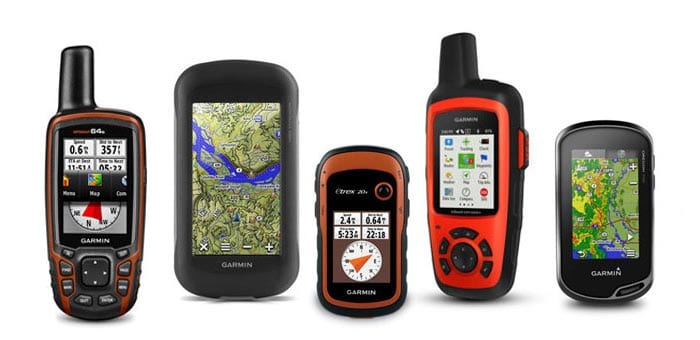
One of the primary requirements of the best handheld GPS for fishing or hiking is that the display should be comfortably readable. Hence, choosing a unit with a big screen that makes the details more visible is a better option.
However, hikers or backpackers often choose a smaller and lightweight unit due to the portability factor.
For activities like geocaching, a mid-sized screen with dimensions of around 3 inches should be a good choice. No matter the screen size, the brightness and the readability under sunlight are important factors to consider.
For viewing high-quality topographical maps, a high resolution colored screen will be needed. Backlighting is also an important feature for using the device during the night.
While choosing the best Garmin hiking GPS, striking the right balance between screen size and portability is important. For handheld devices, smaller screens will provide more ease of handling. They also come at a more affordable price. While the choice of screen size depends on your personal preference, the kind of outdoor trips you go for is also a factor.
Size and Weight
Those who prefer to pack lightly should choose a compact backpacking gps that serves the purpose. But the lightweight models may not offer all the features that you’re looking for.
Hence a compromise is needed when you buy...
...keep in mind the battery life of the GPS unit you choose, as any extra batteries will increase the weight of your pack.
Travelers looking for a basic unit with simple features will find the lightweight options more suitable. Those looking for advanced functionality will need to choose a bigger and heavier unit.
We found the touchscreen units to be lighter than the buttoned ones.
Before choosing a small unit make sure that it doesn’t compromise the readability.
Lastly, a handheld GPS for hiking should also feel comfortable in your hands. So the ideal size of the GPS will also depend on the size of your hands. You need to make the right choice for the type of outdoor adventures you prefer.
Frequently Asked Questions
Q. Does a handheld GPS give your location as a Grid Reference?
You can find the grid reference of your location displayed on the screen from the "Position info" menu. This figure will depend on the location of the cursor on the map. You can also find the grid location from the “GPS Status" menu and it is usually listed under the “Location (last known)” header.
Q. How accurate is a handheld GPS?
The accuracy also depends on the quality of the GPS receiver and antenna. The number of satellites it can connect with simultaneously is also important. Units that use the dual frequencies connect with both GPS and GLONASS satellites. The vertical accuracy of these units can be 2 to 3 times that of the horizontal accuracy.
Q. Which is more accurate GPS or Glonass?
It’s true that in the last decade, the coverage of Glonass has improved but it’s still not in the same league as GPS. Presently Brazil and Antarctica have the most number of Glonass stations. But, the GPS stations are distributed all across the world. So if you need to choose between the two, GPS is still the better choice.
Q. What affects GPS accuracy?
For the most accurate reading, the GPS should be placed under a clear and unobstructed piece of sky. Unfortunately, that is not possible in many outdoor conditions. You can try placing the hiking or camping GPS unit in the outside pocket of a backpack or on in a handlebar mount while cycling. This can help in better signal acquisition.
Q. What is the most accurate handheld GPS?
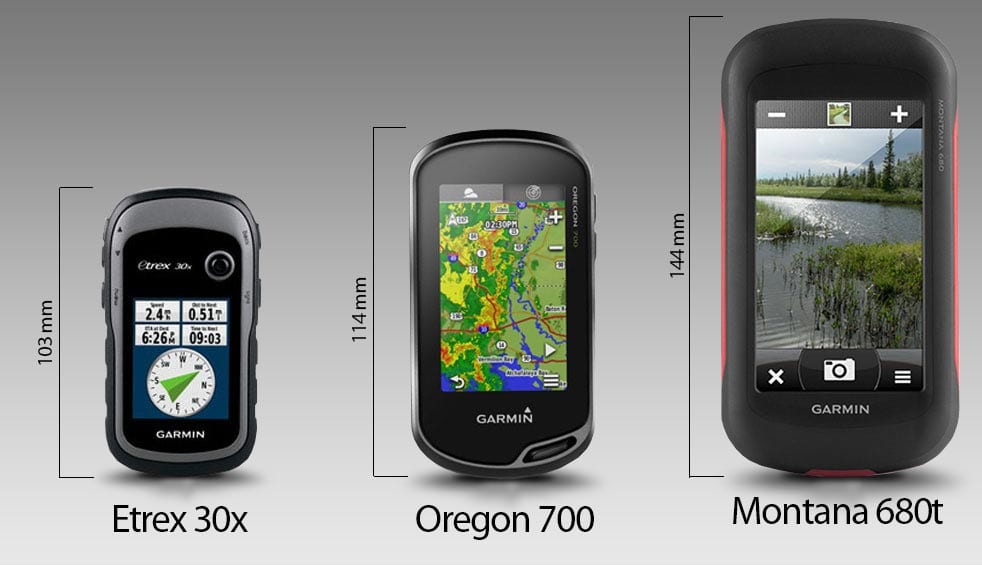
It also offers a track manager feature that uses a waypoint system. This makes GPS navigation for hiking very accurate. Both the tilt-compensated electronic compass and the barometric altimeter deliver high accuracy. Simply put, if precision and accuracy are what you are looking for, then you won’t go wrong picking the Montana 680.
Q. Does wind affect GPS accuracy?
As per standard calculations, the total loss in GPS signal due to weather conditions is very rare. So this has no effect on the accuracy levels of the unit. Try to make sure that the antenna of any GPS devices for hiking is not covered by snow as that will affect the signal quality.
There you have it. You now have all the knowledge you need to buy that all-important handheld GPS with confidence. We want you to know you're buying the right GPS for your needs and to short cut this process we've also included the Top 10 choices to satisfy you. We’ve included links to the Top 3 both at the beginning and the end of this review. You really are choosing from the best of the best - we know - we did the research.

Our Analysis, Comparisons & Test Results
We tested every handheld GPS on this list against the same five things that decide which one earns its place.
Here is how the field compared on each.
Reception
The Garmin GPSMAP 67 Rugged Multi-Band Handheld leads the field for reception at 10 out of 10, and the Garmin eTrex 32x Handheld GPS Navigator trails at 7.
| Handheld GPS | Reception |
|---|---|
| Garmin GPSMAP 67 Rugged Multi-Band Handheld | 10/10 |
| Garmin GPSMAP 66sr Multi-Band Handheld | 10/10 |
| Garmin GPSMAP 65 Multi-Band Handheld GPS | 9/10 |
| Garmin Montana 700 Rugged Touchscreen GPS | 8/10 |
| Garmin inReach Mini 2 Satellite Communicator | 8/10 |
| Garmin eTrex 22x Rugged Handheld GPS | 7/10 |
| Garmin eTrex 32x Handheld GPS Navigator | 7/10 |
Ease of Use
The Garmin Montana 700 Rugged Touchscreen GPS leads the field for ease of use at 9 out of 10, and the Garmin eTrex 32x Handheld GPS Navigator trails at 6.
| Handheld GPS | Ease of Use |
|---|---|
| Garmin Montana 700 Rugged Touchscreen GPS | 9/10 |
| Garmin GPSMAP 67 Rugged Multi-Band Handheld | 8/10 |
| Garmin GPSMAP 66sr Multi-Band Handheld | 8/10 |
| Garmin inReach Mini 2 Satellite Communicator | 8/10 |
| Garmin GPSMAP 65 Multi-Band Handheld GPS | 7/10 |
| Garmin eTrex 22x Rugged Handheld GPS | 6/10 |
| Garmin eTrex 32x Handheld GPS Navigator | 6/10 |
Display Quality
The Garmin Montana 700 Rugged Touchscreen GPS leads the field for display quality at 10 out of 10, and the Garmin inReach Mini 2 Satellite Communicator trails at 6.
| Handheld GPS | Display Quality |
|---|---|
| Garmin Montana 700 Rugged Touchscreen GPS | 10/10 |
| Garmin eTrex 22x Rugged Handheld GPS | 7/10 |
| Garmin GPSMAP 66sr Multi-Band Handheld | 7/10 |
| Garmin GPSMAP 65 Multi-Band Handheld GPS | 7/10 |
| Garmin GPSMAP 67 Rugged Multi-Band Handheld | 6/10 |
| Garmin eTrex 32x Handheld GPS Navigator | 6/10 |
| Garmin inReach Mini 2 Satellite Communicator | 6/10 |
Speed
The Garmin GPSMAP 67 Rugged Multi-Band Handheld leads the field for speed at 8 out of 10, and the Garmin inReach Mini 2 Satellite Communicator trails at 7.
| Handheld GPS | Speed |
|---|---|
| Garmin GPSMAP 67 Rugged Multi-Band Handheld | 8/10 |
| Garmin Montana 700 Rugged Touchscreen GPS | 8/10 |
| Garmin GPSMAP 66sr Multi-Band Handheld | 8/10 |
| Garmin eTrex 22x Rugged Handheld GPS | 7/10 |
| Garmin eTrex 32x Handheld GPS Navigator | 7/10 |
| Garmin GPSMAP 65 Multi-Band Handheld GPS | 7/10 |
| Garmin inReach Mini 2 Satellite Communicator | 7/10 |
Weight and Size
The Garmin inReach Mini 2 Satellite Communicator leads the field for weight and size at 10 out of 10, and the Garmin Montana 700 Rugged Touchscreen GPS trails at 5.
| Handheld GPS | Weight and Size |
|---|---|
| Garmin inReach Mini 2 Satellite Communicator | 10/10 |
| Garmin eTrex 22x Rugged Handheld GPS | 9/10 |
| Garmin eTrex 32x Handheld GPS Navigator | 9/10 |
| Garmin GPSMAP 67 Rugged Multi-Band Handheld | 7/10 |
| Garmin GPSMAP 66sr Multi-Band Handheld | 7/10 |
| Garmin GPSMAP 65 Multi-Band Handheld GPS | 7/10 |
| Garmin Montana 700 Rugged Touchscreen GPS | 5/10 |
Versatility
The Garmin Montana 700 Rugged Touchscreen GPS leads the field for versatility at 9 out of 10, and the Garmin eTrex 22x Rugged Handheld GPS trails at 6.
| Handheld GPS | Versatility |
|---|---|
| Garmin Montana 700 Rugged Touchscreen GPS | 9/10 |
| Garmin inReach Mini 2 Satellite Communicator | 9/10 |
| Garmin GPSMAP 67 Rugged Multi-Band Handheld | 8/10 |
| Garmin GPSMAP 66sr Multi-Band Handheld | 8/10 |
| Garmin eTrex 32x Handheld GPS Navigator | 7/10 |
| Garmin GPSMAP 65 Multi-Band Handheld GPS | 7/10 |
| Garmin eTrex 22x Rugged Handheld GPS | 6/10 |
Our Final Verdict: 10 Best Handheld GPS
After testing the field, three handheld GPS units stood out.
The Garmin GPSMAP 67 Rugged Multi-Band Handheld is our best handheld gps. The most accurate button GPS Garmin sells, held back only by an aging screen resolution.
The Garmin GPSMAP 66sr Multi-Band Handheld is our best handheld gps for hunting. Multi-band accuracy in a proven button body, ideal for hunters who need a precise, rugged unit.
The Garmin Montana 700 Rugged Touchscreen GPS is our best waterproof gps. A big-screen touchscreen GPS that shines for vehicles and mapping, at the cost of bulk and rain quirks.
Conclusion: The Best Handheld GPS
Choosing the best handheld GPS from the wide variety of options out there in the market is not an easy task. Based on our research, the Garmin GPSMAP 66st Handheld Hiking GPS is the best Garmin handheld GPS in terms of performance, features, and versatility. The accuracy, durability, and ease of handling gives it the edge over the other units.
The Garmin GPSMAP 64st and the Garmin Foretrex 401 jointly occupies the second spot in terms of their performance ratings.
Here are our top 3 All Time best Handheld GPS.
We hope you enjoyed our review, Suvajit worked hard on it.
All that’s left is for the team here at TopNotch to wish you many happy hours of camping and many successfully navigated trips with your GPS in the Great Outdoors.
We’re all agreed, that’s where it’s at.
Individual reviews in Camp Electronics
Cheap Off Grid Solar Panel Kits (2026) Suner Power Definitive Review
Big Blue Solar Charger: Definitive Review (2026)
Garmin eTrex 20x: Definitive Review (2026)
Jackery Solar Panel: Definitive Review (2026)
Garmin GPSMAP 66ST: Definitive Review (2026)
Coleman Xtreme Cooler: Definitive Review (2026)
Wen 56200i (2000 Watt Inverter Generator): Definitive Review 2026